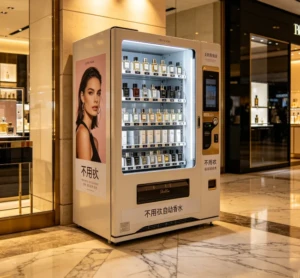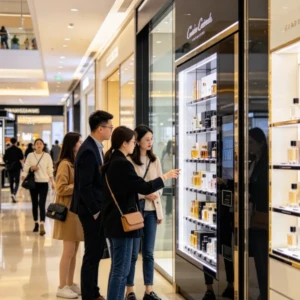
A fully automatic perfume vending machine is a self-service kiosk that dispenses perfume samples or small sealed bottles, typically 5 ml to 30 ml, and the hardware runs $3,000 to $12,000 installed. You’ll see them in airport concourses, mall corridors, hotel lobbies, cosmetics shops, and casino floors, wherever people have five spare minutes and a scent on their mind. Swipe a card, choose a scent, and the machine drops the bottle into the tray and prints a receipt. Most cabinets hold 30 to 120 SKUs and talk to the card reader over MDB or a serial protocol.
What fully automatic should mean on a perfume kiosk
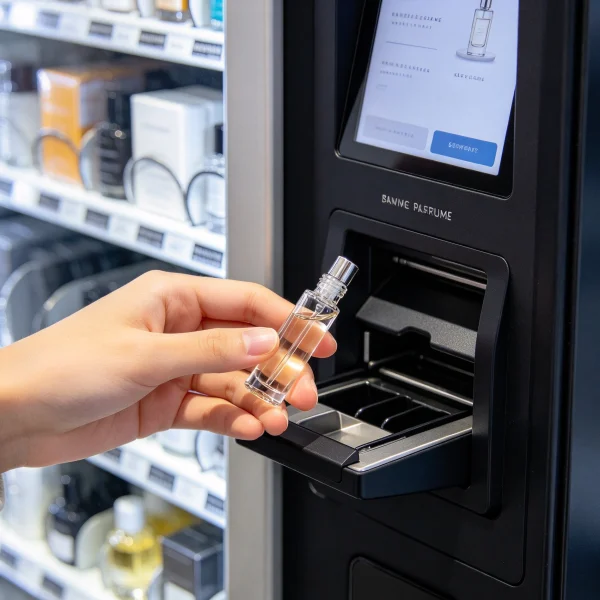
Suppliers throw the word around loosely. On a kiosk it should describe a complete cycle with nobody on site: the customer pays, the mechanism fetches the right bottle, the tray opens, the sale gets logged. Plenty of units sold as automatic still need an attendant to hand the product over at some point, which is useless at 2 a.m. in a terminal.
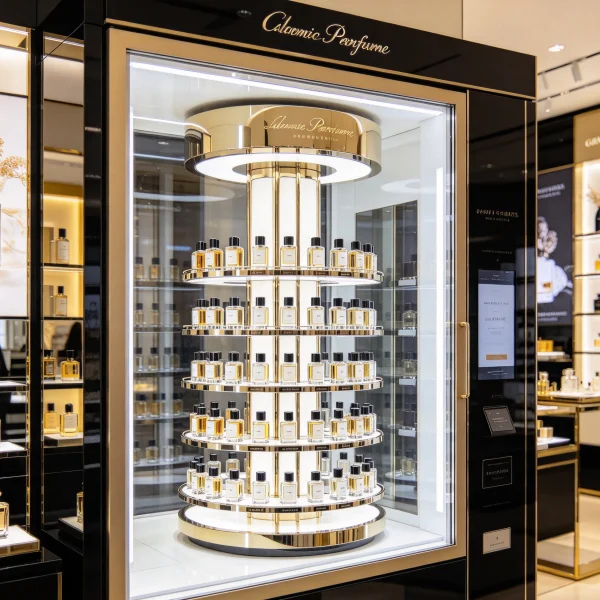
Two mechanisms dominate. Carousel and spiral trays rotate a shelf until the chosen bottle lines up with the drop chute, which keeps the price down and makes hand refilling quick. Elevator and gantry machines carry a gripper to the shelf, lift the bottle, and bring it to a single pickup point, and that is what lets you mix tall 50 ml flacons with stubby 5 ml samples in one cabinet.
The electronics decide how much of a headache the site becomes. A control board runs the menu, the card reader authorizes payment, and a telemetry module pushes stock counts and fault codes to your phone. If a supplier can’t show you the dashboard or name the payment protocol on the spec sheet, walk away. Modern unattended retail boards use MDB or a documented serial link, the same approach that kept smart coffee vendors compatible with new readers without replacing the whole machine.
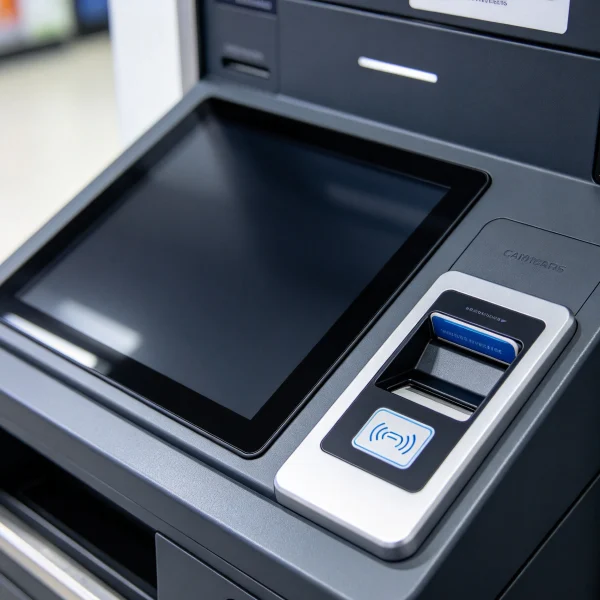
Inside the cabinet: what actually drives the price
Two machines with the same bottle count can differ by $4,000. The gap usually hides in the mechanism, the screen, and the payment hardware.
| Component | Why it matters | Typical cost impact |
|---|---|---|
| Cabinet and glazing | Tempered glass and a reinforced lock matter on unsupervised sites | included, up to $600 for upgrades |
| Dispensing mechanism | Spiral or carousel slots are simple; an elevator gripper handles mixed bottle shapes | $1,500 to $3,000 more for elevator style |
| Payment terminal | EMV contactless, Apple Pay, Google Pay, QR wallets, optional bill acceptor | $400 to $900 |
| Control board and software | Multi-language menus, remote price changes, sales reports | $300 to $1,200 |
| Screen and shelf lighting | A 21.5 inch touchscreen and LED strips make a steel box feel like a counter display | $250 to $900 |
| Telemetry module | Remote stock alerts and fault codes, so you don’t drive out for nothing | $60 to $200 plus $5 to $20 a month |
| Cooled cabinet (optional) | Heat softens packaging and dulls fragrance top notes over a few weeks | $700 to $1,500 |
Notice where the money goes. A cooled cabinet in a shaded indoor lobby is wasted spend. An uncooled cabinet facing afternoon sun at a mall entrance will cost you in spoiled stock.
What a perfume vending machine costs in 2026
These are new-unit prices buyers report paying, excluding freight, duty, and the first stock order. Secondhand cabinets show up cheaper, and the card reader or control board is often the reason they’re for sale. Published price ranges in VendingCore’s supplier directory are worth checking before you believe any single quote.
| Tier | Bottle capacity | Typical 2026 price | Best suited to |
|---|---|---|---|
| Entry carousel | 24 to 40 | $3,000 to $5,500 | A first site in a hotel lobby or small mall |
| Mid range | 48 to 80 | $6,000 to $9,000 | Airports, busy malls, multi-language menus, gift wrap |
| Premium elevator | 80 to 120 | $9,500 to $12,000 | Duty-free corridors with mixed bottle sizes |
Budget for the extras as well. Freight and installation run $300 to $900 depending on distance, customs duty applies on imports, and a first stock order of 40 to 60 real fragrance bottles costs $600 to $1,800 at wholesale. A site deposit or revenue share of $300 to $800 a month is normal in a prime location.
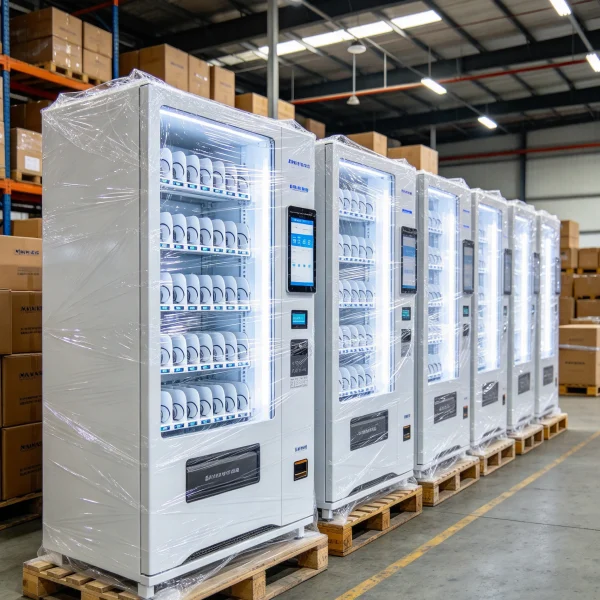
Where a perfume kiosk actually earns
Scent vending works where someone forgot something or wants to test before committing. Airport terminals top the list. A traveler paying $15 for a 10 ml bottle barely blinks next to a $400 flight, and the same logic holds at duty free, hotel gift shops, casino corridors, and the exit of a nightclub.
Ticket sizes land in three bands: samples and 2 ml vials at $5 to $8, 10 ml travel sprays at $12 to $18, and 30 ml bottles at $28 to $45. Daily volume decides everything. A strong airport site does 15 to 40 transactions a day. A quiet mall position might do 4 to 8.
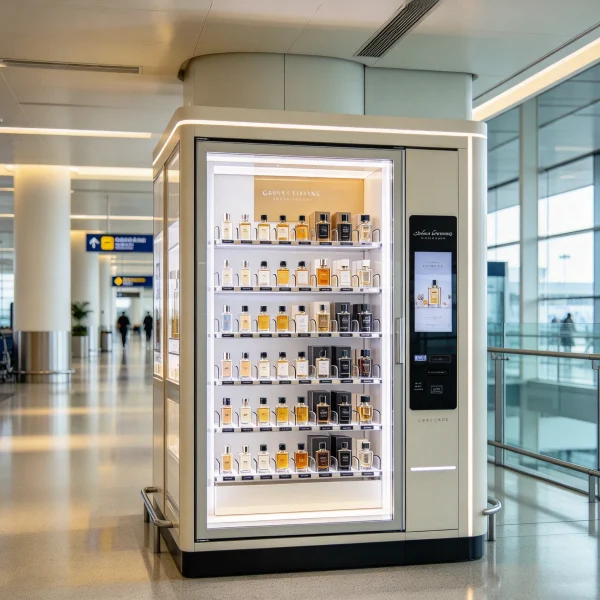
Per square foot, fragrance sits high on the list of most profitable vending items, which is why operators who already run snack machines keep circling this category. The catch is cash tied up in stock and a customer base that needs repeat visits to build.
Payback math you can run in five minutes
Here’s a mid-range scenario. Machine $8,000, freight and install $600, first stock $1,200, spare parts kit $200, site deposit $500. Total outlay around $10,500.
At 12 sales a day and a $13 average, monthly revenue is about $4,680. Cost of goods at 45% takes $2,106, leaving $2,574 gross. Site fee $450, card processing $135, telemetry $15, cleaning and consumables $100, maintenance reserve $150. Net lands near $1,720 a month, so the machine pays back in roughly 6 months.
Push volume to 25 sales a day at the same ticket and payback drops to 4 to 5 months. On a quieter site doing 6 sales a day, expect 8 to 10 months. Operators who treat coffee machine ROI the same way, with a spreadsheet instead of a brochure, tend to survive their first year.
Vetting a supplier without losing $5,000
The supplier causes more bad outcomes in this category than the cabinet does. On VendingCore you can compare verified suppliers side by side, read buyer reviews, check published price ranges, and send an inquiry directly instead of chasing five different WhatsApp numbers.
Questions worth asking before any deposit:
- What does the warranty cover, and for how long? Gripper motors and card readers are the parts that fail. 12 to 24 months on parts is normal; 36 months suggests a supplier who expects few claims.
- Are spare parts held locally or shipped from the factory? A gripper that takes six weeks to arrive kills a site.
- Is the software licensed or owned? Some vendors charge a monthly licence after year one, and the machine stops working if you don’t pay.
- Which payment protocol runs the board? MDB is the safe answer. A proprietary board locks you into one reader supplier.
- What’s the lead time? 25 to 45 days for production, plus shipping and customs clearance.
- Can they name three operators running the same model for a year or more?
Refilling, cleaning, and the faults you’ll actually see
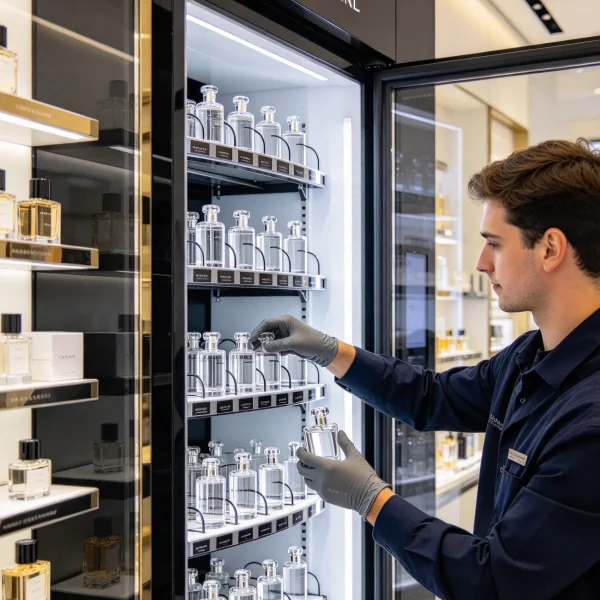
Fragrance kiosks are easier to run than fresh-food machines, since there’s nothing to cook and no compressor running around the clock. What breaks is mechanical and electronic: bottle jams when stock sizes drift, gripper alignment after a few thousand cycles, condensation on the card reader in cold climates, screen delamination in direct sun, and network dropouts that stop card payments mid-transaction.
Keep a spare gripper assembly, a spare reader, and a spare door lock on the shelf. A jam that takes a technician four days to reach can cost more than the parts. Daily, wipe the glass, clear the tray, and pull the sales report. Weekly, rotate stock first in and first out, and move slow sellers into sample pricing before they age.
Before you send a deposit
Decide the site first, then the machine. A cabinet with a 900 mm footprint, MDB payments, and 48 to 80 slots covers most real locations without paying for a gripper you’ll never need. Budget $10,000 to $12,000 all in, expect payback between 4 and 10 months, and hold back 10% of the payment until the unit completes live test cycles on your site.
Then source properly. On VendingCore you can filter suppliers by machine type and region, read what other buyers say about after-sales support, and send your spec list as an inquiry to several vendors at once. Comparing three quotes takes an afternoon. If fragrance doesn’t suit your location, other categories work on very different numbers, and something like a cotton candy vending route starts at a much lower ticket size.
FAQ
How much does a fully automatic perfume vending machine cost?
New units run from about $3,000 for a 24 to 40 bottle carousel model to $12,000 for an 80 to 120 bottle cabinet with an elevator gripper, touchscreen, and telemetry. Add $300 to $900 for freight and installation, plus $600 to $1,800 for the first stock order. Secondhand machines are cheaper, but a tired card reader or control board is often why they’re on the market.
How many perfume bottles does one machine hold?
Typical capacity is 30 to 120 bottles, and the number depends on slot design more than cabinet height. Carousel trays handle 24 to 40 fixed sizes. Elevator machines with adjustable shelves reach 80 to 120 because they can mix 5 ml samples with 50 ml flacons. Narrower bottles mean more slots, so ask the supplier how many SKUs the exact tray layout supports.
Do perfume vending machines need refrigeration?
Usually not, but a cooled cabinet helps in hot climates. Heat degrades fragrance top notes over a few weeks, and a cabinet sitting in direct sun at a mall entrance can hit 40°C inside. The cooling option costs $700 to $1,500 and keeps stock stable. In temperate locations with shade, most operators skip it and simply rotate stock faster.
What payment methods do these kiosks accept?
Most ship with EMV contactless cards, Apple Pay and Google Pay, and QR wallets. Some units add a coin mechanism or bill acceptor, which still matters in markets where cash dominates. Check that the reader is certified for your country’s card schemes before ordering, because swapping in a locally certified reader after delivery is a real cost you can avoid.
How long does delivery and installation take?
Production runs 25 to 45 days for most models. Sea freight adds three to five weeks, air freight about a week at a much higher price. Installation itself takes half a day: level the cabinet, connect power, pair the reader, load stock, and run a test cycle. Plan on six to ten weeks from deposit to first sale for an imported unit.
Can you make money with a perfume vending machine?
Yes, when the site has traffic and you watch stock costs. A mid-range machine doing 12 sales a day at a $13 average returns roughly $1,700 a month after site fees, card processing, and consumables, which pays back a $10,500 investment in about six months. Volume drives everything, and below six sales a day the numbers get thin.
Where should I put one for the best return?
Airports and duty-free corridors first, then hotel lobbies, busy malls, casino walkways, and nightlife exits. The pattern is consistent: people with time to spare, a reason to buy a small bottle, and no easy alternative nearby. Ask the venue for foot traffic figures, and check whether an existing fragrance retailer sits within 50 meters of your spot.
How do I find a reliable perfume vending machine supplier?
Compare suppliers on a directory that lists verified vendors and real buyer reviews rather than one factory’s own website. On VendingCore you can filter by machine type, region, and price range, then send the same spec list to three or four suppliers and compare warranty terms, spare parts policy, and lead times. Ask each one for a video of the dispensing cycle on the exact model you plan to buy.
The mistake I see most often is operators buying the machine before they’ve secured the site. A $12,000 cabinet in a weak lobby loses money faster than a $3,000 carousel by the departure gates makes it. Nail the location, negotiate a short lease with an exit clause, and only then choose your slot count and mechanism. Keep 10% of the payment back until the unit has run complete cycles on site for a week. Suppliers who trust their hardware never argue about that clause.