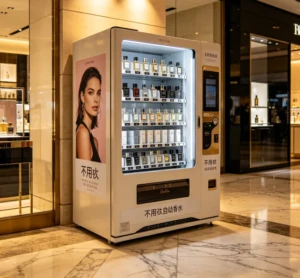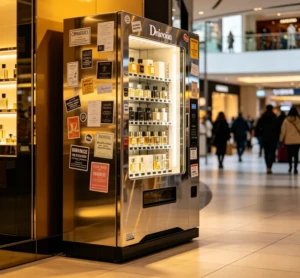
Expect to pay $900 to $6,500 for the best perfume vending machine 2026 has to offer, and that gap is set by the dispensing mechanism rather than the cabinet design. Countertop sample sprayers that dose 0.2 ml of fragrance onto a paper strip sit at the bottom of that range. Freestanding kiosks that vend sealed 5 ml to 30 ml bottles behind glass, take card and mobile wallet payments, and report stock levels remotely sit at the top. You’ll find them in airports, shopping malls, hotel lobbies, nightclubs, and beauty salons, where a purchase takes under a minute and the customer walks out with a scent instead of a commitment.
What a perfume vending machine actually is
A perfume vending machine is a self-service kiosk that dispenses perfume samples or small sealed perfume bottles after payment. That one definition covers two very different machines, and mixing them up is the fastest way to buy the wrong one.
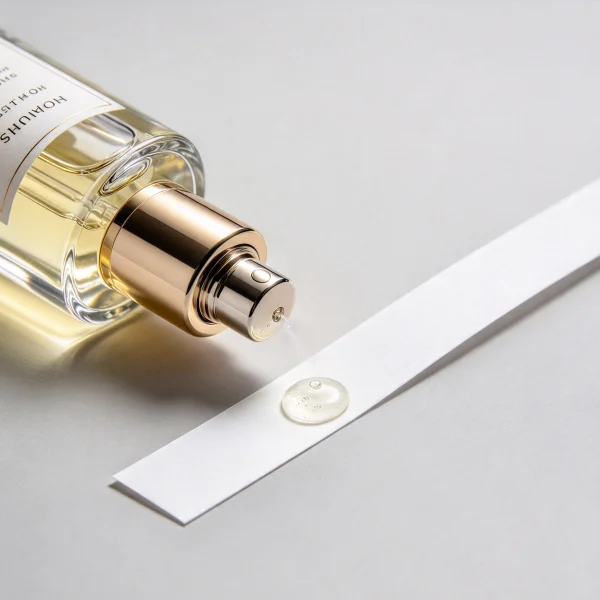
Type one is the sample sprayer. You tap the screen, pick a fragrance, and the machine pushes a measured dose, usually 0.1 ml to 0.3 ml, into an atomizer, a paper test strip, or a small disposable vial. Some operators charge $1 to $3 for the sample. Others give it away and sell full bottles from a staffed counter standing beside the kiosk.
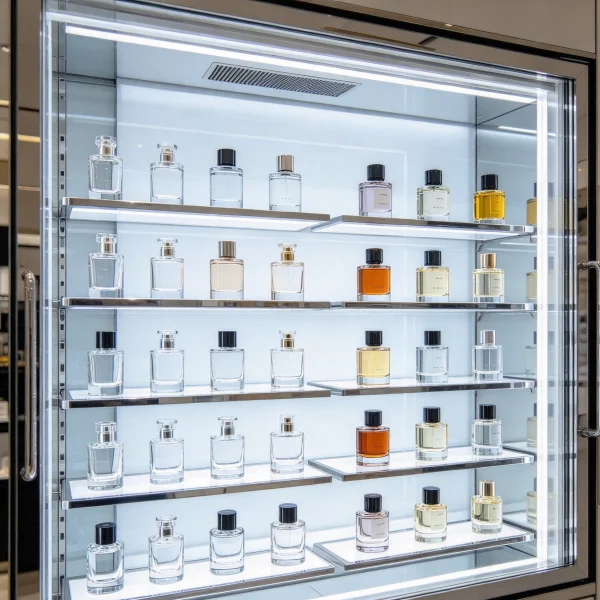
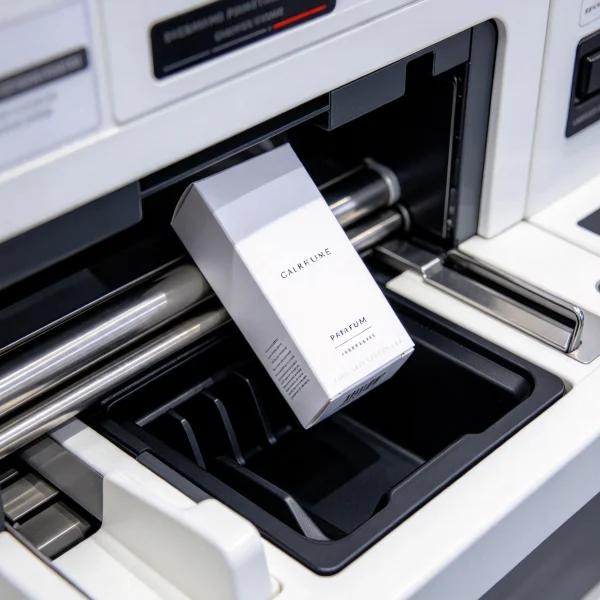
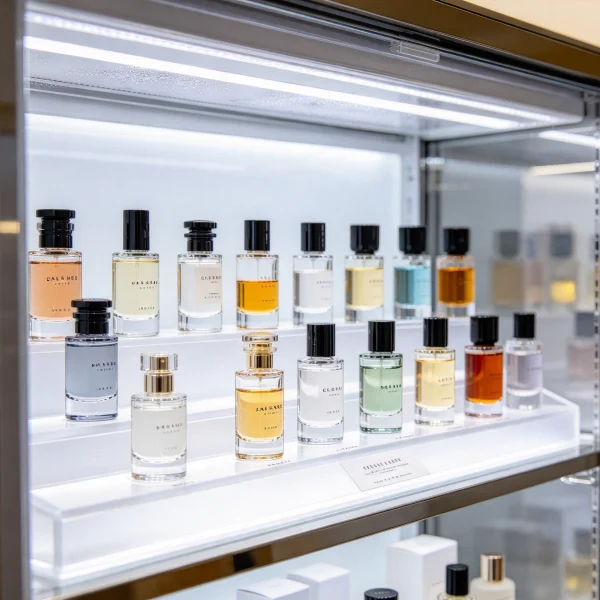
Type two is the retail dispenser. Sealed bottles sit behind glass, and an elevator arm or a rotating carousel drops the bottle you paid for into a collection slot. Those bottles run 5 ml to 30 ml, roughly a few weeks of daily wear, which makes them cheap enough to be an impulse buy rather than a considered one.
Neither machine is a coin-operated novelty. If a quote comes back at $280 and the rep starts talking about capsules or gumballs, you’re looking at a different product category. Ask for the mechanism spec sheet in writing before anything else.
The 2026 price map: what each tier really buys
Typical 2026 prices run from about $900 for a countertop sample sprayer to $6,500 for a refrigerated glass kiosk. The spread tracks four things: how the machine handles fragrance, how many SKUs it holds, how it takes money, and how much steel is wrapped around it.
| Machine type | Typical 2026 price (USD) | Fragrance capacity | Footprint | Best fit |
|---|---|---|---|---|
| Countertop sample sprayer | $900 to $2,200 | 4 to 8 fragrance cartridges | About 0.3 sq m | Salons, hotel receptions, barbershops |
| Wall-mounted sample kiosk with touchscreen | $2,200 to $4,000 | 5 to 12 fragrances, 30 to 60 ml each | About 0.5 sq m | Malls, transit corridors, cinema lobbies |
| Freestanding sealed-bottle dispenser | $3,500 to $5,600 | 24 to 60 bottles, 5 to 30 ml | About 1.2 sq m | Train stations, mid-tier malls |
| Premium glass kiosk with refrigeration | $4,800 to $6,500 | 12 to 20 bottles plus sampling | About 1.5 sq m | Airports, casinos, luxury malls |
Two line items move the price more than anything else. A card reader certified for unattended payments adds $350 to $900 on its own, and a refrigerated compartment, which some fragrance brands now insist on to protect volatile top notes, adds another $600 to $1,200.
Then there is the delivery mechanism itself. A carousel is cheap and reliable. An elevator with a bottle gripper costs more, handles awkward bottle shapes, and needs a service call the moment the gripper drifts 2 mm out of alignment.
Sample spraying vs sealed bottles: which model pays back faster
Sample kiosks win on traffic. Bottle dispensers win on ticket size. That’s the whole trade-off, but the payback math differs enough to be worth running both before you commit capital.
| Metric | Sample spray kiosk | Sealed bottle dispenser |
|---|---|---|
| Average transaction | $1 to $3 per sample | $12 to $45 per bottle |
| Gross margin per sale | 70% to 85% after consumables | 45% to 60% after bottle cost |
| Restock frequency | Daily to weekly | Weekly to monthly |
| Hygiene risk | Medium, nozzles and strips need cleaning | Low, product stays sealed |
| Typical payback | 3 to 6 months | 6 to 9 months |
| Best location type | High footfall, short dwell time | Destination retail, captive audience |
Here’s a worked example with assumptions you can swap for your own numbers. A wall-mounted sample kiosk at $3,200 in a mall corridor sells 250 samples a week at $2 each. Fragrance concentrate and vials cost about $65 a week, and the venue takes $150 in rent. That leaves roughly $285 a week before power and card fees, which puts payback near 12 weeks. Call it three months.
A sealed-bottle dispenser costs more up front, around $5,000 installed, and moves fewer units. Sell four bottles a day at an average of $22 with a 55% gross margin and you’re at about $48 a day in gross profit. Take off $25 for rent and the machine clears $5,000 in roughly seven months. Slower, but the basket size holds up when foot traffic dips.
Fragrance is chemistry, and chemistry breaks kiosks
Alcohol-based fragrance attacks the parts that touch it. Pump seals stiffen, nozzles film over, and a machine that worked perfectly in week one starts dosing 0.4 ml instead of 0.2 ml by week ten. Your consumable cost quietly doubles.
Heat is the second problem. Top notes fade faster above 25°C, and a kiosk sitting in direct sun through a mall atrium will cook whatever is in the reservoir. Refrigeration solves the scent problem and creates a new one, because condensation collects in the dispensing path.
Build a cleaning routine into the business plan from day one. Weekly nozzle purge with the manufacturer’s solvent, monthly seal inspection, and a swap of any vial magazine showing residue. It’s maybe 30 minutes a week. Skip it and you’ll be replacing pumps instead of restocking fragrances.
Where a perfume kiosk earns its keep in 2026
Location does more work than the machine. The general rule for unattended retail applies here too: you want volume or you want dwell time, and you rarely get both at the same address.
- Airports and transit hubs: high volume, short dwell, travelers buy small bottles. Rent is the killer, so negotiate revenue share rather than a flat monthly fee.
- Malls near a cinema or food court: steady evening traffic, and people are already in a spending mood.
- Hotel lobbies and upscale gyms: lower volume, but customers have time and a higher tolerance for premium pricing.
- Nightlife exits: late-night impulse buying is real, and so is theft. Use a sealed cabinet with no exposed product.
- Beauty salons and barbershops: the captive-audience play. Customers wait, and a sample is the natural step before a full bottle.
The footfall scoring method I use for other unattended retail sites carries over almost unchanged. If you want a worked approach for ranking a location before you sign a lease, the arithmetic in this guide to choosing a nail vending machine location is the same one I’d run for fragrance.
Regulation matters as much as traffic. Selling cosmetics triggers labeling and import rules in many markets, and sampling can count as cosmetic distribution rather than retail. If you’re eyeing the Gulf, the licensing and setup process covered in this Dubai vending machine guide is a useful reality check on cost and timeline.
Payment, telemetry and the specs that quietly set your margin
These are the boring line items that decide whether you visit a machine once a week or once a month.
- MDB protocol support, so you can swap card readers without replacing the whole controller.
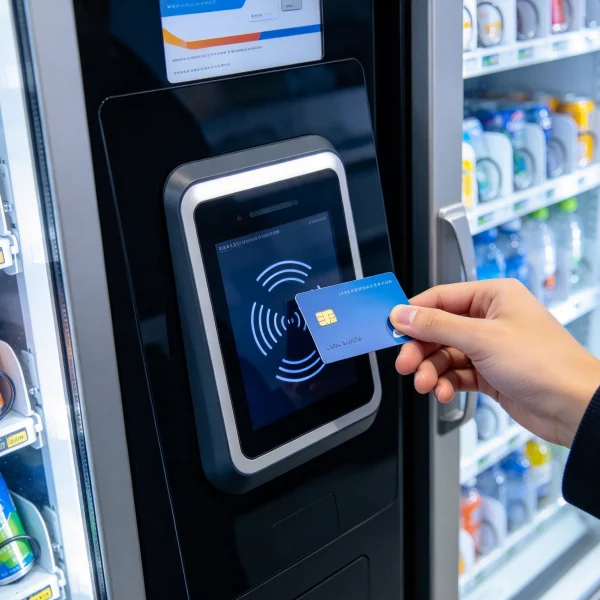
- A certified unattended card reader with contactless support, plus a QR wallet option if your market runs on phones.
- Remote inventory reporting, because guessing stock levels costs you sales at exactly the busiest hour.
- Offline mode. Terminals drop connection, and a machine that stops selling during a network blip isn’t a vending machine.
- A sales export in CSV, so you can see which fragrance earns and which one just sits there.
- Age or ID prompts only if your venue requires them. Fragrance rarely needs them, but some mall operators ask anyway.
Ask for a demo login on the telemetry dashboard before you pay. If a supplier can’t show live data from a working unit, that tells you plenty about how seriously they treat the software.
How to vet a supplier before the deposit leaves your account
This is where first-time buyers lose money, and it usually has nothing to do with the spec sheet.
Start with the questions that separate a trading company from an actual factory. Who makes the dosing pump? What happens when a controller fails in month eight? Can they send a photo or video of the same model running at a customer site right now? Get the spare parts lead time in writing, and confirm whether the shipping quote includes customs clearance and who eats the cost if the cabinet arrives dented.
Then collect a second and third opinion. On VendingCore you can compare verified suppliers side by side, read buyer reviews, check price ranges for the configuration you want, and send an inquiry directly to the ones that fit. It costs you an hour and nothing else, and the differences in warranty terms alone usually justify the effort.
The same diligence applies in adjacent categories. The questions behind this UV printing phone case vending machine guide, or a regional setup like this DIY phone case vending machine Malaysia breakdown, are nearly identical: who supports the software, what’s the parts pipeline, and what does a bad month actually cost you.
One more thing worth checking. Novelty formats attract regulators faster than useful ones, and the rules can shift mid-year. The story behind lucky box vending machines in Australia is a good reminder that a product category can be perfectly legal in January and contested by October.
What to do next
Decide the model first. Sample sprayer if your site has volume and short dwell time. Sealed bottle dispenser if you have a captive audience and want bigger baskets. Then work backwards from your rent: how many sales a day do you need to clear the machine in six months? That single number is the one that matters at the negotiating table.
After that it’s a sourcing exercise. Browse the verified perfume vending machine suppliers listed on VendingCore, filter by the configuration you’ve settled on, read what other buyers say about parts and after-sales support, and send your inquiry with the spec list already in hand. Quotes get sharper when you clearly know what you’re asking for.
FAQ
How much does a perfume vending machine cost in 2026?
Countertop sample sprayers start around $900 and run to roughly $2,200. Wall-mounted sample kiosks with touchscreens sit between $2,200 and $4,000. Freestanding sealed-bottle dispensers cost $3,500 to $5,600, and refrigerated premium glass kiosks reach about $6,500. Add $350 to $900 if you want an unattended-certified card reader, and $600 to $1,200 for a cooled compartment. Shipping, customs, and installation are usually quoted separately.
How does the sampling mechanism work?
A peristaltic or piston pump draws fragrance from a reservoir and pushes a measured dose, typically 0.1 ml to 0.3 ml, through a nozzle into a paper test strip, an atomizer, or a disposable vial. The pump runs for a fixed number of milliseconds set in the controller. Cheaper machines use a fixed timer, which drifts as the pump wears and quietly raises your cost per sample.
Do customers pay for perfume samples?
It depends on the venue. Mall and transit kiosks usually charge $1 to $3 per sample because the machine has to earn on impulse traffic. Hotel lobbies, salons, and brand-owned kiosks often give samples away and treat the dispenser as a lead generator for full bottles sold at a nearby counter. Test both: a free sample with a paid bottle upsell often beats a paid sample on footfall alone.
How many sales a day do I need to break even?
For a $3,200 sample kiosk with $150 weekly rent and $65 weekly consumables, you need about 108 paid samples a week at $2 each to clear the machine inside three months. For a $5,000 bottle dispenser with 55% gross margin and $25 daily rent, four bottles a day at an average of $22 gets you there in roughly seven months. Swap the rent figure for yours and the math moves fast.
Are perfume vending machines actually profitable?
They can be, and the ceiling is set by the site rather than the hardware. A well-placed sample kiosk in a busy mall corridor pays back in three to six months in my own modeling. A bottle dispenser in a captive location takes six to nine. The failure cases I’ve seen almost always trace back to poor footfall, an overpriced lease, or no plan for restocking and cleaning.
What’s the biggest maintenance problem?
Nozzle and pump wear from alcohol-based fragrance. Seals stiffen, nozzles film over, and dosing accuracy drifts within two to three months of heavy use. A weekly solvent purge and a monthly seal check prevent most of it. Keep one spare pump and nozzle assembly on site, because the cost of a two-week parts delay is far higher than the $40 part.
How do I find a reliable perfume vending machine supplier?
Ask for the parts list, the warranty term in writing, and a live reference from a customer running the same model. Then compare at least three suppliers on price, lead time, and after-sales response. VendingCore is built for exactly that: you compare verified suppliers, read real buyer reviews, check price ranges, and send an inquiry directly to the suppliers that fit your spec.
Most first-time buyers spend three weeks choosing a cabinet and about four minutes thinking about who restocks it. The machine is the easy part. What decides whether you’re still running it in year two is whether you picked a site with enough traffic to absorb a slow month, and whether your parts supplier picks up the phone. I’ve watched operators with a $2,000 countertop unit outperform operators with a $6,000 glass kiosk, purely because one of them was standing in the right corridor.