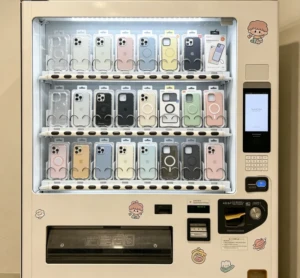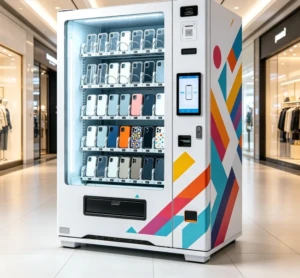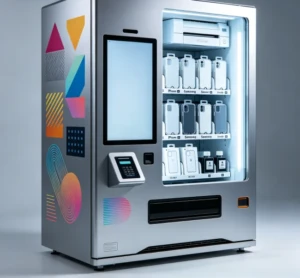
Most people overthink this. To start a phone case business, you need a reliable source for cases, design files that print cleanly, a place to sell them, and a small budget for marketing and legal setup. The exact equipment changes depending on whether you use print-on-demand, buy your own UV printer, or install a phone case vending machine, but the checklist stays the same.
This guide walks through every item on that checklist, with the real price ranges, profit math, and mistakes you want to avoid before you spend money.
What you actually need
Here is the short version. You can start with print-on-demand and no inventory. In that case you need a POD account (Printful and Printify are the most common), a storefront on Etsy, Shopify, or Amazon, original design files, and roughly $200 to $500 for samples and fees.
If you want to print cases yourself, add a UV printer, blank cases, cleaning supplies, and a safe workspace. A decent entry-level UV printer costs $2,500 to $5,000. If you prefer automated retail, you need a vending machine, a location, and stock, which often means $4,000 to $10,000 in total startup costs.
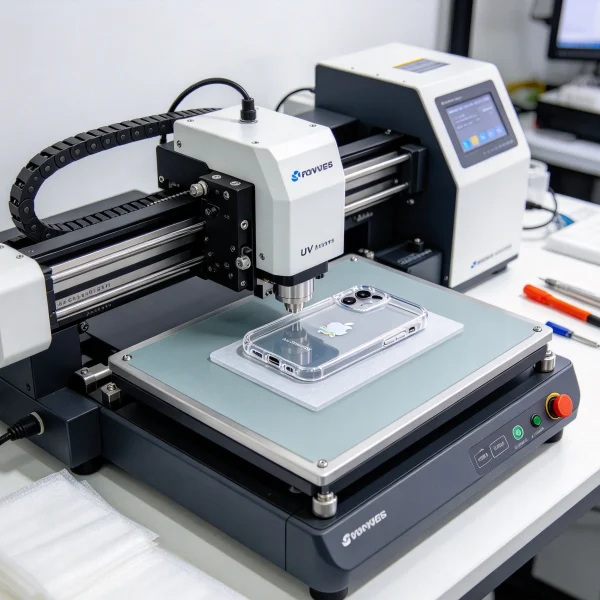
Before you buy anything, decide which production route matches your budget and goals. That decision drives every other choice you make.
Choose your production route first
If you are new, print-on-demand is the cheapest way to validate a design. You upload artwork, a supplier prints and ships each order, and you never hold stock. The tradeoffs are higher per-unit cost and less control over print quality.
In-house printing gives you lower per-unit costs once volume grows, but equipment, repairs, and waste eat into that margin at first. Vending machines shift the model: you print or buy cases in advance, stock a machine, and earn from impulse buys in busy locations. The upfront cost is higher, but there is no per-sale shipping and no ad dependency.
| Route | Upfront cost | Cost per case | Typical profit per case | Best for |
|---|---|---|---|---|
| Print-on-demand | $0 to $50 for samples | $7 to $14 | $6 to $12 at $24.99 retail | Beginners testing designs |
| In-house UV printing | $2,500 to $5,000 | $3 to $4 | $14 to $18 | Established sellers with repeat orders |
| Phone case vending machine | $4,000 to $10,000 | $4 to $6 | $6 to $12 depending on location | Operators who want location-based sales |
These are rough 2026 ranges. Your real numbers will change with supplier pricing, platform fees, and retail price.
If the automated route appeals to you, read our in-depth guide on how to make money with phone case vending machines before signing any location agreement.
How much money you need to start a phone case business
Here is the concrete version. You can launch a lean print-on-demand store for $250 to $600. That covers Etsy listing fees, one round of sample cases, a Canva design subscription, and a small social media ad test. If you want your own website, add $30 to $50 per month for Shopify, a domain, and a theme.
In-house printing requires a larger leap. After buying a UV printer, blanks, packaging, and software, plan for $3,000 to $6,000 to start. The first few hundred cases will carry a higher real cost because of setup, test prints, and broken blanks.
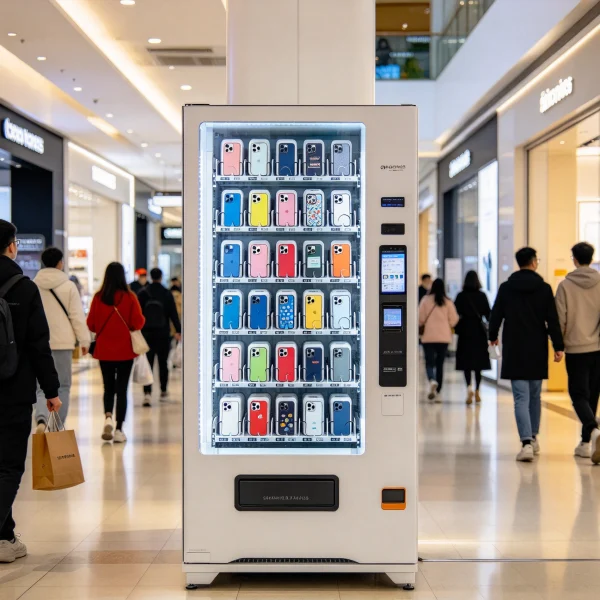
A phone case vending machine route is the most capital-heavy option. Machines range from $2,800 to $7,000, and you still need stock, a payment system, and sometimes a lease deposit for the location. Budget $4,000 to $10,000 until the machine is running.
| Launch style | Total budget | What it covers |
|---|---|---|
| Lean POD | $250 to $600 | Etsy fees, samples, basic software, small ad test |
| Shopify + POD | $700 to $1,500 | Website, domain, apps, samples, branding, initial ads |
| In-house printing | $3,000 to $6,000 | Printer, blanks, cleaning supplies, packaging, software |
| Vending machine | $4,000 to $10,000 | Machine, stock, location deposit, permits, payment processing |
Do not spend more than $1,000 on inventory before you sell a single case. Most beginners over-order blanks and then discover that demand is much narrower than expected.
What exactly you need to buy
Your buying list depends on the route, but this is the complete list of items you will touch at some point:
-
Blank phone cases (if printing yourself) in the five or six models that dominate your target market.
-
A UV printer or POD supplier. For vending, you need a bulk source instead of per-order fulfillment.
-
Design software: free options like GIMP or Canva, or professional tools like Photoshop and Illustrator.
-
Packaging: eco-friendly mailers, inserts, thank-you cards. For vending, packaging needs to fit machine trays.
-
Store setup: domain, hosting, shop theme, payment processor.
-
Samples: at least one test case per design before you list it.
-
Marketing budget: $100 to $300 for early content and ads.
-
Business registration, sales tax setup, and permits if required in your area.
If you source from Alibaba or a wholesale supplier, ask about minimum order quantities. Many require 50 to 200 units for custom printing. Always order samples first, even if it slows you down. Wrong model cutout or poor coating can ruin a whole batch.
Price your cases high enough to survive
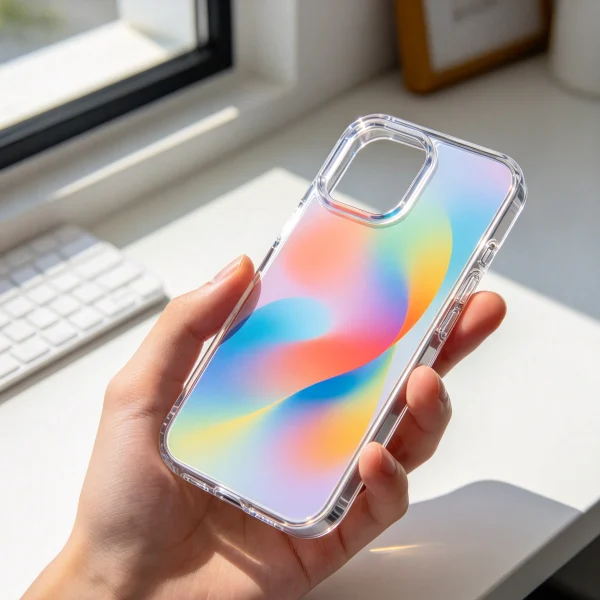
The most common pricing mistake is undercutting competitors until there is no room for real profit. Let’s run the math for a POD case sold at $24.99.
If the supplier charges $8.47 for a printed case and the customer pays shipping separately, your gross profit is $16.52. On Etsy, pay around 6.5% transaction fee plus payment processing, around $1.60. That leaves roughly $13 to $14 before you pay for marketing, packaging, or returns. That is a healthy margin if the case actually sells.
With in-house printing, your costs look different. A blank case might cost $2.50, ink might cost $1.20, and packaging adds $0.50. That gives you $20.79 gross profit at the same retail price, but you need to cover equipment, rejected prints, your time, and replacement parts. A 10% defect rate on a bad batch can wipe out a week of profit.
Vending adds another layer. A case that sells for $24.99 through a machine needs to cover the machine’s lease, credit card fees, and restocking labor. The margin is still respectable, but location rules everything. Run a break-even model before you commit to a machine.
Legal basics: LLC, taxes, and trademarks
You can legally start as a sole proprietor, but an LLC protects your personal assets if someone gets hurt using a product or if a design triggers a lawsuit. LLC filing costs range from $50 to $200 in most states, plus annual renewal fees. Open a separate business checking account as soon as you sell anything.
Sales tax is not optional. If your state has sales tax, you need a seller’s permit and you collect tax on taxable orders. Marketplaces like Etsy and Amazon handle many of these requirements for you, but if you sell through your own website or a vending machine, you are responsible.
Before you pick a brand name, search the USPTO database for trademarks. And do not print characters, logos, or artwork you do not own. Fan art cases get removed constantly, and one infringement notice can shut down your entire store.
Design specs that make or break your product
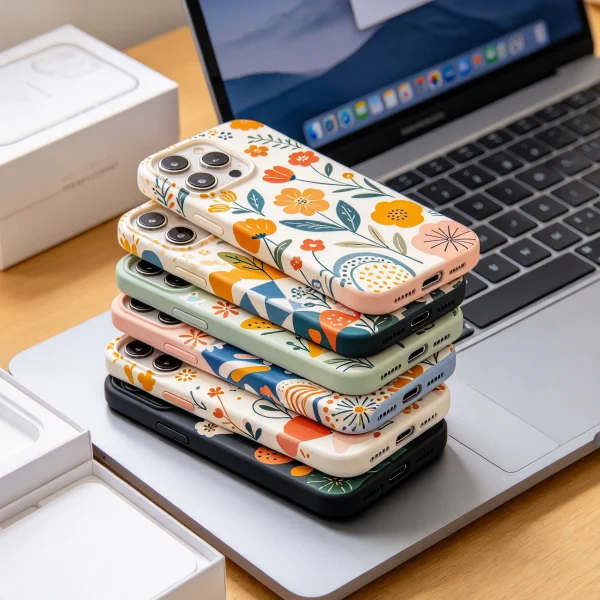
Phone case printing is unforgiving. If your file is too small, edges get blurry. If you ignore the safe zone, a logo can wrap around the side and appear cut off.
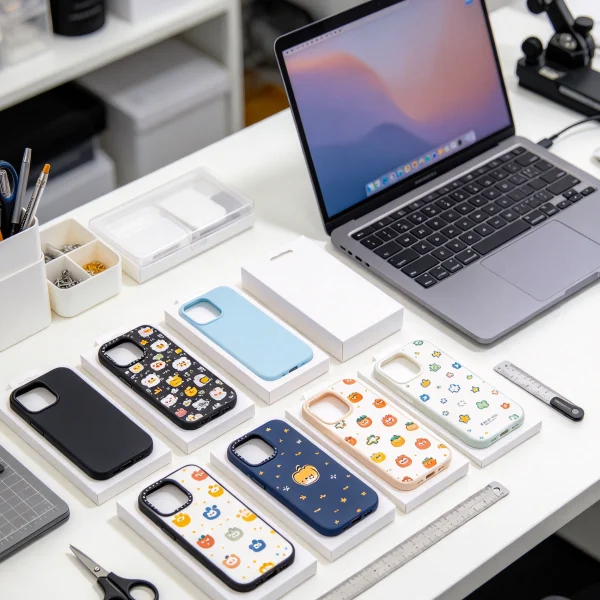
Follow these specs from day one: work at 300 DPI at the actual case size, use CMYK color mode for print, add a bleed of at least 3 mm, and keep important elements at least 3 to 5 mm from the edges. Never rely on a preview on screen. Order a physical sample and compare it side by side with your artwork.
The finished quality also depends on the material. TPU cases bend easy but do not hold UV ink well in all printers. Hard PC cases give sharper prints, while hybrid cases offer a clear back with a colored frame. Ask your supplier which cases are compatible with their printing method.
Where to sell phone cases in 2026
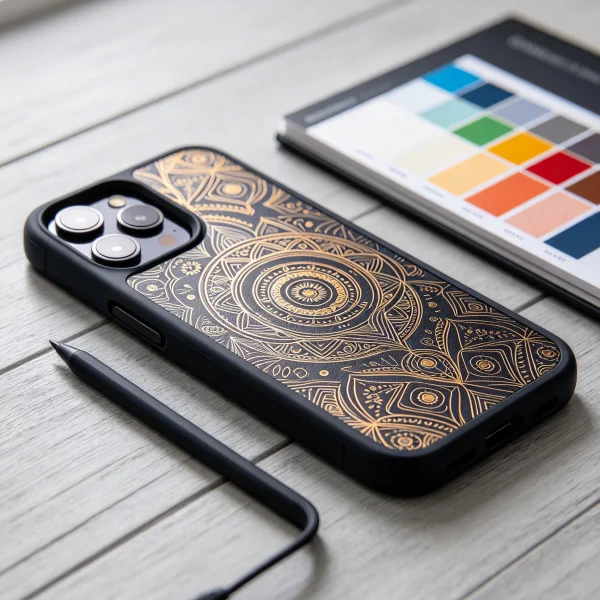
Etsy is the easiest starting point for unique designs because buyers already search for custom phone cases and the fees are low. Shopify gives you a professional store and better margins, but you have to drive traffic. Amazon offers massive volume, though competition and returns are tougher. Many sellers use Etsy first, then add Shopify once a design proves itself.
Vending machines are a different channel. Instead of waiting for online traffic, you place a machine where people already walk, like a mall, transit station, or convenience store. If you like that model, our dedicated guide on how to make money with phone case vending machines covers placement, machine costs, and profit splits with location owners.
The same impulse-buy locations often work across categories. You can apply the location playbook from our guides on spraying perfume vending machines and bubble tea vending machines to understand what foot traffic and product appeal look like in practice. Even the 24 hour flower vending machine guide has useful lessons about restocking schedules and machine reliability.
Marketing a phone case business with $300 or less
Your first dollars should go toward content, not ads. Short videos of the printing process, drop tests, or packing orders perform well on TikTok and Instagram Reels because they show the product in action. Etsy SEO matters too: use phrases like custom iPhone 16 case or personalized clear phone case in titles and tags.
Pinterest is underrated for phone cases. Create pins styled around outfits or desk setups, and link them to your listings. For an extra push, send free cases to 10 to 20 micro-influencers who post tech or lifestyle content. Give each one a unique discount code so you can track sales.
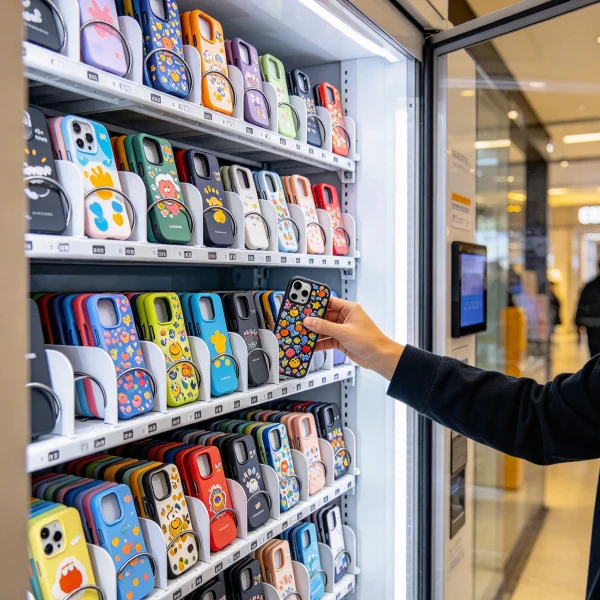
If you run a vending machine, location placement is your marketing. A well-placed machine in a college bookstore or transit hub earns more than a poorly placed machine with better-looking stock.
Mistakes that kill phone case businesses
-
Ordering hundreds of blank cases before testing designs. Dead stock strangles small budgets.
-
Printing trademarked characters. One DMCA notice can remove your listing and freeze your account.
-
Ignoring the iPhone release cycle. When a new model appears, old-model cases drop in demand. Old-model stock loses value fast, so avoid overbuying cases for a model that is about to be replaced.
-
Pricing below $15. You will work for pennies after fees.
-
Skipping samples. The result is blurry text, wrong cutouts, or colors that run.
If you avoid these five, you are ahead of most people who ask about this business. Vending machines can be a reliable side business, but only when the location is right. Our guide on why vending machines are a good business in 2026 looks at the location data behind successful routes.
A 30-day plan you can start this week
Week 1: pick a niche (gym, pets, crystals, travel), name your brand, and search the USPTO. Week 2: create five designs and order sample cases. Week 3: set up Etsy or Shopify, take photos, write listings, and register your business. Week 4: publish everything, post three videos, and spend $50 to $100 on a small ad test.
By day 30 you will know whether customers actually want your designs. That is more valuable than a $5,000 printer you bought before proving demand.
Frequently asked questions
How much money do I need to start a phone case business?
You can start a lean print-on-demand business with $250 to $600. In-house printing and vending machines require $3,000 or more.
Can I start a phone case business without inventory?
Yes. Print-on-demand services like Printful and Printify print and ship each order, so you never hold stock. You still need to order samples to check quality.
Do I need an LLC for a phone case business?
Not on day one. A sole proprietorship works temporarily, but an LLC protects personal assets. It costs between $50 and $200 in most states.
Can I sell designs with anime characters or sports logos?
No, unless you have a license. Fan art infringes copyright, and marketplaces remove those listings.
How profitable is a phone case vending machine?
It depends on machine cost, location rent, foot traffic, and case price. A well-placed machine can sell several cases per day, while a bad spot might sell none. Run the numbers before buying a machine.
Start small, learn fast, reinvest
The essentials are not complicated: a way to make cases, a place to sell, original designs, a legal structure, and a marketing budget. The fastest path is print-on-demand, because it costs almost nothing to test. Once a design sells reliably, move up to in-house printing or a vending machine.
Your first goal is one sale. Then three. Then ten. The numbers teach you what no guide can.