Guangzhou-based vending machine manufacturer with 10+ years of export experience. 2,000 sqm factory with 6 production lines, 150…
Compare automatic cotton candy vending machines, check real price ranges and profit data, and find verified suppliers — everything you need to launch a fresh cotton candy vending business in one place.
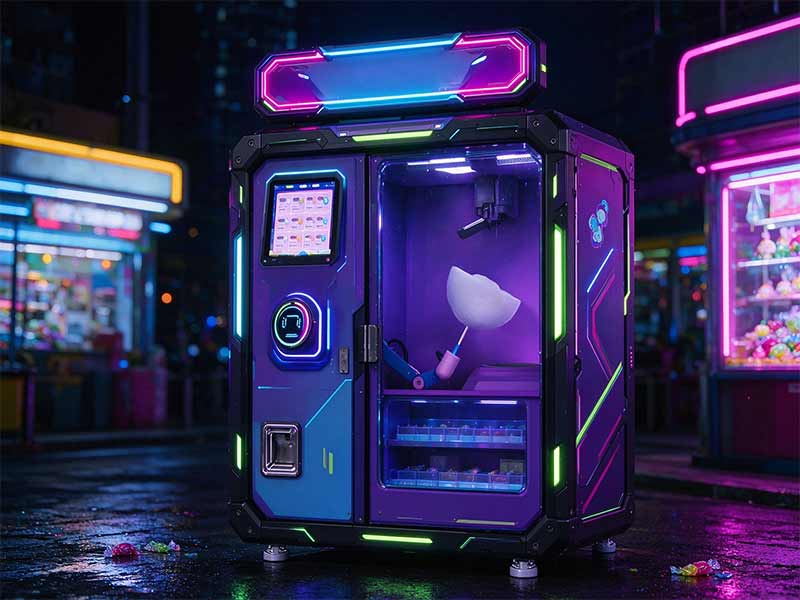
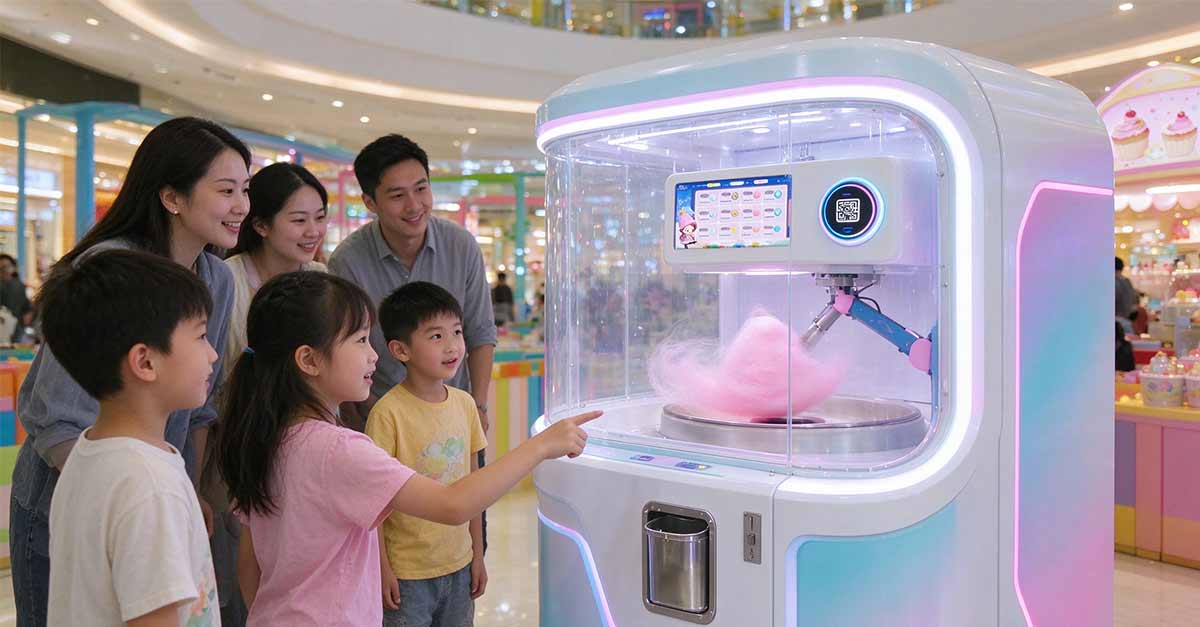
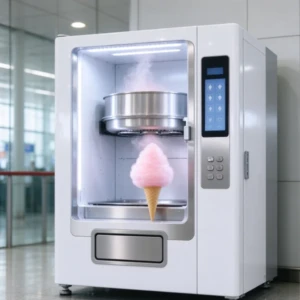
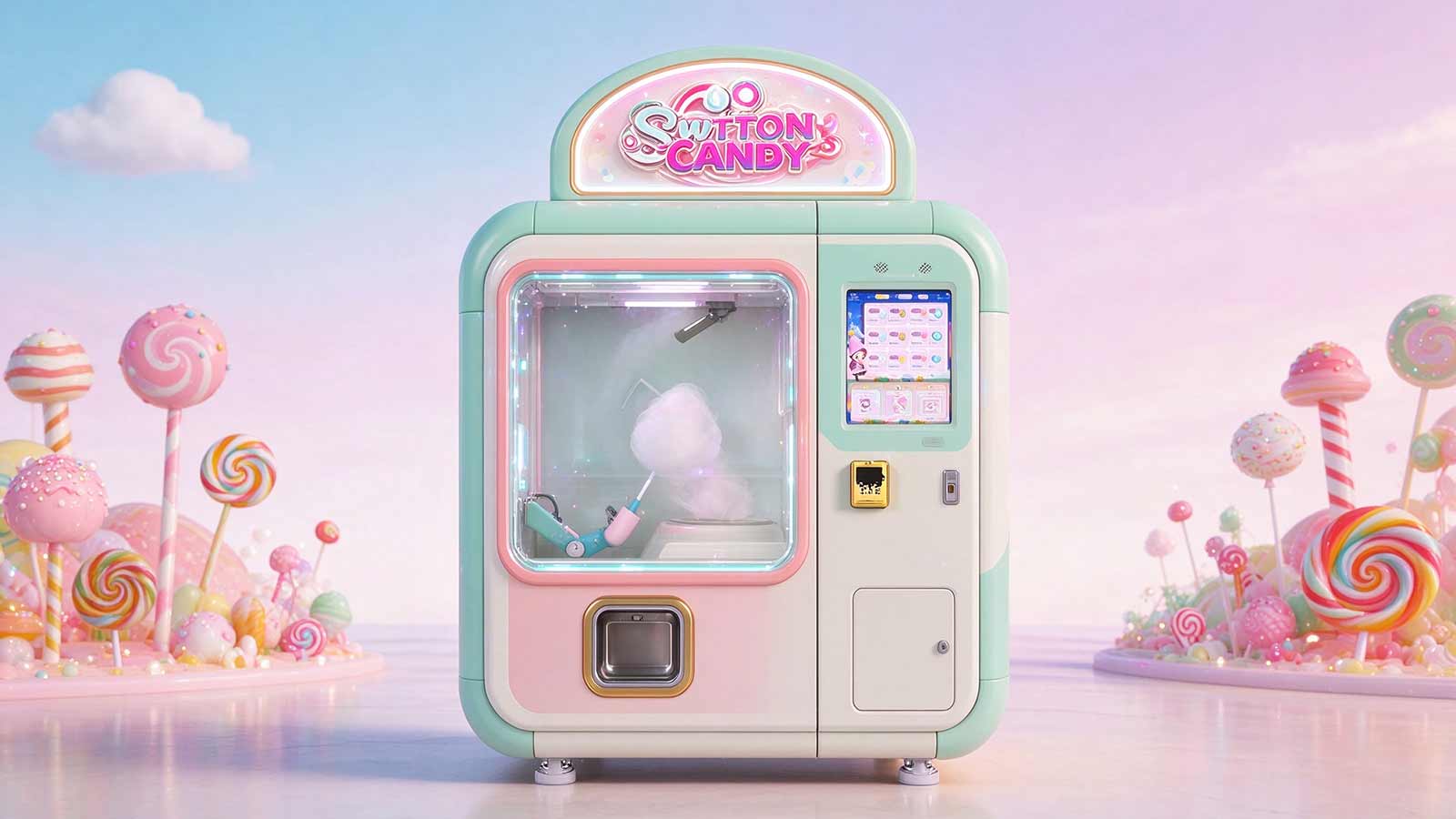
A cotton candy vending machine is a self-service kiosk that makes fresh cotton candy on demand: the customer pays by card, NFC or QR code, the machine melts sugar, spins it into fine threads and winds them onto a cone in about 1–3 minutes — no staff required. Operators sell each serve for $2–$5 against a material cost of roughly $0.15–$0.25 (sugar plus cone), which is why it is one of the highest-margin food vending categories and the only one that needs no refrigeration.
Four simple steps, fully unattended — the customer pays, the machine spins fresh cotton candy, and they walk away smiling.
Pick your favorite shape on the touchscreen
Card, cash, or mobile payment accepted
Fully automatic 3-axis arm spins sugar into a perfect flower in 1 minute
Grab your cup and enjoy the magic
A cotton candy vending machine combines freshly-made food with vending economics: no staff, no refrigeration, no spoilage, and a 90%+ gross margin on every serve.
Sugar costs about $0.10–$0.15 per serve and the cone about $0.05, while customers pay $2–$5 for candy that is literally made in front of them.
One child wanting cotton candy brings a whole family. Kids come back daily, and parents see a $3 treat as an easy yes — built-in repeat traffic.
The spinning glass chamber is a live show. Passers-by stop to watch, which converts browsers into buyers and makes the spot a local landmark.
Unlike ice cream or slush machines, nothing perishes: sugar and cones have a 12+ month shelf life, so there is no waste and far lower electricity bills.
Routine maintenance is a 10-minute brush-out of the spinning head plus restocking sugar and cones — usually once a week in a busy location.
Cotton candy kiosks already run in malls, amusement parks, fairs, cinemas and arcades across North America, Europe and Asia — a category kids have wanted for a century, now unattended.
Typical specs across the major automatic cotton candy vending machines on the market. Exact numbers vary by model and supplier — use this as a comparison baseline.
| Spec | Typical Range | What It Means for You |
|---|---|---|
| Sugar hopper | 2–4 kg per tank | Enough for 100–200 serves; a busy spot restocks weekly |
| Cone magazine | 80–150 cones | Matched to sugar capacity so neither runs out first |
| Serves per hour | 10–20 | Peak-hour capacity for fairs, parks and mall atriums |
| Making time | 1–3 minutes per serve | Fast enough for impulse queues; the spin is the show |
| Colors | Red & white (2-color standard) | Multi-hopper models add blue/green/rainbow at a price premium |
| Heating power | 1,100–1,500 W | Plan the spot's power; higher than a fridge, far below a kitchen |
| Voltage | 110 V / 220 V options | Ask the supplier for your destination country's standard |
| Footprint | ~60 × 50 cm (counter) to ~80 × 60 cm (floor) | Fits mall corners, food courts and fair aisles |
| Payment methods | Card, NFC, QR, coin & bill (optional) | Contactless-first — most parents pay by tap |
| Connectivity | Wi-Fi / 4G LTE | Remote sales reports, low-sugar alerts, tamper alarms |
How much does a cotton candy vending machine cost? Most automatic cotton candy vending machines from verified manufacturers list between US$2,500 and US$5,500 per unit (EXW), before freight, duty and optional payment modules — cheaper to enter than almost any other food vending category.
| Scenario | Serves / Day | Price / Serve | Monthly Revenue | Est. Monthly Profit |
|---|---|---|---|---|
| Shopping mall (family zone) | 30–60 | $3 | $2,700 – $5,400 | $2,000 – $4,500 |
| Amusement park / zoo | 80–150 | $4–5 | $9,600 – $22,500 | $7,000 – $16,000 |
| Fair / carnival (seasonal) | 150–300 | $3–4 | $13,500 – $36,000 | $10,000 – $27,000 |
| Cinema / arcade | 20–40 | $3 | $1,800 – $3,600 | $1,300 – $2,700 |
Figures are industry estimates compiled from operator-reported data and supplier case studies (2025–2026). Your results depend on foot traffic, placement, pricing, season and local competition. Profit excludes rent, electricity, restocking labor and payment fees.
The best location for a cotton candy vending machine is anywhere families with children spend money on treats — and the machine's spinning show can turn window-shoppers into buyers.
Anchor the machine near kid-oriented stores, food courts and escalator landings — the spin show pulls families over from the main walk.
The benchmark placement: candy-on-a-stick is park currency. High ticket prices ($4–5) and 100+ serves a day are common at gates and mid-park.
Cotton candy is the #1 fair food. A self-service machine runs the whole event unattended and earns 3–5× a mall machine during peak season.
Pre-show waiting time plus a captive kid audience. A $3 fresh treat competes well against the concession stand's $6 cup of candy.
Summer camps, school fairs and after-school clubs — low rent or revenue-share deals, and kids who have no other candy option nearby.
Beach boards, sightseeing areas and holiday markets: warm weather, families, and a souvenir-flavored impulse buy at $3–4.
Manufacturers and exporters that list cotton candy vending machines among their main products, ranked by community popularity. Compare profiles and request quotes directly — no middlemen.
Guangzhou-based vending machine manufacturer with 10+ years of export experience. 2,000 sqm factory with 6 production lines, 150…
Hunan AFEN Vending Machine Co., Ltd. is a custom vending machine manufacturer based in Hunan, China, with 9…
Guangzhou Deer Machinery Co., Ltd. has been manufacturing vending machines in Guangzhou, Guangdong, for 16 years, with a…
A cotton candy vending machine sells more than sugar — it sells the show. Here's the customer experience loop that drives daily repeat visits.
Classic two-tone red-and-white swirl, or blue, green and rainbow on multi-hopper models — a tiny choice that makes the treat "theirs".
Behind the glass, sugar melts and flies into fine threads winding onto the cone — a 30-second magic show that parents film and post.
The candy is warm, airy and made seconds ago — nothing like a bagged treat from a shelf. That freshness is the whole point of the category.
The machine is inherently photogenic. Every happy kid with a pink cloud of cotton candy is free advertising for the spot — and a return visit.
The questions buyers and would-be operators ask most — answered plainly.
A cotton candy vending machine (also called an automatic cotton candy maker or candy floss vending machine) is a self-service kiosk that melts sugar, spins it into threads and winds them onto a cone without staff. The customer pays by card, NFC or QR code and collects a fresh serve in about 1–3 minutes.
Most automatic cotton candy vending machines from verified manufacturers list between US$2,500 and US$5,500 per unit (EXW), depending on hopper count, cabinet style and payment options. Budget additionally for sea freight, import duty, a card/NFC payment module if not built in (US$160–360), and initial sugar and cone stock (US$150–300).
The material cost per serve is roughly $0.15–$0.25 (sugar plus cone) while the retail price is $2–$5, giving a 90%+ gross margin. Operator-reported net profit for a single well-placed machine typically ranges from about $1,300 per month in a modest cinema spot to $4,000–$16,000 in high-traffic amusement parks and malls — with fairs and carnivals spiking well above that in season.
About 1–3 minutes from payment to finished cone. The heated spinning heads warm up in under 60 seconds, then each serve takes roughly 30 seconds of spinning. The machine can produce 10–20 serves per hour, enough for most peak queues.
A standard 2–4 kg hopper makes 100–200 serves. In a busy mall that is about once a week; a fair during peak season may need a top-up every day. The cone magazine holds 80–150 cones and is sized to match sugar capacity.
The spinning chamber is enclosed in glass, so mess stays inside the machine. Daily upkeep is a 10-minute brush-out of the spinning head with a small brush (supplied by manufacturers); a full deep clean takes 30–40 minutes once a month. Stuck-sugar failures are rare on modern models with temperature-controlled heads.
No — that is one of the category's biggest advantages. Cotton candy is made to order and eaten immediately, so there is no cold chain, no spoilage and no freezer electricity bill. Sugar and cones have a 12+ month shelf life at room temperature.
Cotton candy is essentially flavored, colored sugar — the same nutritional profile as any candy. It is sold as an occasional treat, and many machines now accept sugar-free or reduced-sugar sugar substitutes on request for operators targeting health-conscious locations.
Yes, with the right model. Outdoor units add weather-protected cabinets, stronger heating for cold weather and anti-theft mounting. Keep the machine shaded in extreme heat, as ambient temperature above ~35 °C (95 °F) slows sugar melting. Indoors (malls, parks, cinemas) remains the easiest and most profitable environment.
Amusement parks, fairs and carnivals earn the most per day; shopping malls (family zones), cinemas, arcades, schools and boardwalks are the proven year-round placements. The common factor is families with children passing by without a fixed purchase plan.
Compare verified suppliers in this category below, check each supplier's hopper capacity, power rating and payment options, then send an inquiry for a quote. Ask for the exact model configuration, voltage for your country, freight to your destination, and whether a card payment module is included before you sign.
In-depth guides on the cotton candy vending machine business, plus verified suppliers you can quote directly.
Browse verified suppliers in this category, compare specs and price ranges side by side, and send a single inquiry to the ones that fit your budget.
About this page: Price, profit and specification figures on this page are compiled from public supplier listings and operator-reported data (2025–2026) and are provided for comparison purposes. VendingCore is an independent supplier directory — we are not a manufacturer, and actual machine prices and results vary by configuration, destination and market conditions. Last updated: November 2026.