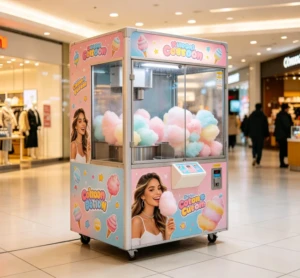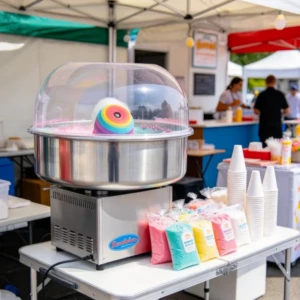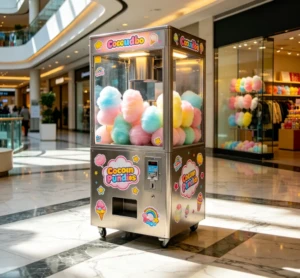
A cotton candy vending machine can achieve ROI in 3-6 months with strong location placement, offering net margins of 65-75% after accounting for sugar, cones, location fees, and card processing.
You're probably wondering if this sweet idea is a real moneymaker or just a sugar-coated dream. We get it—you need hard numbers, not hype. This guide cuts through the fluff to give you a realistic financial breakdown, including the hidden costs and location strategies most blogs miss. We'll show you exactly how to calculate your potential profit and avoid the common pitfalls that trip up new operators.
The allure of a cotton candy vending machine as a passive income stream is undeniable, but savvy entrepreneurs know the real question isn’t about the dream—it’s about the data. Moving beyond simple cost lists, a true ROI analysis requires dissecting operational realities, hidden expenses, and location-specific variables that most generic guides overlook.
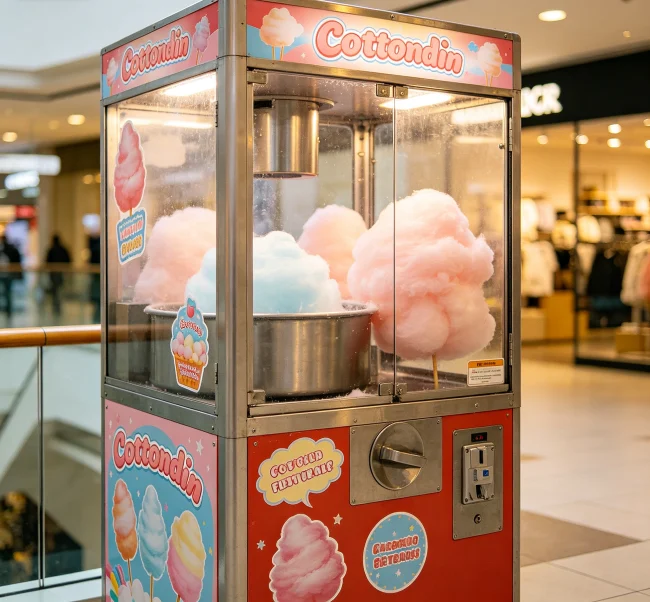
Your initial investment is more than just the machine. A realistic startup budget must account for both capital expenditure (CAPEX) and initial operating supplies. On platforms like vendingcore.com, we see quality, fully automated commercial machines from our network of over 500 manufacturers ranging from $3,500 to $8,000, depending on capacity and features like touchscreens or advanced payment systems.
Here’s a detailed breakdown of typical upfront costs:
| Cost Category | Item | Estimated Cost (USD) |
|---|---|---|
| Machine & Setup (CAPEX) | Commercial-Grade Machine | $4,000 – $7,000 |
| Delivery & Installation | $200 – $500 | |
| Initial Business Licensing & Permits | $100 – $400 | |
| Initial Inventory & Essentials | Flavored Sugar (First 200-300 lbs) | $300 – $600 |
| Cones/Sticks (First 1,000 units) | $80 – $150 | |
| Cleaning Supplies & Tool Kit | $50 – $100 | |
| Spare Parts Kit (Heating element, motor brushes) | $100 – $250 |
💡 Budgeting Tip: Always allocate 10-15% of your machine cost for a “contingency fund” to cover unexpected setup fees, permit variations, or higher initial shipping costs.
Operational Costs: The Numbers They Don’t Always Show
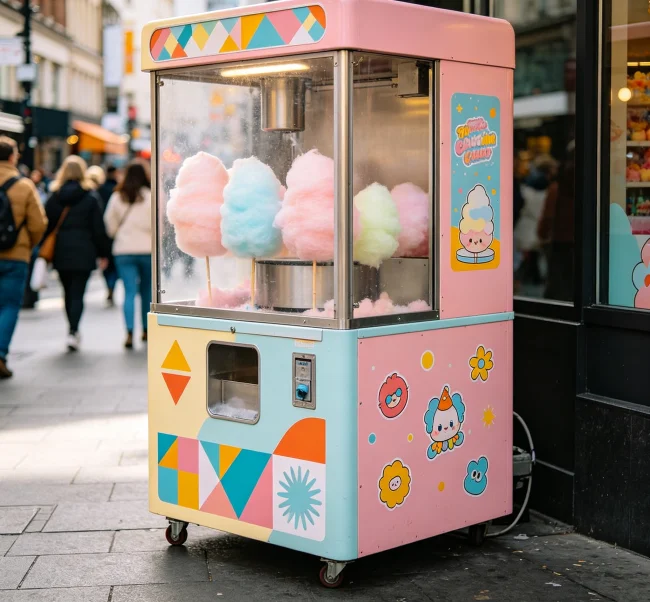
Your ongoing profitability hinges on managing operational expenses (OPEX). The cost per serving is surprisingly low, but ancillary fees can erode margins if not planned for.
💡 Negotiation Leverage: When discussing location fees, propose a percentage-of-sales model over a flat rent. This aligns your success with the venue’s and protects you during slow periods.
Revenue Realities: From Festival Frenzy to Steady Mall Traffic

Revenue is highly location-dependent. A machine at a seasonal fair will have explosive but short-lived income, while an airport location offers consistent, year-round sales. Pricing is typically between $5 and $8 per serving.
Let’s examine realistic daily sales scenarios:
| Location Type | Estimated Daily Servings (Avg.) | Price Point | Gross Daily Revenue | Key Considerations |
|---|---|---|---|---|
| Major Airport Terminal | 25 – 40 | $7 – $8 | $175 – $320 | High foot traffic, captive audience, stringent health/safety codes, very competitive placement. |
| Regional Shopping Mall | 15 – 30 | $6 | $90 – $180 | Family traffic, weekends peak, requires mall approval and likely a revenue share agreement. |
| Weekend Festival/Fair | 50 – 100+ | $5 | $250 – $500+ | Very high volume for short duration, requires generator for outdoor use, significant setup/tear-down labor. |
| College Campus Student Union | 10 – 20 | $5 | $50 – $100 | Consistent academic-year traffic, may have lower summer sales, appeals to late-night crowds. |
Calculating Your ROI: A Practical, Multi-Scenario Model
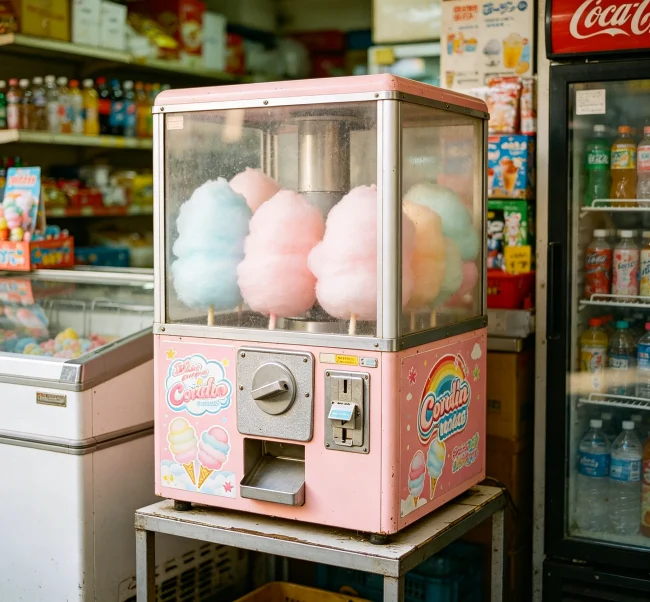
The basic ROI formula is: (Net Profit / Total Investment) x 100. Net Profit = Gross Revenue – (COGS + Location Fees + Processing Fees + Other OPEX). Let’s model a realistic scenario.
Scenario: Mid-Tier Mall Location
This is a strong scenario. A less optimal location with 10 daily servings might extend the payback to 5-6 months. This is why we emphasize connecting with vetted manufacturers on vendingcore.com—securing a reliable machine at a direct-factory price through our platform is the first critical step to achieving a favorable ROI.
💡 Cash Flow Focus: Don’t just fixate on payback period. Ensure your projected monthly net profit after payback justifies the ongoing management time and effort for a sustainable business.
The Critical Hidden Factors That Make or Break Profitability
Most ROI analyses stop at the math. Your real success depends on these operational nuances.
How to Secure a Prime Location
A great machine in a poor location is a guaranteed poor ROI. Your pitch to a venue manager should focus on mutual benefit.
💡 First Move: Before you even buy a machine, start scouting and making informal inquiries at potential locations. Securing a letter of intent from a venue can de-risk your entire investment.
Is the Cotton Candy Vending Machine Business Right for You?
The ROI can be excellent—often with a payback period under 6 months in a good location. However, this is not a “set it and forget it” passive income. It’s a hands-on microbusiness requiring attention to maintenance, location relationships, and inventory. For an individual willing to manage these operational details, it represents a scalable, relatively low-barrier entry into the vending industry. The key to maximizing your return starts with a quality, reliable machine. By leveraging a platform like vendingcore.com, you gain access to a global network of certified manufacturers, ensuring your foundation is solid, your costs are competitive, and you’re supported by a community that has facilitated over 10,000 successful transactions worldwide.