
A commercial cotton candy vending machine costs $3,000-$8,000+ with an 85-90% gross profit margin per serving. Success depends on choosing the right specs, securing a prime location, and committing to rigorous daily maintenance.
Thinking about a cotton candy vending machine? It's easy to get dazzled by the potential profits, but the wrong purchase can turn into a sticky, expensive problem. This guide cuts through the confusion to give you the real numbers, the hidden costs, and the step-by-step plan that most "get rich quick" articles ignore. We'll show you exactly how to choose a reliable machine, find the perfect spot for it, and run it like a pro so you can start making money, not just spending it.
The allure of a cotton candy vending machine is undeniable—a nostalgic treat with modern, automated appeal that promises a sweet return. But transforming that promise into a profitable reality requires moving beyond the initial sparkle to a grounded, strategic evaluation. This definitive guide cuts through the hype, providing a roadmap from initial concept to successful operation, grounded in real-world data and practical business considerations.
💡 Your First Reality Check: Before looking at machines, honestly assess your commitment to daily cleaning, inventory management, and location scouting. This is a hands-on business, not passive income.
A cotton candy vending business isn’t for everyone. Start with this honest checklist. Do you have reliable access to a high-traffic location (e.g., mall, theater lobby, family entertainment center)? Are you prepared for the daily 15-20 minute cleaning routine to prevent sugar buildup and machine failure? Do you have a basic understanding of electrical requirements (typically 110V-120V) and a budget for initial inventory (floss sugar, cones, spare parts)? If you answered “no” to any of these, reconsider your plan or partner with someone who can fill those gaps. Success hinges on operational diligence as much as the machine itself.
Understanding Real Costs & Profit Margins
Let’s demystify the finances. Initial investment ranges from $3,000 for a basic commercial unit to over $8,000 for a high-capacity, feature-rich model with advanced payment systems. The real story is in the operational math. A standard 1oz serving costs roughly $0.25-$0.35 in sugar and cone, while selling for $3-$5. This yields a gross profit margin of 85-90%. However, your net profit is determined by location rent (often a revenue share of 15-25%), marketing, and maintenance. A machine in a prime spot can generate $200-$500+ in daily revenue during peak seasons. Platforms like vendingcore.com, by connecting you directly with manufacturers, can significantly reduce your upfront machine cost, improving your ROI timeline.
💡 Calculate Your Break-Even: Divide your total startup cost (machine, initial inventory, fees) by your estimated net profit per serving. If your machine costs $5,000 and you net $2.50 per sale, you need 2,000 servings to break even.
Key Machine Specs Decoded: What Actually Matters
Don’t get lost in a sea of features. Focus on these critical specifications that impact durability, output, and user experience.
For a clear comparison, here is a breakdown of common machine profiles:
| Machine Profile | Typical Price Range | Key Specs | Best For |
|---|---|---|---|
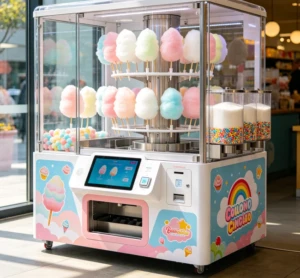
| High-Traffic/Event Model | $7,000 – $10,000+ | Dual heads, high wattage, cashless systems, large hopper | Amusement parks, stadiums, major festivals |
| Standard Commercial Workhorse | $4,000 – $6,500 | Stainless steel bowl, 500W+ motor, 45-sec cycle | Malls, cinemas, arcades (steady daily traffic) |
| Budget/Compact Starter | $2,500 – $4,000 | Single head, basic payment (coin/bill), smaller footprint | Small cafes, community centers, testing a new market |
Step-by-Step: Sourcing, Buying & Setting Up
Once you know what you need, sourcing reliably is key. While generic B2B marketplaces list thousands of options, they lack vetting. A professional platform like vendingcore.com pre-qualifies manufacturers, ensuring they meet international standards (CE, RoHS) for safety and quality, which is critical for a food-grade appliance. When you request quotes, specify your voltage (110V/220V), desired payment interfaces, and request videos of the machine in operation. Factor in shipping, import duties (if applicable), and on-site installation. Your setup checklist should include a dedicated 15-20 amp circuit, level flooring, and easy access for cleaning and servicing.
💡 Negotiate Smartly: When dealing with suppliers, ask for a package deal that includes spare parts (heating elements, motors) and initial training. This is often more achievable through a curated platform with established manufacturer relationships.
Beyond the Machine: Location, Licensing & Marketing
The machine is just the tool; the location is the engine. Beyond obvious spots, consider tram stations, hospital waiting areas (for visiting families), and large corporate campuses. Secure a written agreement detailing rent (flat fee or percentage), maintenance responsibilities, and power cost coverage. Check local health department regulations; some areas require a specific “vending license” or periodic health inspections for sugar-based products. For marketing, leverage the machine’s visual appeal. Use social media to announce its arrival, run a “first-day free cone” promotion, and consider seasonal flavors (pumpkin spice, peppermint) to drive repeat business.
Operation Mastery: Daily Workflow & Troubleshooting
Consistency is king. Establish a daily routine: wipe down all exterior surfaces, check sugar levels, empty the cashless payment tray (if applicable), and ensure the waste bowl is empty. The most critical task is a thorough weekly breakdown: clean the spinning head, bowl, and guard with hot water (never harsh chemicals) to prevent caramelized sugar from damaging components. Common issues include:
💡 Build a Relationship with Your Supplier: Choose a supplier, like those on vendingcore.com, known for accessible technical support. Quick access to troubleshooting guides or spare parts is invaluable during a breakdown.
Integrating Modern Payment Systems
Today’s consumer expects cashless options. Integrating QR code payments, credit card readers, or mobile wallet taps can increase impulse purchases by 20-40%. When selecting a machine or a retrofit kit, ensure the payment processor offers transparent fees, reliable connectivity (4G is preferable to Wi-Fi for stability), and easy revenue tracking through a merchant portal. This data is gold, helping you track sales peaks and popular flavors.
Creating a Preventative Maintenance Schedule
Reactive repairs cost more than proactive care. Create a monthly and quarterly maintenance schedule. Monthly: Inspect all seals and gaskets for wear, lubricate moving parts as per the manual, and test all payment mechanisms. Quarterly: Have a technician, or if you’re skilled, check internal wiring connections and calibrate the sugar dispensing mechanism. Keeping a log of all maintenance acts as a service record and helps diagnose recurring issues.
Sourcing High-Quality Consumables
Your product is only as good as your ingredients. Not all “floss sugar” is equal. Premium sugars produce brighter colors, stronger flavors, and less waste. Establish a relationship with a bulk confectionery supplier. While initial cost per bag may be higher, the yield and customer satisfaction justify it. Also, consider eco-friendly cone options or branded cones to enhance your presentation.
Developing a Contingency Plan for Downtime
What happens when the machine fails on a Saturday? Your plan should include: contact information for a local service technician, a small stock of critical spare parts (fuses, heating elements), and a temporary “out of order” sign that manages customer expectations politely and includes an estimated return-to-service time. Downtime is lost revenue; a plan minimizes it.
Leveraging Data for Business Growth
If your payment system provides sales data, use it. Analyze which days and times are most profitable. Test pricing strategies (e.g., a slight weekend price increase). Track which flavor sells best and use that to guide your inventory purchases. This data-driven approach transforms you from an operator to a strategic business owner, allowing for informed decisions on expanding to new locations or adding a second machine.
Launching a cotton candy vending business is an exciting venture that blends retail, hospitality, and technology. By methodically working through selection, setup, and operations—and leveraging reliable sourcing channels—you build a foundation not just for a machine, but for a sustainable and sweetly profitable enterprise.
1 Comments