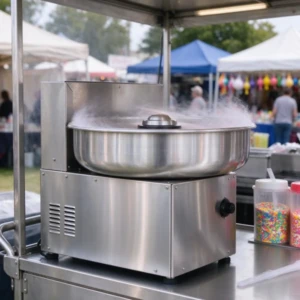
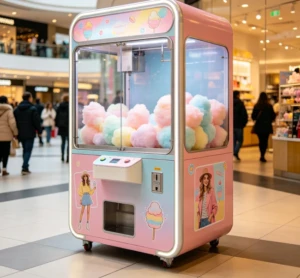
Cotton candy vending can achieve 50-70% net profit margins after all costs, with a typical payback period of 3-6 months. Success hinges on controlling operational expenses and securing high-traffic locations.
You're researching this because you need real numbers, not just hype. It's easy to get excited about the 95% gross margin, but the hidden fees and location costs can trip you up. This guide gives you the complete, unvarnished cost breakdown and a realistic net margin formula you can use yourself. We'll show you exactly where profits get made and lost, so you can decide if this sweet venture is the right fit for your hustle.
The landscape of vending has evolved far beyond simple snacks and drinks, with cotton candy machines emerging as a high-margin, experiential option for entrepreneurs. While the allure of fluffy profits is real, the actual margin you achieve depends on a precise understanding of both visible and hidden costs, paired with strategic operational decisions.
💡 Your First Step: Before looking at machines, define your target market. Are you aiming for family-friendly festivals, indoor mall traffic, or corporate events? Your location strategy dictates everything from machine type to expected revenue.
Your initial investment sets the foundation for your entire profit calculation. A common mistake is budgeting only for the machine itself. A comprehensive startup budget must include:
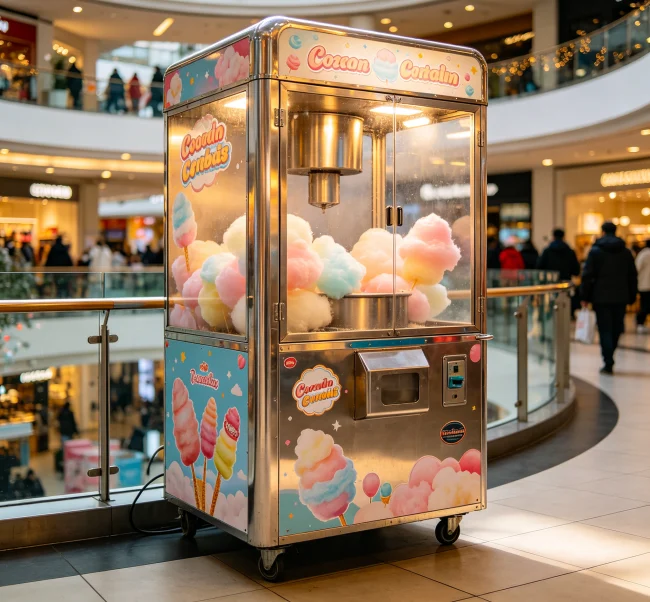
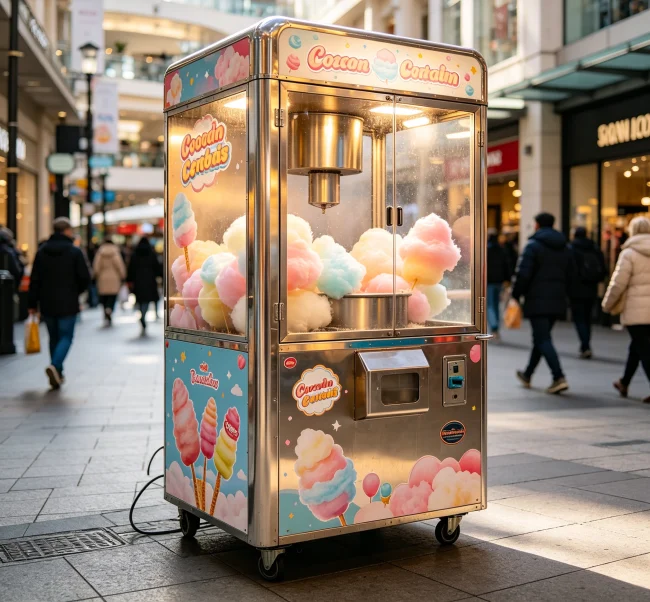
The Machine: Prices range from $2,500 for a basic countertop model to over $8,000 for a high-capacity, fully enclosed cart with cashless payment systems. On platforms like vendingcore.com, we connect buyers with our network of over 500 pre-vetted manufacturers, allowing for direct price comparison on machines that meet international safety and quality standards (CE, UKCA).
Shipping & Import Duties: For international buyers, this is critical. Factor in DDP (Delivered Duty Paid) shipping costs, which can add $500-$1,500+ depending on origin. We advise clients to always clarify shipping terms with suppliers upfront to avoid surprise fees.
Essential Supplies: Initial bulk purchase of floss sugar (various colors), cones/sticks, and packaging. Budget $300-$600.
Permits & Licenses: Costs vary wildly by municipality but can include business licenses, health department permits for food handling, and event-specific vendor fees. Allocate $100-$500.
Miscellaneous Startup: Business formation (LLC setup), initial marketing materials (banners, signage), and a small reserve fund for unexpected expenses.
Cost Category
Low-End Estimate
High-End Estimate
Notes
Vending Machine
$2,500
$8,500
Basic cart vs. premium enclosed unit with cashless reader
Shipping & Duties
$500
$1,500
Highly variable by region; insist on DDP terms
Initial Supplies
$300
$600
Sugar, cones, packaging bought in bulk
Permits & Licenses
$100
$500
Local health dept. and business licensing
Miscellaneous Startup
$200
$1,000
LLC filing, signage, reserve fund
Total Startup Investment
~$3,600
~$12,100
Plan for the high end to avoid being undercapitalized
Ongoing Operational Costs: The Monthly Reality
Your gross margin is eaten into by recurring expenses. An accurate profit model accounts for every ongoing cost:
Consumables (Floss Sugar & Cones): This is your largest variable cost. A single cone uses about 1 oz of sugar, costing roughly $0.15-$0.25 in materials.
Location Commission/Rent: High-traffic spots like malls, stadiums, or theme parks rarely come free. Expect to pay 15-30% of your gross sales or a fixed monthly rent.
Payment Processing Fees: If you accept credit/debit cards (which you should), factor in 2.5%-3.5% of each transaction plus a small per-transaction fee.
Maintenance Fund: Set aside 1-2% of machine cost annually for motor servicing, heating element replacement, and general repairs.
Transportation & Labor: Fuel, vehicle maintenance, and your time or an employee’s wage to operate, service, and relocate the machine.
Insurance: General liability insurance is non-negotiable for food vending and can cost $500-$1,500 annually.
💡 Hidden Cost Alert: Never forget payment processing fees (2.5-3.5%) and a dedicated maintenance fund. These “small” percentages are the difference between a 70% and a 65% net margin.
Revenue & Profit Margin Deep Dive
Here is where we move from generic estimates to actionable calculation. Let’s build a realistic scenario.
Unit Economics:
Sale Price per Cone: $5.00 (common in 2026 markets)
Cost of Goods Sold (COGS) per Cone: $0.25 (sugar + cone)
Gross Profit per Cone: $4.75
Gross Margin: 95% (This is the often-cited, but misleading, headline figure).
Net Margin Calculation (The Real Number):
To find your true net margin, you must subtract all operational costs. For a medium-traffic scenario:
Weekly Sales: 150 cones
Weekly Gross Revenue: 150 $5 = $750
Weekly COGS: 150 $0.25 = $37.50
Weekly Gross Profit: $712.50
Now, deduct estimated weekly operational costs:
Location Commission (20% of gross): $150
Payment Processing Fees (3% of gross): $22.50
Maintenance Fund Allocation: $15
Transportation/Labor: $75
Total Weekly Op Costs: $262.50
Weekly Net Profit: $712.50 – $262.50 = $450
Net Profit Margin: ($450 / $750) 100 = 60%
This 60% net margin is a more realistic and sustainable figure for planning. Your payback period on a $6,000 total investment would be roughly 13-14 weeks of consistent operation at this level.
💡 Pro Forma Tip: Build three financial models: Worst-Case (80 cones/week), Expected (150 cones/week), and Best-Case (250 cones/week). This shows your full risk and reward spectrum before you buy a single machine.
Critical Factors That Determine Your Actual Margin
Your financial outcome hinges on these operational levers:
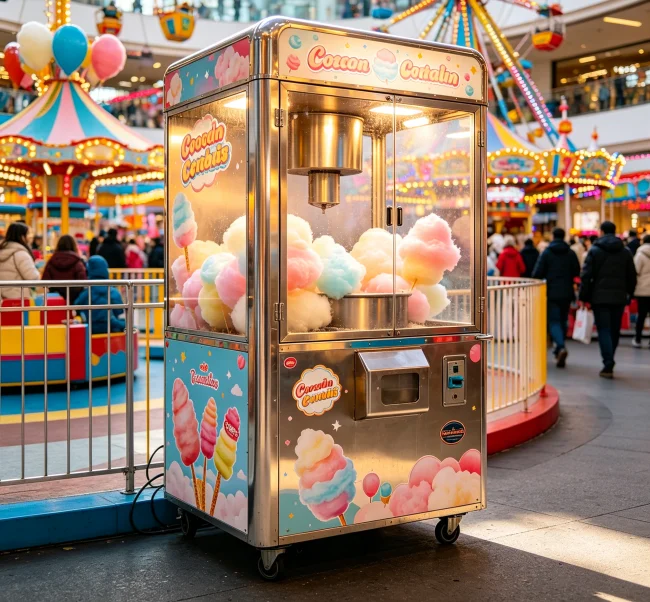
Location Intelligence: A premier spot inside a family entertainment center may command 25% commission, but the consistent, high-volume traffic can far outweigh a lower-commission, low-traffic spot. Always calculate potential net profit, not just the commission rate.
Machine Efficiency & Uptime: A reliable machine from a quality manufacturer minimizes downtime (lost sales) and repair costs. This is why at vendingcore.com, we emphasize suppliers with proven reliability data and clear warranty terms—downtime is a direct margin killer.
Pricing Strategy: In tourist-heavy or premium venues, you can often price at $6 or $7. A $1 increase, with no change in COGS, flows almost entirely to your net profit, dramatically improving margins.
Seasonal Management: In colder months, pivot to indoor locations like malls, skating rinks, or community centers. A year-round operation plan protects your annualized margin.
How to Source a Machine for Optimal Margins
Your choice of supplier directly impacts your startup cost and long-term reliability. The B2B wholesale route offers significant advantages.
Direct Factory Pricing: Sourcing through a professional B2B platform like ours eliminates retail markups. You’re connecting directly with the manufacturer, which is how we help clients achieve more favorable and transparent pricing.
Quality Assurance: For a food-grade machine, certifications (CE, UKCA, RoHS) and stainless-steel food contact parts are non-negotiable for safety and longevity. We facilitate this by strictly selecting manufacturers who meet these international standards.
After-Sales Support: Access to technical manuals, spare parts, and warranty service is crucial. A platform with a global network can often provide more efficient support logistics, a key consideration for operators across our 50+ covered countries.
💡 Supplier Vetting Question: Always ask a machine supplier for the expected duty cycle (hours of continuous operation) and the availability/cost of common spare parts like heating elements. Their answer reveals much about long-term cost of ownership.
Common Pitfalls That Erode Profit Margin
Awareness of these traps is your first defense:
Underestimating Location Costs: Failing to formally account for commission or rent in your model.
Neglecting Maintenance: Skipping regular cleaning and servicing leads to catastrophic motor failure during peak sales periods.
Poor Inventory Management: Buying sugar in small, expensive batches instead of negotiating bulk supplier rates.
Ignoring Cashless Trends: Only accepting cash excludes a significant portion of potential sales, especially from younger demographics.
Is a Cotton Candy Vending Machine Business Right for You?
This venture is ideal for someone who is hands-on, enjoys event-based or retail environments, and is adept at basic logistics and customer service. It requires active management, not passive ownership. The potential for 50-70% net margins is strong, but it is earned through diligent cost control, savvy location selection, and operational consistency. By starting with a comprehensive, realistic financial model and sourcing reliable equipment from trusted partners, you build a foundation where strong profit margins are not just possible, but probable.
Frequently Asked Questions (FAQ)
A
There's no single average, as it's highly location-dependent. However, based on a realistic model, a machine in a decent location selling 100-200 cones per week at $5 each can generate a net profit of $300-$900 weekly. Daily net profit could range from $60 on a slow day to $180 on a very good day, after accounting for all commissions, fees, and costs.
A
The raw material cost (floss sugar and cone stick) is very low, typically between $0.15 and $0.30 per cone. The major costs come from elsewhere: location commissions (15-30%), payment processing fees (2.5-3.5%), labor, and maintenance. Focusing only on sugar cost gives an incomplete picture of profitability.
A
They can be exceptionally profitable at well-attended events due to high volume in a short time. Key considerations are the event's entry fee for vendors, the duration, and the demographic. Weekend-long festivals often provide the best return, but you must factor in the labor intensity and transportation costs to the site.
A
The two most commonly overlooked costs are payment processing fees and a dedicated maintenance fund. Credit card fees take a bite out of every sale, and machines require periodic servicing—failing to budget for a motor or heating element replacement can wipe out weeks of profit when a breakdown occurs.
A
For a first-time operator, a new machine from a reputable supplier with a warranty is generally the safer investment. Used machines can offer savings but carry the risk of hidden wear, obsolete parts, and no support. The potential downtime and repair costs of a used machine can quickly erase any upfront savings.
A
Start locally with businesses that attract families and foot traffic: movie theaters, bowling alleys, mini-golf courses, community centers, and indoor play areas. Prepare a professional proposal highlighting the benefit to them (customer draw, revenue share) and be ready to offer a trial period. Networking at local business events is also effective.
The allure of the cotton candy vending business is in its unit economics, but the trap is in the operational overhead. I've seen too many entrepreneurs calculate their margin based solely on the cost of sugar versus sale price, which paints a wildly optimistic picture. The real skill lies in the logistics: negotiating the location agreement, managing the maintenance schedule, and controlling the variable costs of payment processing and transportation. Your machine's reliability is your most important asset; a single weekend of downtime during a peak season can devastate your quarterly margins. Source your equipment with a focus on serviceability and proven durability, not just the lowest sticker price.
Alex Chen
Operations Director for a multi-state family entertainment vending service
Ready to Start Your Project?
Contact us for professional advice and customized solutions
Technical expert in smart vending solutions and IoT-enabled retail automation. Providing in-depth reviews and comparisons to guide businesses toward the best technology choices.
Excellent Suppliers
Trusted and highly rated by vending professionals from around the world