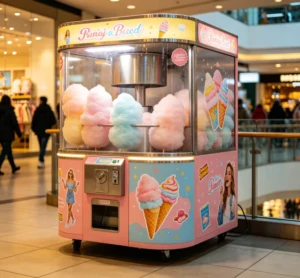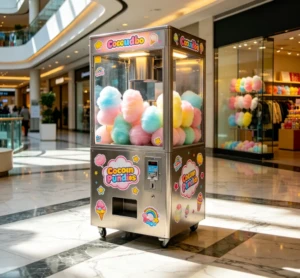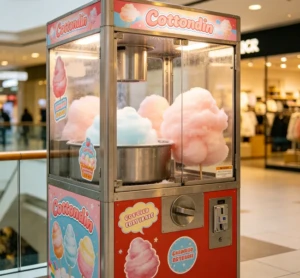
What is a cotton candy vending machine? It’s an automated vending unit that spins fresh cotton candy on demand, with many commercial models holding 100 to 200 servings per fill and selling each cone for $3 to $6. You’ll find them in shopping malls, movie theaters, amusement parks, and event spaces where operators don’t want to staff a booth. The machine pulls sugar from an internal hopper, spins it into threads, wraps it around a stick, and drops the finished cone into a delivery tray. Some models shape the candy into hearts, stars, or even flowers.
How a cotton candy vending machine actually works
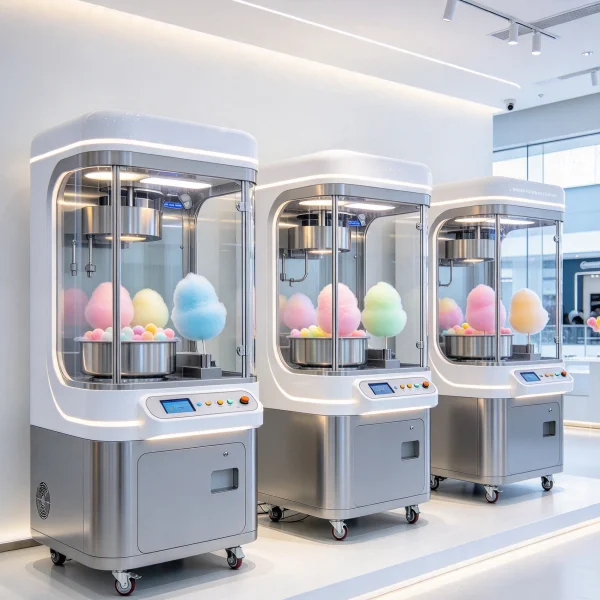
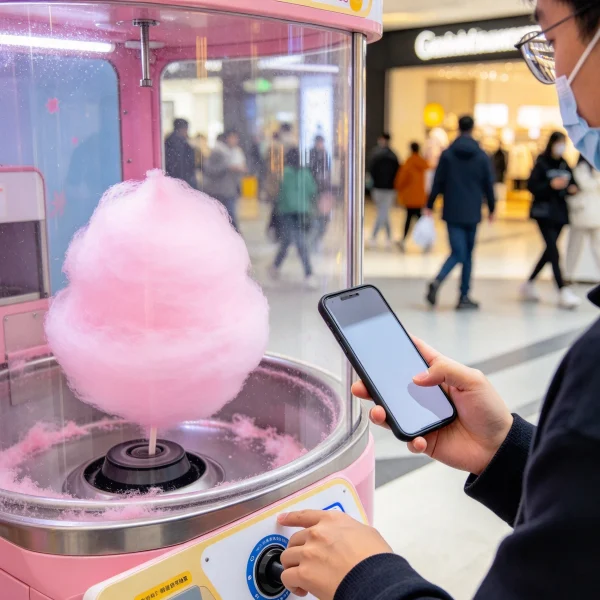
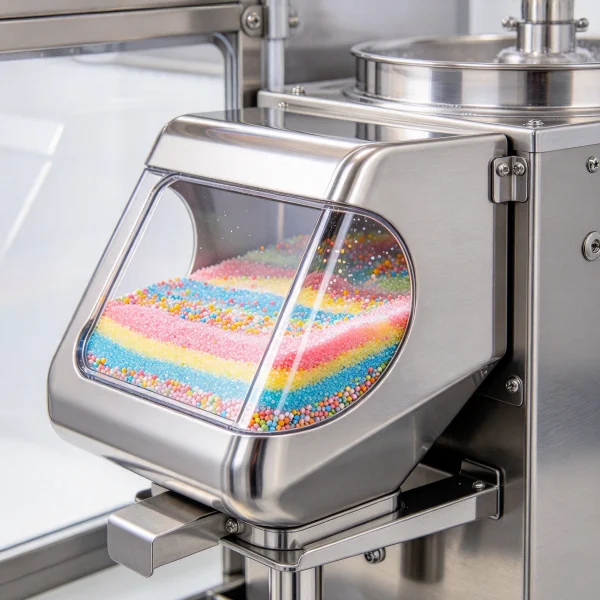
A fully automatic cotton candy machine replaces three jobs that used to require a person: pouring sugar, spinning the bowl, and rolling the cone. You start by filling the sugar hopper and choosing a flavor or shape on the touchscreen. When someone pays, the machine heats the sugar, spins it into fine threads, collects it onto a paper cone, and hands it out through a small door. The whole cycle usually takes less than a minute.
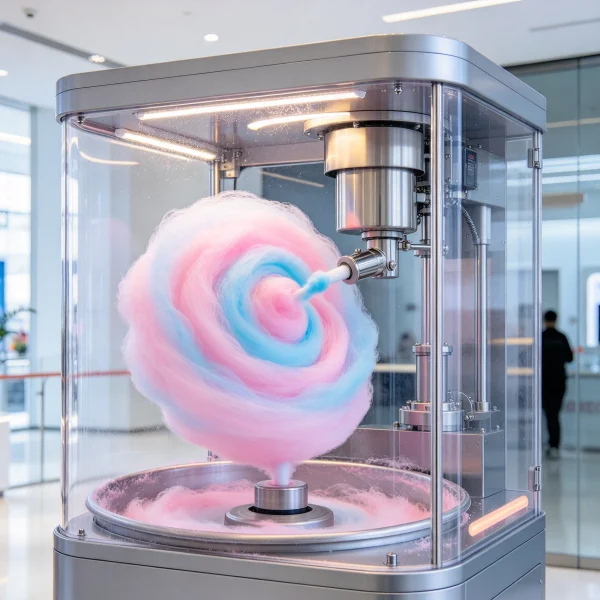
The biggest difference from soft-serve ice cream or coffee vending is the robot arm. That arm has to grab a cone, move it through the spinning floss, and guide it into shape. Small movements matter, so a cheap machine can produce lopsided cones that customers notice.
How much it costs and what you get
Pricing varies more than most operators expect. Supplier listings I’ve seen put entry-level units near $3,000 and full kiosks above $10,000, but the machine price is only part of the picture. Here’s a rough comparison based on current supplier listings and operator reports:
| Machine type | Ballpark price | Servings per fill | Where it works best |
|---|---|---|---|
| Entry-level counter unit | $3,000 to $5,000 | 50 to 100 | Small events, staffed venues |
| Fully automatic kiosk | $5,500 to $9,000 | 150 to 250 | Malls, cinemas, amusement parks |
| Premium or customized unit | $9,000 to $15,000+ | 250 to 400+ | High-traffic tourist zones |
Those ranges are guidance, not quotes. The same machine can cost more or less depending on shipping distance, voltage requirements, and whether the supplier includes a warranty on the robot arm.
Where you’ll actually see one earning money
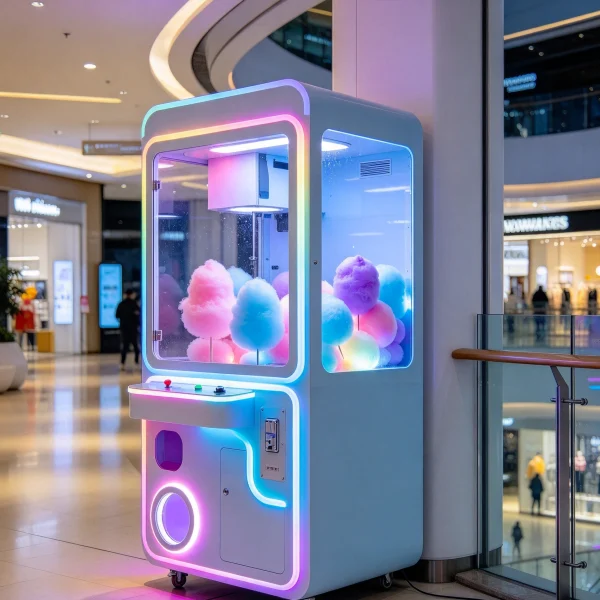
Location is the real make-or-break. A machine that makes five sales an hour in a family entertainment center might sit silent in an office lobby. The best spots share two things: families and waiting time. That’s why cinemas, mall food courts, and amusement parks keep showing up in operator success stories.
The math is easy to run. If a busy theater machine sells 40 cones a day at $5 each, that’s $200 gross daily. Sugar and consumables might cost $30 to $40, so the margin can look attractive before you add location rent, electricity, and occasional repair time. Cotton candy demand is also seasonal, so operators usually pair this machine with other vending routes or place it where indoor traffic stays steady year round. If you’re wondering whether vending machines still make money, the same cost discipline applies here.
How to choose one without getting burned
A cotton candy machine is mechanical and food-touching, so reliability matters more than looks. Look for stainless steel surfaces that are easy to clean, a sugar hopper you can refill without stopping the machine, and an arm assembly that’s easy to replace if it breaks. Ask the supplier about spare parts availability and who services the unit in your city. That answer matters as much as the price tag. For a full checklist, see our 2026 buyers guide for cotton candy vending machines.
This is also where a directory platform saves time. On VendingCore’s supplier ranking, you can compare verified suppliers, read buyer reviews, and send inquiries directly to multiple companies at once. You still do your own due diligence, but you skip the sketchy part of Google searching. You can browse the supplier ranking when you’re ready to compare verified cotton candy machine sellers side by side.

Should you actually buy one?
Honest answer: it depends on your location and maintenance expectations. Low consumable cost is the machine’s biggest draw, but high foot traffic is non-negotiable. Some operators treat cotton candy machines as a seasonal add-on for fairs and school events, while others run them year round in indoor family venues. Both can work, but they call for different machines and very different service plans.
If you want to compare it with other hands-off retail ideas, phone case printing vending machines use a very different cost model, and toy vending machines have their own profit curve. The right pick depends on the space you can get and the amount of maintenance you can stomach.
If you go in with clear eyes about traffic, service, and seasonality, a cotton candy vending machine can be a solid small-business experiment. If you expect it to print money with zero attention, it won’t. Match the machine size to the foot traffic, plan for cleaning and repairs, and use a supplier list you can verify before sending money. When you’re ready, a verified supplier ranking makes that last part easier.
FAQ
How much does a cotton candy vending machine cost?
Entry-level counter units usually run between $3,000 and $5,000. Fully automatic kiosks are more common in commercial settings and typically cost $5,500 to $9,000. Premium machines with larger hoppers or custom enclosures can go above $15,000. Always confirm shipping, installation, and warranty costs separately, because those numbers change the total more than people expect. If you’re comparing models, use our cotton candy machine buyers guide to see which specs matter most.
How long does it take to make one cone?
Most fully automatic machines need about 30 to 60 seconds from payment to dispense. The actual time depends on the shape selected, because a simple round cone spins faster than a heart or flower. The wait is part of the show for customers, but in a busy spot you want a model with a shorter cycle and a touchscreen that keeps the line moving.
Do you need staff to run it?
No, the machine runs unattended after the hopper is filled and the settings are set. The main labor comes from cleaning sugar residue, replacing flavor pellets, and refilling cones. Most operators check on the machine once a day, sometimes more on weekends. You still need someone to handle jammed cones and the occasional robot arm hiccup, but that is a side task, not a full-time job.
Is a cotton candy vending machine hygienic?
Food-touching surfaces are the key. Look for models with a sealed sugar hopper, removable stainless steel parts, and a cleaning mode that lets you wipe down the spinning head without taking the whole machine apart. The cone drops through a short chute, so it does not sit on an open tray. Check local food-vending regulations, because health department rules vary by city and venue.
What profit can you expect from a cotton candy vending machine?
Expectation depends almost entirely on foot traffic. A single machine in a busy family area might sell 30 to 60 cones a day at $5 each. Sugar and consumables are cheap, often a small fraction of the sale price, but rent, electricity, and repair costs eat into the margin. Operate one for a full season before judging it, and pair it with a second location if the first one is slow. The same logic applies to any vending business.
Where should I put a cotton candy vending machine?
Cotton candy needs families and waiting time. Shopping malls, movie theaters, amusement parks, bowling alleys, and event halls all work. Places with a long line for food already have customers standing still, and that is exactly when a nearby vending machine gets attention. Quiet office buildings and random sidewalks rarely generate enough sales to make the machine worth the maintenance.
How do I find a verified cotton candy vending machine supplier?
Start with VendingCore’s supplier ranking, where you can compare verified suppliers, read buyer reviews, and send inquiries directly. After you get quotes, check each supplier’s spare parts list and service coverage in your region. Ask for references from other buyers who run the same machine model. A supplier who cannot name one nearby machine in operation is a red flag, no matter how polished their website looks.
The cotton candy machines that perform well in the field share one trait: the operator can fix or replace the spinning head and arm assembly without shipping the whole unit back to the factory. Buyers who confirm spare-part availability, local service coverage, and cleaning access before signing usually report far fewer downtime headaches. The cheapest machine often looks fine on paper, but the cost of one missed event weekend can erase the savings. Reliability matters more than the sticker price.