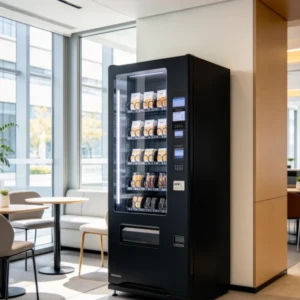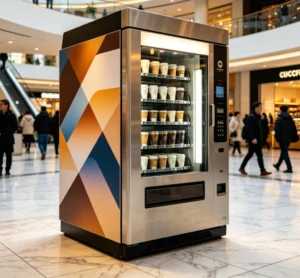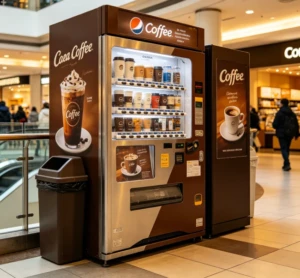
An automatic coffee vending machine grinds whole beans, brews an espresso shot, and adds steamed milk or hot water to serve a fresh cup in about 45 to 70 seconds. You’ll find them in office pantries, hospital staff rooms, factory floors, airport gates and student unions that stay open all night, wherever people want real coffee without standing in a queue. Expect to pay roughly $3,200 for a compact bean-to-cup unit and up to $9,500 for a twin-grinder model with a refrigerated milk carafe. Most buyers end up caring about three things: cup quality, cups per day, and how fast the machine pays for itself.
What happens inside a fresh coffee machine
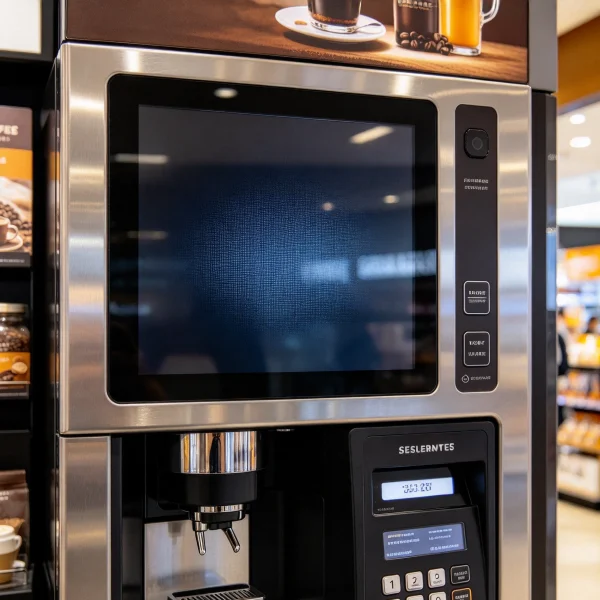
Coffee is a simple drink made by a fiddly process, and the machine does the whole thing behind a stainless door. A burr grinder doses 7 to 9 grams of beans per shot and adjusts coarseness as humidity shifts through the day. The grounds drop into a brew unit, get compressed by a piston, and hot water pushes through at around 9 bar. From button press to cup, most commercial units finish in under a minute.
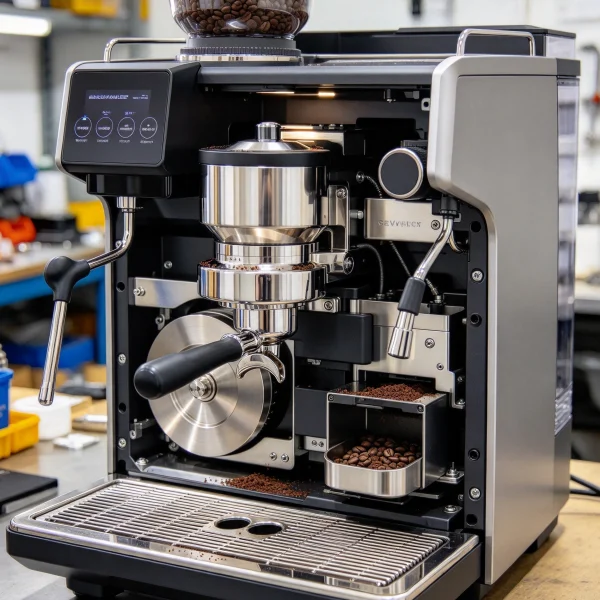
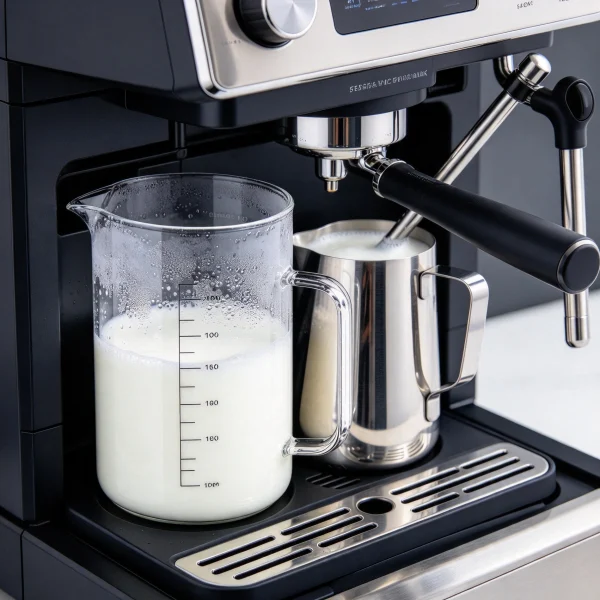
The milk side is where cheap and expensive machines separate. Powder systems mix milk powder with hot water, which is fine for a $1 cappuccino and disappointing at $3. Fresh-milk systems draw from a refrigerated carafe or an external fridge and steam the milk through a wand or a froth chamber. That’s the version offices and hospitals keep buying, and it’s also the one that needs daily cleaning.
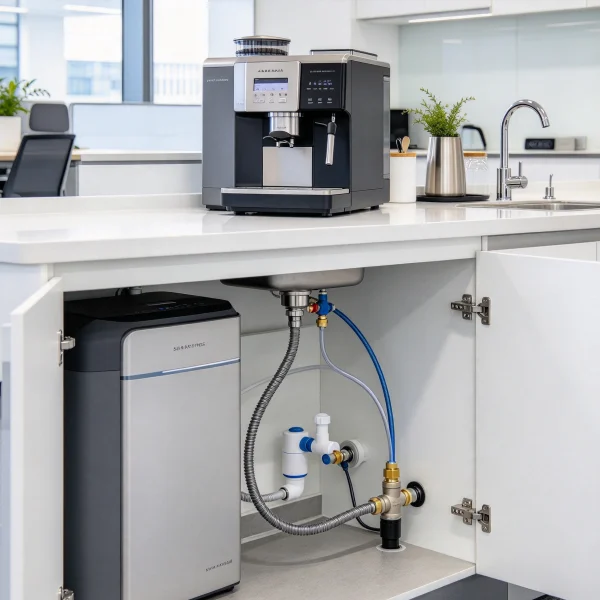
Water quality matters more than most buyers expect. Run unfiltered hard water through a boiler and you’ll be descaling it within a year, with flat-tasting coffee long before that. Budget for an inline filter or a softener from day one rather than after the first repair bill.
Bean-to-cup, instant, and tabletop: which format fits your site
Three formats cover most of the market and they solve different problems. The spec sheet won’t tell you which one belongs in your lobby.
| Format | How it brews | Typical cups per day | Unit price | Best for |
|---|---|---|---|---|
| Bean-to-cup, fresh milk | Grinds and brews each cup, steamed chilled milk | 80-300 | $5,500-$9,500 | Offices, hospitals, busy lobbies |
| Bean-to-cup, powder milk | Grinds and brews each cup, milk powder mixed | 50-200 | $3,800-$6,000 | Factories, warehouses, low-maintenance sites |
| Instant and instant-plus | Soluble coffee and powder mixed with hot water | 100-400 | $1,200-$3,200 | High-traffic, price-sensitive public sites |
Here’s something suppliers don’t always spell out: an instant machine can out-earn a bean-to-cup unit in the right spot. A $2,500 instant machine selling 200 cups a day at $1 brings in more than a $9,000 machine selling 40 cups at $2.50. Match the format to the foot traffic before you fall in love with a spec sheet.
The cup economics that decide your profit
Ingredient cost per cup is where the math gets interesting, and it varies more than most operators assume. A single espresso at 8 grams of beans costs roughly $0.25 to $0.45 depending on the bean contract you sign. Fresh milk adds $0.20 to $0.30. A cup, lid and stirrer run $0.05 to $0.08, and cleaning chemicals plus filters add another $0.03 to $0.06.
- Coffee beans, 8 g per shot: $0.25 to $0.45
- Fresh milk: $0.20 to $0.30
- Cup, lid, stirrer: $0.05 to $0.08
- Filters, descaler, cleaning tablets: $0.03 to $0.06
- Total per milk drink: $0.53 to $0.89
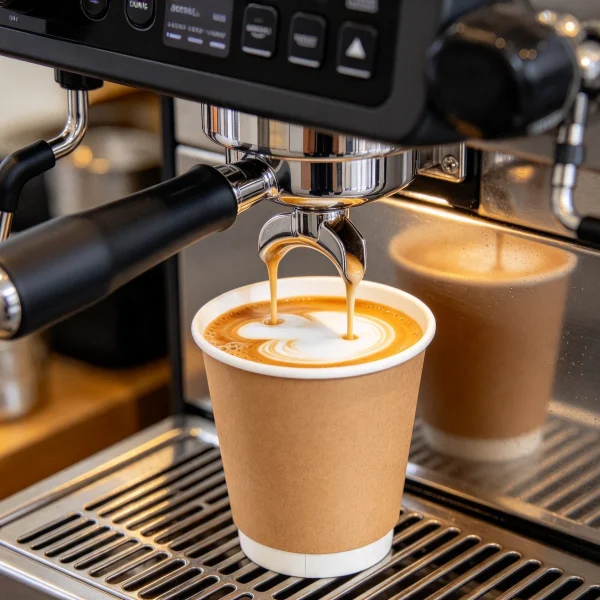
Sell that same drink at $1.80 in a staff room or $2.60 in a transit concourse and the margin speaks for itself. Volume is the multiplier. 200 cups a day is $360 to $520 in daily revenue. 25 cups a day, which is what a badly placed office machine actually does, turns good hardware into dead weight.
Site requirements people forget
Power, water and drain are the things that kill an install after the machine has already been paid for. Sort them first.
- Power: 220-240 V single phase on a dedicated 10-16 A circuit, 2.5 to 3.2 kW at peak. Compact 110 V units exist but heat water slowly and cap your throughput.
- Water: a 6-8 mm mains line with a shutoff valve and filter, or a 19 L bottle with a pump kit if there’s no plumbing.
- Drain: gravity drain or a waste tank you empty daily. Bean-to-cup machines produce rinse water and spent pucks.
- Space: 0.6 to 1.0 square metre of standing room, plus clearance to open the door and pull the brew unit.
- Payments: MDB or Executive protocol for coin and card readers, plus QR and NFC. 4G or Wi-Fi telemetry reports what sold and what needs refilling.
In Singapore specifically, the site can cost more than the machine. Mall concourse spots run SGD 800 to 2,500 a month depending on footfall, and that rent moves your break-even more than any hardware choice. There’s a solid breakdown of locations and rental costs in this guide to vending machine locations in Singapore.
Maintenance, honestly
Nobody puts this in the brochure. A fresh-milk machine needs its milk lines rinsed at the end of every day and a full hygiene cycle weekly, or the froth sours and your regulars notice by Wednesday. The brew unit wants a rinse cycle daily and a tablet clean weekly. Descaling depends on water hardness, anywhere from every 3 months to every 12.
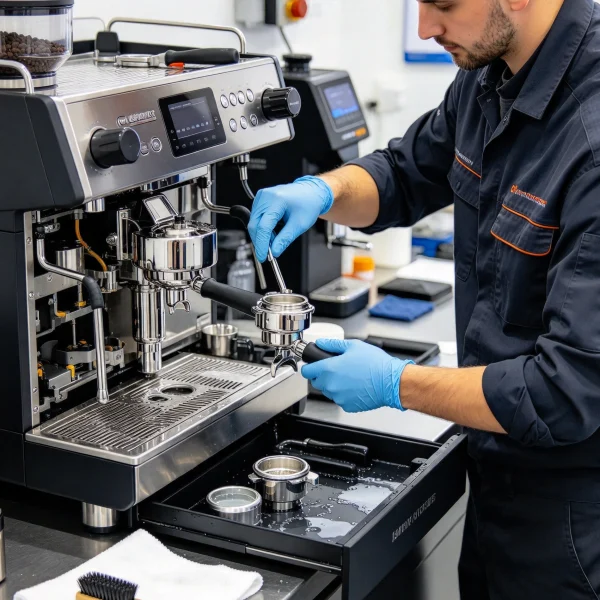
Parts that wear out: brew unit seals, grinder burrs, the milk frother, and the waste container sensor. Burrs usually last 1,200 to 1,500 kg of beans, which is years in a quiet office and closer to nine months in a busy transit site. Keep a spare brew unit on the shelf if downtime costs you more than the part does.
How to pick a supplier without getting burned
Most complaints about coffee machines are really complaints about the supplier. Late delivery, no technician in your city, firmware you can’t update, and a two-week wait for a $12 seal. Ask for the name of the person who will actually service your site.
- Who services my location, and what response time is written into the contract?
- Which spare parts are stocked locally rather than shipped in?
- Does the warranty cover the brew unit and boiler, or only the electronics?
- Can I taste a demo cup from the exact model before paying a deposit?
- Is there a minimum order or an exclusivity clause I should know about?
This is where a directory beats a single vendor’s website. On VendingCore you can compare verified suppliers side by side, read buyer reviews, check price ranges, and send an inquiry directly instead of emailing eight companies and waiting a week. Read the vending machine supplier vetting checklist before signing anything, because warranty terms matter more than the discount.
What payback looks like in practice
Take a well-placed bean-to-cup machine selling 60 cups a day at a $1.50 average. That’s $2,700 a month in revenue. Ingredients and cleaning take about $1,080, rent and power another $600, leaving roughly $1,000 a month before tax. On a $6,500 machine, payback lands at six to seven months, which sits inside the range most operators plan for.
Move the same machine to a quiet corridor doing 30 cups a day and the numbers tighten fast, because rent doesn’t shrink with volume. That’s why experienced operators fight over locations rather than over hardware. If you’re new to the category, the vending machine business guide covers route planning, refill logistics and staffing.
Running coffee next to another fresh machine
Plenty of operators now pair a coffee unit with a fresh bubble tea machine, since the same site, power supply and payment stack serve both and one refill trip covers two revenue streams. The fully automatic bubble tea vending machine guide breaks down cost and ROI, and there’s a separate piece on custom bubble tea machines if you want branded drinks for a franchise site.
The short version
Placement decides the outcome more than the spec sheet does. A mid-range bean-to-cup machine in a busy lobby beats a flagship model in a corridor every time, and the difference shows up by month two. Pick your format, sort the water and power, then negotiate hard on service terms.
When you’re ready to compare, browse the verified supplier directory on VendingCore, filter by machine type and region, and send an inquiry to the suppliers that fit. Quotes land in your inbox instead of in a sales pitch, and you can judge them side by side before anyone visits your site.
FAQ
How much does an automatic coffee vending machine cost?
Most bean-to-cup units land between $3,800 and $9,500 depending on grinders, boiler type and whether the milk system is refrigerated. Instant and instant-plus machines run $1,200 to $3,200. Add 8 to 15 percent for a water filter, installation and the first year of service. Quotes well below those ranges usually mean a smaller boiler, a single grinder, or no local service contract.
How many cups a day does it need to sell to be worth it?
At 60 cups a day and a $1.50 average price, a $6,500 machine typically pays back in six to seven months. Below 30 cups a day, rent and service costs eat the margin. Count foot traffic before buying. A site with 300 people passing daily at a 20 percent conversion rate gives you 60 cups, and that number is what actually decides the investment.
Bean-to-cup or instant powder, which should I choose?
Bean-to-cup wins wherever customers compare you to a café and are willing to pay $1.50 or more per cup. Instant wins in high-traffic, price-sensitive sites where the machine has to run 300 cups a day with minimal cleaning. Some operators run both, using the bean-to-cup unit for staff areas and an instant machine for public zones.
What maintenance does a fresh milk machine need?
Daily rinsing of the milk lines, a weekly hygiene cycle and brew unit tablet clean, and descaling every 3 to 12 months depending on water hardness. Grinder burrs last 1,200 to 1,500 kg of beans. A service contract with a named technician and a stated response time matters more than a long warranty on paper.
Can it take card, QR and mobile payments?
Yes. Most machines sold in 2026 support MDB or Executive protocol, so you can fit coin, bill, card and NFC readers from third-party suppliers. Telemetry runs over 4G or Wi-Fi and reports cup counts, error codes and stock levels, which lets you schedule refills from data instead of guesswork.
How long does installation take?
A plumbed bean-to-cup machine takes two to four hours once power, water and drain are in place, plus a calibration session for grind size and shot volume. Sites without plumbing need a bottle-fed setup, which adds a pump kit and a daily jug swap to your routine. Book the water line work a week ahead so the machine isn’t sitting in a box.
Where can I find reliable suppliers to compare?
On VendingCore you can compare verified suppliers, read real buyer reviews, check price ranges, and send an inquiry directly to several suppliers at once. That beats emailing one vendor and judging the quote in isolation. Ask each supplier for a technician name, a local spare parts list and a written response time before you sign.
Operators ask me which machine makes the best coffee, and that’s the wrong first question. Ask how many people walk past the spot between 7am and 10am, because that number decides whether the machine is an asset or a cupboard ornament. I’ve watched a $4,000 unit in a hospital corridor beat a $9,000 flagship in a dead lobby on every metric that matters. Get the site right, then spend on hardware. Water treatment comes third, and it’s the one everybody skips.