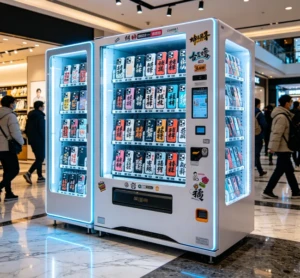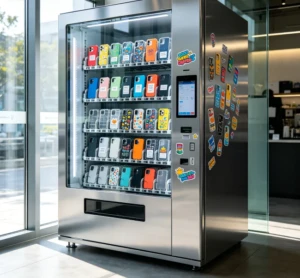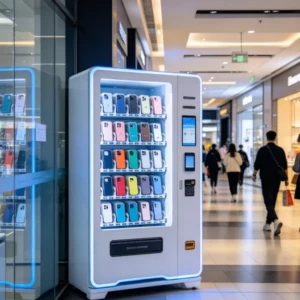
Most people typing this question want to settle one of two things: whether they can walk up to a machine in a mall and print a custom case on the spot, or whether they can buy or build a machine and run it as a business. Yes, DIY phone case vending machines exist and have been sold commercially for years. A UV-printing kiosk that lets a customer design, print and collect a finished case generally costs US$4,500 to US$18,000 depending on cabinet size and automation, and it finishes a case in three to six minutes. What you will not find is a real build-it-yourself vending machine kit for a garage workshop.
The word DIY hides three different questions
Search results blend three audiences together, and each one needs a different answer. A shopper wants to know whether a kiosk near them can print a case today. A prospective operator wants machine prices, site requirements and payback. A maker wants to print cases at home, either for fun or as a side business.
The rest of this article is split along those lines, so skip to whichever one sounds like you.
What a self-service case printing kiosk actually is
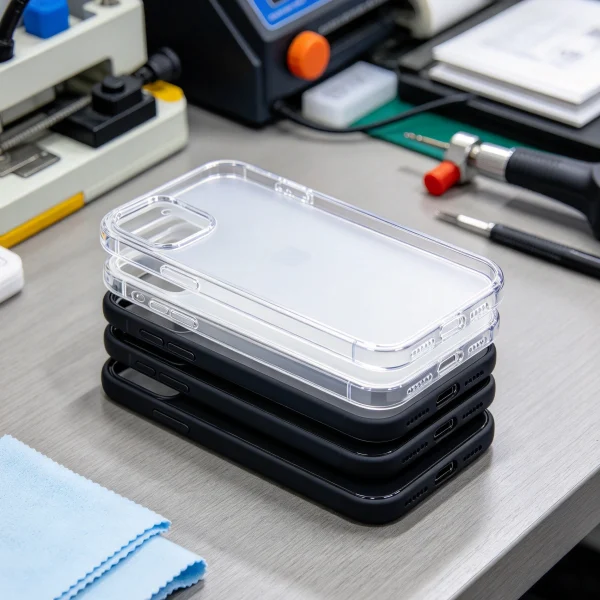
Inside the cabinet you will find a touchscreen, a compact UV printer, a rack of blank cases, a payment terminal and a collection slot. The customer picks their phone model, designs on screen by uploading a photo or tapping a template, previews the artwork on the exact case shape, pays, and waits for the machine to print and cure the ink.
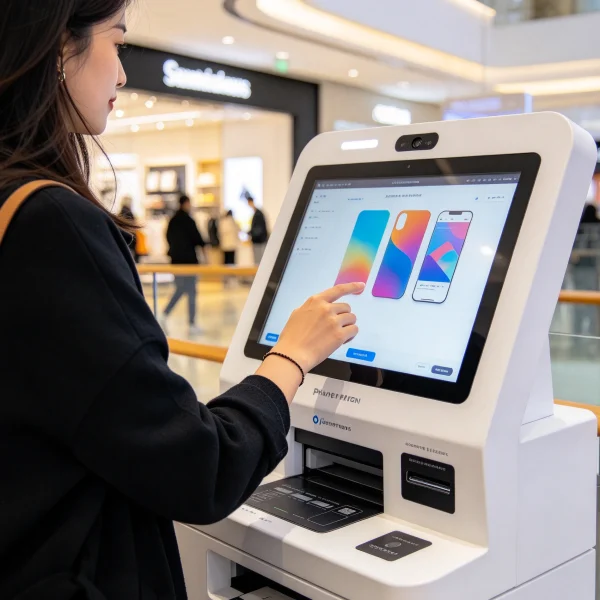
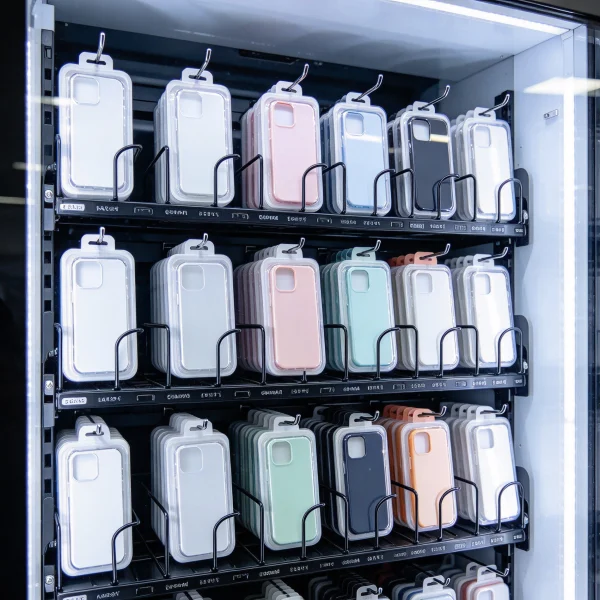
Cabinet sizes run from a counter-top unit about the size of a large luggage locker to a floor-standing model over 1.8 metres tall. Blank capacity ranges from roughly 40 cases in the smallest units to more than 1,000 in the big automated cabinets. Capacity matters more than most buyers expect, because running out of the iPhone model everyone owns is the fastest way to lose a sale.
How the cycle runs, minute by minute
- Model selection: the customer taps their handset. Usually 15 to 30 seconds.
- Design: templates, photo upload, text and stickers. This is where people linger, typically 2 to 5 minutes.
- Preview and payment: card, QR, coin or mobile wallet. Another 30 to 60 seconds.
- Printing: several passes under UV lamps. Two to four minutes.
- Cure and dispense: a final UV pass, then the case drops into the slot. Under a minute.
Total time from first tap to case in hand is usually 5 to 9 minutes, and the person standing at the machine is the slow part. Throughput is limited by how long people take to choose a design, not by the printer.
What a machine costs in 2026
The prices below are what manufacturers quote FOB from Shenzhen, Ningbo and Busan, plus a landed estimate that covers sea freight, duty, customs clearance and delivery to your site.
| Machine class | Typical FOB price | Landed estimate | Blank capacity | Cycle time |
|---|---|---|---|---|
| Entry UV kiosk, tablet design, manual pickup | US$4,500 to 6,500 | US$6,000 to 8,500 | 40 to 80 cases | 4 to 6 min |
| Mid-range UV kiosk, larger screen, auto dispense | US$8,000 to 12,000 | US$10,500 to 15,500 | 100 to 200 cases | 3 to 5 min |
| High-capacity automated cabinet | US$15,000 to 25,000 | US$19,000 to 30,000 | 300 to 1,140 cases | 2 to 4 min |
| 3D sublimation kiosk with film feed | US$6,000 to 10,000 | US$8,000 to 13,000 | 100 to 300 cases | 5 to 8 min |
Then add consumables: blank cases at US$0.60 to US$2.00 each, ink at around US$0.30 to US$0.80 per case, plus a spare printhead kept on the shelf. A clogged head stops the machine for a week if you have to order one from overseas. Freight and duty change the landed number a lot by country, and our guide to vending machine costs in the UAE walks through the same landed-cost maths on a different market.
The payback maths, with assumptions you can argue with
Worked example: a mid-range UV kiosk lands at US$13,000. Blanks, ink and coating cost US$2.60 per case, card fees take about 3% of the sale, the site charges US$600 a month, and the retail price is US$10.
| Cases per day | Monthly revenue | Monthly contribution after consumables, fees and rent | Payback on US$13,000 |
|---|---|---|---|
| 3 | US$900 | US$40 | Over 10 years |
| 10 | US$3,000 | US$1,530 | About 8.5 months |
| 30 | US$9,000 | US$5,790 | About 2.2 months |
| 60 | US$18,000 | US$12,180 | About 1.1 months |
Three cases a day does not pay for the space. That is the scenario most new operators run into: a quiet corridor, a machine with no signage, and rent that swallows the whole margin. Operators I have spoken to report 20 to 40 cases a day at busy mall sites with a visible screen, while ordinary sites sit closer to 5 to 10.
If you want to weigh this against other machine types before committing, which vending machine is most profitable applies the same contribution-margin logic, and are vending machines profitable in Australia shows how rent, commission and seasonality shift the answer by market.
UV printing, 3D sublimation or embossed sheets
Three printing routes show up in commercial kiosks, and they produce quite different cases.
| Method | How the image goes on | Best case types | Consumable cost per case | Durability |
|---|---|---|---|---|
| UV direct print | Inkjet printed onto a primed blank, then cured with UV light | Flat-back polycarbonate and TPU cases | US$0.30 to 0.80 | 12 to 24 months, edges wear first |
| 3D sublimation | Printed film vacuum-wrapped and heat transferred | Curved, full-wrap cases | US$0.50 to 1.20 | Strong wrap, corners fade |
| Embossed sheet press | Pre-printed sheet pressed under heat | Flat cases | US$0.60 to 1.50 | Softest finish, peels if mispressed |
For a mall kiosk, direct UV printing on a polycarbonate blank is the usual pick. It handles one-off photos with no film preparation and the per-case cost is the lowest. 3D sublimation wins when the customer wants the artwork to wrap around the curved edge, but it needs pre-printed film and a longer cycle. Embossed sheet presses are cheap to run and popular in small studios, though the finished case feels different in the hand.
Space, power and the paperwork people forget
A kiosk needs roughly 1 to 1.5 square metres of floor, plus clearance for the service door and for people standing in front of it. Power draw is typically 500 to 1,500 watts on a standard 10 amp circuit, so most mall bays work without an electrician visit. Confirm where the outlet sits before you sign the lease.
Network matters more than buyers expect. If the machine cannot reach the design server or the payment gateway, it is an expensive cupboard. Run a dedicated 4G router instead of relying on mall Wi-Fi, and ask the vendor whether the design library keeps working offline.
Then the boring list: CE or UL certification for the electricals, local EMC rules, payment terminal certification, public liability insurance, a mall deposit, a refund policy that matches local consumer law, and a plan for waste ink and packaging.
Which phones you can cover
The printer is rarely the limit. The limit is the blank case mold list. Most machines ship with blanks for recent iPhone models, Samsung Galaxy S and A series, and a thin spread of Pixel and Xiaomi handsets. Coverage for older and budget phones is patchy, and a customer with a three-year-old mid-range Android will often find nothing that fits.
Ask for the mold list as a spreadsheet before you order. Count how many current models in your market it covers, then check the restocking lead time for the most popular blank. A machine full of last season’s cases earns nothing.
How long the print lasts
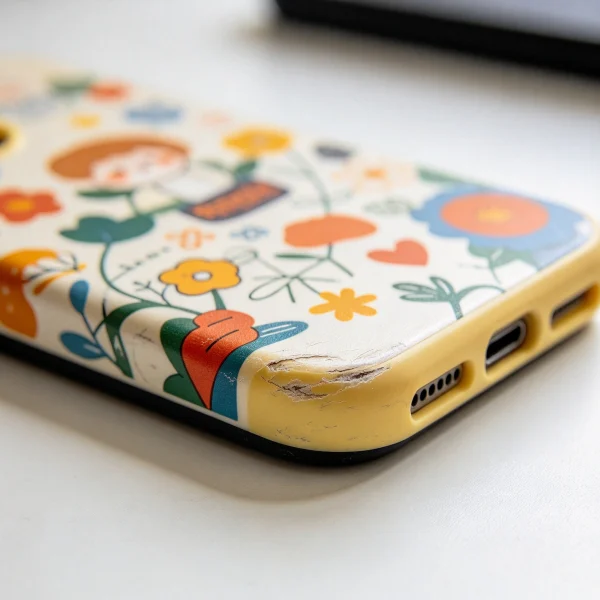
UV ink printed on a properly primed polycarbonate case and finished with a clear coat holds up for 12 to 24 months of normal use. Edges and corners wear first, and pocket abrasion from keys does more damage than water. Cases printed without a primer or top coat can start to flake within weeks, which is why cheap machines sometimes produce complaints that the hardware itself does not explain.
Can you build one yourself at home?
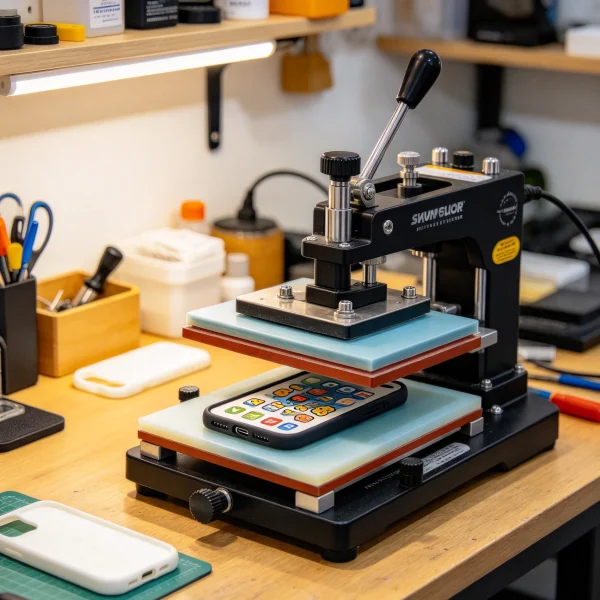
Printing cases at home is easy. A sublimation starter kit with a heat press, blanks and paper costs US$250 to US$600 and turns out decent flat cases in a small workshop. A desktop UV flatbed for short-run printing runs US$2,500 to US$6,000.
Building the vending machine is the hard part. You would need a dispensing mechanism that separates one case from a stack every single time, a payment terminal integration, kiosk software with a design editor, remote monitoring, and a support process for the customer standing in front of a frozen screen. That is a six to twelve month engineering project for someone who already writes software and can machine parts. It does not exist as an off-the-shelf kit.
Buy, lease, or send customers to an online printer
| Option | Money up front | Who carries the risk | Sensible for |
|---|---|---|---|
| Buy a kiosk | US$6,000 to US$30,000 landed | You | Operators with a confirmed site |
| Lease or revenue share | Small deposit, then 20 to 40% of sales | Shared with the host venue | Testing a location before buying |
| Online print-on-demand | Almost nothing | The service provider | Small online sellers |
| Staffed print counter | Fit-out plus labour | You | Existing retail space |
If the fallback plan is a small retail counter, compare the numbers honestly. The minimum investment for a coffee shop runs well past the price of a kiosk once fit-out, staff and a lease are added, and it only earns while someone is standing there.
Where to place it, and where not to
Malls work when the machine sits on a route people already walk, near the cinema escalator or the food court entrance, rather than in a dead-end corridor booked at a discount. Campuses and airports do well on impulse, but airport rent usually eats the margin unless volume is high. Tourist areas are strong in season and empty the rest of the year.
The question that matters most is whether people are standing around with time to kill. A queue outside a cinema is worth more than a wider corridor with nobody in it.
Questions to ask a supplier before you pay a deposit
- Can I see the mold list for my market, in writing?
- What is the real cycle time for a photo-heavy design, not a simple logo?
- Which parts are consumables, and what do they cost per 1,000 cases?
- What does the warranty cover, and is the printhead included?
- How long is the lead time from deposit to delivery, including freight?
- Is the dashboard available in English, and can it alert me when a blank runs low?
- What happens when the machine jams and there is no technician nearby?
- Can you give me two customer references in my country?
Importing hardware follows the same steps as any other vending purchase. The supplier vetting, deposit and pre-shipment inspection process in our China sourcing guide for coffee vending machines applies here almost word for word.
What tends to break in the first year
Printheads clog when a machine sits idle, so a site selling three cases a week is harder on the hardware than a busy one. Blanks jam in the dispensing mechanism when a customer pushes a returned case back into the slot. Payment terminals lose certification after a gateway update. Software bugs lock the design screen, and the customer walks away without telling anyone.
Set up remote monitoring on day one, keep a spare printhead and a cleaning kit on site, and pay for a support agreement with a response time measured in hours rather than days.
The short version
DIY phone case vending machines are real, they have been in malls since the mid-2010s, and they make a decent small-format retail business when the site is busy. Expect US$6,000 to US$15,000 landed for a workable UV kiosk, US$2 to US$3 in consumables per case, and a payback period that depends almost entirely on how many people walk past the screen each day. Building one yourself is realistic for the printing part and unrealistic for the vending part.
Next step: get a mold list and a landed-cost quote from two suppliers, then model your own site at 5, 15 and 30 cases a day before you sign a lease.
FAQ
Can I buy a DIY phone case vending machine?
Yes. Several manufacturers in China, South Korea and Europe sell self-service case printing kiosks, usually with a minimum order of one unit. Production lead time is typically 25 to 45 days, plus 25 to 40 days by sea.
How much does it cost to print one case?
Consumables run about US$1 to US$3 per case: a blank shell at US$0.60 to US$2.00, ink at US$0.30 to US$0.80, plus coating and packaging. Card fees and site commission sit on top of that.
How long does the machine take per customer?
Roughly 5 to 9 minutes from first tap to case in hand. Printing itself takes two to four minutes; the rest is the customer choosing a design.
Will it work for my phone?
Only if a blank mold exists for that model. Current iPhone and Samsung Galaxy models are almost always covered. Older and budget Android handsets often are not, so check the mold list before you buy.
Can I build a phone case vending machine myself?
You can handle the printing side at home with a heat press or a desktop UV printer for a few hundred to a few thousand dollars. The dispensing mechanism, payment integration and kiosk software are what turn it into a real engineering project.
Is printing licensed characters or logos a problem?
Yes, and it is the risk most buyers ignore. Printing trademarked artwork without permission can bring takedown requests and claims. Many operators block obvious keywords and add a customer declaration at checkout, which lowers the risk without removing it.
How much can one machine earn?
At US$10 per case and 20 cases a day, gross revenue is about US$6,000 a month before rent, consumables and fees. At 5 cases a day it is US$1,500, which rarely covers a mall lease.