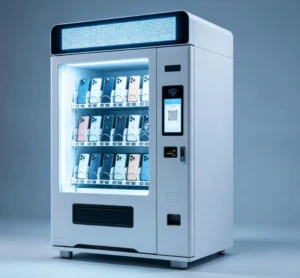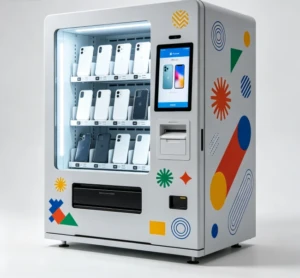
Most people asking this are a week away from buying a used machine and want one honest number before they commit cash. A snack vending machine at a decent office or warehouse site brings in roughly $300 to $900 a month in gross sales and keeps about $90 to $270 of it after product cost, location commission, card fees, spoilage and repairs. Over a year that is $1,100 to $3,200 of profit per machine. The spread is that wide because two identical machines in two buildings can differ by 4x, and the reason is almost always foot traffic and how often the machine sits empty.
The short answer in one table
Here is what the ranges look like before we get into the weeds. All figures assume one snack machine, an average vend price of $2.00, and 22 operating days a month.
| Period | Gross sales | Net profit | What usually goes wrong |
|---|---|---|---|
| Per day | $14 to $45 | $4 to $14 | Machine picked clean by 3pm because nobody restocked |
| Per week | $70 to $225 | $20 to $68 | Sold out of the two rows that actually move |
| Per month | $300 to $900 | $90 to $270 | Commission invoice plus a surprise compressor repair |
| Per year | $3,600 to $10,800 | $1,100 to $3,200 | Two flat months after a location change |
Anything above $1,200 a month gross from a single snack machine is a strong site. Above $2,000 is rare and usually means a large captive population with long opening hours, like a distribution center running three shifts.
How the monthly number is actually built
Vending gets sold as passive income and it is not. The math, though, is simple enough to run on the back of an envelope before you spend a dime. Four inputs decide your gross:
- How many people walk past the machine on a normal day
- What share of them buy something, typically 15% to 35% in a captive location
- Your average ticket, which is price per item times items per visit
- How many days a month the building is actually open
Multiply those and you get daily gross. A 150-person warehouse at a 20% capture rate and a $2.10 ticket produces around 30 vends a day, or $63. Run it 26 days and you are at $1,638 for the month.
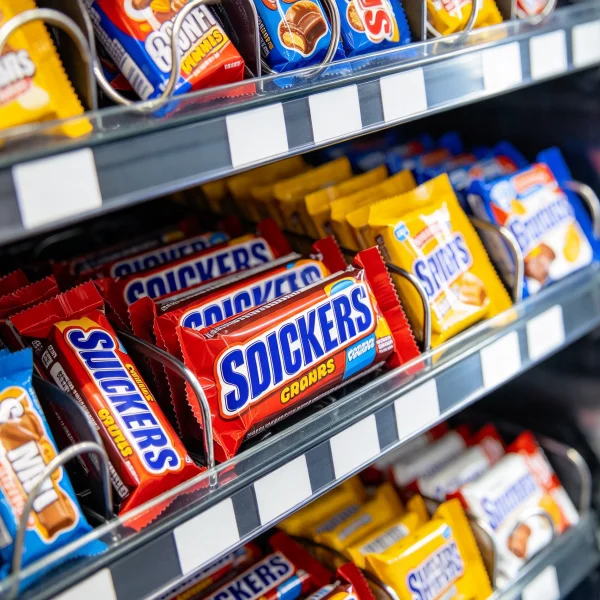
Then the deductions start. Product cost eats 40% to 48% of gross on snacks. Location commission runs from 0% at a small office you already have a relationship with up to 25% at a school district. Card processing takes another 3% to 6% of every cashless sale, and cashless is now the majority of transactions at most sites. Repairs, spoilage, fuel and machine depreciation come out of whatever is left.
What survives all of that is your net, and it usually lands between 20% and 35% of gross. That percentage is the most useful figure in the whole business, because it lets you sanity check any revenue claim you hear, including the optimistic ones in YouTube thumbnails.
What one vend earns: snack SKU margins
Blended margin hides a lot. The mix of what you stock decides how much each swipe is worth, and the gap between the best and worst slot is bigger than most new operators expect.
| Product | Your cost | Retail price | Gross margin per vend | Margin % | Sell-through |
|---|---|---|---|---|---|
| Chips, 1.5 oz bag | $0.55 | $1.75 | $1.20 | 69% | Very high, top three rows |
| Candy bar, standard size | $0.62 | $1.75 | $1.13 | 65% | High |
| Peanut butter crackers | $0.48 | $1.50 | $1.02 | 68% | High in offices |
| Pastry or honey bun | $0.78 | $1.85 | $1.07 | 58% | Medium, spikes before 9am |
| Granola or protein bar | $0.95 | $2.25 | $1.30 | 58% | Medium |
| Gum and mints | $0.32 | $1.25 | $0.93 | 74% | Low but never dies |
| Bottled water in a combo machine | $0.28 | $1.50 | $1.22 | 81% | Very high in summer |
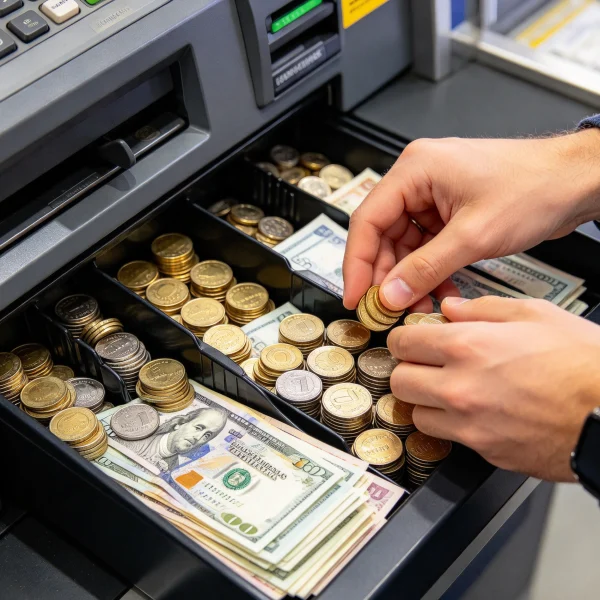
Percentage margin and cash margin pull in opposite directions. Gum returns 74% but only $0.93 a vend. A protein bar returns 58% and puts $1.30 in your pocket each time. When you are grinding toward a $900 month, the dollar figure per vend matters more than the percentage, which is why experienced operators load the top rows with the highest cash margin items and leave the cheap candy at eye level for impulse.
If you have not picked a machine format yet, this rundown of machines that make money with real ROI data puts snack, drink, combo and a few odd formats next to each other.
Three worked examples from three different sites
Ranges are useful, examples are better. These three are models built from the traffic and ticket numbers operators usually report, with every assumption written out so you can swap in your own building.
A 60-person office
60 employees, 30% capture rate, $2.00 ticket, 22 days open. That is 18 vends a day and $792 a month gross. Product cost at 45% takes $356. A 5% commission to the landlord takes $40. Card fees at 3.5% take $28, spoilage takes $20, a repair reserve takes $24, fuel is $30, and depreciation on a $2,000 used machine over 60 months is $33. Net lands at $261, or 33% of gross, for roughly four hours of work a month.
A 150-person warehouse
150 people, 20% capture, $2.10 ticket, 26 days open. That is 30 vends a day and $1,638 gross. Product at 44% takes $721. An 8% commission takes $131, card fees take $57, spoilage and theft take $49, repairs take $49, fuel runs $45 because the site is further out, and depreciation takes $33. Net is $553, around 34% of gross, for about seven hours of work including drive time.
A 400-student high school
400 students, 18% capture, $1.75 ticket (school pricing sits lower), 18 school days a month across 10 months. That is 72 vends a day and $2,268 gross, which looks fantastic. Then product at 45% takes $1,021. The 25% commission the district requires takes $567. Card fees take $68, theft and shrink take $91, repairs take $68, fuel takes $40, depreciation on a newer machine takes $50. Net is $363, about 16% of gross.
That last one is the punchline. The school site produces the biggest revenue number and the thinnest profit, and then it produces nothing at all for two months. Lots of new operators chase the high school because the gross looks exciting on paper.
Seasonality: the school site problem
Almost nobody accounts for this before signing a contract, and it changes your annual number more than a price increase ever will. School sites fall off a cliff in June and stay there. Office sites dip in July and August when everyone is on vacation, pick back up in September, and sag again in late December.
| Month | School site index | Office site index | Why |
|---|---|---|---|
| January | 100 | 105 | New year, resolutions, still cold outside |
| February | 105 | 100 | Peak school term |
| March | 100 | 100 | Steady |
| April | 95 | 100 | Spring break week |
| May | 85 | 100 | Testing weeks, fewer breaks |
| June | 35 | 95 | Finals then out |
| July | 5 | 70 | Building closed or half empty |
| August | 15 | 75 | Staff return, students do not |
| September | 110 | 105 | Best month of the year |
| October | 105 | 100 | Strong |
| November | 95 | 100 | Holiday week dips |
| December | 85 | 80 | Parties and closures |
If a school contract is your only site, budget for ten earning months and two months where the machine just sits there while you still pay insurance. A mixed route of offices, warehouses and one school smooths this out and is the main reason multi-site operators earn more predictably than single-site ones.
The full cost stack on a $900 month
Modeled on a $900 month looks like, using a used snack machine with a card reader. Every line is checkable against your own numbers.
| Line item | Monthly | % of sales |
|---|---|---|
| Gross sales | $900 | 100% |
| Product cost | $405 | 45.0% |
| Location commission or rent | $72 | 8.0% |
| Card processing and telemetry fees | $40 | 4.4% |
| Spoilage and expiry | $23 | 2.5% |
| Repairs and parts reserve | $27 | 3.0% |
| Fuel and mileage | $27 | 3.0% |
| Liability insurance | $7 | 0.8% |
| Depreciation on a $2,000 machine | $33 | 3.7% |
| Total costs | $634 | 70.4% |
| Net before tax | $266 | 29.6% |
Two things jump out. Product cost is the biggest line by far, which means price and mix decisions matter more than anything else you will do. And the soft costs that most one-page vending articles skip, like card fees, depreciation and insurance, together add up to around 12% of sales. Ignore them and you will convince yourself a mediocre site is profitable.
Spoilage, expiry and the snack categories that eat your margin
Snacks are shelf stable, which is why they suit vending. They are not immortal. Every category has its own shrink profile, and the worst offenders are the ones that look most appealing on a buying trip.
| Category | Typical shelf life | Shrink as % of category sales | Practical rule |
|---|---|---|---|
| Chips and salty snacks | 4 to 6 months | 1% to 2% | Safe, but crush damage kills the bag |
| Candy and gum | 9 to 12 months | Under 1% | Almost never expires |
| Cookies and crackers | 5 to 8 months | 2% to 3% | Watch for melting in summer heat |
| Pastries and honey buns | 2 to 3 months | 6% to 10% | Only stock if the morning crowd is real |
| Protein and granola bars | 6 to 9 months | 2% to 3% | Fine, but slow sellers expire quietly |
Run a simple turns check once a month. Any slot that has not sold through a full case in six weeks goes out and something else goes in. A slow row is not neutral, it is a row that is not earning and will eventually cost you the product outright.
Restock frequency moves sales more than price does
An empty slot is a lost sale you never see. The customer does not wait, does not complain and does not come back tomorrow for the same item. They buy a soda instead and you never know it happened.
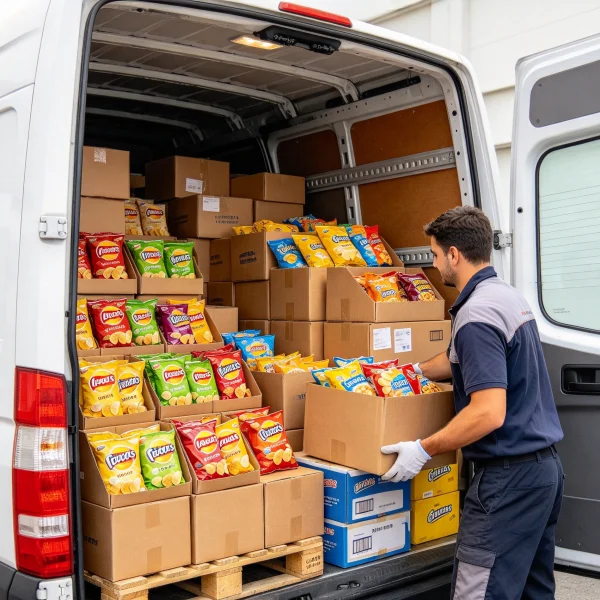
Snack machines typically hold 25 to 40 selections depending on shelf configuration, with four to six units per spiral. A machine at a busy site can empty a fast-moving row in four days. That is why service frequency is a revenue lever, not just a chore. Going from every 14 days to every 10 days at a strong site often adds 8% to 12% to monthly gross with almost no extra labor, because you were driving there anyway.
Capacity planning works the same way whatever the product. If you are thinking about adding a drink machine beside your snack unit, this guide to how many cans a drink vending machine holds runs the same turns-per-column logic with real capacity figures.
Startup cost and how long payback takes
| Item | Used snack machine | New combo machine |
|---|---|---|
| Machine | $1,500 to $2,500 | $4,500 to $8,000 |
| Card reader or telemeter | $250 to $350 | $300 or included |
| Opening stock | $250 to $400 | $400 to $700 |
| Transport and setup | $150 to $400 | $250 to $600 |
| Insurance first payment | $100 to $200 | $100 to $200 |
| LLC, permits, bonding | $100 to $500 | $100 to $500 |
| Total to open | $2,350 to $4,350 | $5,650 to $10,000 |
| Payback at $266 net a month | 9 to 16 months | 21 to 38 months |
The used route is the one most people should take first. You can buy two used machines for the price of one new combo unit, test two locations, and find out which one deserves the second machine. If you are working with a tight budget, these proven business ideas for starting with $5,000 show how a vending setup compares to other low-capital options.
Find your own number with a sensitivity grid
Nobody can tell you what your building will do. You can estimate it, though, and then stress test the estimate.
| Vends per day | At $1.75 | At $2.00 | At $2.25 | Net at 30% (at $2.00) |
|---|---|---|---|---|
| 10 | $385 | $440 | $495 | $132 |
| 20 | $770 | $880 | $990 | $264 |
| 30 | $1,155 | $1,320 | $1,485 | $396 |
| 40 | $1,540 | $1,760 | $1,980 | $528 |
Find the cell closest to your site, then halve it. If the halved number still covers your costs and leaves something behind, the site is worth trying. If halving it makes the whole thing negative, you are relying on an optimistic capture rate to break even, and that is how people end up with a machine in a storage unit.
Going from one machine to a route
| Machines | Monthly net | Service hours a month | Effective hourly |
|---|---|---|---|
| 1 | $260 | 4 to 6 | $45 to $65 |
| 5 | $1,150 | 20 | $58 |
| 10 | $2,100 | 38 | $55 |
| 20 | $3,800 | 75 | $51 |
The effective hourly rate falls as the route grows, and drive time is the reason. Four machines on one street beat eight machines scattered across three towns, even though the scattered route shows more gross. Route density is the number to protect once you get past five machines.
If you want a second product line that pulls people to the machine, the profit math on a popcorn machine makes an interesting comparison, since a fresh-popped machine can carry a much higher ticket than a $1.75 bag of chips.
Where the money leaks after year one
The first year is usually clean. The second year is when the machine starts asking for money. Common failures and what they cost in 2026:
- Compressor or cooling failure on a combo unit: $300 to $600, and it kills revenue until fixed
- Bill validator replacement: $150 to $300
- Coin mechanism jam or replacement: $60 to $180
- Spiral motor or shelf harness: $40 to $120 per column
- Card reader terminal out of warranty: $250 to $350
- Door seal, glass or lock damage from a break-in attempt: $100 to $400
Set aside 3% of gross every month from day one. By month 14 you will have a repair fund that makes these events annoying rather than crisis-level.
Contracts, insurance, taxes and the boring stuff
This is the part most snack machine guides skip entirely, and it is where a good site can turn into a bad deal.
Commission contracts should state the percentage, the payment schedule, the term length and what happens if the building changes owners. Watch for exclusivity clauses that lock out any second machine you might want to place. A five-year auto-renewing contract on a site that underperforms is worse than no contract at all.
Liability insurance for a single machine typically runs $300 to $800 a year, and some landlords will not let you in without a certificate naming them. An LLC costs $50 to $500 depending on the state and keeps your personal assets out of the equation if someone claims the machine injured them.
Sales tax varies. Some states tax snacks at the full rate, some exempt food, and some treat vending differently from retail. Check with your state revenue department before you set prices, because a 7% tax you did not account for comes straight out of that 30% net.
The bottom line and what to do next
A snack vending machine is a decent small business with a modest ceiling. One machine at a good office site returns $200 to $300 a month in profit for a few hours of work, pays for itself inside a year, and rarely makes anyone rich. Ten machines done well produces enough to matter. The people who lose money are the ones who buy a new $7,000 combo unit before they have a signed location, or who take a 25% commission school contract and then discover July exists.
Before you buy anything, go stand in the building for two days and count the people who walk past where the machine would sit. Multiply that by 25%, then by $2.00. If the daily gross you get back is under $25, walk away. If it is over $40 and the building is not a school, start looking for a used machine.
If you are weighing this against other low-cost vending formats, the realistic cost and profit guide to starting a nail vending machine business covers a niche that trades lower volume for much higher ticket sizes, which some operators find easier to run alongside a full-time job.
Frequently asked questions
How much does a snack vending machine make in a day?
Most sites run somewhere between $14 and $45 a day in gross sales, which is 7 to 22 vends at around $2.00 each. Net after all costs is roughly $4 to $14. A quiet office with 30 people can sit at the bottom of that range, and a busy warehouse breakroom can beat the top of it.
How much profit does one machine make per month?
Plan on $90 to $270 net per machine per month at an average site, with $266 being a realistic middle estimate on a $900 gross month. Great sites can hit $500 or more. Poor sites with low traffic and a high commission can run at a loss once you count the drive time.
Is a snack vending machine worth it in 2026?
As a small side business with one or two machines, yes, provided you have a location with real foot traffic before you buy the machine. It is not passive, and the effective hourly rate drops fast if your machines are spread out. Treat it as a part-time job that pays $45 to $60 an hour at small scale and you will have a clear-eyed view of it.
How many items does a vending machine sell per day?
Capture rates in captive locations typically run 15% to 35% of the people who pass by. A 60-person office at 30% capture sells around 18 items a day. A 150-person warehouse at 20% sells around 30. Schools can push far higher, sometimes 70 or 80, but the ticket price and commission offset much of that volume.
What is the best location for a snack machine?
Anywhere with a captive population that cannot easily leave the building, and where the population sits above 100 people. Warehouse breakrooms, manufacturing floors, distribution centers and medical office waiting areas tend to outperform retail spaces where customers have options. Schools rank high on volume and low on net profit once the commission is factored in.
Should I take cash, card, or both?
Both, but card now dominates. Cashless transactions clear a higher average ticket, often around $2.45 versus $1.57 for cash, because people do not count coins when they tap a card. Card processing costs 3% to 6% of sales depending on the processor, which is a real line item, but machines that go cashless usually see enough of a sales bump to cover it.
How much money do I need to start?
A single used snack machine, card reader, opening stock and transport can be done for $2,350 to $4,350. New equipment pushes that to $5,650 or more. First-time buyers should expect payback in 9 to 16 months on the used route if they picked the location well.
Why do so many operators quit after a year?
Three reasons show up again and again: a location that never had enough traffic, a commission arrangement that ate the margin, and the discovery that restocking and driving are actual work. Running the numbers on foot traffic before signing anything avoids the first two, and going into it knowing the hours avoids the third.