A popcorn machine can generate a gross profit margin of over 90% on every bag sold, with a single medium-sized serving costing you roughly $0.25 to produce and selling for $3.00 to $5.00. That’s the kind of math that makes concession stand owners, event vendors, and small business operators take a serious look. Whether you’re running a weekend booth at a farmer’s market or a full-time kiosk at a mall, the numbers are compelling enough to warrant a real business plan.
But here’s the thing — profit margins that high don’t automatically mean you’ll be rolling in cash. The real question isn’t just about the cost of kernels and oil. It’s about your location, your pricing strategy, your volume, and your ability to handle the operational headaches that come with any food business. Let’s break down exactly what you’re looking at.
The Real Numbers Behind Popcorn Profitability
Let’s start with the basics. A 50-pound bag of premium popcorn kernels costs around $35 to $50. That single bag can produce roughly 400 to 500 servings of popped popcorn, depending on your portion size. Add in the cost of oil, seasoning, and a bag or container, and you’re looking at a total cost of goods sold (COGS) of about $0.20 to $0.35 per serving.
Now, what are you selling that serving for? If you’re at a county fair, you might get $5.00 for a large bag. At a school fundraiser, maybe $2.00. At a gourmet popcorn shop in a busy shopping center, you could charge $7.00 for a specialty flavor. The variance is huge, and that’s where your actual profit lives.
Let’s do some quick math with a realistic middle-ground scenario. Say you sell 200 bags per day at an average price of $4.00. Your daily revenue is $800. Your COGS for those 200 bags is roughly $50. That leaves you with $750 in gross profit per day. Sounds amazing, right?
But wait — that’s before you pay for the machine itself, the rent or permit fees, your labor, electricity, insurance, and any marketing costs. A commercial popcorn machine can cost anywhere from $500 for a basic model to $5,000 for a high-volume, commercial-grade unit. You need to factor that into your break-even analysis.
💡 Key Takeaway: Don’t just look at profit margins — calculate your break-even point. If your machine costs $3,000 and you make $200 net profit per event, you need 15 events just to cover the equipment.
Startup Costs: What You’ll Actually Spend
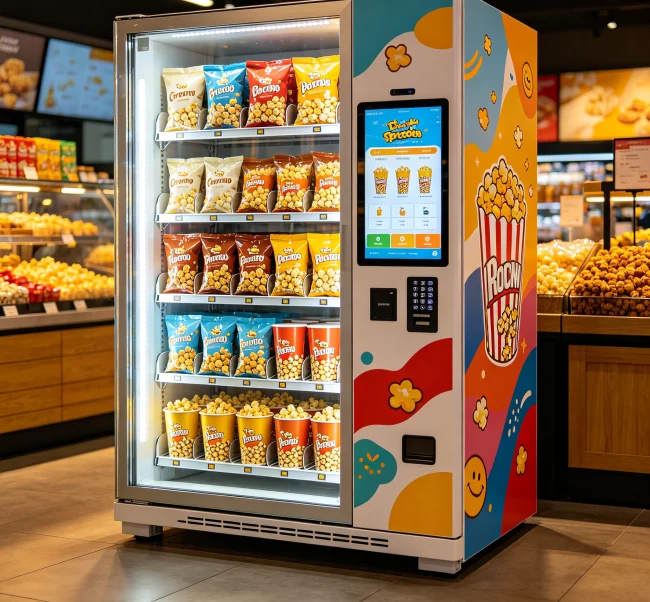
I’ve seen too many people jump into this thinking they just need a machine and some kernels. That’s a fast track to disappointment. Here’s a realistic breakdown of what you’ll need to get started:
So your total startup investment could be as low as $1,500 for a bare-bones operation or as high as $10,000 for a professional setup. Most people land somewhere in the $3,000 to $5,000 range.
How Location Makes or Breaks Your Popcorn Business
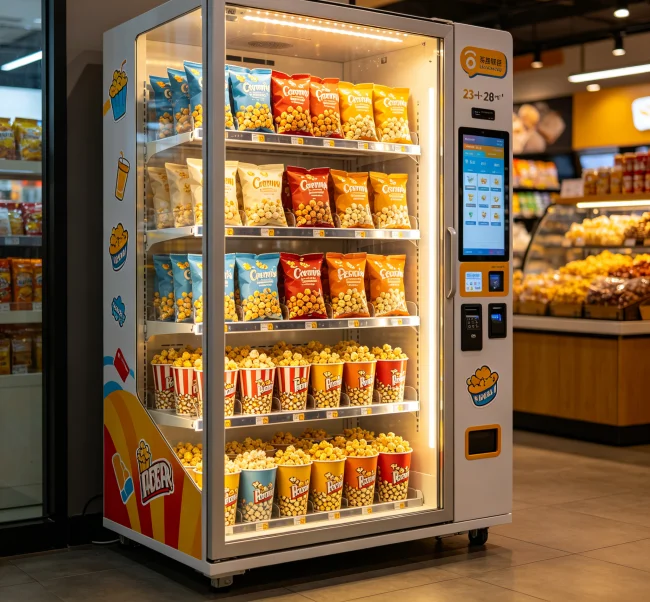
This is the single biggest factor that nobody talks about enough. You can have the best popcorn in the world, but if you’re in a dead zone, you’re not making money. Conversely, a mediocre operation in a high-traffic area can do incredibly well.
Think about where popcorn sells best:
The best operators I’ve seen don’t just set up shop in one location. They have a schedule — Friday night at the high school football game, Saturday at the farmer’s market, Sunday at the flea market. They maximize their machine’s usage across multiple revenue streams.
💡 Practical Advice: Before you buy anything, scout your potential locations. Spend a weekend counting foot traffic and watching what other food vendors are doing. If you can’t find at least 3 reliable spots to sell, rethink the plan.
Pricing Strategies That Actually Work
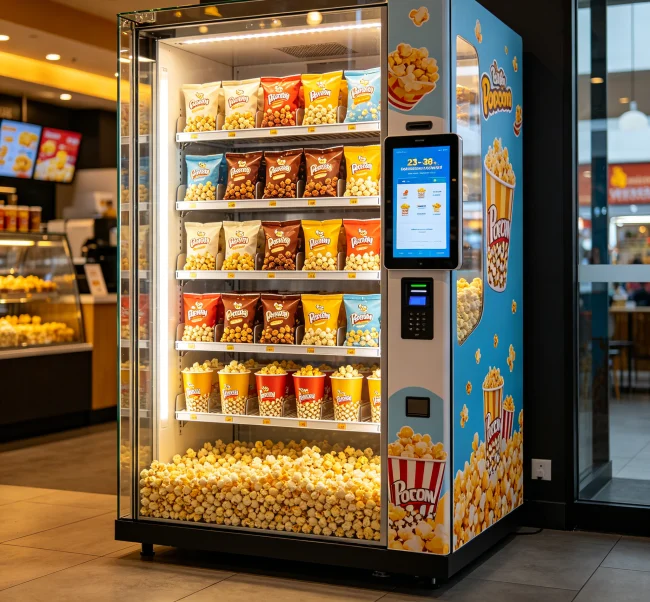
You can’t just slap a price on a bag and hope for the best. Smart pricing is what separates profitable operations from break-even ones. Here are a few strategies that work:
The Anchor Pricing Method: Offer a small bag for $2.00, a medium for $4.00, and a large for $6.00. Most people will pick the medium, which is where your best margin is. The small and large options make the medium look like the smart choice.
Flavor Upsells: Sell plain popcorn for $3.00, then charge an extra $1.00 for cheese, caramel, or kettle corn. The cost of adding seasoning is pennies, but the perceived value is much higher.
Combo Deals: Bundle popcorn with a drink or candy for a slight discount. This increases your average transaction value without adding much cost.
Event-Based Pricing: At a county fair, you can charge more because people expect to pay premium prices. At a school fundraiser, keep it lower to encourage volume sales.
One operator I know makes $1,000 in a single day at a craft fair by using a simple strategy: offer free samples of three flavors, then charge $5.00 for a large bag of the customer’s choice. The samples cost him maybe $10 in product, but they drive massive sales.
Hidden Costs That Eat Into Your Profit
Let’s talk about the stuff nobody puts in their Instagram posts. These are the costs that can quietly destroy your margins if you’re not paying attention:
💡 Critical Info: Set aside 10% of your gross revenue for unexpected costs. That broken machine or last-minute permit fee won’t feel so painful when you’ve already planned for it.
Real Success Stories (and One Failure)
Let me share a couple of real examples I’ve come across.
Success Story: A guy in Ohio bought a used commercial popcorn machine for $800. He started by renting a booth at his local farmer’s market for $50 per weekend. His first weekend, he sold 150 bags at $4.00 each — $600 in revenue, about $50 in costs. He was hooked. Within six months, he had a regular schedule of three events per week and was grossing $2,500 to $3,000 per month. After expenses, he was netting around $1,500 per month. Not a fortune, but a solid side hustle that paid for his family’s vacation that year.
Failure Story: A couple in California invested $7,000 in a top-of-the-line machine, a custom cart, and a prime spot at a local mall. The rent was $1,200 per month. They sold gourmet popcorn at $7.00 per bag. Problem was, the foot traffic wasn’t as high as they expected, and their average daily sales were only $200. After paying rent, supplies, and their own time, they were losing money every month. They closed after six months.
The difference? The first guy started small, tested the market, and scaled up. The second couple went all in without really understanding their location’s potential.
Is Popcorn a Recession-Proof Business?
There’s a reason popcorn has been around for over a century. It’s cheap, it’s comforting, and people buy it even when they’re cutting back on other expenses. During economic downturns, small indulgences like a $4 bag of popcorn actually hold up pretty well. It’s not a luxury item — it’s an affordable treat.
That said, it’s not completely immune. If people are staying home more, event attendance drops. If gas prices spike, fewer people travel to fairs and festivals. But compared to, say, a sit-down restaurant or a clothing boutique, popcorn has a lot more resilience.
The smartest operators diversify. They don’t rely solely on events. They also offer catering for corporate events, birthday parties, and weddings. They sell pre-packaged popcorn to local convenience stores. They have an online ordering option for local delivery. Multiple revenue streams make the business much more stable.
How to Maximize Your Popcorn Machine’s Profitability
Here’s what the most successful popcorn vendors do differently:
They focus on volume, not just margin. A 90% margin on 50 bags per day is nice. A 70% margin on 500 bags per day is much better. They find high-traffic locations and optimize their production speed.
They invest in quality. Cheap kernels, old oil, and stale seasoning produce mediocre popcorn. Customers notice. They might buy once, but they won’t come back. The best operators use premium ingredients and maintain their equipment religiously.
They brand themselves. A plain white bag with “Popcorn” written in marker doesn’t sell. A colorful bag with a logo, a catchy name, and a social media handle does. Branding costs almost nothing but adds huge perceived value.
They track everything. They know exactly how many bags they sold, at what price, on what day, in what location. They know their COGS down to the penny. They can tell you their best-selling flavor and their worst-performing event. Data drives their decisions.
They build relationships. They get to know the event organizers, the other vendors, and their regular customers. Repeat business and word-of-mouth are free marketing that outperforms any ad campaign.
💡 Key Tip: Start with one machine and one reliable location. Master that before expanding. Most failures come from scaling too fast without proving the business model first.
The Bottom Line on Popcorn Machine Profitability
So, is a popcorn machine profitable? Yes — absolutely — but only if you treat it like a real business, not a hobby. The margins are fantastic, the startup costs are relatively low, and the demand is consistent. But you need to be realistic about location, pricing, and operational discipline.
If you’re willing to put in the work, a popcorn machine can generate a solid side income or even a full-time living. If you’re looking for a passive income stream that requires no effort, this isn’t it. Popcorn is a hands-on business that rewards hustle and attention to detail.
For those who are serious about getting into the vending or concession business, it’s worth exploring all your options. Companies like VendingCore offer a range of commercial equipment and can help you find the right setup for your specific needs. If you want to learn more about what’s possible, reaching out to them is a smart first step.