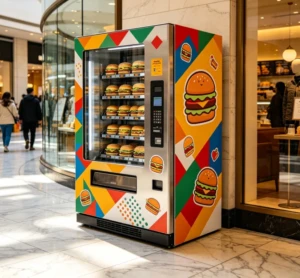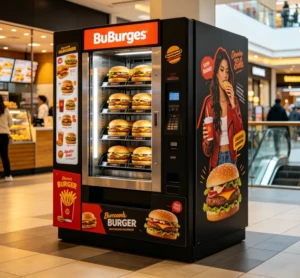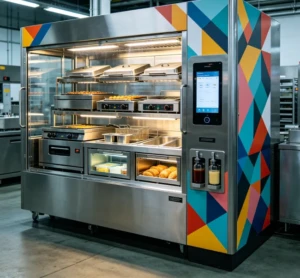
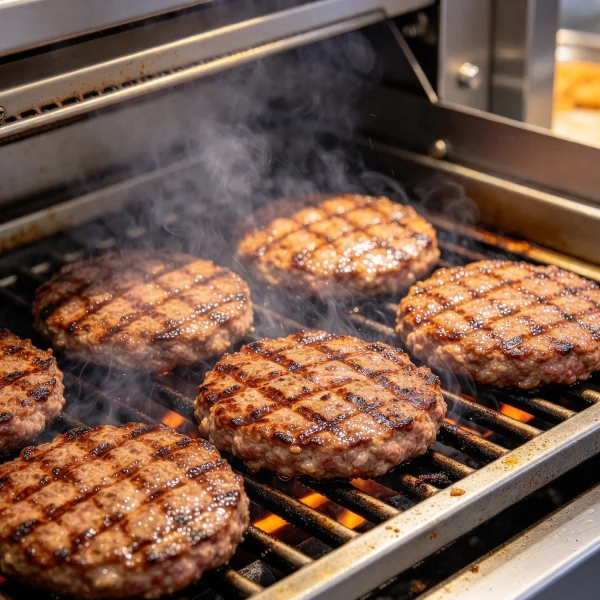
Is selling burgers profitable? Run the numbers on a burger vending machine and the answer is usually yes: many operators report gross margins around 60-70%, with monthly revenue of $1,200 to $3,000 per unit in decent foot-traffic spots. A machine placed at a transit station, college campus, or gas station can sell 80 to 140 burgers a day, depending on price and foot traffic. These machines cook a frozen patty in about 90 seconds, so customers get a hot burger at 3 a.m. without any staff. That’s the core appeal: fast food margins without the labor headache.
The real profit math behind burger vending
Before buying anything, map out the unit economics. A mid-range burger vending machine runs $28,000 to $45,000 delivered. Add installation and payment system fees, and you’re closer to $35,000 to $55,000. Each fresh-frozen burger costs about $1.80 to $2.40 in ingredients and packaging, and selling them at $5.99 to $7.99 leaves a healthy gap.
Here’s a typical monthly cost breakdown from operators we’ve followed over the past year. Numbers shift by region, but the shape stays the same:
| Item | Monthly cost | Notes |
|---|---|---|
| Machine lease or loan | $450-$700 | If you financed 4 years |
| Food and packaging | $800-$1,400 | Depends on volume |
| Electricity | $60-$120 | Cooking and refrigeration |
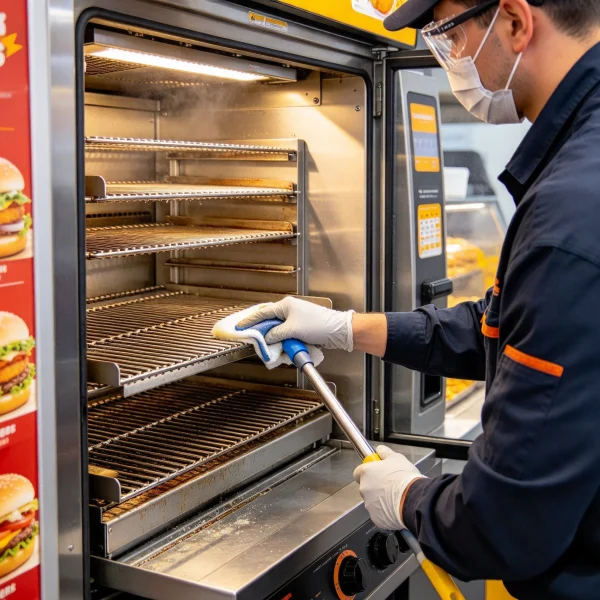
| Maintenance and cleaning | $80-$200 | Scheduled service |
If the machine sells 90 burgers a day at an average price of $6.50, that’s $17,550 a month in revenue. After food costs at 33% and operating expenses, net profit lands around $4,000 to $7,000 a month. That works out to a payback period of 6 to 9 months on a $45,000 setup, which is faster than most food businesses ever get.
What makes one location profitable and another dead?
Location does more work than the machine. A burger vending unit at a busy gas station near a highway exit can easily move 120 burgers a day. The same machine inside a quiet office lobby might barely do 15. Before you sign a site agreement, count actual foot traffic at three different time slots: morning rush, lunch, and late night.
You also need to check the competition. If there’s a McDonald’s directly across the street, your vending burger becomes a novelty, not a destination. But put it somewhere food options vanish after 11 p.m., and you own the market. If you’re completely new to the model, this guide on how to start a vending machine business in 2026 with proven steps covers licensing and the first-site basics.

Burger vending vs. a traditional burger stand
Let’s compare what you’re actually buying into. A traditional burger food truck or stall costs less upfront, but it demands staff, permits, and your daily presence. A vending machine trades labor for a bigger upfront check and tighter technical limits. The table below shows the trade-offs:
| Factor | Burger vending machine | Traditional burger stand |
|---|---|---|
| Upfront cost | $35,000-$55,000 | $15,000-$50,000 |
| Monthly labor | ~$100 (restocking) | $3,000-$7,000 |
| Daily capacity | 80-160 burgers | 200-400 burgers |
| Operating hours | 24/7 | Depends on staff |
| Payback | 6-9 months | 8-10 months |
Neither option is objectively better. If you want 24/7 revenue and you can live with fewer menu choices, vending wins. If you want to cook custom orders and build a brand, a stand gives you room to play. For operators who want a semi-passive asset, the machine is the cleaner route.
If burgers don’t fit your site, the write-up on what machines can make you money with real ROI data is worth a read before you commit.
Watch out for these hidden costs
The machine cost isn’t the whole story. Sites charge commissions that slice your revenue by 10% to 20%, sometimes more in airports and malls. You’ll also need a health department permit, a food handler certificate in some states, and a liability insurance rider. Those fees add up quicker than people expect.
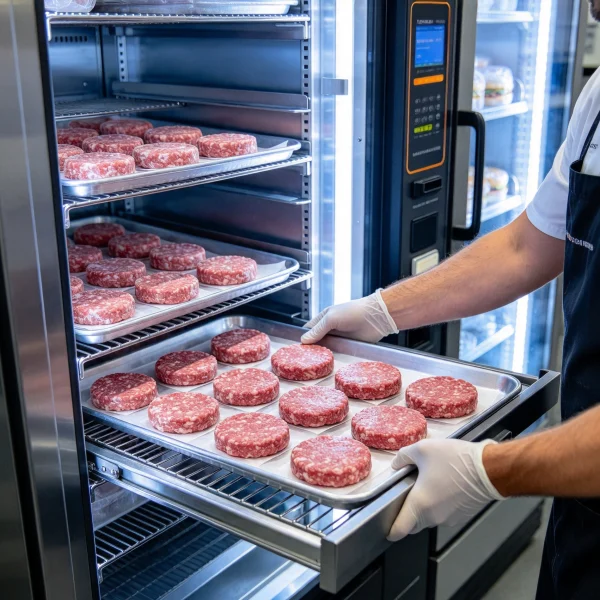
Then there’s the restocking rhythm. A machine selling 100 burgers a day needs three or four full trays of frozen patties loaded every day or two. If you’re running five machines across a city, you’ll spend your weekends driving, cleaning, and troubleshooting. That’s real work, even if it’s not a full-time job.
How to choose a burger vending machine supplier
This is where most people get stuck. Burgers are heavier and greasier than snacks or drinks, so the machine’s cooking chamber, ventilation, and refrigeration system matter. Ask every supplier for the same three numbers: average burgers sold per machine in their network, service response time, and spare parts availability in your region.
On VendingCore’s supplier ranking, you can compare verified suppliers, read buyer reviews, and send inquiries directly. That beats chasing down random manufacturers on social media, and you can see which brands actually hold up in the field.
You also want a supplier who offers remote monitoring. If the machine goes down on a Saturday night, you need to know before a customer does. Some suppliers include telemetry in the price; others charge a monthly fee. Get it in writing.
Bottom line: is the burger vending play for you?
The short answer is yes, if you pick a high-traffic location, keep costs honest, and choose a supplier that supports you after the sale. The model shines with low labor and round-the-clock hours, but it rewards operators who treat restocking like a discipline, not an afterthought.
Start with a single machine. Learn the cleaning rhythm, track your food cost weekly, and pay attention to which hours sell. Once that unit pays back in 6 to 10 months, then you can think about scaling to two or three sites. When you’re ready to see what’s actually on the market, browse VendingCore’s supplier ranking and send the same questions to three suppliers at once.
Pairing a burger machine with a cold drink machine often lifts both. This forecast on best-selling drinks for vending machines in 2026 shows which drinks still earn their space next to a burger.
Most people buy the machine first and pick the location second. That’s backwards. The burger vending model only works where there’s proven late-night or high-density demand. I’ve seen operators succeed with a single unit in a hospital cafeteria, and I’ve seen them fail with three machines in a suburban office park. The food cost is forgiving, and the labor is nearly zero, but the location will make you or break you. Start with one site, track every number for a few months, and only expand after the first machine pays for itself.
FAQ
What is the average profit margin for a burger vending machine?
Most operators report gross margins between 60% and 70%, which means after food and packaging costs, you keep roughly two-thirds of every sale. Net margin, after site commission, electricity, maintenance, and restocking, tends to be 25% to 40%. A machine doing 50 burgers a day at $6.50 can net $2,400 to $3,900 a month in many markets. The spread depends mostly on your location deal and how disciplined you stay with portion control.
How many burgers does a vending machine sell per day?
In a good location, 80 to 140 burgers a day is realistic. Quiet sites might do 20 to 30. The strongest performers sit outside late-night businesses, hospitals, transit hubs, and college dorms where people want food after regular kitchens close. Don’t rely on averages alone. You need site-specific foot traffic data and a sense of whether passersby match the profile of someone who eats a hot burger from a machine.
How much does a burger vending machine cost in 2026?
Expect to pay $28,000 to $45,000 for a new unit, plus installation, taxes, and payment system fees. Shipping and setup can add $3,000 to $8,000 depending on the site. Some suppliers offer leasing, which lowers the upfront hit but adds monthly finance costs. Before you compare prices, decide on capacity and service network. A cheaper machine from a distant supplier can cost more in downtime and freight when parts are needed.
What locations are best for a burger vending machine?
Locations with steady foot traffic during off-hours are ideal. Gas stations, truck stops, convenience stores, military bases, hospitals, and college campuses all fit. Look for places where the nearest hot food option is at least a ten-minute walk away. Avoid residential streets with no evening traffic and don’t rely on foot traffic alone. In 2026, operators in the US and Europe are also testing machines next to EV charging stations, where drivers wait 20 to 40 minutes with time to buy food.
How fast can a burger vending machine pay for itself?
With a strong location, payback usually lands between 6 and 9 months. A mediocre site can stretch that closer to 10 months, so calculate your own numbers before buying. Use a conservative daily sales figure, not the supplier’s brochure. A machine in a poor spot can still be profitable, but a slow payback ties up money you could have used for a second location.
Do burger vending machines require a food license?
Yes, in most places. Vending machines that serve prepared food generally need a food service or vending permit from the local health department. You may also need a food handler certificate if you restock the machine, and a business license. Requirements vary by city, so check with the local authority before signing a site lease. Health inspectors pay special attention to temperature logs, so keep records of fridge and cooking temperatures every time you visit.
What are the biggest mistakes new operators make?
Picking a location on gut feel ranks first. The second is ignoring site commission, which can be 10% to 20% of gross sales. Third is letting the machine run out of patties during peak hours, because one empty machine sends customers straight to a competitor. Also, don’t cheap out on preventive maintenance. A $200 service visit every three months beats an $800 repair after grease causes a sensor failure.