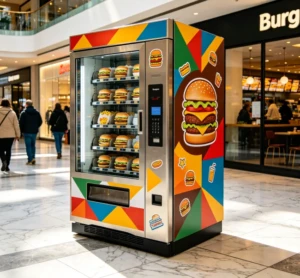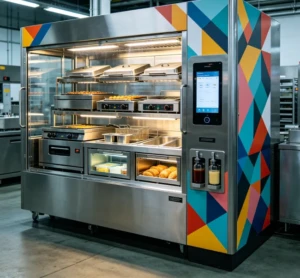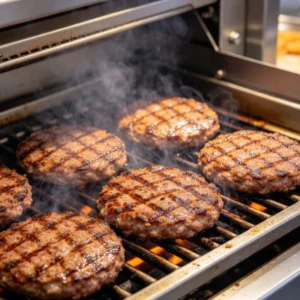
The price of a burger vending machine typically ranges from $12,000 for a basic model to over $60,000 for a fully automated, AI-powered robotic unit. That’s the sticker price, but your real investment—and potential for profit—depends entirely on what you’re buying and how you plan to use it. You’re not just shopping for a box; you’re evaluating a 24/7 automated restaurant that needs to handle cooking, assembly, and payment without a human in sight. Let’s break down what you’re actually paying for and how to think about this purchase as a business owner.
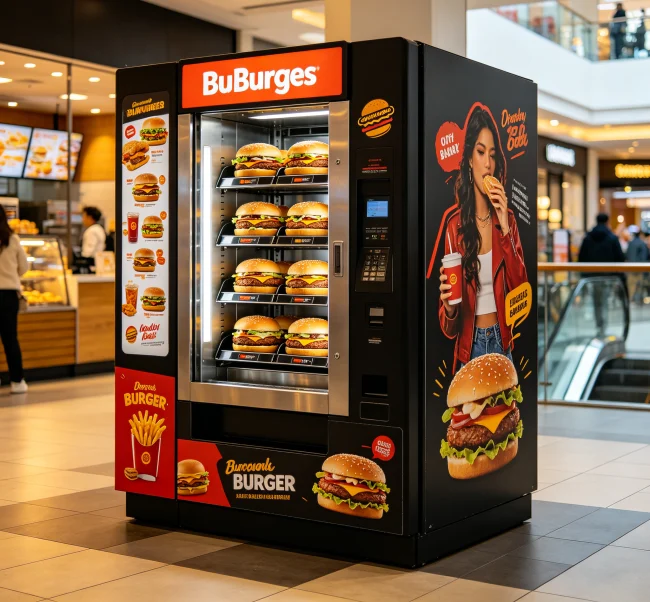
You’ll find machines in three main categories, and the features jump dramatically with each price bump.
First, the entry-level or basic models ($12,000 – $22,000). These are often “finishing” or reheating machines. They store pre-cooked, frozen patties and buns, then heat and assemble an order. The tech is simpler—think microwave or convection heating elements and basic mechanical arms. They’re a solid start for lower-traffic areas like office breakrooms or small colleges.
Then you have the advanced, fully automated models ($25,000 – $45,000). This is where most commercial buyers land. These units can cook from raw or frozen. They have integrated griddles, refrigerated ingredient bays, robotic assembly arms, and sophisticated software. Capacity is larger (often 150-200 burgers), and they include large touchscreens and cashless payment systems. This tier is built for airports, busy malls, or university quads.
At the top, the AI-powered robotic kitchens ($50,000 – $80,000+). This is the cutting edge. We’re talking about machines with computer vision to monitor cooking, predictive analytics for inventory, and sometimes even robotic arms that handle everything from dispensing sauce to packaging. The price reflects R&D, premium materials, and complex integration. The ROI case here hinges on ultra-high volume, premium pricing, and reduced waste.
💡 Key Takeaway: Don’t just look at the price tag. Match the machine’s capabilities to your location’s expected sales volume and customer expectations.
What Actually Drives the Cost?
So why does one machine cost five times another? It’s not magic—it’s components and complexity.
The cooking and assembly system is the biggest cost driver. A simple reheating module is cheap. A commercial-grade griddle with precise temperature control, a vacuum-based frozen patty dispenser, and a multi-axis robotic arm that can place pickles accurately? That’s expensive engineering.
Capacity and throughput matter. A machine that holds 80 burgers and makes one every 3 minutes is a different beast than one holding 300 and delivering one every 60 seconds. Higher capacity means more refrigeration, more ingredient bays, and more robust hardware.
Then there’s the tech stack. A basic resistive touchscreen versus a 32-inch HD interactive display with integrated customer analytics software. Basic payment versus a system that handles credit/debit, mobile wallets, and facial recognition. Cloud connectivity for remote management and real-time sales data adds cost but immense operational value.
Brand and origin play a role too. Established manufacturers with proven reliability and extensive service networks often command a premium over newer market entrants.
The Real Investment: Total Cost of Ownership (TCO)
Here’s where most online research falls short. The purchase price is just the entry fee. To run a profitable operation, you must budget for the ongoing costs.
Let’s talk about a 5-year TCO for a mid-range ($35,000) machine in a decent location:
Suddenly, that $35,000 machine has a true 5-year cost closer to $55,000-$65,000. Planning for this from the start is what separates successful operators from those who struggle.
💡 Critical Info: Always model your Total Cost of Ownership, not just the purchase price. Include installation, utilities, ingredient sourcing, and a monthly maintenance budget.
ROI and Profitability: Making the Numbers Work
Can you make money? Absolutely. But it’s a numbers game. Your profit hinges on three things: location, unit economics, and uptime.
A good location might see 30-50 sales per day. If your average burger sells for $8 with a food cost of $3, that’s $5 gross profit per item. At 40 sales a day, that’s $200 daily gross profit, or about $6,000 a month.
From that, subtract your TCO expenses (utilities, lease, maintenance). If those total $1,500 monthly, your net operating profit is around $4,500. On a $35,000 investment, that suggests a payback period of 2-4 months in an ideal, well-executed scenario. In reality, with ramp-up time and variable sales, a 3-6 month ROI is a strong, achievable target for a well-placed machine.
The key is maximizing those daily sales through marketing, a great product, and—most importantly—keeping the machine running. Downtime is your biggest enemy.
Key Buying Considerations Beyond the Price Tag
Your relationship with the manufacturer is as important as the machine specs. Here’s what to prioritize:
After-Sales Support: Where are their service technicians? What’s the average response time? A cheaper machine with poor support will cost you more in lost sales than a premium model with a gold-standard service agreement.
Regulatory Compliance: This isn’t just a soda machine. You’re serving prepared food. Does the machine’s design and materials meet local health department codes? Are there NSF or CE certifications for its components? This is non-negotiable.
Supply Chain and Parts: Ask about the availability of spare parts. If a critical component breaks, can you get a replacement in days or in months? A manufacturer with a global parts network is a huge advantage.
This is where working with a professional sourcing service like VendingCore adds tremendous value. Our team doesn’t just provide a list of suppliers. We leverage our decade of industry experience and global manufacturer network to match you with partners who not only meet your price and spec requirements but also have a proven track record of reliability and strong after-sales support. We help you navigate these critical, non-price factors that ultimately determine your long-term success.
💡 Practical Advice: Vet the manufacturer’s service network as thoroughly as you review the machine’s features. Reliable after-sales support is a core part of your business continuity plan.
Finding the Right Supplier and Next Steps
Start by crystallizing your needs: target location, expected daily volume, budget (including TCO), and desired features. Then, engage with manufacturers or a sourcing partner who can ask the right questions.
Request detailed specifications, references from other operators, and a clear breakdown of warranty and service terms. Always ask for a video demonstration of the machine’s full cycle.
For buyers looking to efficiently navigate this global market, our role at VendingCore is to streamline this process. We connect serious buyers with pre-vetted manufacturers from our global network. You tell us your specific requirements—capacity, automation level, budget, and target region—and our sourcing experts work to match you with qualified suppliers that align with your business goals, helping you avoid the pitfalls of navigating complex international supply chains alone.
Ready to move from research to action? The best next step is to get specific quotes based on your unique scenario.
If you’re evaluating specific models and would like personalized assistance connecting with manufacturers that fit your operational and budgetary needs, our team at VendingCore is here to help. Submit your project requirements, and we’ll leverage our network to find qualified partners for you.