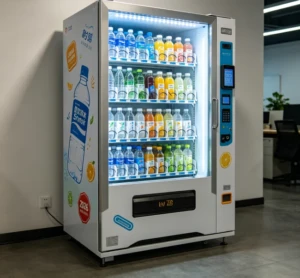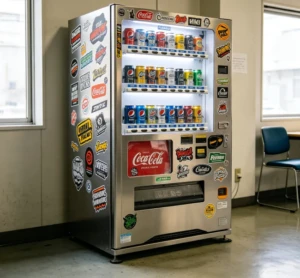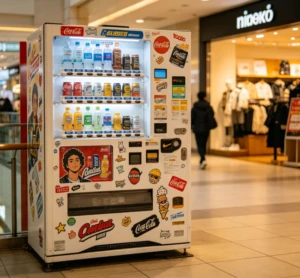
The hard numbers behind how to start a snack and drink vending machine business are simple: budget $2,000 to $10,000 for your first machine, and plan for gross margins of 25-35% on snacks and 30-40% on drinks. You’ll place machines in office break rooms, college dorms, hospitals, or gyms, stock them twice a week, and track sales from a phone app. Most new operators break even in 12 to 18 months when a location does 40 to 60 sales a day. It’s a cash-flow business that scales one machine at a time.
What It Actually Costs to Start
The biggest myth is that you need a fleet of machines on day one. You don’t. Nearly every operator I’ve talked to started with one used combo machine bought from a local dealer, then added a second machine after the first location proved itself. Keep the first budget tight, because the costs that sneak up on you are inventory, card reader fees, and fuel.
| Cost item | New machine | Used machine | Notes |
|---|---|---|---|
| Combo machine (snacks + drinks) | $4,500-$8,000 | $1,200-$3,500 | Check the compressor and coin mechanism before paying |
| Initial stock | $300-$600 | $300-$600 | Buy from a wholesale distributor, never retail |
| Card reader and install | $250-$500 | $150-$350 | Most used machines need a reader added |
| Permits and sales tax | $50-$300 | $50-$300 | Varies by city; check with your local tax office |
| Cart, cleaning supplies, tools | $150-$300 | $150-$300 | Add a dolly and a basic tool kit |
The table assumes you handle maintenance yourself. If you hire a route driver later, budget another $300 to $500 a month per machine. If you’d rather not own equipment at all, a full-service operator can run the same locations for you, though your take-home is smaller and your learning curve longer.
Choosing Your First Machine
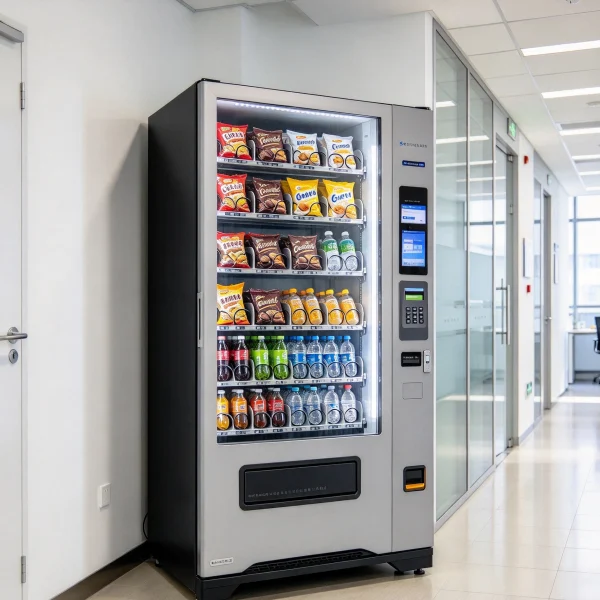
Snack and drink combos dominate the market because one unit covers two cravings in a single footprint. But if your location already has a soda fountain or a fridge full of bottled water, a dedicated snack machine might serve better. Match the machine to the location, not the other way around.
Whatever you buy, make it cashless-ready. On a typical route these days, 80% or more of sales come from cards and mobile wallets, so a coin-only machine will feel like a donation box. Look for a model with remote telemetry too, the kind that lets you check sales and low-slot warnings from your phone.
With regular cleaning, a quality unit runs 10 to 15 years. The 2026 vending machine lifespan guide walks through compressor care, coin mech replacement, and the maintenance schedule that keeps an old machine earning.
Location Is 80% of the Business
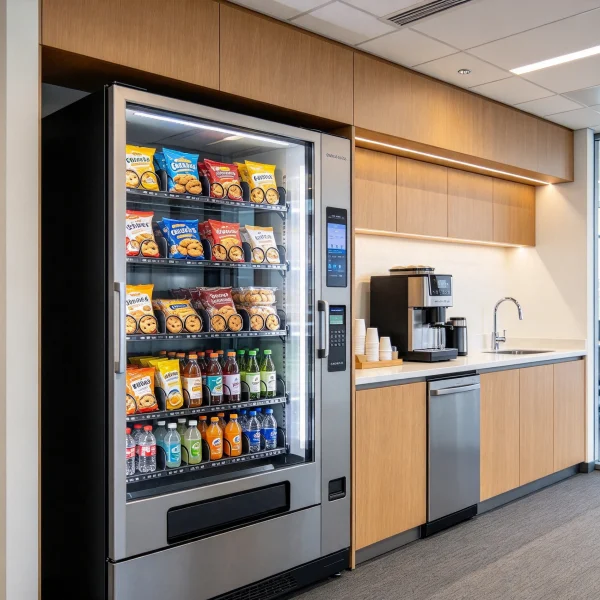
A $6,000 machine in the wrong spot is worth less than a $1,500 used machine in the right one. The best sites have steady foot traffic and no other place to buy a snack within walking distance: office break rooms, factory floors, hospital waiting areas, gym lobbies, and laundromats.
Before you sign a placement agreement, visit the site at three different times of day and count the people walking past. Ask the manager who supplies the break room today, and check whether employees already get free drinks. If the office fridge is stocked with free soda, your machine is fighting a losing battle.
The same reasoning drives specialty machines too. The 2026 cotton candy vending location playbook relies on visibility, dwell time, and a hungry crowd, and those three factors matter even more for snacks and drinks with everyday demand.
Stocking, Pricing, and the Margins That Matter
Gross margin is the gap between wholesale cost and the retail price on the machine. It starts generous, then card processing takes a few percent, and spoilage and theft quietly take their cut. Here’s a realistic pricing ladder for a typical route.
| Product | Wholesale cost | Retail price | Gross margin |
|---|---|---|---|
| Chips (2 oz bag) | $0.55 | $1.50 | 63% |
| Chocolate bar | $0.65 | $1.75 | 63% |
| Bottled water | $0.25 | $1.00 | 75% |
| Soda (12 oz can) | $0.45 | $1.50 | 70% |
| Energy drink | $1.20 | $2.75 | 56% |
High margin alone does not win a slot. Water sells steadily at a thin profit per unit; energy drinks turn slower but add more dollars per transaction. Most operators aim for a mix where about 60% of slots are crowd pleasers and 40% are higher-ticket items.
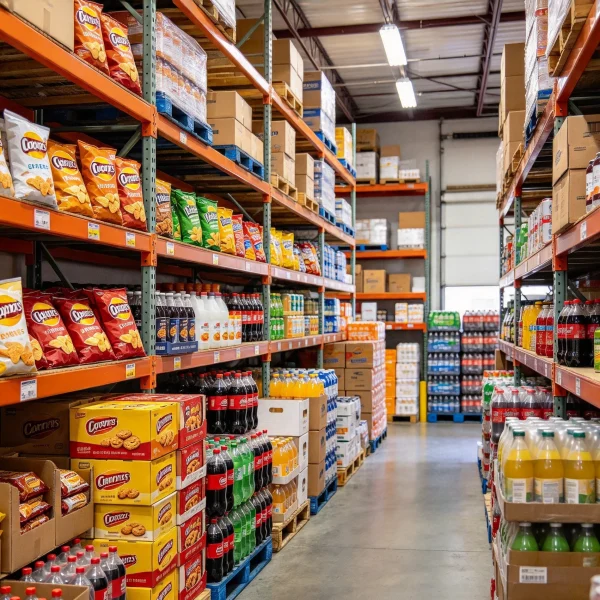
Buy stock through a wholesale distributor that delivers locally. The first route I built, I bought a case of candy at a supermarket and gave back half the margin before the machine ever saw it. Wholesale pricing is what makes the numbers in that table real.
Software, Payments, and Running the Route
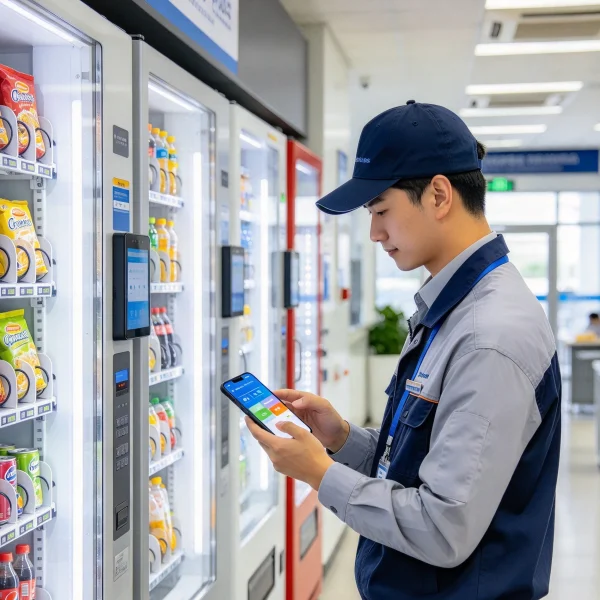
Modern vending runs on telemetry. A connected card reader, usually a Cantaloupe or NAYAX unit, logs each sale in real time, flags low slots, and tells you when a coil jams or a motor fails. You check the app over coffee and plan a route based on data instead of driving to every machine out of habit.
Cashless changes buyer behavior too. People who never carry change will happily tap a card for a $1.50 soda. The transaction fee, usually 2.5% to 5%, is the cost of capturing that extra business, and for most routes it pays for itself many times over.
Picking a Supplier You Can Trust
Where you buy the machine matters as much as which machine you buy. A local dealer lets you inspect the unit in person and usually stocks spare parts. Online marketplaces have tempting prices and the occasional seller with no phone number, no warranty, and no hope of support.
A directory simplifies the search. On VendingCore’s supplier ranking, you can compare verified suppliers, read buyer reviews, and send inquiries directly to several at once, which beats cold-calling dealers one by one. You stay in control of the conversation, and the suppliers know you’re comparing.
Watch for red flags: no physical address, no spare parts inventory, or a demand for full payment before you’ve seen the machine run. Legitimate suppliers take a deposit, ship against an invoice, and answer the phone when something breaks.
The Mistakes That Sink New Operators
The failure pattern repeats. Someone buys a brand-new machine, puts it in a low-traffic spot, skips the card reader, and quits after three slow months. The operators who last do the opposite: cheaper machine, proven location, cashless from day one, and a six-month minimum before judging anything.
Keep your expectations honest too. A single machine usually nets $200 to $400 a month after everything, which is a decent side income and a weak salary. The point is that ten machines doing that become a real income, but you only get there by keeping the first one alive.
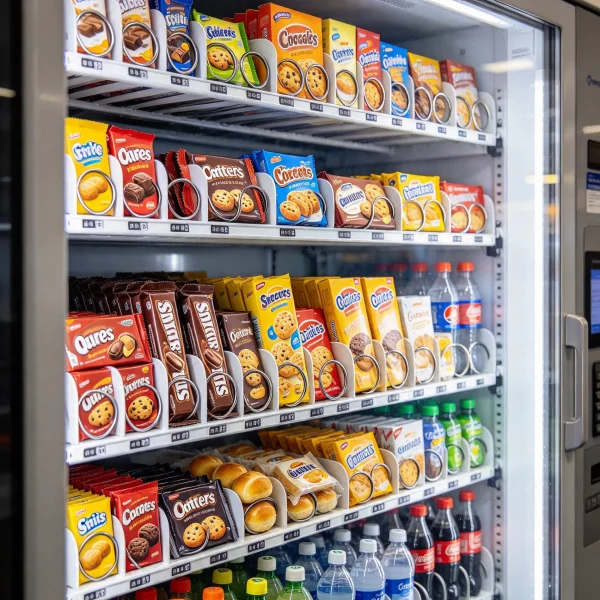
Most new operators fail because they treat vending like an ATM. It’s a route business, and the location, the stock rotation, the relationship with the manager, all of it compounds weekly. One machine in a strong site is more profitable than five machines in weak sites, and the discipline you learn on that first route is what lets you scale to ten or twenty machines without drowning in trips. The operators who succeed keep showing up every week and pay attention to what the sales data says.
Your First 30 Days, Simplified
Start with one machine and one location. Week one, pull permits and schedule the card reader install. Week two, stock the machine and add simple signage. Weeks three and four, watch the sales data, rotate slow items, and ask the manager what people request.
If you want to branch out later, the same playbook applies to other machine types, from phone case vending machines to lucky box machines, each with its own location quirks. But get your first snack and drink route profitable before you try any of them.
FAQ
How much money do I need to start a snack and drink vending machine business?
Plan for $2,000 to $10,000 all-in for your first machine, depending on whether you buy new or used. The machine is the biggest line item, but inventory, a card reader, permits, and basic tools add roughly $800 to $1,400 on top. A used combo machine is the lowest-risk entry point, and most operators scale from there.
What is the average profit margin for a snack and drink vending machine?
Gross margins typically run 25-35% on snacks and 30-40% on drinks before card processing fees. After those fees, spoilage, and travel cost, a well-managed single machine usually nets $200 to $400 a month. The margin depends less on the product than on the quality of the location and how consistently you rotate stock.
Where are the best locations for snack and drink vending machines?
Offices, gyms, factories, hospitals, laundromats, and colleges all work when they offer steady foot traffic and no competitor within walking distance. Visit a site at different times of day, count passing traffic, and check whether employees already get free snacks. A manager who mentions low break-room morale is often your best sales pitch.
Do I need a license to run vending machines?
Most cities require a general business license and a sales tax permit once you sell food or beverages through a vending machine. Sealed snacks and bottled drinks usually sit outside restaurant-style food permits, but some health departments still want a registration. Confirm with your local tax office and health department, because rules vary by state and city.
How many sales per day make a vending location worth keeping?
A useful rule of thumb is 40 to 60 sales a day per machine. Below that, the route trip often eats the profit; above that, you should consider a second machine nearby. Track daily sales for at least 60 days before judging a location, and watch for seasonality if the site is near a school or a seasonal employer.
Should I buy a new or used vending machine as a beginner?
For a first machine, a used combo unit from a local dealer is the smart play. You save thousands, and most mechanical issues are repairable with standard parts. Ask the dealer for a maintenance history, test the compressor, and check error codes before you pay. A new machine makes more sense once you know your route and have cash flow behind you.
How do I find a reliable vending machine supplier?
On VendingCore’s supplier ranking, you can compare verified suppliers, read buyer reviews, and send inquiries directly to several at once. Also ask any local dealer for references and spare parts availability. Avoid sellers with no physical address or demands for full payment upfront, because a machine with no support line is a very expensive paperweight.