What to look for when buying a perfume vending machine starts with real foot traffic, before you open a brochure. A mall corridor with 15,000 daily passersby and a hotel lobby with 800 guests call for different spray systems, security levels, and stock plans. Most operators place these units near restrooms, airport gates, department store exits, and event halls, where shoppers have idle minutes and a few dollars to spend. A well-placed model pays back in 6 to 8 months; the wrong one becomes an expensive shelf.
Start with foot traffic, not the machine
The busiest mistake I see is buying a machine before choosing a spot. A perfume vending machine lives or dies on dwell time. Shoppers need a few minutes to test a scent, decide, and pay. If your spot pulls mostly commuters who walk at speed, a spray sample unit can work better than a full-bottle kiosk, because the transaction is faster and the price is lower. If your spot is a mall lounge area, you can aim for a higher average ticket.
Walk the location at different hours. Stand there for 15 minutes and count who slows down, who looks at displays, who stops to check a phone. Mall management can give you foot traffic counts, but your own observation tells you more about the people who actually stop. That habit will save you more money than any discount from a supplier.
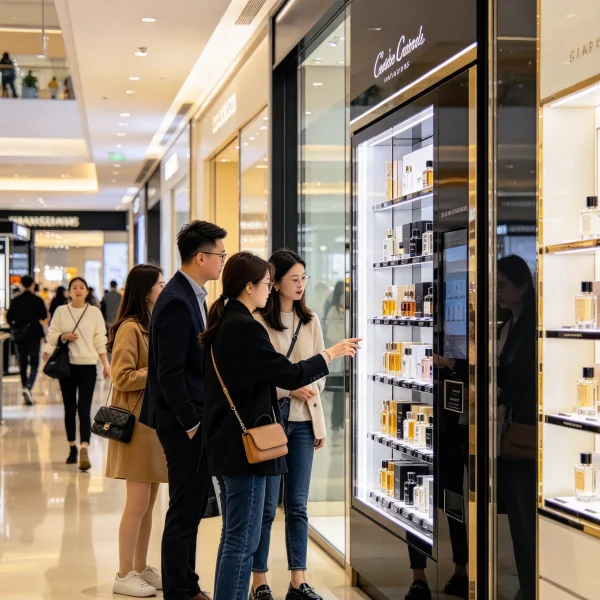
Some operators put perfume vending machines in restroom corridors because scent purchases pair naturally with travel moments and the waiting time feels unhurried. Airport arrivals and hotel lobbies behave the same way. Maximum traffic is less useful than idle traffic.
Match the dispensing system to how people shop
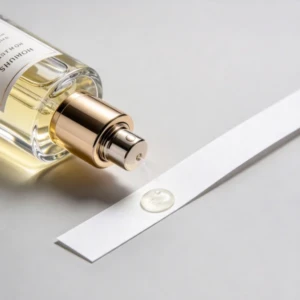
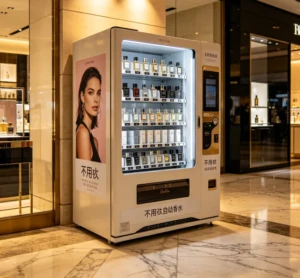
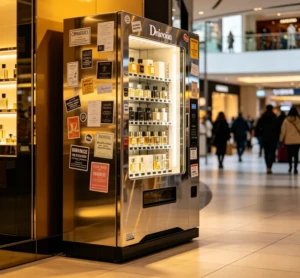
Perfume vending machines generally split into two families. Coil or spiral units hold boxed bottles, spin them forward, and drop them into the door. Spray sample dispensers use a pump or a small robotic arm to release a controlled mist onto a card or into a cup. A smart kiosk holds testers, atomizes precise doses, and can sell everything from 2ml travel sprays to full 50ml bottles.
Here is how the three formats compare when you are weighing a purchase.
| Machine type | What it sells | Best setting | Refill reality |
|---|---|---|---|
| Coil or spiral unit | Sealed boxed perfumes | Fast transit spots with more foot traffic than patience | Stock runs low before it turns a profit if you ignore telemetry |
| Spray sample dispenser | Testers and small vials | Restrooms, event halls, station exits | Nozzle cleaning and cartridge refills happen often |
| Smart kiosk with atomizer | Samples, travel sprays, gift sets | Mall lounges, hotel lobbies, departure gates | Sealed cartridges reduce evaporation but raise initial cost |
Whatever you choose, check how the machine handles the liquid. Perfume is mostly alcohol, and alcohol evaporates. If the refill system uses open reservoirs, you lose product even when nobody is buying. Sealed bottles or cartridges sound like a small detail; they show up directly on your monthly cost line.
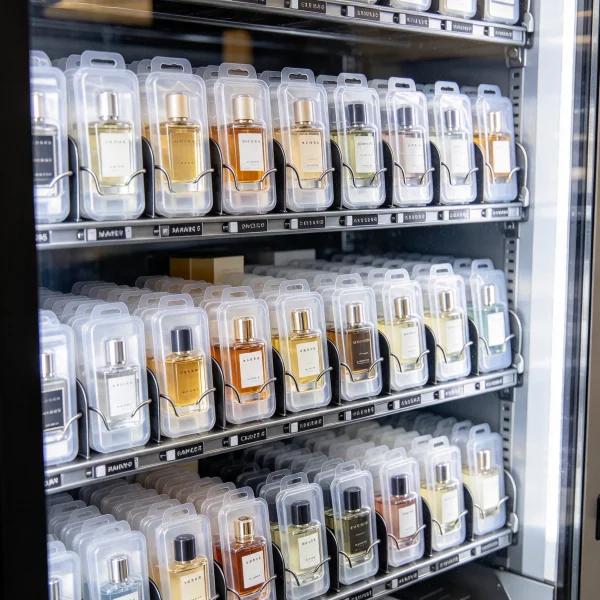
Avoid judging a unit by slot count alone. Twenty slots look generous, but if fifteen of them are too narrow for the bottles you want to stock, the display is decoration. Bring the packaging you plan to sell and slide it into the actual coil before you negotiate.
Payment, telemetry, and remote control
A modern perfume vending machine should do more than accept coins. Look for a card reader, mobile payment support, and a 4G or Wi-Fi board that streams transaction data. A remote dashboard lets you see stock levels, sales totals, error codes, and temperature alerts from your phone. That matters because scent-based vending needs more frequent servicing than a snack machine.
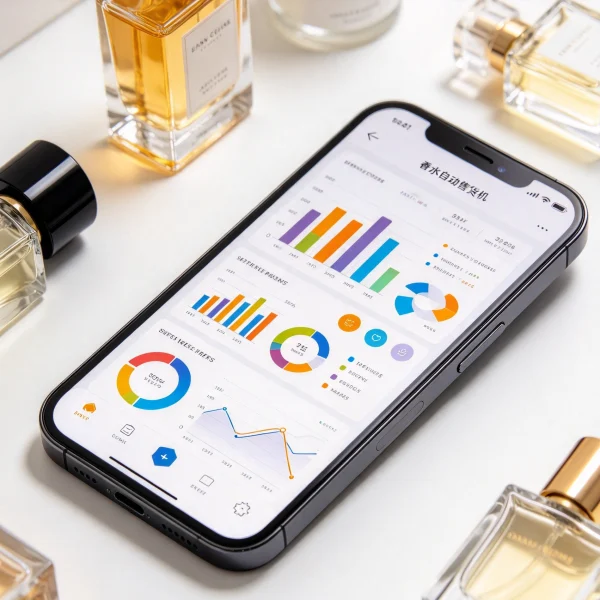
Ask whether you can change prices from that dashboard. Some suppliers tie pricing to a local app, which means a hundred machines need a hundred manual updates whenever you run a promotion. You want one central panel. Also check the card reader certification, because banks flag terminals that do not meet payment standards.
Security, tampering, and the alcohol factor
Perfume is a small, high-value item, so it attracts thieves. Look for a reinforced lock, anti-tamper sensors, an alarm that triggers when the door opens, and a mounting bracket designed for your floor type. A machine bolted to concrete in a busy corridor feels like a bad target; an unlocked unit in a quiet corner feels like an invitation.
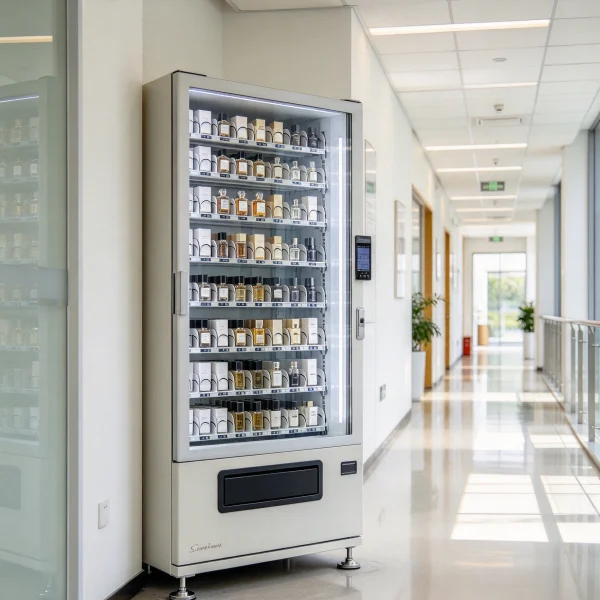
Because perfume spray contains alcohol, local fire codes may treat it differently from a typical snack vending machine. Some areas require a spark-proof motor or a sprinkler above the unit. Others cap the amount of stock you can display behind glass. Call your local fire marshal before signing anything, then ask the supplier whether the machine already meets those standards.
The supplier matters more than the cabinet
The machine is half the purchase; the supplier relationship is the other half. Check how many years they have spent building perfume vending equipment, where the spare parts come from, and how quickly they ship replacements. Ask for contact details of two operators who have run the same model for at least a year. A hesitation to share references is an answer in itself.
On VendingCore’s supplier ranking, you can compare verified suppliers, read buyer reviews, and send inquiries directly. That gives you a side by side view of warranty terms, price ranges, and real operator feedback without sitting through a dozen sales calls. The same reference checking process shows up in our sourcing guide for phone case vending machines, where the questions about spare parts and software support are identical.
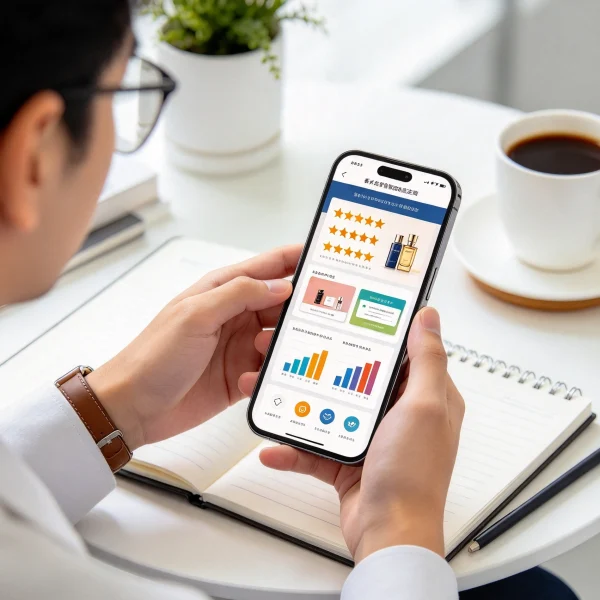
Ask about software updates too. Does the machine accept over the air updates, or does a technician have to visit? When payment protocols change, a supplier who can fix it remotely saves you days of downtime.
Costs, payback, and honest math
Prices range from affordable coil units to smart kiosks with large touchscreens. A used machine looks like a deal, but replacement parts for older dispensers can disappear quickly. Budget for freight, installation, payment processing fees, restocking labor, and a service buffer for the first three months.
In a location with steady idle traffic, operators often see the machine pay for itself in 6 to 8 months. If you land an airport or event space with proven foot traffic, 3 to 5 months is realistic. If the machine sits in a low dwell time corner, payback can stretch toward 10 months, which is why the site matters more than the hardware.
Work through the math with your actual product mix. If you sell 5ml samples at $8 to $12 each and move 30 samples a day, you are pulling in around $240 to $360 on a strong day. That kind of cash flow can pay the machine off quickly, but it depends on restock discipline and card fees.
Looking across vending categories, the same rule keeps showing up: low inventory cost plus idle traffic returns money fast. See the cotton candy vending machine profit margin breakdown, read how much money you can make selling phone cases, or follow the phone case printing vending machine 2026 business blueprint for a step-by-step plan.
Final takeaways before you sign
- Foot traffic first. A machine in a busy restroom corridor will outsell a fancier unit in a quiet corner.
- Match the dispensing system to the customer. Samples for speed, full bottles for dwell zones.
- Demand remote telemetry. Restocking blind becomes a guessing game.
- Check the fire code before you spend money on a lease or cabinet.
- Verify the supplier through reviews and references. VendingCore’s supplier ranking is a practical place to start.
Choose the perfume vending machine that fits a location where people have time to smell, swipe, and buy. Start with the site, verify the supplier, and keep the first 90 days flexible.
FAQ
What are the most important features in a perfume vending machine?
Focus on spray consistency, tamper-proof storage, remote monitoring, and payment support. A machine with these features protects inventory and tells you when refills are needed. Location selection still outweighs any feature list, because the same machine earns different money in a hotel lobby and a transit station.
How long does a perfume vending machine take to pay back?
With steady idle traffic, expect 6 to 8 months. An airport or event placement with proven foot traffic can shorten that to 3 to 5 months, while a low-dwell-time corner may sit closer to 10 months. The safest approach is to calculate your daily break-even before you buy; if the machine must sell more than it can realistically hold, rethink the site.
Do I need a special permit to operate a perfume vending machine?
Most cities treat it as a vending machine, but perfume changes the picture because the product contains alcohol. You may need a business license, a sales tax permit, and approval from the fire marshal for the location. Speak to the local fire department before signing a lease, then ask the supplier for documentation that the machine meets relevant safety standards.
Should I sell samples or full bottles?
It depends on dwell time. High-speed locations like transit corridors lean toward $8 to $12 samples that customers can try and buy in under a minute. Mall lounge areas can support full bottles and gift sets because people are comfortable spending more time and money. Some smart kiosks let you run both and switch shelf settings remotely.
How do I know if a supplier is reliable?
Ask for buyer references, warranty terms, spare parts availability, and software update commitments. Check whether the supplier responds to support tickets within 24 hours and whether it has been building vending equipment for a few years. On VendingCore’s supplier ranking, you can compare verified suppliers, read reviews, and send inquiries directly, which saves the cold-call guessing.
What should I do after buying a perfume vending machine?
Treat the first 90 days as a testing phase. Track sales by time of day, check which scent families move fastest, and adjust prices from the dashboard. Restock before the machine runs empty; an empty machine teaches customers to ignore the corner. Keep a log of every service visit, because that log tells you whether the machine or the location is the problem.
Most buyers over-research the cabinet and under-research the location. A perfume vending machine is a retail outlet with a vending engine inside it, and retail success has more to do with the people who pass it than with the brand of the stepper motor. I tell operators to spend two weekends counting foot traffic, watch how many people pause, then rank suppliers by after-sales service and software stability, not by who has the smallest footprint. If you can handle a six-month learning curve, this category can create a nice recurring income stream.