How much does a coffee vending machine cost? Between $2,000 and $20,000, and the figure you land on depends largely on the machine type, the location you’re serving, and whether you buy or lease it. A countertop unit for a small bakery or office runs $2,000-$5,000, while a floor-standing bean-to-cup machine that handles a 60-person workplace realistically lands at $6,000-$12,000. Big commercial machines for high-traffic gyms, co-working spaces, or factory floors push past $20,000 before installation. The purchase price is only the beginning, because per-cup costs for beans, cups, maintenance, and payment processing decide when you actually get your money back.
The four price tiers of coffee vending machines
Most of the market stacks into the four ranges below. Treat them as starting points, since the same model can cost $800 more if the seller includes delivery, installation, and a starter kit of cups and beans.
| Machine type | Typical price | Where it fits |
|---|---|---|
| Instant / capsule countertop | $500 – $1,500 | Low-traffic break rooms where any hot drink beats no hot drink. |
| Countertop bean-to-cup | $2,000 – $5,000 | Small offices, bakeries, salons, hotel receptions; roughly 20-60 cups a day. |
| Floor-standing bean-to-cup | $6,000 – $12,000 | Offices with 30+ staff, gyms, retail shops; includes a milk fridge and bigger hoppers. |
| Commercial high-volume | $12,000 – $20,000+ | Co-working spaces, factories, cafeterias; twin grinders and fast brew cycles for 300+ cups a day. |
A bakery owner I talked to last spring bought a countertop model for $3,200 and sells about 15 cups a day at $2.50. She picked it because the shop doesn’t have the foot traffic to justify a $9,000 floor unit.
Why price gaps of $6,000 exist between similar-looking machines
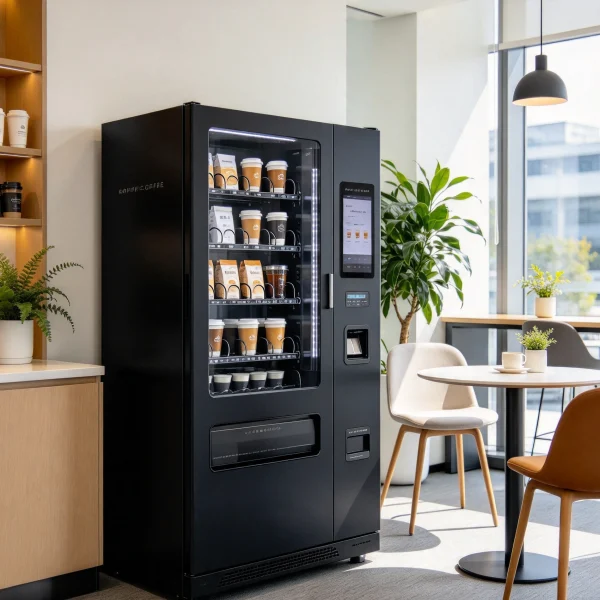
When two machines look similar from the front, the difference hides behind the front panel. A real milk system with a cooled compartment adds $1,500-$2,500. A second grinder so you can offer caffeinated and decaf without cleaning between drinks adds another $1,000-$2,000. A touchscreen with card and phone payments adds $800-$1,500, and IoT telemetry that texts you when the machine needs servicing adds $500-$800.
Skip those extras and a machine can cost $3,000. Add all of them and the same chassis crosses $10,000. That’s fine, as long as you’re buying the extras for the right reason: a location serving 200 employees a day needs the fast brew group and telemetry. A salon with 10 customers a day absolutely doesn’t.
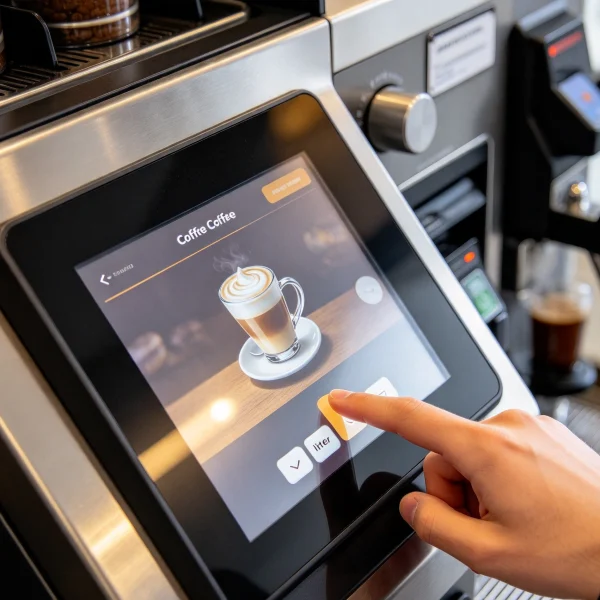
New, used, rented, or leased: what each option does to your bank account
The purchase price is a fork in the road, but the paths after it matter more.
| Option | Upfront cost | Monthly cost | What you need to know |
|---|---|---|---|
| Buy new | $5,000 – $20,000 | $0 | Full warranty, modern payments, longer machine life; you own the asset. |
| Buy used | $1,500 – $5,000 | $0 | Fastest entry; budget $800+ for repairs; older payment tech can reject modern cards. |
| Rent or lease | $100 – $300 | $80 – $250 | Lower risk and maintenance often included; over 3-5 years you’ll pay more than buying. |
A used machine can be a bargain. I’ve also watched people buy a $2,000 used unit and then spend $900 in the first six months replacing a control board. When you inspect one, put the brew group, water pump, and control board at the top of your checklist.
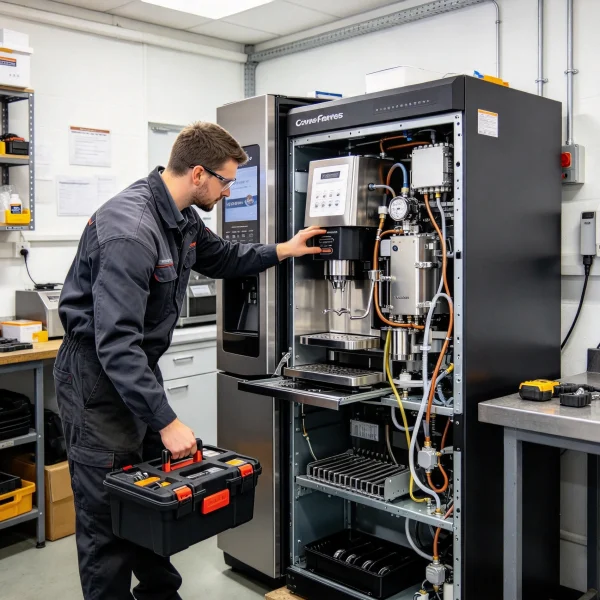
The hidden costs sitting under the price tag
First-timers fixate on the machine price and then get surprised by the monthly drain. Forecast these expenses before signing anything, because they hit your bank account every single month.
| Cost item | Typical range | Notes |
|---|---|---|
| Delivery and installation | $200 – $500 | Depends on location and whether plumbing is available. |
| Water filtration | $150 – $400 | Needed if the machine connects to the building’s water supply. |
| Ingredients per cup | $0.20 – $0.35 | Beans, milk, cups, lids, stirrers, sugar. Volume discounts change the math. |
| Service contract | $900 – $1,500 per year | Covers cleaning and repair labor; check what is actually included. |
| Payment processing fees | 2.5% – 5% per card transaction | Most modern machines sell 60-80% of drinks by card. |
| Electricity | $15 – $40 per month | The machine runs all day and the milk fridge never switches off. |
| Insurance | $100 – $300 per year | Small-business liability if the machine sits in a customer-facing location. |
A penny per cup sounds trivial until you multiply it. At 50 cups a day, one penny of ingredient difference is roughly $180 a year, and a nickel is $900. Choosing what else to stock is part of the same puzzle; the data in our guide on what sells most in vending machines helps you avoid slow products that just sit in the hopper.
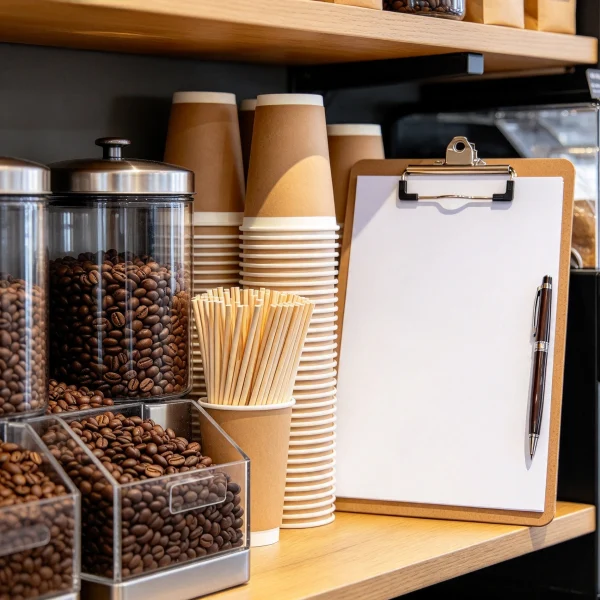
Can a coffee vending machine pay for itself?
Using the costs above, run one realistic example. Take a $7,500 floor-standing machine in an office with 60 employees. If 45 people buy a drink per workday at $1.80, that’s $81 per day, or about $1,780 across 22 working days. Ingredients eat roughly $300 a month, service and payment fees around $150, and electricity $30. Monthly net lands near $1,300, which puts payback around six months.
Cup price and traffic shift that number fast. Charge $2.00 and sell 60 cups a day; payback drops toward four months. Drop to 30 cups a day and the same machine stretches closer to ten months. If you want broader benchmarks by machine type and location, our most profitable vending machines guide has 2026 data that covers coffee and other categories.

How to pick a supplier without overpaying
Most price complaints come from buying through the wrong channel. A supplier that only sells boxes and runs no maintenance service will quote you a machine price, then leave you alone when the pump fails. A supplier that verifies machines, services them, and carries spare parts will quote a higher price and a much lower five-year cost.
Get three quotes and compare the service contract, not the sticker. Ask for the brew group replacement price, the average repair response time, and whether the quote includes delivery and first stock. Directories collect real buyer feedback for exactly this reason; on VendingCore’s supplier ranking, you can compare verified suppliers, read buyer reviews, and send inquiries directly.
If your budget is genuinely stuck near $5,000, consider whether coffee is the right first machine. There are cheaper ways into vending; our guide to what is the best business to start with $5,000 covers lower-risk options, and a phone case vending machine costs far less upfront than any decent bean-to-cup unit. Entering with a smaller machine and trading up later is a legitimate plan.
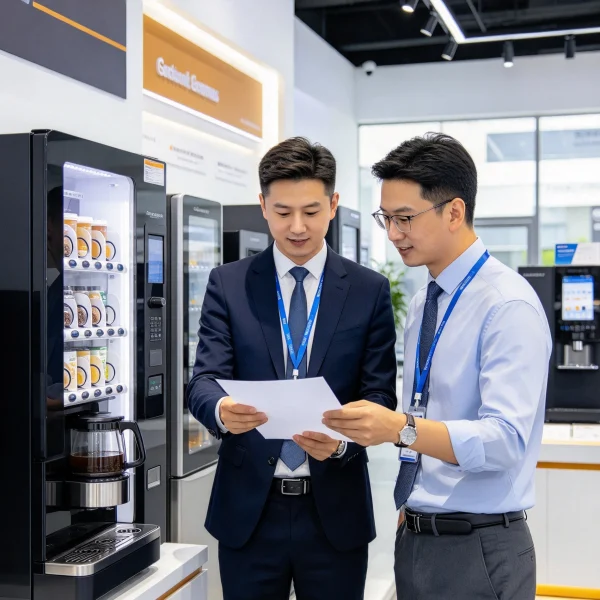
At the end of the month, the machine price is a number; your per-cup economics are what actually matter. Keep the payback inside four to eight months, keep the service contract honest, and the machine works for you instead of the other way around. When you’re ready to compare suppliers, start with the verified supplier ranking on VendingCore and shortlist two or three operators before requesting quotes.
FAQ
Is a cheap coffee vending machine worth it?
If traffic is under 20 cups a day, a $2,000-$2,500 countertop machine can work and pay back within eight to ten months. The catch is durability: budget machines often share the brew group design of home espresso units and fail under constant use. For a much cheaper entry into vending, our cotton candy vending machine buying guide covers costs and a profit calculator.
What is a fair price for a used coffee vending machine?
$1,500-$5,000 is normal for a working used bean-to-cup unit, depending on age and whether it has a milk fridge. Fair also depends on replacement parts. A machine with a replaced brew group and new water pump is worth more than an untouched one. Bring someone who repairs vending machines to look at it before you hand over money.
What are typical monthly running costs?
Expect $300-$700 a month for a mid-size machine once you add ingredients, service fees, payment processing, and electricity. Ingredients are usually half of that. If the location sells 300-600 cups per month, a per-cup cost of $0.30 puts ingredient expense at $90-$180. Add about $100 for a service contract and $20-$40 for power and the picture is complete.
How much can a coffee vending machine earn in a month?
In a location with 20-50 daily customers, gross monthly revenue of $1,200-$2,800 is realistic at $1.50-$2.00 per drink. Net after ingredients, fees, and electricity often lands at 55-65% of gross. That means a $7,500 machine can pay back in five to seven months at a strong site, or stretch toward ten months where traffic is lighter.
Should I rent a coffee vending machine instead of buying one?
Renting makes sense when your contract term is under 12 months, because service is usually included and your cash stays free. Over three to five years, however, rental payments add up beyond the purchase price. If the location has proven traffic, buying wins. If you’re testing a new space, rent first and buy once the daily cup count looks consistent.
What hidden charges should I look for in a supplier quote?
Installation, delivery, water filtration, payment processing fees, and service call minimums are the usual extras. Check whether the warranty includes both parts and labor, and whether annual maintenance visits are mandatory. Mandatory upkeep can add $900-$1,200 a year you didn’t plan on, so ask for the full cost of ownership in writing before you sign.
Most first-time buyers ask what the machine price is and stop there. In fifteen years of placing coffee machines, the placements that fail are the ones where someone saved $1,000 on the unit and then lost goodwill because the machine kept skipping espressos and leaking milk lines. This is a margin game: you win or lose on per-cup cost, service response time, and cup quality, not on the sticker. Buy from a supplier who can show you several live machines in operation, not a glossy catalog.