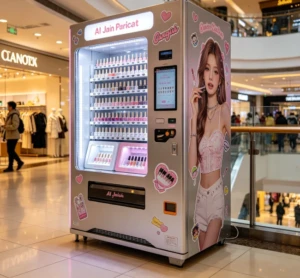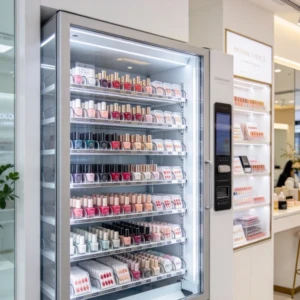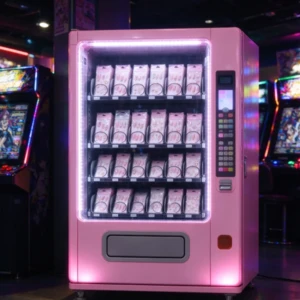
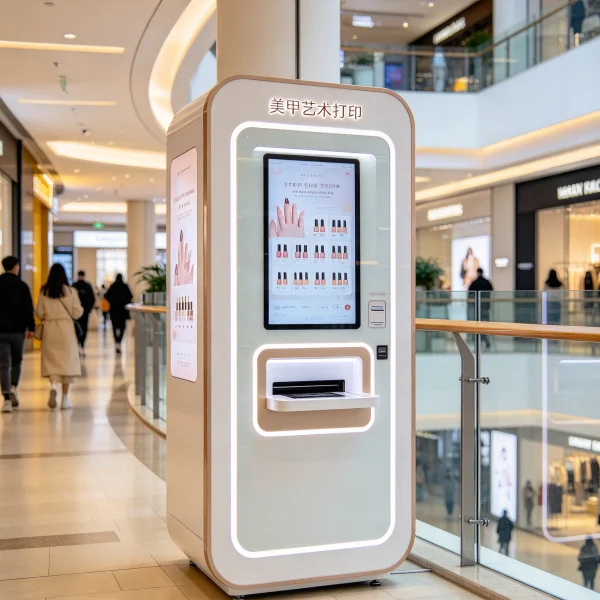
A nail vending machine from China typically costs $6,500 to $14,000 FOB Shenzhen or Ningbo, plus $600 to $1,400 for sea freight and clearance into a US or EU port. The hardware is a custom nail art kiosk: a customer uploads a photo or picks a design on the touchscreen, and the unit prints it onto nail stickers or press-on tips in two to four minutes. You’ll find them in malls, beauty supply stores, airports, and student districts with young foot traffic. Two suppliers can quote the same $9,000 and ship very different machines, so the print head, tip format, and payment module are what you compare before paying a deposit.
What a nail vending machine actually is
A nail vending machine is a self-service kiosk that prints a customer’s uploaded photo or chosen design onto nail stickers or press-on tips, cures the ink, and drops the finished set into a collection slot. There’s no capsule drum and no shelf of pre-made sets. Every order is printed on the spot, which is why the print head and the blank cartridge matter more than the cabinet design.
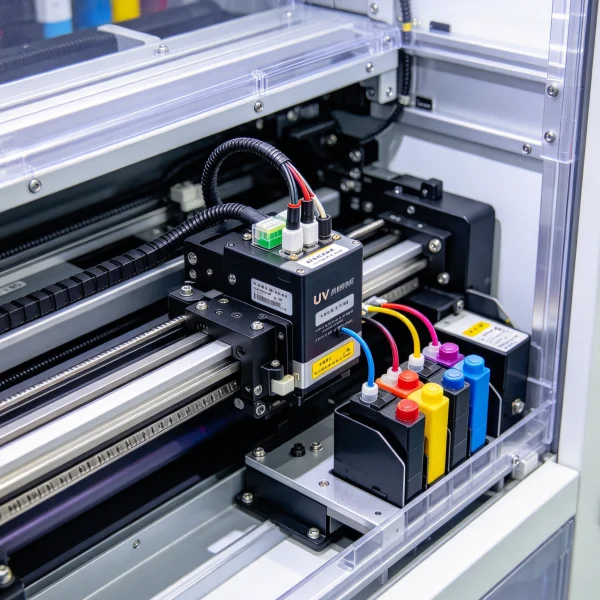
Open a typical export unit and you’ll see a UV or thermal inkjet print head, a cartridge holding blank sticker sheets or tips, a 21 to 32 inch touchscreen, an MDB-compatible payment board, and a curing lamp. The software counts too. Good machines let the customer crop the photo, preview it on a nail shape, and choose S, M, or L before the print starts. Cheap builds skip the preview, and that’s where refund requests come from.
Placement follows foot traffic. Mall concourses, beauty supply shops, metro stations, and salons that want an upsell without hiring another technician. Salon owners often park a unit near the entrance so walk-ins can print a set while they wait for a chair.
What you’ll actually pay, line by line
Factory quotes cluster into three bands. A basic 32-inch unit with a thermal head sits around $6,500 to $8,000 FOB. A mid-range UV-cure kiosk with a larger screen and a cloud backend runs $9,000 to $11,500. High-throughput builds with dual cartridges, a lift mechanism for the tip tray, and a factory-fitted card reader land between $12,000 and $14,000.
None of those numbers is your landed cost, and that’s the figure your accountant will ask about.
| Cost item | Typical range (USD) | What to check |
|---|---|---|
| Machine, FOB Shenzhen or Ningbo | $6,500 to $14,000 | Print head type, screen size, cartridge system |
| UV print head upgrade | $800 to $1,800 | Worth it in humid climates and high-volume sites |
| Blank tip or sticker cartridges | $120 to $260 per 500 sets | Order two spare sets with the machine |
| Sea freight, LCL, one unit | $600 to $1,400 | Get a written quote to your named port |
| Duty and customs broker | 0 to 8% of declared value | Confirm the HS code with your broker first |
| Spare parts kit | $150 to $400 | Print head, rollers, fuses, tray springs |
| Landed total, one unit | $8,000 to $17,000 | Add local delivery and installation |
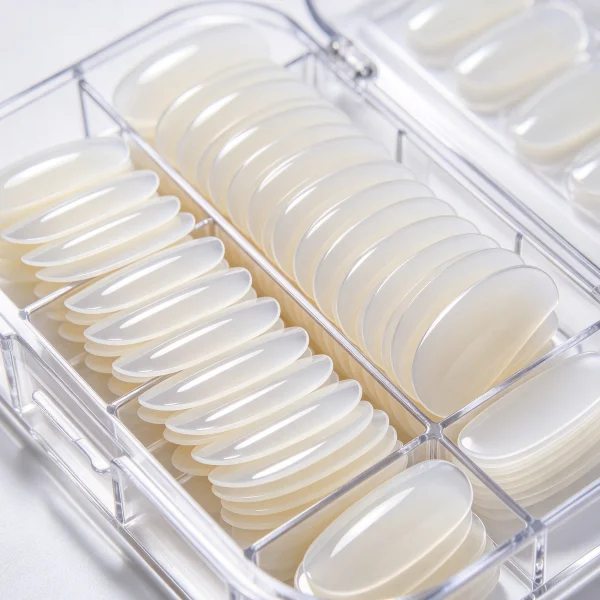
Consumables are the number people forget. Tip and sticker sets cost roughly $0.25 to $0.55 each, and a printed set sells for $8 to $15. That spread pays for rent, power, and payment fees long before it pays for the machine.
Specs that decide whether customers come back
Print resolution and ink type
Ask for the head model and the actual resolution instead of “HD quality”. 600 dpi produces a clean photo on a glossy white tip. 1200 dpi looks sharper, uses more ink, and adds 30 to 60 seconds to every set, which matters when a queue forms on a Saturday. UV-cured ink survives hand washing and dish soap better than thermal transfer, so if your machines sit in a humid market, spend the extra $800 to $1,800.
Tip and sticker format
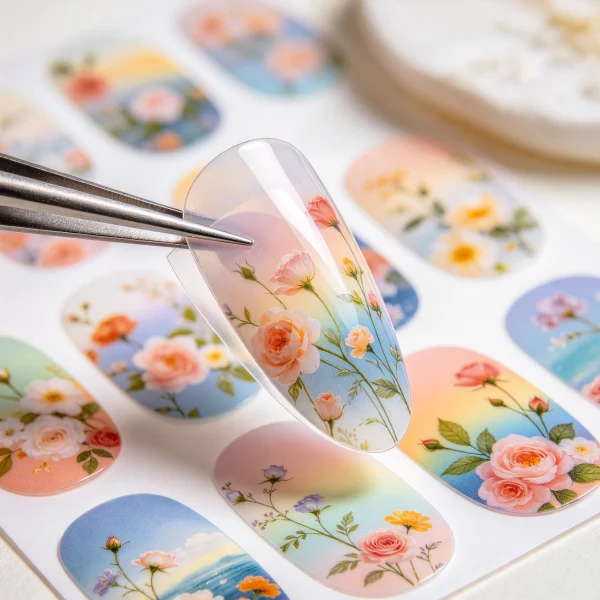
Most export machines take a standard press-on tip. The question that saves real money is whether the tray accepts third-party blanks. If it only takes the supplier’s proprietary cartridge, you’re tied to their consumable prices for the life of the machine. Buyers have lost more margin on that one detail than on any negotiation over the machine price itself.
Payment, connectivity, and software
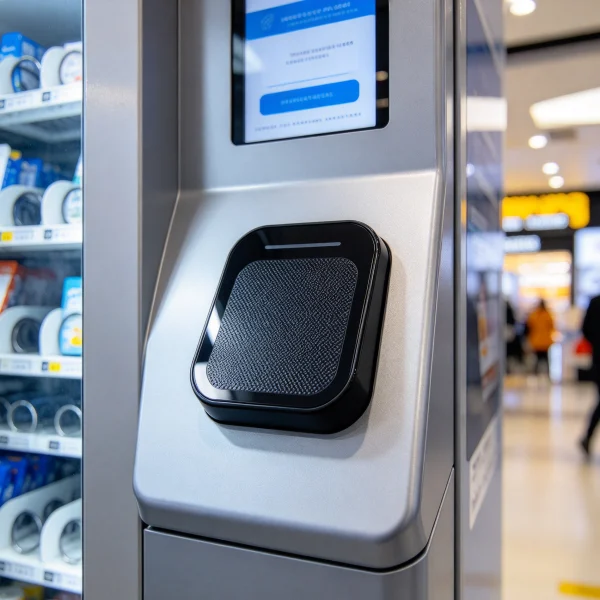
Look for an MDB or ccTalk payment board so you can swap in a local card reader later without returning the unit to China. For Europe, confirm the reader handles contactless, and check that the coin or note module matches your currency. Then ask who hosts the backend and what happens when the internet drops. A kiosk that stops printing during an outage quietly loses a day of revenue. If you want to see how payment and verification boards work across other self-service categories, this explanation of tobacco vending machine age verification and payment systems covers the same hardware family.
How this workflow compares to other custom kiosks
Photo-print kiosks share a lot of DNA. If you’ve read how a phone case vending machine works, the upload, preview, print, and cure sequence will look familiar. Many Chinese factories build both products on the same chassis and run them from the same software stack, which tells you a lot about who maintains spare parts well.
How to vet a Chinese supplier before you wire anything
Factories that sell a nail vending machine from China are easy to find and harder to trust. Search any sourcing platform and you’ll get pages of listings, many of them from trading companies that have never touched the production line. That’s not automatically a problem, but you should know which one you’re dealing with.
Run this list before the deposit leaves your account:
- Business license and export record, with the company name matching the bank account exactly
- At least three video calls, one of them an unscripted walk around the production floor
- Two customer references in your region, with phone numbers you can actually dial
- A physical sample print set mailed to you before you commit to a full order
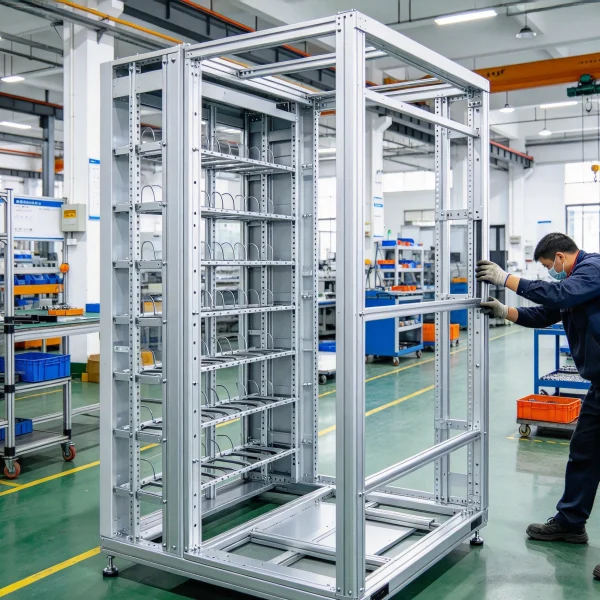
- Written warranty terms: 12 months on the print head, 24 months on the frame
- A spare parts price list with a three-year validity commitment
That last item is the one buyers skip and later regret. Print heads die. When yours does, the question is whether a $180 part arrives in ten days or whether you spend three weeks emailing a sales rep who has moved to a different company.
The same vetting logic plays out across product categories, and the guide to who supplies phone case vending machines is worth reading if you’re comparing several print kiosk factories at once. If you’d rather work from a structured process, this supplier vetting checklist covers the documents, payment terms, and reference calls in order.
Certifications, contracts, and support that holds up
CE and RoHS cover the EU, FCC covers the US, and your insurer will want a test report for the electrical components. Get the certificate number and verify it with the issuing lab, because photocopied certificates get reused across unrelated factories.
Payment terms sit at 30% deposit and 70% before shipment for most factories. On orders above $20,000 you can push for the balance against a copy of the bill of lading, or open a letter of credit through your bank. One rule matters more than the rest: the receiving account name must match the company on the invoice and the contract. Deposits sent to a personal account rarely come back, and no amount of follow-up fixes that.
Put three things in writing before you pay: the ship date, the spare parts commitment, and remote support terms. A 12-month warranty that covers parts only, with you paying $400 in shipping both ways, is a weaker deal than the headline suggests.
If you’re costing the whole project for the Gulf, this breakdown of vending machine costs in the UAE covers duty rates, installation, and what local retail space actually rents for.
Locations and payback
At $10 a printed set, a machine doing 25 sets a day grosses around $7,500 a month. Take out rent, consumables, payment fees, and electricity, and a $12,000 landed unit pays back in 5 to 7 months in a strong mall spot and 8 to 10 months in a quieter store. Both are workable. Below 8 sets a day, you bought the wrong location, not the wrong machine.
| Location type | Printed sets per day | Payback on a $12,000 landed unit |
|---|---|---|
| Mall concourse, weekend peak | 25 to 40 | 4 to 6 months |
| University campus, term time | 15 to 25 | 6 to 8 months |
| Beauty supply store | 10 to 18 | 7 to 9 months |
| Airport or transit hub, higher rent | 20 to 35 | 6 to 9 months |
Mistakes that cost first-time buyers
Most of the pain I hear about comes from five decisions, and none of them is about the machine’s build quality.
- Choosing on machine price alone, then discovering the cartridges are proprietary and cost double the market rate
- Skipping the mailed sample print, so the first real print happens after the deposit is gone
- Underestimating consumables and treating them as a rounding error instead of the main cost line
- Assuming the software license is permanent when the contract says 12 months
- Having no local technician lined up for a simple board swap
The software point bites quietly. Some factories bundle the customer app and cloud dashboard free for a year, then charge $40 to $90 a month per machine. Over five years that’s another $2,400 to $5,400, which changes the payback math you built your business case on.
Before you send a deposit
Two things decide whether this works: the machine you pick and the supplier standing behind it. Get the print head specification, the consumable cost, and the local payment setup right, and a $9,000 kiosk in a busy mall will earn its money back inside a year. Get them wrong and no discount will save the unit.
Comparing suppliers is where most buyers stall, because every factory says the same things in the same words. On VendingCore you can compare verified suppliers side by side, read buyer reviews, check price ranges, and send an inquiry directly to the ones that fit your spec. Bring your spec sheet, ask each supplier the same questions, and let the answers sort them out.
FAQ
How much does a nail vending machine from China cost?
Most factories quote $6,500 to $14,000 FOB depending on the print head, screen size, and cartridge design. Add $600 to $1,400 for sea freight, plus duty and a customs broker, and a single unit lands between $8,000 and $17,000. Consumable sets cost $0.25 to $0.55 each and sell for $8 to $15, so your margin lives in consumables rather than in the purchase price.
Do these machines print on real nails or press-on tips?
Press-on tips and nail stickers. The customer’s finger never goes inside the machine. You load blank tips or sticker sheets into a cartridge, the head lays down the image, and a curing lamp sets the ink. Most sets take two to four minutes, and the customer applies them at home or in a salon chair. Ask for a sample set in your target sizes before you order the machine.
Is there a minimum order quantity?
One unit is normal from trading companies and mid-size factories, although pricing improves at three to five units. A single-machine order from a direct factory often carries a $300 to $800 premium over the five-unit rate. If you’re testing a location, buy one, run it for 60 days, then scale. Don’t commit to ten machines before you know your real daily print count.
How long does shipping from China take?
Production runs 15 to 30 days after deposit. Sea freight to a US port takes 25 to 40 days, and to Europe 30 to 45 days, plus clearance and inland delivery. Door to door is usually 7 to 11 weeks. Air freight cuts transit to 5 to 8 days but costs several times more, so it only makes sense for a trade show or a fixed opening date.
Which certifications should I check?
CE and RoHS for the EU, FCC for the US, and a test report from a recognized lab for the electrical components. Verify the certificate number with the issuing lab rather than accepting a PDF. Check the payment board protocol as well, since an MDB or ccTalk board lets you replace the card reader locally instead of shipping the machine back to China for a $90 part.
Should I buy from a factory or through a platform?
Both routes work. Factories offer better pricing and faster spare parts, while trading companies handle export paperwork and small orders more smoothly. The risk follows whoever holds your deposit. Compare several verified suppliers on VendingCore, read reviews from buyers in your region, and send the same spec sheet to each one so the quotes actually line up.
What payback period is realistic?
At $10 per printed set, a machine doing 25 sets a day grosses around $7,500 a month. After rent, consumables, and payment fees, a $12,000 landed unit typically pays back in 5 to 7 months in a strong mall location and 8 to 10 months in a quieter store. Below 8 sets a day, the location is the problem, not the hardware.
China still builds most of the world’s print kiosks, and the gap between the best and worst factory is wider than the gap between China and anywhere else. I tell buyers to spend two weeks on the supplier and two hours on price. Ask for raw video of the same machine printing three different photos, ask who stocks the print head, and ask what happens on a Sunday night when the software crashes. The factory that answers all three quickly usually still answers in year three, and that’s worth more than a $500 discount.