Can you buy a vending machine and put it anywhere in the UK? Not anywhere, and the catch is nearly always planning permission and landowner consent. In England, a standalone machine on public land usually needs planning permission and a highway licence; inside an existing shop or office, you may only need written permission from the owner. Before you buy, check the local council’s rules and inspect the site’s footfall. That applies whether you’re going for a coffee machine, a snack vendor, or a perfume unit.
Where can you actually put a vending machine in the UK?
The first thing to unlearn is the idea that a vending machine is like a phone charger you can plug into any wall. It’s a commercial unit. The law treats it differently depending on where it stands: on public land it’s effectively a structure, inside a private business it’s merchandise. That distinction shapes every decision below.
If you have a shop, gym, office, or waiting room with a spare corner, the site owner can simply say yes. But if that person is a tenant, you need the landlord’s written approval too. Most landlords ask for proof of insurance and a copy of the machine’s electrical safety certificate before they allow anything through the door.
Planning permission: when you need it and when you don’t
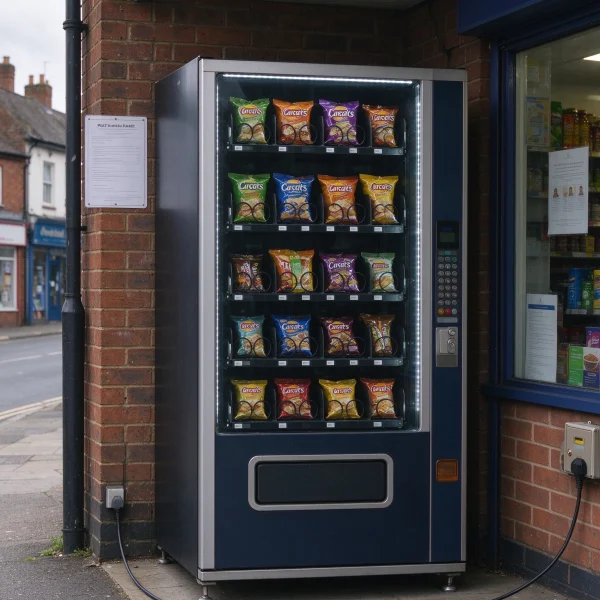
Planning rules are not one-size-fits-all, which confuses most first-time operators. Inside a building, a vending machine rarely counts as a development, so no planning permission is needed. On a pavement, a roadside verge, or any piece of public open space, you almost always need a permit from the council or the highway authority.
The cheapest way to find out is a one-line email to the council planning department with a photo and dimensions. They usually reply within a few days, and the answer costs you nothing. Do not skip this step because a neighbour swore their machine had no permission. If the council later asks you to remove it, the removal bill lands on you, not the neighbour.
The full checklist before you install
Planning permission is just the headline. If you sell food or drink, the local environmental health team needs to know you exist, and you normally have to register at least 28 days before trading. If the machine has a plug, the site’s electrical socket needs to be on a circuit that can handle the load. Here’s the short version:
| Check | Who you need to ask | Why it matters |
|---|---|---|
| Landowner consent | The building owner or leaseholder | Without it, your machine is trespassing and can be removed on the spot. |
| Planning permission | Local council planning department | Required for standalone units on public land and sometimes for open private land. |
| Food hygiene registration | Environmental health team | Mandatory for any machine selling food or drink. It’s free to register; apply 28 days before trading. |
| Electrical safety | Qualified electrician or supplier | Machines should carry CE/UKCA certification and pass a PAT test before installation. |
| Public liability insurance | Your insurer | Covers accidental damage or injury near the machine. |
The good news is that most of these checks are paperwork. The bad news is that they take time. A food registration form takes minutes, but a planning decision can run for four to eight weeks, and some machines need delivery slots booked weeks in advance. We’ve seen operators fly through the first three checks and trip on the last one because they already paid for a machine they could not place.
How to find a good spot, and what to charge for it
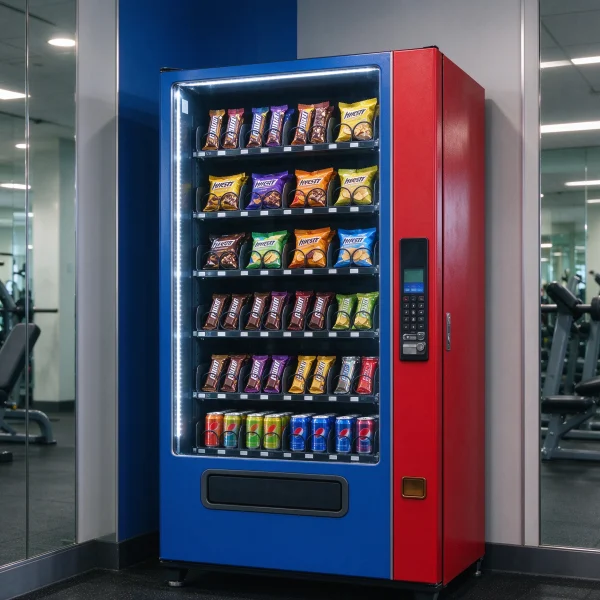
Once you know the rules, the fun part starts: finding a spot where people have change in their pockets and a reason to pause. Good sites are not the busiest streets. They are the places where people linger: train station platforms, hospital waiting areas, gym corridors, student halls, camper van parks and staff canteens all beat a busy high street where everyone is walking somewhere.
You will often split the takings with the host. A revenue share of 10-20% of gross sales is typical, although some hosts prefer a flat monthly rent so they do not have to check numbers with you. If a site owner asks for more than 25%, you need genuinely massive footfall to make it work. Visit the site at the exact time you expect to sell before you commit.
- Who cleans the floor around the machine?
- Is there a power socket on a dedicated circuit?
- Does the host want a cut of sales or a flat fee?
- What happens if the machine breaks down outside opening hours?
- How long is the notice period on the agreement?
Ask these five questions before you sign anything. The answers tell you whether this is a stable home or a headache waiting to happen.

Choose the machine after the site, not before
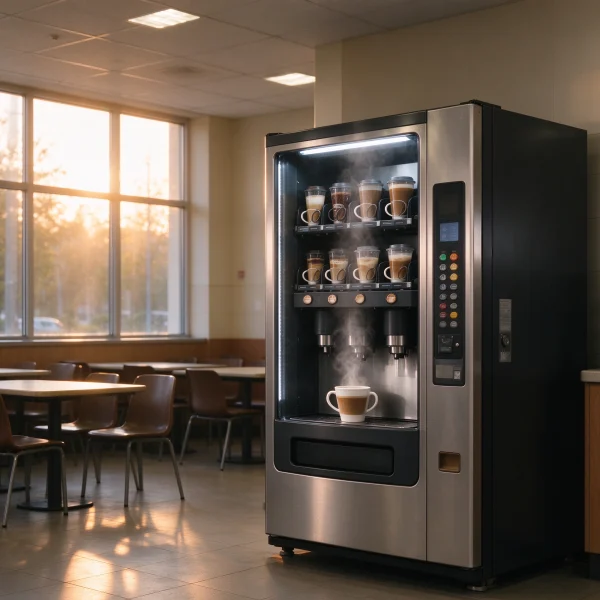
The machine itself should match the location’s traffic and the host’s patience. A coffee machine can earn well, but it brings water tanks, descaling and more cleaning. A snack or custom unit like a phone case vendor is easier to manage part-time. If you are not sure, read the coffee vending machines for sale guide or the 2026 guide to modern smart vendors to compare types, prices and running costs before you settle on a model.
Suppliers with documented quality checks are worth an extra conversation. Companies like VendingCore carry CE and UKCA certification on their vending machines, and their team will talk through site-specific details like plug ratings and ventilation. That is the kind of conversation that stops a machine from sitting in storage for a month while you sort out a fuse box.
If you are aiming at a shopping centre or a beauty spot, a perfume vending machine might justify the stock value, but the location has to be able to handle product theft and storage. For a small retail unit or a workspace, a DIY phone case vending machine is a lower-cost way to test the same idea.
The final reality check before you buy
So, can you buy a vending machine and put it anywhere in the UK? No. And that’s not a bad thing, because the permission steps filter out the casual crowd and reward people who do the homework. The machine is rarely the bottleneck; the site is.
Treat the site like an extension of the product. Check the floor can take the weight, the socket can take the load, the landlord can take the paperwork, and the footfall can take your price. If all four line up, a vending machine is a business. If one is missing, the others do not matter. If you are still unsure about a specific site, send the location details to the VendingCore team and ask for their delivery checklist.
Most new operators overestimate the machine and underestimate the siting. You can spend weeks finding a location, only to discover that the floor cannot take the weight, the socket is on a lighting circuit, or the cleaning rota belongs to someone else. Build the site checks into your purchase timeline, not after. The operators who last are the ones who treat planning permission, landlord consent, and electrical testing as part of the product. A machine on paper looks identical to one in a corridor, but the corridor decides whether you make money.
FAQ
Can you buy a vending machine and put it anywhere in the UK?
No. You need permission from the landowner and, depending on the location, the council. On private property with the owner’s written consent you can usually proceed, but public land requires planning permission or a permit. Always confirm your specific site before you buy, and get the agreement in writing. A verbal yes is not enough when the building changes hands or the landlord sells.
Do I need planning permission for a vending machine?
It depends. A machine inside a shop or office usually does not need it, because it doesn’t count as development. A standalone unit on a pavement, roadside, or public square almost always does. Contact the council’s planning team with the machine’s dimensions and location before ordering, and keep their email reply as proof. This is the one step that causes the most trouble, so never rely on word of mouth.
Can I place a vending machine outside without permission?
No. Pavements and public open spaces are controlled by the council or the highway authority. Placing a machine there without a licence is treated as an obstruction, which can bring a fine on top of the removal bill. If you want an outdoor spot, ask about a street trading consent or a licence to occupy the land, and expect the paperwork to take weeks.
How much does it cost to place a machine on someone’s site?
Most hosts ask for a revenue share of 10-20% of gross takings, or a fixed rent of about £30-£80 a week if you are using their electricity and floor space. That varies by location and footfall, so treat these as ranges, not quotes. You’ll also need public liability insurance and possibly a small payment to cover power use.
What happens if I put a machine somewhere without permission?
You risk trespassing, removal, fines, and a damaged relationship with the site owner. If vending stock spoils during a dispute, that cost is on you. Councils can confiscate the machine and charge storage fees before you get it back. Not worth it. Treat permission as a required part of the setup, not an optional extra, and you will save yourself months of stress.
Do vending machines need food hygiene registration?
If you sell food or drinks, you must register with the local environmental health team at least 28 days before you start trading. Registration is usually free. You also need to follow allergen labelling rules, keep a cleaning schedule, and make sure the machine displays the right calorie or ingredient information where required.
How do I know if a vending machine is safe?
Look for CE and UKCA marks, plus a PAT test certificate if the machine has had a previous owner. Ask the supplier to confirm quiet operation, energy use, and whether the model suits indoor or sheltered sites. The electrical installation should be checked before first use, and the machine should have a clear emergency stop or isolation switch.