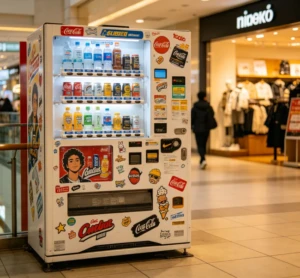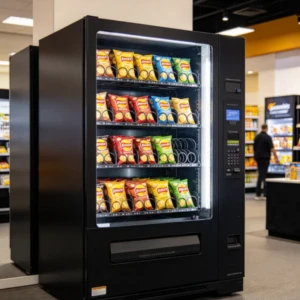
A 24 hour snack and drink vending machine is a combination cabinet that holds pre-packaged chips, candy, and pastries on coils plus bottled and canned drinks in a refrigerated bay, and it keeps selling at 2 a.m. with no staff on site. You see them in warehouse break rooms, apartment laundry rooms, hospital corridors, and dorm lobbies, the places where people work or wait when every shop nearby is locked up. Most run on a standard 110V outlet, eat about 3 by 4 feet of floor space, and cost $2,500 to $6,500 new depending on capacity and payment hardware. Cashless readers and remote inventory alerts are the first two features buyers ask about.
What’s actually inside a combo machine
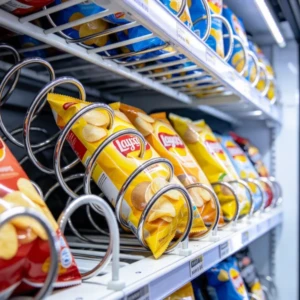
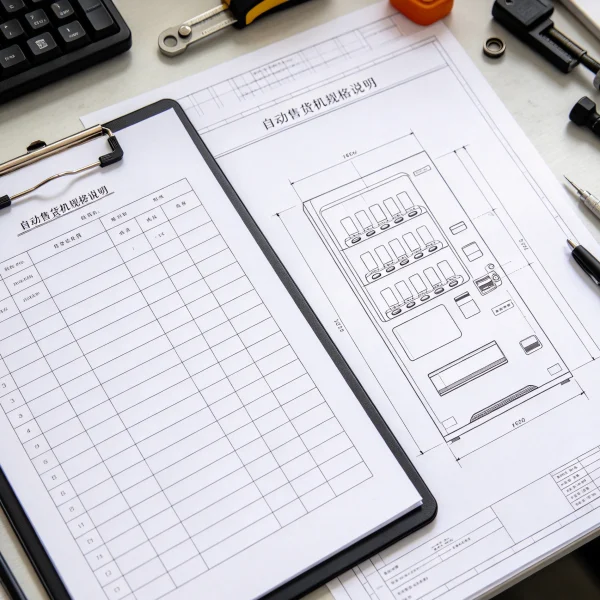
Two compartments, one cabinet. The snack side runs on spiral coils or a push mechanism, and each coil holds a column of one item so the machine can track exactly what sold and what didn’t. The drink side is a separate cooled bay with a drop shelf or a conveyor, holding cans and 20 oz bottles at 34 to 38°F. A mid-size unit carries 30 to 45 snack selections and 8 to 12 drink selections, which works out to roughly 260 to 400 items before you restock.
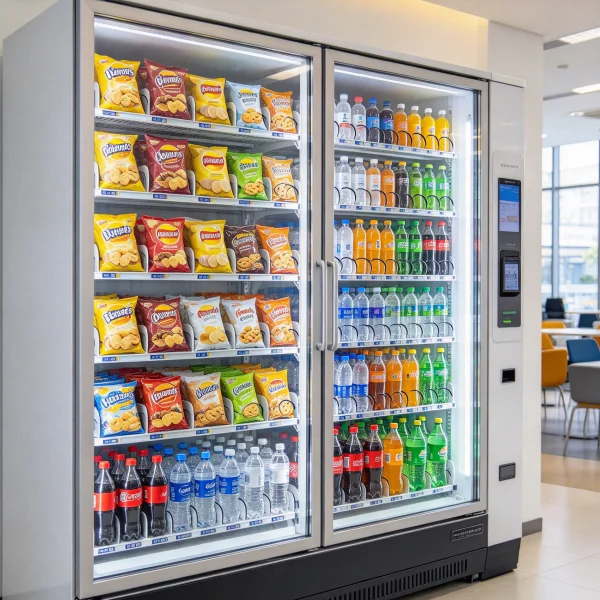
Power and weight catch first-time buyers off guard. A loaded machine weighs 700 to 1,000 lbs, so a second-floor install needs a freight elevator or a very good plan. Electricity is modest: 110V, 4 to 6 amps, roughly $15 to $30 a month at commercial rates. The compressor cycles on and off, so it isn’t pulling full power all day the way people assume.
| Spec | Typical range | Why it matters |
|---|---|---|
| Snack capacity | 30-45 selections | Fewer selections means fewer restock trips |
| Drink capacity | 8-12 selections | Drinks move faster than snacks on night shifts |
| Footprint and height | About 3 ft wide, 4 ft deep, 72-78 in tall | Measure doorways and elevator doors first |
| Weight loaded | 700-1,000 lbs | Floor load and delivery access |
| Power | 110V, 4-6 amps | A normal wall circuit is usually enough |
| Drink bay temperature | 34-38°F | Warm soda kills repeat sales fast |
What a 24 hour snack and drink vending machine costs in 2026
Prices climbed with card readers and telemetry. Refurbished combos start near $1,500, new mid-capacity units sit between $2,500 and $4,500, and large glass-front machines with a lift mechanism run $4,500 to $7,500. The machine is rarely the whole bill, though, so budget separately for delivery, a card reader, and your first product order.
| Machine type | Capacity | Price (2026) | Best for |
|---|---|---|---|
| Refurbished 5-shelf combo | 24 snacks + 8 drinks | $1,500-$2,800 | First machine, steady break room |
| New 6-8 shelf combo | 30-45 snacks + 10 drinks | $2,500-$4,500 | Office, clinic, apartment laundry |
| Large glass-front lift | 50+ snacks + 12 drinks | $4,500-$7,500 | Factory, hospital, transit hub |
| Card reader and telemetry add-on | Fits any MDB machine | $250-$450 plus $8-$15/month | Any machine you plan to run remotely |
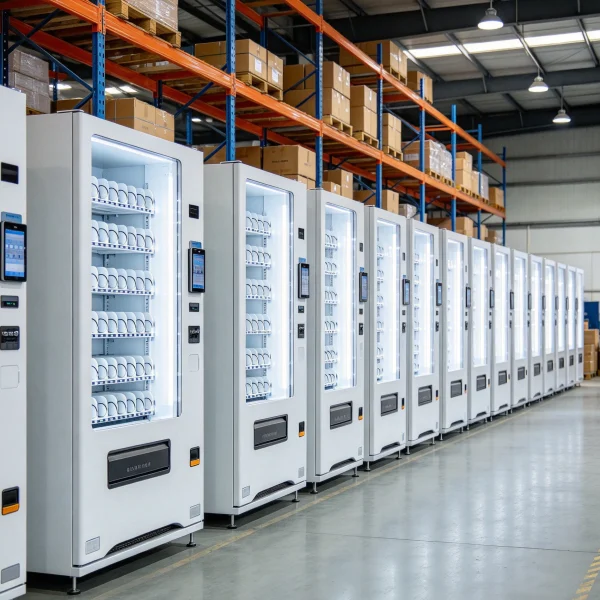
Where a 24-hour machine earns its keep
Night traffic is the point. A machine that only sees 9-to-5 foot traffic pays like a 9-to-5 machine. Here’s where round-the-clock access actually changes the numbers:
- Factory and warehouse break rooms: second and third shifts run 11 p.m. to 7 a.m., and the machine is often the only food within walking distance.
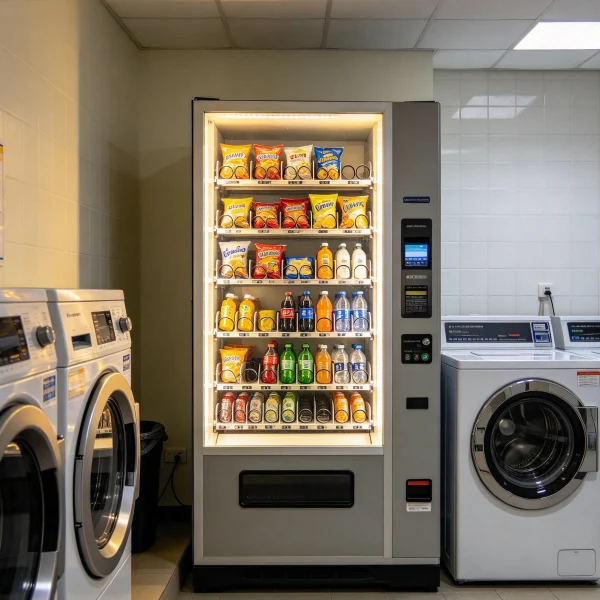
- Apartment laundry rooms: people sit with a load of laundry for 40 minutes and buy something while they wait.
- Hospital and clinic staff areas: nurses on 12-hour rotations buy energy drinks at odd hours, and they buy them daily.
- Dorm lobbies and gyms: late-night study and post-workout traffic, mostly bottled drinks and protein-adjacent snacks.
- Truck stops and motels: cash still matters here more than it does in an office, so keep a bill acceptor in good shape.
One 200-person plant on rotating shifts can move 60 to 90 items a night. A quiet office of 40 people might move 20. Same machine, same price, wildly different outcome, which is why site selection beats brand selection every time.
Payment, telemetry, and the small details that decide profit
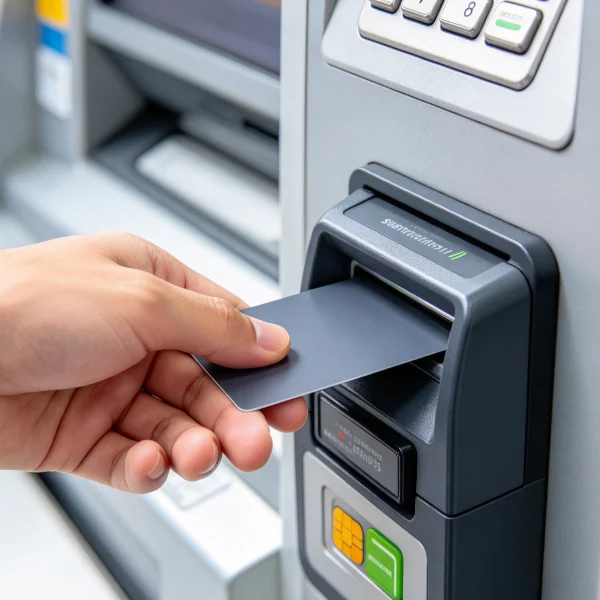
Modern combos talk to the outside world through MDB, the standard interface between the control board and payment devices. DEX or DDEP data gives you a sales report without visiting. That combination is what makes a 24-hour route workable: you know a coil jammed before a customer sends an angry email about it.
Cashless matters more than most new operators expect. In urban and campus sites, card and mobile taps often account for 40-60% of transactions, and a machine with only a coin mech leaves that money sitting in someone else’s pocket. A reader costs $250 to $450 up front and $8 to $15 a month per machine. Check the cell signal at the wall before you buy, because a reader that can’t connect is just an expensive sticker.
What one machine can realistically make
A strong site typically does $900 to $1,600 in gross sales a month. Product costs eat 45-55% of that, commission takes another slice, and what’s left is usually $400 to $800 net before you pay yourself for the drive. On a $3,500 to $5,000 machine, that lands you in a 5 to 8 month payback window. Anything promising faster than that is probably quoting gross revenue as profit.
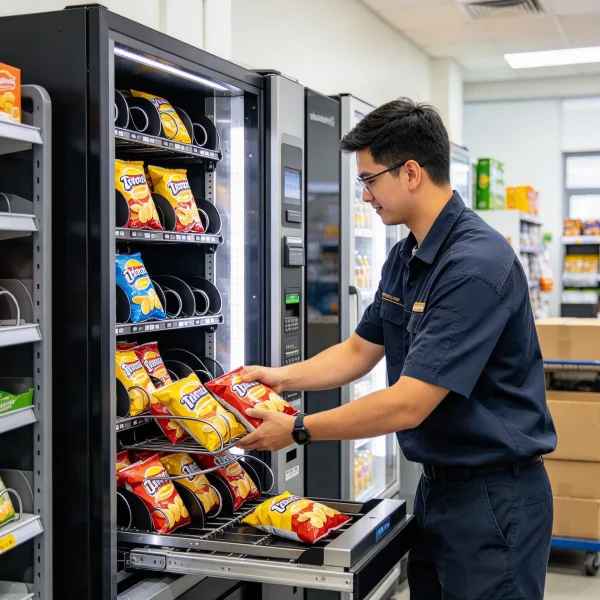
If you want the fuller math across locations and machine sizes, this breakdown of how much vending machines make per month walks through the cost lines most sellers gloss over. Restock frequency matters as much as the machine: a route that takes 25 minutes per stop instead of 15 is a 40% pay cut on your own time.
How to vet a supplier before you wire money
This is where most first purchases go wrong, and it has nothing to do with the machine itself. The vending machines on the market are broadly similar in function; what differs is who answers the phone in month seven when a coil motor dies.
Ask these seven questions before paying a deposit:
- What is the warranty period, and does it cover the compressor and control board, or just parts?
- Do you stock spare coils, motors, and bill validators, and how fast do they ship?
- Is the control board MDB compliant with published specs?
- What does refurbished mean here: cleaned and tested, or cosmetic only?
- Who installs the card reader and telemetry, and who supports it after?
- Is delivery, stair carry, and leveling included in the quoted price?
- Can I see invoices or reviews from buyers who run machines in my region?
This is exactly the comparison work VendingCore exists for. On VendingCore you can compare verified suppliers side by side, read real buyer reviews, check price ranges across machine types, and send an inquiry directly instead of chasing five different sales inboxes.
Other machine types worth watching
If your location turns out to be a poor fit for a snack and drink combo, some neighboring categories are worth a look. Fresh-brew coffee still pulls morning traffic in offices, and the 2026 guide to modern coffee vendors explains how those units compare on upkeep. Customization machines sit at the other end of the spectrum: bubble tea vending machines make drinks fresh on demand, which changes both the price and the daily cleaning routine. Flowers are a different play entirely, and this analysis of whether flower vending machines are profitable covers the chilled-case economics.
The short version
Buy for the site, not the brochure. A mid-size combo with MDB wiring, a card reader, and telemetry is the practical starting point for most buyers in 2026, and the payback on a well-chosen location usually lands in the 5 to 8 month range. What you cannot control from a spec sheet is whether the supplier still picks up the phone next year.
So do the boring part first. Compare a few verified suppliers, ask the seven questions above, and get written quotes that include delivery and support. You can browse the supplier directory and send your first inquiry directly on VendingCore, then compare responses side by side before you commit a dollar.
FAQ
How much does a 24/7 snack and drink combo machine cost?
Refurbished units run $1,500 to $2,800, new mid-capacity combos cost $2,500 to $4,500, and large glass-front machines with a lift mechanism go for $4,500 to $7,500. Add $250 to $450 for a card reader, $8 to $15 a month for telemetry, plus delivery and your first product order, which often adds $400 to $800.
Do I need a special power supply or a water line?
No water line is needed because everything is pre-packaged. A standard 110V circuit running 4 to 6 amps handles the machine, drawing roughly $15 to $30 a month in electricity. The bigger constraint is floor load: a loaded machine weighs 700 to 1,000 lbs, so verify the floor and the delivery path before buying.
How many items should the machine hold?
For a single shift site with 40 to 80 people, 30 snack selections and 10 drink selections is plenty. Busy factories and hospitals benefit from 45 or more snack selections and 12 drinks, because fewer out-of-stock moments means fewer lost sales and fewer emergency restock trips during the week.
What payment methods should I offer?
Coin and bill acceptance is the baseline, but add card and NFC tap if the site has people under 40. In urban and campus locations, cashless can reach 40-60% of transactions. Look for MDB-compatible readers so you can upgrade or swap hardware without replacing the machine’s control board.
How long until the machine pays for itself?
On a solid site grossing $900 to $1,600 a month, net profit usually lands between $400 and $800 after product costs and location commission. On a $3,500 to $5,000 machine, that is a 5 to 8 month payback. Slow sites with thin foot traffic stretch well past that, so the location decision matters more than the price you negotiate.
What should I ask a supplier before buying?
Ask about warranty coverage on the compressor and board, spare part stock and shipping speed, whether the board is MDB compliant, what refurbished actually includes, who installs and supports the card reader, and whether delivery and leveling are in the quoted price. Get it in writing, and compare at least three suppliers on VendingCore before you pay a deposit.
Can I run the machine without visiting every day?
Telemetry makes it possible. DEX sales data and remote alerts tell you when a coil jams, when a selection sells out, and when cash needs collecting. Most operators still visit once or twice a week for restocking and cleaning, because a dusty machine with empty coils stops earning long before it breaks.
Everyone asks me which brand to buy. That is the wrong question. Ask what happens the week your card reader dies or a coil motor jams, because that is when you find out whether your supplier answers the phone. I run eighteen combos across three counties, and the machines that make money are the ones on routes I can reach in fifteen minutes. Buy a mid-size combo with MDB wiring so you can swap payment hardware later, keep spare coils and a motor on the truck, and read your telemetry numbers before you place a product order. Guessing at restock levels is how you end up with a machine full of the one candy nobody buys.