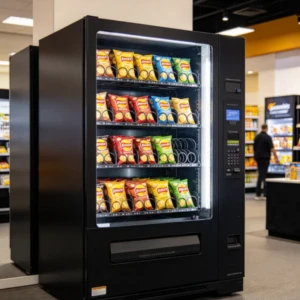
A commercial drink and snack vending machine typically costs $2,800 to $6,500 new, holds 300 to 600 pre-packaged items, and runs on a standard 110V outlet. You’ll see them in office break rooms, hospital corridors, warehouse lunchrooms, motel lobbies, and dealership waiting areas where foot traffic is steady and there’s no staffed cafe nearby. The cabinet chills bottles and cans in a lower or side bay and drops bags and bars from coiled or push shelves. Nothing gets brewed or assembled inside, so everything you stock is pre-packaged. Machines built for 2026 also take tap and mobile wallets through an MDB controller, and telemetry tells you what sold before you drive out to restock.
What a combination drink and snack machine actually is
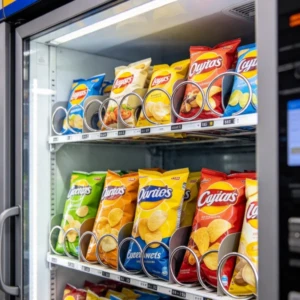
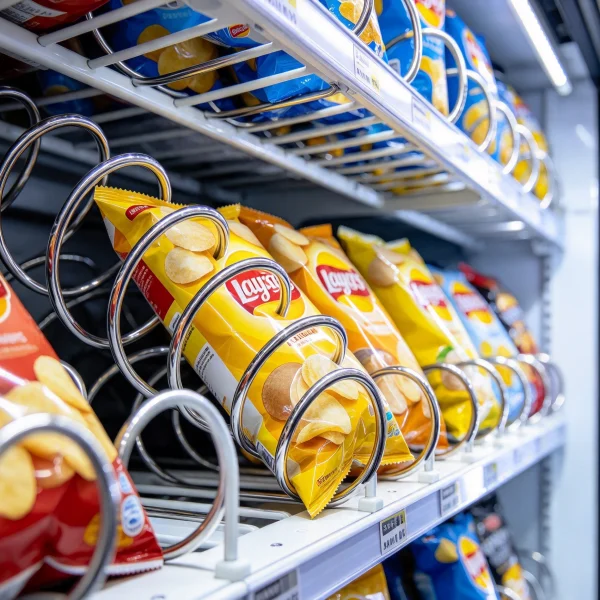
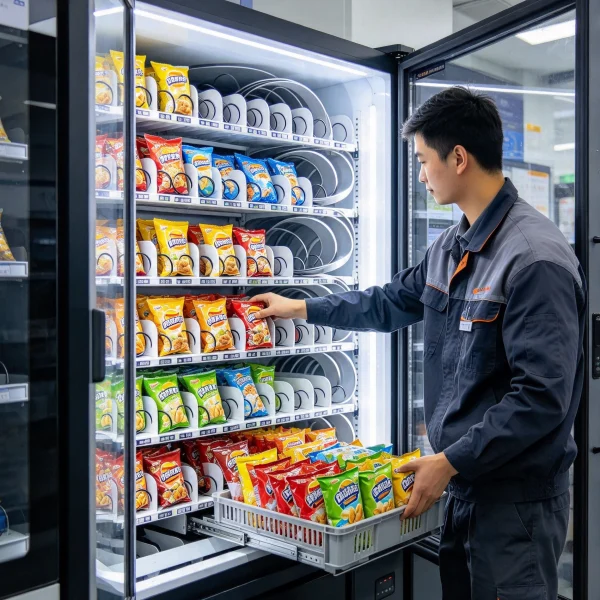
A combination machine is two vending businesses sharing one cabinet. The refrigerated bay holds bottles and cans at 34-38°F. The ambient shelves above it hold chips, candy, nuts, granola bars, and gum. Coil models use one spiral wire per slot, and the coil turns to push the front item off the shelf edge. Push models use a flat shelf with a motorized pusher behind each column.
Coils handle odd shapes well, which is why they still dominate snack vending. Push shelves look tidier and carry wide or heavy items, but they’re fussier about shelf height. If a bag is 3 inches tall and the gap is 2.5 inches, you’ll fight it on every restock.
Here’s the range you should expect from a mid-size unit sold in 2026:
| Spec | Typical range | Why it matters |
|---|---|---|
| Height | 72-78 in | Fits an 8 ft ceiling with room for the door swing |
| Width | 35-40 in | Check doorways and freight elevators first |
| Loaded weight | 700-850 lb | Floor loading matters, not just delivery |
| Power | 110V / 15A dedicated | Shared circuits trip the compressor |
| Selections | 30-60 | More slots means more SKUs and slower restock |
| Snack capacity | 200-400 items | About 3 to 6 days between visits |
| Drink capacity | 100-200 bottles or cans | Chilled bay holds 34-38°F all day |
| Payment | MDB protocol | Cash, card, and NFC all run through it |
Two specs carry more weight than the rest of the sheet. A dedicated 15-amp circuit keeps the compressor from tripping whenever someone runs a microwave nearby, and MDB support on the controller decides whether you can add a card reader later without swapping the brain of the machine.
What these machines cost in 2026
Prices climbed through 2025 and stayed high. Steel, compressors, and card readers all cost more than they did three years ago, and ocean freight never returned to pre-2020 rates. Here’s what buyers are actually paying right now.
| Configuration | Price (new) | What you get |
|---|---|---|
| Entry coil, 6 shelves, cash only | $2,800 – $3,900 | 30-40 selections, no telemetry port |
| Mid-range, 8 shelves, card reader | $4,200 – $5,400 | 45-55 selections, DEX telemetry, drop sensor |
| Premium, 10 shelves, dual zone | $5,800 – $7,500 | 55-60 selections, lift delivery, 21.5 in touchscreen |
| Refurbished unit | $1,500 – $2,500 | Older controller, verify MDB support before paying |
On top of the machine, budget $250 to $600 for domestic freight or $600 to $1,400 for a container from Asia, plus a lift gate fee if the delivery address has no dock. First stock runs $400 to $700 for a decent planogram, and a card reader retrofit on a machine that lacks one adds $250 to $400.
Coil or push: the choice that decides your restock day
Mis-vends happen, and they cost more than the dollar or two of product. A customer who loses $1.75 to a bag that never dropped usually does not come back. Infrared drop sensors catch most of these and issue an automatic refund, which is why a sensor is worth paying for even on an entry-level cabinet.
What actually causes misfires? Undersized bags sitting in a coil sized for a 2-ounce chip bag. Shelves loaded past the fill line. Coils that lost spring tension after a few years in a hot warehouse. Product that soaked up humidity and went sticky. None of it is mysterious, and all of it is fixable with a better planogram and a $4 coil.
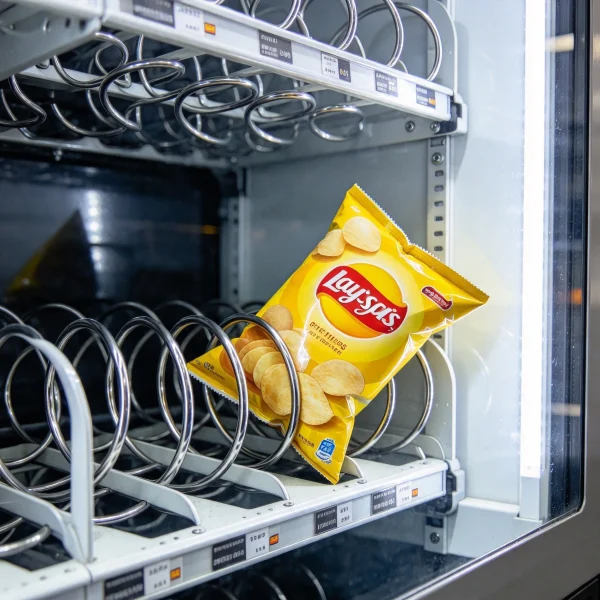
One rough field test: if a machine doing 60 sales a day misfires more than once, something is set up wrong. Rebuild the planogram before you spend money on new hardware.
Where these machines earn, and where they just sit
Foot traffic decides everything. A machine needs roughly 40 or more people passing it daily to justify the drive, and a site with 100 or more people on shift should carry one machine per 80 to 120 people. Below that, you are paying rent on a metal box.
Locations that consistently work:
- Office break rooms with 50 to 200 staff, especially where the nearest lunch option is a 10-minute drive
- Manufacturing floors running two or three shifts, since the night crew has nowhere else to go
- Hospital staff lounges and outpatient waiting areas
- Truck stops and motels with overnight guests
- Dealership and auto service waiting rooms
- Apartment laundry rooms and gyms
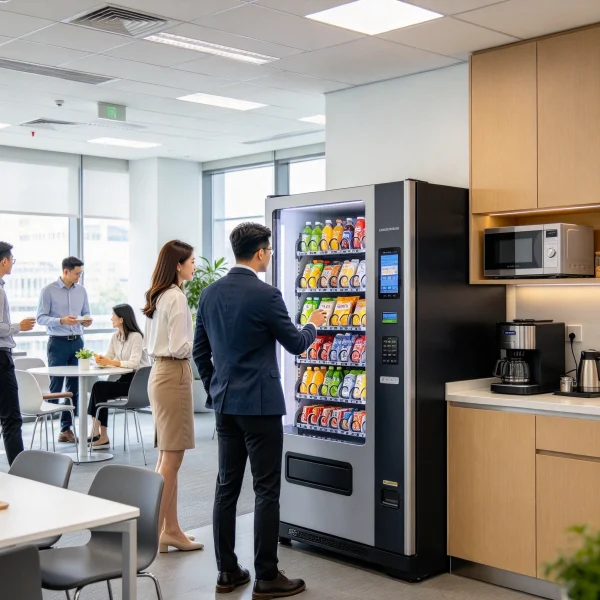
Locations that quietly fail: anywhere with a free snack program, a subsidized cafeteria in the same room, or a competitor’s machine already humming by the door. VendingCore’s breakdown of the most profitable vending machines for 2026 puts drink and snack combos near the top for steady income, but only where the site supports them.
Payment, telemetry, and the MDB question
MDB is the protocol that lets a card reader talk to the machine controller. Ask about it in writing before you buy, because a machine without MDB support cannot take a modern reader without a controller swap that runs $400 or more and keeps the unit offline for a day.
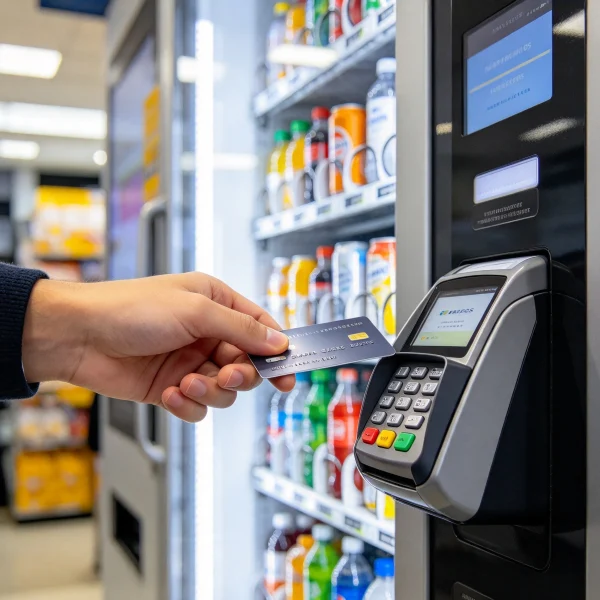
Card and tap acceptance changes buying behavior. Every operator I have spoken with saw sales rise after adding it, and the lift came mostly from people who simply do not carry cash anymore. Younger customers in particular walk past a cash-only machine without a second thought.
Telemetry is the other upgrade worth the money. A DEX-enabled controller reports planogram sales, cash levels, and error codes to a dashboard, usually for $8 to $15 per machine per month. If it saves you one wasted trip a month, it has paid for itself. In practice it saves more than that.
How to vet a supplier before you send a deposit
This is where most first-time buyers get hurt. The machine itself is close to a commodity. The difference between a good purchase and a bad one comes down to who is behind it when a motor dies in month nine.
- Ask for the factory’s business license and a recent third-party inspection report
- Get the compressor warranty (12 to 24 months) and the controller warranty in writing, not in a chat message
- Confirm which spare parts ship with the unit and what a replacement coil, motor, or bill acceptor costs
- Check whether they hold stock in a local warehouse or ship direct from the factory, since that changes your lead time by weeks
- Request two or three buyer references in your own country and actually call them
- Agree on terms: 30% deposit with the balance before shipment is normal. Full prepayment on a first order is a red flag.
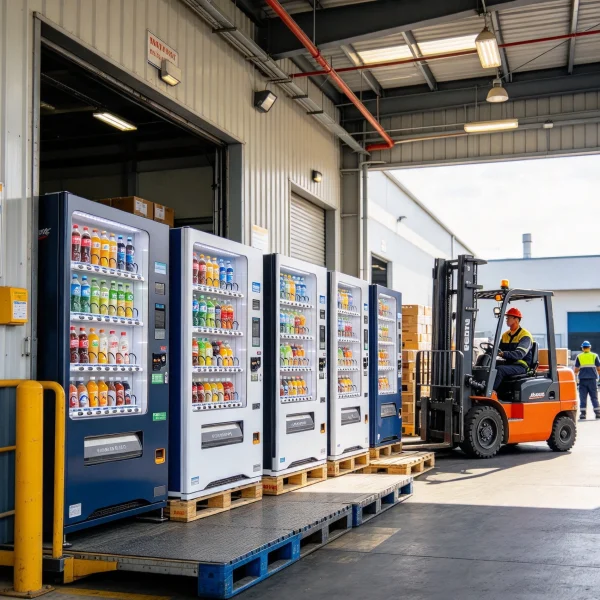
The same framework applies whether you are buying a snack combo or a specialty kiosk. If you ever branch into personalized units, the guide to choosing a phone case vending machine supplier walks through reference checks and warranty terms in more detail.
On VendingCore you can compare verified suppliers side by side, read real buyer reviews, check current price ranges, and send an inquiry directly. It is a directory rather than a manufacturer, so the listings come from suppliers who build and ship the machines, and you negotiate with them on your own terms.
What payback looks like
A well-placed office machine moving 60 to 90 items a day at an average ticket of $1.75 grosses roughly $3,100 to $4,700 a month. Product cost eats 55% to 65% of that. Add host commission of 0% to 15%, card processing, telemetry, fuel, and the occasional repair, and you keep somewhere between $800 and $1,400 a month.
On a $5,000 all-in setup, that works out to payback in roughly 4 to 8 months. Push the average ticket up with a better product mix, or negotiate a lower host commission, and the payback shortens. If a site only moves 15 to 20 items a day, the math never works, no matter how cheap you bought the machine.
Adding other machine types to the same route
Once two or three drink and snack machines are running well, a different machine type in a high-traffic spot can add revenue without much extra driving. Cotton candy units suit cinemas and family entertainment centers, and the ROI comparison for 2026 cotton candy machines is worth reading before you commit. Personalized kiosks have their own pull too, from nail art printing trends to the novelty draw of a lucky box machine. Each one brings a different buyer profile and a different set of supplier questions.
Sorting out your shortlist
Three things decide whether this purchase works: the site, the mechanism, and the supplier behind it. Get the site right and a $3,500 coil machine will out-earn a $7,000 touchscreen unit sitting in a quiet lobby. Get the supplier wrong and you will spend month nine hunting for a $180 motor while nobody answers the phone.
Write down your traffic count, your budget ceiling including freight, and the two or three features you actually need. Then compare suppliers on those terms instead of price alone. On VendingCore you can compare verified suppliers, read buyer reviews, check price ranges, and send an inquiry directly to the ones that fit. Ten minutes of comparing beats a rushed deposit.
FAQ
How much does a commercial drink and snack vending machine cost?
New units run $2,800 to $6,500 depending on shelf count, screen size, and whether a card reader is included. Refurbished machines sell for $1,500 to $2,500. Budget another $900 to $1,800 for freight, a lift gate, first stock, and any custom wrap. The machine price is rarely the full landing cost, and buyers who forget that run short before the machine is even plugged in.
How many items should a combination machine hold?
A 6-shelf coil unit holds about 300 to 400 items. A 10-shelf machine with a 6-column drink bay handles 550 to 650. Match capacity to your restock cycle rather than your ambition: you want roughly three to six days of product on board. A machine that empties in two days eats your fuel budget, and one that takes three weeks to empty ties up cash in inventory.
Do I need a dedicated power circuit?
Yes. Plan on a dedicated 110V, 15-amp circuit within reach of the machine. Shared circuits trip whenever a nearby microwave or space heater kicks on, and a compressor that restarts constantly will not last. Some larger dual-zone units want a 20-amp circuit. Check the nameplate rating before the electrician shows up, and confirm the outlet location in your host agreement.
What is MDB and why does it matter?
MDB, the Multi-Drop Bus, is the standard protocol between a vending machine controller and its payment devices. If the controller supports MDB, you can add a card reader, a bill validator, or tap-to-pay later without replacing the brain of the machine. Without it, a retrofit controller costs $400 or more and takes the unit out of service for a day.
How long until the machine pays for itself?
A well-placed office machine usually pays back in 4 to 8 months on an all-in cost near $5,000. That assumes 60 to 90 items a day at roughly $1.75 average and a host commission at or below 15%. Faster payback comes from a better location or a smarter planogram, not from a cheaper machine.
Can I add card and tap payments to a used machine?
Usually, if the controller supports MDB and has a free peripheral port. Older machines often need a controller or firmware update first. Ask the seller for the controller model number and check the manufacturer’s spec sheet before you buy. Adding a reader later runs $250 to $400 plus installation, and it is one of the few upgrades that pays for itself quickly.
How do I find a supplier I can trust?
Start with references from buyers in your own country, then confirm warranty terms and spare part pricing in writing. Comparing listings on VendingCore is a fast way to shortlist verified suppliers, read buyer reviews, and check price ranges before you send an inquiry. Suppliers who answer technical questions clearly and quote freight upfront are usually the ones worth a deposit.
Do I need a permit to place a vending machine?
It depends on where the machine sits. A sales tax permit is standard in most US states. Some cities require a vending or amusement device license, and food handling rules can apply to perishable stock. The host location usually handles building access, but the paperwork is yours. Confirm requirements with your state revenue office before installation day.
The machine is the easy part. What separates a route that pays from one that drains you is the site, the planogram, and how fast you can get a replacement part. I have watched operators buy a $6,000 touchscreen unit and park it in a lobby that sees 25 people a day. Six months later they blame the machine. Count the traffic yourself, match your coil sizes to the bags you will actually stock, and keep one spare motor and one spare bill acceptor in the van. That is most of the job.