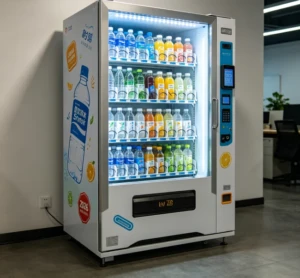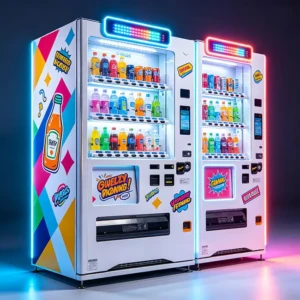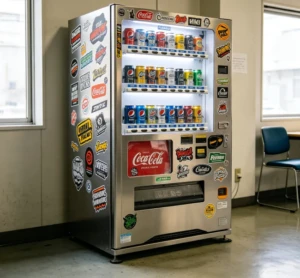
A drink and snack vending machine for sale typically costs between $2,200 and $6,500, with refurbished 4-wide combo units at the low end and new 6-wide glass-front machines with a card reader and touchscreen at the high end. These machines vend pre-packaged bottled or canned drinks and bagged snacks through adjustable coils or pushers, so nothing is brewed, mixed, or assembled on site. You’ll find them in office break rooms, gyms, warehouses, hospital waiting areas, hostels, and apartment lobbies, anywhere people want a cold drink and a bag of chips without leaving the building. Four things drive the price: capacity, selection count, payment hardware, and whether the machine reports sales data remotely.
What you’re actually buying when you order a combo machine
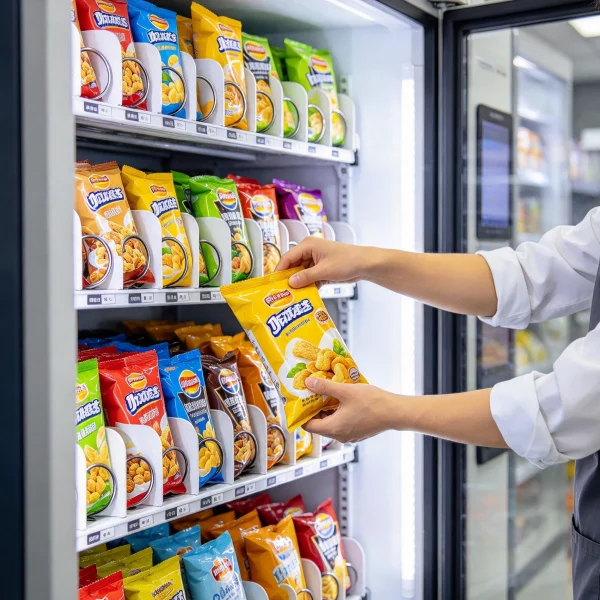
A drink and snack vending machine is a glass-front or closed-front cabinet with adjustable shelves, where coils or pushers hold pre-packaged products and release them into a delivery bin at the bottom.
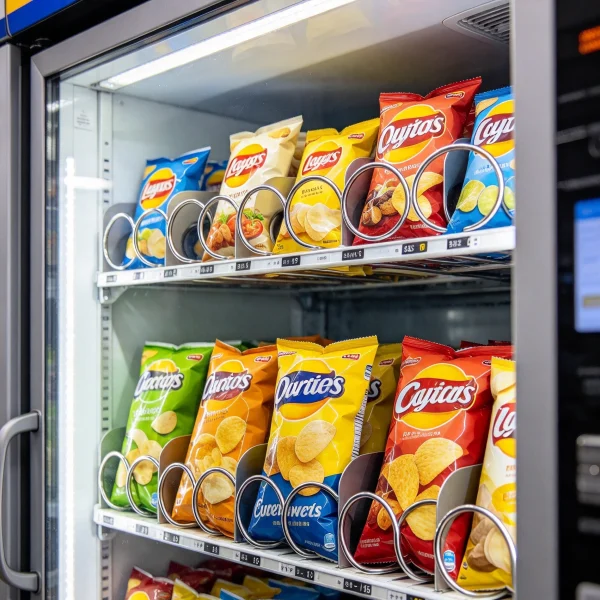
Most units sold today run on one of two mechanisms. Coils are the classic metal spiral, and they still handle chip bags, candy bars, and 12 oz cans well. Pushers hold products in lanes behind a spring-loaded plate, which keeps odd-shaped boxes and heavier bottles from leaning into the next slot. If you plan to stock glass bottles, look for a machine with an elevator or product catcher. It lowers the item into the bin instead of dropping it, and that one feature removes most of the breakage complaints you’d otherwise hear.
Sizes run from a 4-wide unit at about 72 inches tall, 35 inches wide, and 32 inches deep to a 6-wide glass front closer to 45 inches wide. Weight lands between 600 and 900 pounds loaded, which matters on upper floors. Power needs are modest: 115V at 60 Hz on a dedicated 15 or 20 amp circuit. The compressor pulls 3 to 6 amps while running and more at startup, so putting the machine on the same circuit as a microwave or a space heater is how you end up resetting breakers every afternoon.
Capacity lands between 250 and 500 items when a mid-size combo is full, split across 20 to 40 snack facings and 6 to 12 drink facings. That number matters more than it sounds. A machine that empties in two days forces a second restock run, and labor is what eats your margin at a small site.
Price ranges by machine type
Quotes swing a lot for the same class of machine. Payment hardware, refrigeration quality, and whether the seller is a distributor or a reseller flipping auction units all move the number. Here’s roughly where the market sits in 2026 for machines delivered in the continental US.
| Machine type | Selections | Typical capacity | Delivered price | Fits best at |
|---|---|---|---|---|
| Refurbished 4-wide combo | 20-30 snacks, 6-8 drinks | 180-260 items | $2,200-$3,400 | Small offices, salons, waiting rooms |
| New 5-wide combo | 30 snacks, 8 drinks | 250-350 items | $3,600-$4,800 | Warehouses, gyms, mid-size offices |
| Refurbished 6-wide with elevator | 30-40 snacks, 8-10 drinks | 300-420 items | $4,000-$5,200 | Hotels, hospitals, 24/7 sites |
| New 6-wide glass front | 40 snacks, 10 drinks | 350-500 items | $5,000-$6,500 | High-traffic break rooms, colleges |
| Combo with touchscreen and telemetry | 30-40 snacks, 8-10 drinks | 300-400 items | $4,900-$6,500 | Modern lobbies, campuses, hostels |
Those prices assume the unit arrives with a working bill validator and coin mech. Add $250 to $450 if you want a card reader installed at the factory instead of sourcing one afterward.
The costs that never make it into the online quote
Nobody advertises these, and they explain why two operators can buy the same machine and end up with very different break-even points.
- Freight and inside delivery: $150 to $400, more if you need a liftgate or a stair carry.
- A dedicated electrical circuit: $0 if one already exists, $150 to $600 if an electrician has to run it.
- Initial stock: $300 to $700 to fill a 300-item machine with a sensible mix.
- Liability insurance for a third-party site: $150 to $400 a year.
- Spare parts kit with coils, motors, validator belts, and locks: $100 to $250.
- Location commission: 5% to 25% of gross sales, depending on how badly the site wants you.
- Telemetry subscription: $60 to $150 a year if it isn’t bundled into the card reader plan.
Add those up and a $3,000 machine often becomes a $4,000 project before the first sale.
Matching the machine to the location
Site selection decides your profit long before specs do. A 40-selection glass front in a room with eleven people is a $5,000 coat rack.
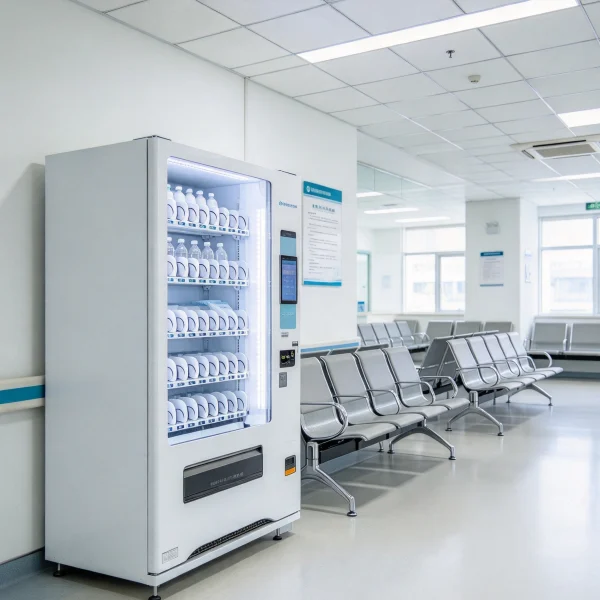
What works is a site with 25 or more people who stay put for hours and have limited food options nearby. Offices, warehouses, and hospitals fit that pattern. Gyms do too, though the mix shifts hard toward water, sports drinks, and protein bars, and the candy side sells less than new operators expect.
Public foot traffic is trickier. A corridor with 300 passers-by a day sounds better than a break room until you remember that tourists buy once and employees buy five times a week. If you’re weighing formats for a mall or a transit hub, the footfall and dwell-time logic behind choosing a nail vending machine location applies almost word for word to a snack combo, and it’s worth reading before you sign anything.
Fresh-drink formats cover demand a cold case never will, and a bubble tea vending machine can sit in the same corridor without stealing snack sales. Novelty formats work on different math again. A perfume vending machine for sale or a kiosk that prints custom phone cases needs a different buyer, a different price point, and often a different lease, and the payback curve on a phone case vending machine looks nothing like a snack machine’s.
Cashless payment and remote monitoring
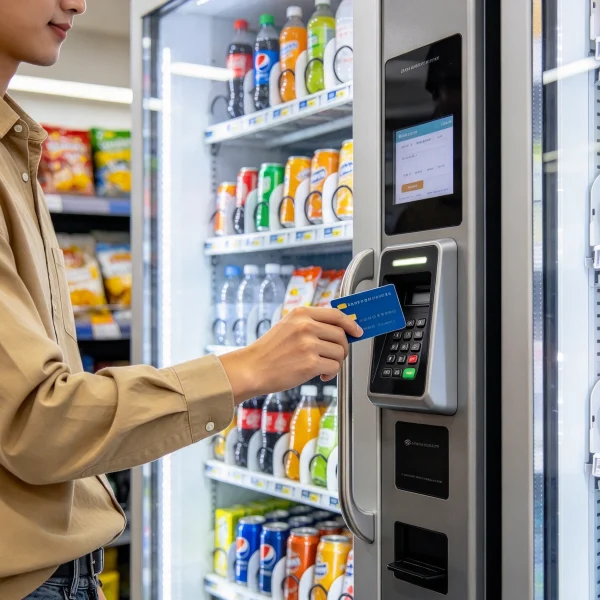
Card and tap payments now make up the majority of transactions on well-placed machines, and that share keeps climbing as fewer people carry coins. If you’re buying new hardware, insist on MDB (Multi-Drop Bus) compatibility.
MDB is the protocol that lets a controller talk to the bill validator, coin mech, and card reader. Machines that follow it let you swap or upgrade a payment device later without replacing the board. Closed, proprietary controllers lock you into one vendor for the life of the machine, which is a rough place to be when that vendor raises fees or drops support for the model.
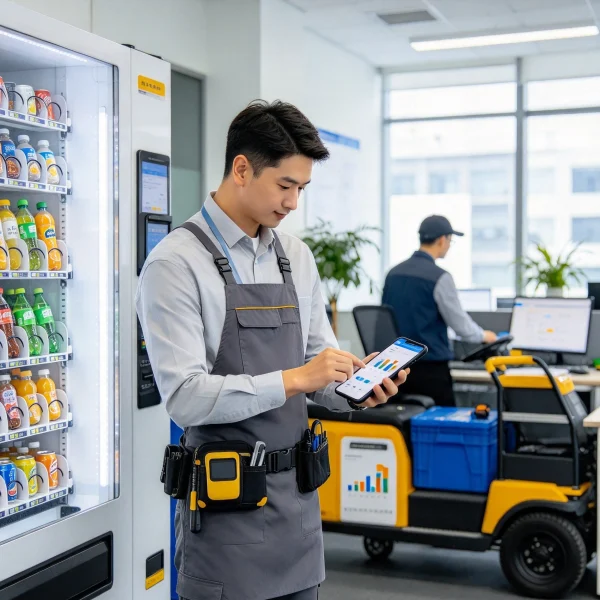
Telemetry is the other half of the equation. A 4G or Wi-Fi module sends DEX sales data to a dashboard that tells you what sold, what’s jammed, and when to restock. That’s the difference between visiting a machine twice a week on a hunch and visiting it only when it actually needs you. Fuel and windshield time add up faster than most new operators expect.
How to vet a supplier before you wire money
This is where first-time buyers get hurt most. Vending has a long tail of brokers who take a deposit and then disappear, or ship something other than what the listing showed.
Ask for the model number, serial number, year of manufacture, and photos of the actual unit rather than stock images. On refurbished machines, ask what was replaced: compressor, evaporator fan, bill validator, controller board. Get the warranty in writing. Ninety days on parts is normal for refurbished stock, while new machines usually carry one to two years.
Check the power spec against your country. A machine built for 115V/60Hz won’t run properly on 220-240V/50Hz without a transformer and a different compressor setup. Ask about refrigerant as well. R-600a has largely replaced R-134a in new production, and that changes which technician can service the machine.
References beat brochures. Ask for two buyers in your own region who took delivery in the past year, then actually call them. Comparing sellers side by side saves a week of email. On VendingCore you can compare verified suppliers, read real buyer reviews, check price ranges, and send an inquiry directly. VendingCore doesn’t manufacture or ship machines, so there’s no house brand pushing you toward one option.
What owning one actually looks like
Restocking is the job. A 300-item machine in an office of 80 people moves roughly 20 to 45 items a day, so plan on one or two visits a week. Load best sellers at eye level. Keep chocolate away from the compressor end of the cabinet when you can, because warm spots turn bars gray and customers notice.
Rotate stock first in, first out. Snack codes run three to six months, and chips that have been sitting since last summer taste stale. Anything unsold after three straight weeks comes out and gets replaced. That habit alone fixes most machines that supposedly don’t sell.
Cleaning is quick, but it has to happen. Wipe the glass, empty the delivery bin before it gets sticky, and run a lint-free wipe through the bill validator path once a month. Nearly every service call I’ve seen on a combo machine traces back to a dirty validator or a coil that’s one turn out of alignment.
The payback math, with real numbers
Here’s an all-in figure for a mid-size new combo going into a warehouse with 120 employees.
| Startup line item | Amount |
|---|---|
| Machine, freight included | $4,600 |
| Initial stock | $500 |
| Card reader | $350 |
| Spare parts kit | $150 |
| First-year insurance | $250 |
| Total to start | $5,850 |
Gross sales at a site that size land between $1,800 and $2,900 a month. Product cost takes 55% to 65% of that, site commission takes another 8% to 10% of gross, and card and telemetry fees shave a little more. Net profit ends up around $600 to $870 a month, which puts payback at roughly 7 to 9 months. A weaker site with fewer than 30 regular users stretches it to 9 or 10 months, and that’s the scenario where a decent refurbished unit at $2,800 makes more sense than a new glass front. The same payback discipline applies to a DIY puzzle vending machine, though sales there spike with foot traffic instead of repeat users.
What to do next
Buying a combo machine is mostly a math problem with a few traps hidden in the fine print. Pick the site first, size the machine to the traffic, insist on MDB-compatible payment hardware, and get the delivered price in writing before any deposit changes hands. A refurbished 5-wide at $3,000 in a busy warehouse will outearn a $6,500 glass front in a quiet lobby, month after month.
When it’s time to buy, remember that you’re shopping for a seller as much as a cabinet. If you’re comparing a drink and snack vending machine for sale, a good starting point is the supplier directory on VendingCore, where you can filter verified suppliers, read reviews from buyers who took delivery, check current price ranges, and send an inquiry directly to the sellers that match your site and budget. No sales pitch, no house brand, just the sellers and the numbers.
FAQ
How much does a drink and snack vending machine cost in 2026?
Expect $2,200 to $3,400 for a refurbished 4-wide combo and $3,600 to $6,500 for a new mid-size or 6-wide glass front. Add $250 to $450 for a card reader if it isn’t installed, $150 to $400 for freight, and $300 to $700 for the first stock order. A realistic all-in budget for one new machine at a decent site is $4,500 to $6,000.
Is a combo machine better than two separate machines?
For sites under about 150 people, a combo wins. You get one cabinet, one power drop, one lease conversation, and one restock stop. Above that, separate snack and drink machines give you more capacity and let you place the drink unit where the traffic actually is. Two machines also let you widen the snack range without touching the refrigeration side.
Should I buy coil or pusher shelves?
Coils cost less to buy and less to repair, and they handle bags, cans, and standard candy. Pushers cost more up front but hold odd-shaped packaging and heavier bottles without leaning. If most of your stock is chips and 12 oz cans, coils are fine. If you plan to carry boxes, jars, or 20 oz bottles, pushers cut down on jams.
Do I need a card reader to make money?
On most sites, yes. Cash-only machines often lose 30% to 50% of potential sales because people don’t carry coins. A reader costs $250 to $450 plus small monthly fees, and it usually pays for itself within a few months on a decent site. Insist on MDB compatibility so you can swap the reader later without replacing the controller.
How long does a vending machine take to pay for itself?
A well-placed combo machine usually pays back in 6 to 9 months. Site traffic and product mix matter more than the machine itself. Sites with fewer than 30 regular users stretch to 9 or 10 months, and a convenience store next door is the reason many buyers start with a $2,800 refurbished unit instead of a new glass front.
What should I check on a used or refurbished machine?
Ask for a serial plate photo, year of manufacture, and a list of parts replaced. Confirm the compressor, evaporator fan, bill validator, and controller board all work, and get the warranty in writing. Check voltage and frequency against your supply, and ask which refrigerant the cooling system uses, since R-600a needs a technician trained for flammable refrigerants.
Where can I compare vending machine suppliers and get a quote?
Start with VendingCore, a supplier directory for vending machines. You can compare verified suppliers side by side, read buyer reviews, see current price ranges by machine type, and send an inquiry straight to the sellers that match your budget and location. It’s a directory rather than a manufacturer, so you compare real sellers instead of one company’s catalog.
Most first-time buyers spend weeks comparing machine specs and almost no time counting people. The machine sets your ceiling, and the site decides whether you ever reach it. When a location has thirty regular users, decent dwell time, and no store within a short walk, a plain refurbished combo will outperform a loaded glass front sitting in a lobby nobody visits. Get the site right, then buy the best machine that traffic can pay for.