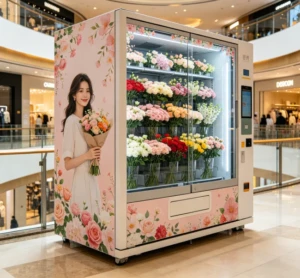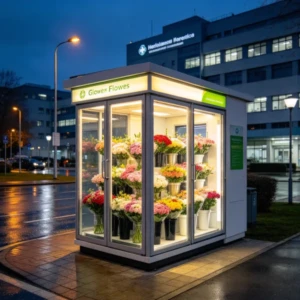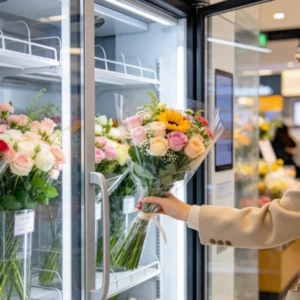
A flower vending machine for a shopping center typically costs $6,500 to $18,000 installed, holds 20 to 60 bouquets inside a case chilled to 3°C to 8°C, and pays back in about 5 to 9 months on a busy mall floor. You see them near supermarket exits, cinema lobbies, and food courts, where someone wants a last-minute gift on the walk to the car. The cabinet keeps stems cold, the buyer picks a bouquet on the touchscreen, pays by card or QR code, and a door or an elevator arm hands it over. Mall operators, florists adding a second sales point, and first-time vending investors make up most of the buyers.
What’s actually inside a chilled flower machine
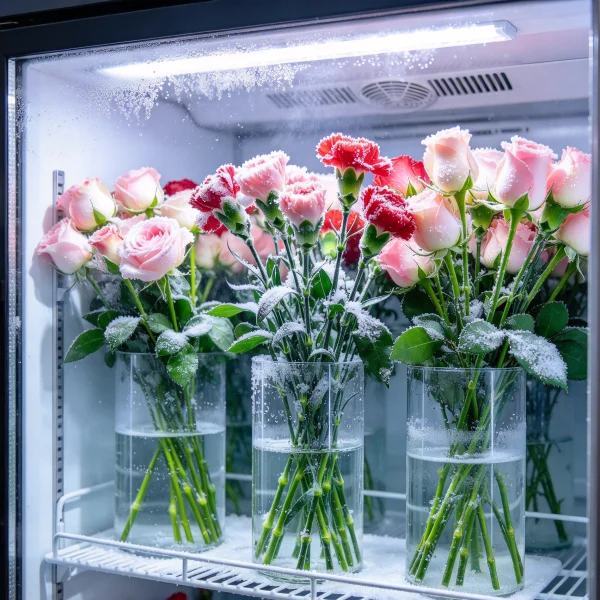
A flower vending machine is a refrigerated cabinet with a glass front, a payment terminal, and a mechanism that brings the chosen bouquet to a pickup hatch. Refrigeration is what separates it from a snack machine. The interior sits at 3°C to 8°C, the same band florists use for cut stems in a walk-in cooler, and that number matters more than any other spec on the sheet.
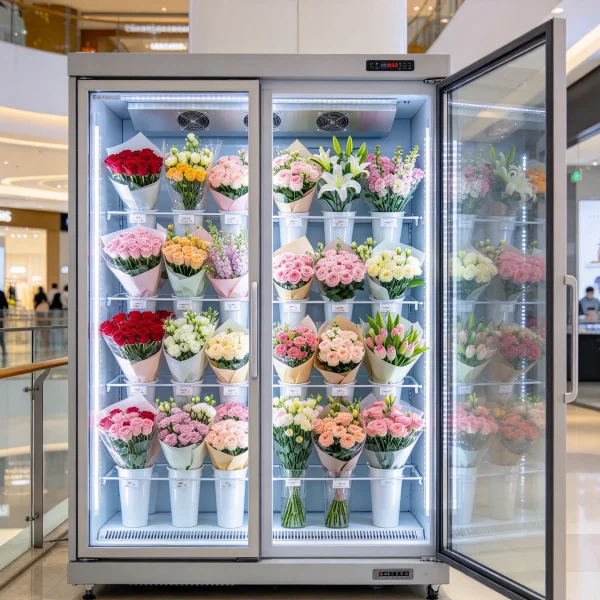
Dispensing comes in a few shapes. The simplest is a row of lockable glass doors, one per bouquet, and the machine just unlocks the door the customer paid for. Spiral coils suit smaller single stems and wrapped bunches. Elevator systems, where an arm lifts the item and carries it to a central hatch, cost the most and treat flowers best, since nothing gets dragged through a coil and crushed.
Payment runs on MDB, the Multi-Drop Bus protocol that most card readers, coin acceptors, and bill validators speak. That matters for your future: on an MDB machine you can swap payment hardware without touching the controller. Add a 4G telemetry module and you get stock alerts, sales logs, and fault codes on your phone, which is how one operator manages six or seven units without driving to each one.
Power and placement catch people out. A chilled unit draws 800W to 1,500W while the compressor runs, so give it a dedicated circuit. Leave 30cm behind the cabinet for airflow, and keep it away from doors that open onto 35°C air all afternoon. A machine fighting that kind of heat runs its compressor nonstop and still lets flowers wilt.
Specs worth checking on the datasheet
Most seller pages list a price and a photo. Very few list the eight numbers below, and those are the ones that decide whether your flowers last five days or two.
| Spec | Typical range | Why it matters |
|---|---|---|
| Case temperature | 3°C to 8°C hold, recovery under 20 minutes | Warm spots cut vase life by days |
| Capacity | 20 to 60 items, depending on tray layout | Sets your restocking rhythm |
| Footprint | 1.0m to 1.4m wide, 0.8m to 1.0m deep, 1.9m to 2.1m tall | Mall corridors often cap depth at 1.0m |
| Power | 800W to 1,500W, dedicated 220V or 110V circuit | Shared circuits trip when the compressor kicks in |
| Payment | MDB controller, card reader, QR scanner | Swap-friendly hardware saves you later |
| Telemetry | 4G modem with sales log and stock alerts | Cuts route time, prevents sold-out weekends |
| Weight | 250kg to 450kg empty, plus 200kg of water and stock | Floor loading matters on tiled mall floors |
| Refrigerant | R290 or R134a | R290 cools faster and draws less power |
What you’ll pay: three real price tiers
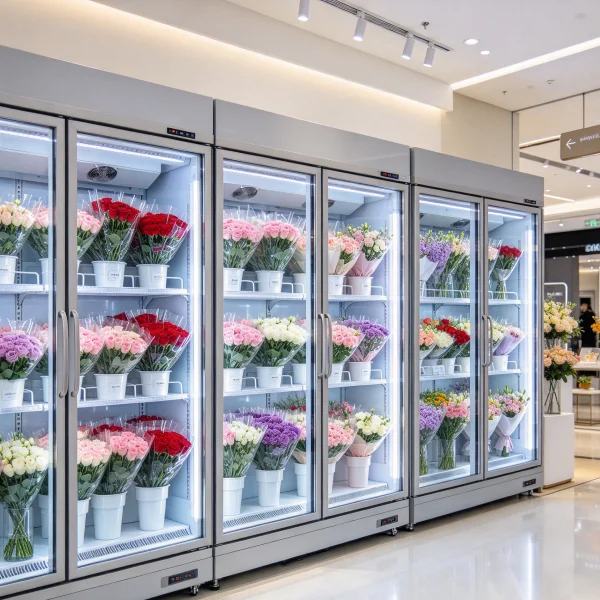
Quotes land in three bands, and the gap between them is almost always the cooling system and the dispensing arm. A glass-door cabinet is a fridge with locks. An elevator unit is a fridge plus a robot, and that robot is what keeps a $25 bouquet looking sellable.
| Tier | Landed price | Capacity | Best fit |
|---|---|---|---|
| Glass-door refrigerated cabinet | $6,500 to $9,500 | 15 to 25 bouquets | First machine, quieter lobby, office or hotel mall |
| Elevator refrigerated unit | $11,000 to $15,000 | 30 to 45 bouquets | Food court, cinema exit, mixed bouquet sizes |
| Dual-zone premium cabinet | $15,000 to $18,000 | 45 to 60 items, flowers plus small gifts | Flagship malls, operators running three or more sites |
Then come the add-ons nobody quotes upfront: a card reader at $250 to $450, a 4G telemetry module at $150 to $300 plus the SIM plan, delivery and commissioning at $300 to $800, and a spare tray set at $120 to $250. Ask for the landed price with all of it included, delivered to your mall’s loading dock.
Why a shopping center is the right host
Malls already sell impulse. Someone walks past the machine with 90 seconds to spare, sees roses behind glass, and buys. That moment is far more reliable in a mall than on a sidewalk, because mall foot traffic is concentrated, weather is controlled, and shoppers are already in a spending mood. The same logic powers the cotton candy vending machines you see in food courts, though flowers carry a much higher ticket.
Three occasions do the heavy lifting: Friday and Saturday evenings, Valentine’s and Mother’s Day weekends, and the everyday apology or thank-you purchase. A person heading to dinner who forgot an anniversary is your best customer, and they don’t comparison shop. They pay the sticker price.
Where inside the mall it should stand
Supermarket exit and main entrance
These two spots pull steady traffic all day, and grocery shoppers are already buying things for the home. The catch is heat. Entrance machines that sit beside automatic doors fight outside air every time the doors open, so watch your compressor duty cycle in the first month.
Food court and cinema lobby
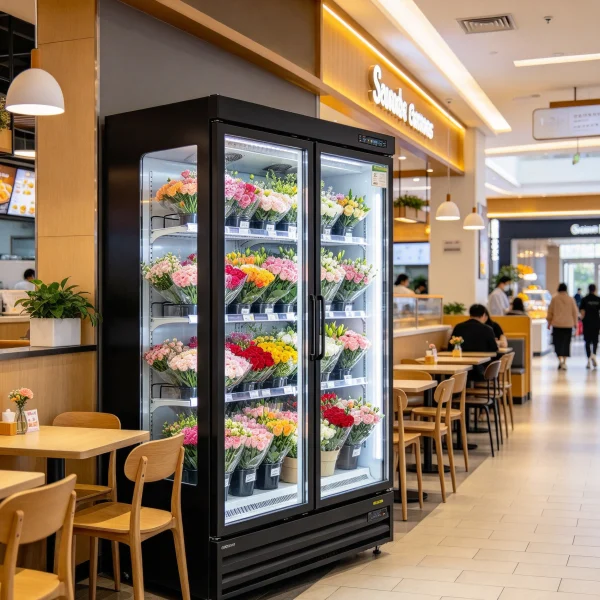
This is the highest-converting placement in most malls, and it’s worth paying 10% to 15% of sales in revenue share to get it. People arrive early for a movie, they wander after dinner, and they’re in gift-buying mode. Bouquets priced at $18 to $25 sell here at rates that would look absurd in a lobby.
Level position and sightlines
Ground floor beats the third floor almost every time. If you can get a machine beside a seating area or a phone-charging bench, take it: people standing still for two minutes are the ones who notice flowers. Also check the route your restocking cart has to travel. Hauling 40 buckets of water through three service corridors gets old fast.
The money: sales, spoilage, and payback
Nobody can promise you numbers, but the shape of the business is predictable. The two levers that matter are bouquets per day and average ticket. The two that quietly eat your margin are spoilage and mall rent. Here’s a realistic spread for a single mall machine running seven days a week.
| Monthly line | Quiet lobby spot | Strong food court spot |
|---|---|---|
| Revenue | $2,300 to $2,800 | $6,500 to $7,600 |
| Flowers and wraps (about 40%) | $900 to $1,100 | $2,600 to $3,000 |
| Mall rent or revenue share | $250 to $400 | $700 to $1,100 |
| Gross profit | $1,150 to $1,300 | $3,200 to $3,500 |
| Payback on a $10,000 machine | 7 to 9 months | 3 to 5 months |
Spoilage is the wild card. A machine that sells 5 bouquets a day and holds 40 will throw away stems, so stock to the slowest realistic day, not to capacity. If you want to see how payback math works on another impulse-buy format, the phone case machine profit timeline follows the same structure of upfront cost, break-even volume, and monthly margin.
Vetting a supplier before you wire money
Machines ship from dozens of factories, and two quotes for the same photo can hide completely different refrigeration. Before you pay a deposit, get answers in writing. VendingCore is a useful starting point here, because it is a supplier directory where you can compare verified suppliers side by side, read real buyer reviews, check price ranges, and send an inquiry directly instead of cold-calling factories at 3am your time.
| What to check | Good answer | Walk away if |
|---|---|---|
| Cooling spec | Named compressor, refrigerant, and a pull-down test result | Datasheet lists no temperature at all |
| Warranty | 24 to 36 months on the compressor, 12 months on parts | Warranty voids if you fit your own card reader |
| Payment hardware | MDB controller, documented plug layout | Locked to one payment provider you cannot change |
| Telemetry | Stock alerts and sales logs included | Monthly fee just to see your own sales |
| Spare parts | Doors, trays, and condenser fans shipped within two weeks | No parts list and no local agent |
| Site support | Asks for your mall layout, power, and floor load first | Sends a quote without a single question |
Week-to-week operation
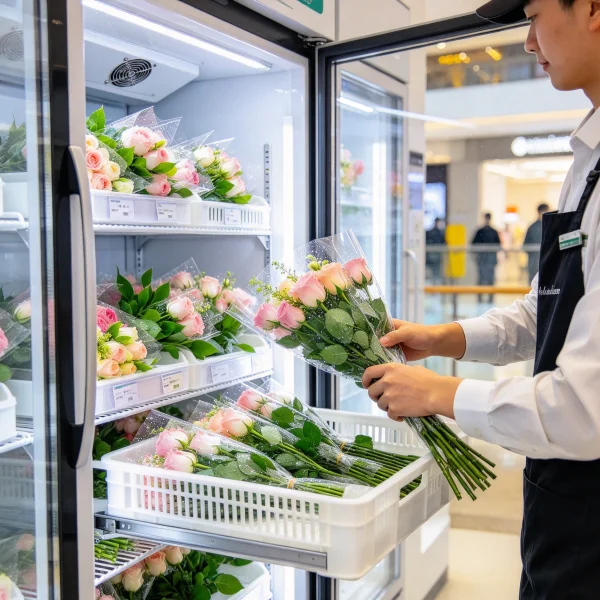
Running a flower machine is a restocking job with a small maintenance layer on top. Plan on three to five hours a week per machine once you know the route.
- Restock two to three times a week, and daily during Valentine’s and Mother’s Day weeks.
- Pull older bouquets to the front trays and mark them down rather than discarding them.
- Check the condenser coil and air filter monthly. A dusty coil is the number one cause of warm cabinets.
- Wipe the glass outside and the pickup hatch daily if the mall is busy, since fingerprints kill purchases.
- Reconcile the telemetry sales log against the card processor statement weekly. Gaps show up early when something fails.
If you’re new to route-based operations, the beginner steps on starting a vending machine business are worth reading before you buy, because scheduling, cash handling, and supplier relationships work the same way whether you sell flowers or snacks.
Mistakes that sink first-time owners
Buying the cheapest fridge is the big one, and it shows up in July, not in the showroom. The second is overstocking, because a full cabinet looks great and spoils fast. The third is picking a spot by rent price instead of foot traffic. Before you commit, read the honest list of vending machine pros and cons, especially the parts about site dependency and equipment downtime, since a dead compressor means zero revenue that week.
One more habit worth stealing from experienced operators: photograph the cabinet before each restock. You’ll see which trays sell first within two weeks, and that tells you exactly what to order more of next time.
What to do next
Decide your budget band first, then your location, then your supplier. A glass-door unit at $6,500 to $9,500 is a fair first machine for a quieter lobby, while a $11,000 to $15,000 elevator model makes sense in a food court where mixed bouquet sizes sell. Get three quotes for the same spec sheet, ask about refrigerant, warranty, and spare parts in writing, and confirm the mall will accept the cabinet’s footprint and power draw before you order.
The fastest way to compare options is to skip the random factory emails. On VendingCore you can browse verified flower machine suppliers, read buyer reviews, check current price ranges, and send an inquiry directly to the ones that fit your mall and budget. Start with three suppliers, ask each for a landed price and a lead time, and you’ll know within a week whether your mall site makes sense.
FAQ
How much does a flower vending machine for a shopping center cost?
Installed prices run from about $6,500 for a basic glass-door refrigerated cabinet to $18,000 for a dual-zone unit with an elevator arm. Budget $300 to $800 for delivery and commissioning and $250 to $450 for a card reader if it isn’t included. Refrigeration quality, capacity, and the dispensing mechanism drive almost all of the difference between quotes.
What temperature should the case run at?
Hold 3°C to 8°C. That’s the range florists use for cut stems, and it slows wilting without freezing petals. Below 2°C you risk cold damage on tropical blooms like orchids, and above 10°C flowers open and fade fast. Ask for a recovery test too, because a mall cabinet opens 30 to 50 times a day.
How often do you restock?
Two to three times a week for a typical mall machine, and daily during Valentine’s, Mother’s Day, and graduation season. Restocking is also your quality check: remove aging stems, top up the water, and rotate older bouquets to the most visible trays with a markdown rather than leaving them hidden at the back.
Do shopping centers allow vending machines?
Most malls do, usually under a concession or license agreement rather than a standard lease, and many ask for 10% to 15% of sales instead of fixed rent. Rules differ by city. Some treat a refrigerated cabinet as food-adjacent retail and require an electrical inspection and a business license, so confirm the paperwork before signing. Operators in tightly regulated markets can check what owning a vending machine in Singapore involves as a comparison.
How quickly does the machine pay for itself?
On a $10,000 cabinet, a strong food court spot generally pays back in 3 to 5 months, while a quieter lobby takes 7 to 9 months. The formula is simple: monthly gross profit after flowers and mall fees, divided into the machine cost. Slower sites still work when the rent is a revenue share instead of a fixed monthly bill.
Can it run without a florist on site?
Yes. The machine handles the sale, and you handle sourcing, restocking, and cleaning, usually three to five hours a week per unit. What you do need is a cold chain: flowers bought from a wholesaler the same morning and moved into the cabinet within a few hours. Leaving bouquets in a hot car between stops is what ruins sell-through.
Where can I find verified suppliers?
Use a directory that lists real suppliers with reviews instead of a search engine full of identical reseller pages. VendingCore connects buyers with verified vending machine suppliers, so you can compare quotes side by side, read buyer reviews, and send inquiries directly. Get at least three quotes on the same spec sheet before you pay any deposit.
Flowers are the hardest product to vend because they’re alive and they’re on a clock. In a mall, the cabinet does the selling, but the person behind it decides the sell-through. I’ve watched operators triple their numbers just by switching from a fixed daily restock to reading the telemetry and refilling the two best-selling trays first. If you’re buying your first unit, spend the extra money on the elevator model and a genuinely good fridge. Weak cooling is where new owners lose their margin, and they usually find out in August, when it’s too late to return anything.