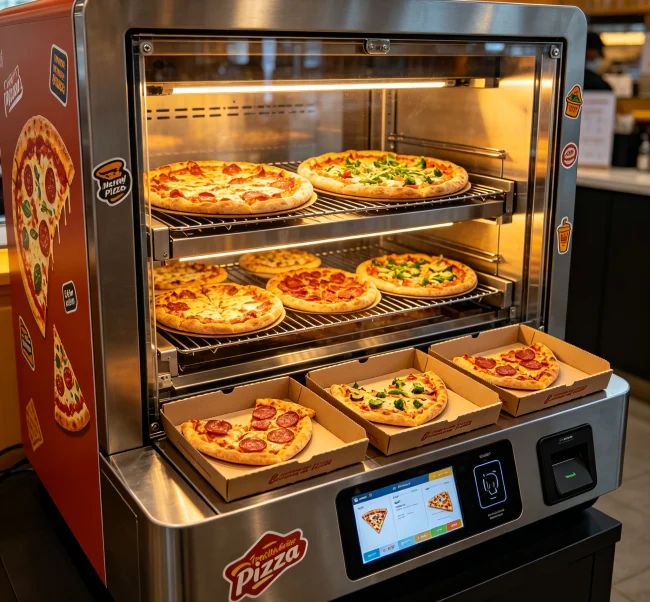
A pizza vending machine price typically ranges from $8,000 to $85,000 for a new unit, depending entirely on the brand, technology, and capacity you’re looking at. These machines aren’t your standard snack dispensers — they’re mini restaurants in a box, capable of mixing, proofing, saucing, topping, and baking a fresh pizza in about 3 minutes. And the price tag reflects that complexity.
So you’re probably wondering: is it worth it? Let’s break down exactly what you’re paying for, what the hidden costs look like, and how to figure out if this investment makes sense for your business.
What Determines the Price of a Pizza Vending Machine?
The price isn’t just one number. It’s a sliding scale based on several key factors. Here’s what moves the needle:
**Brand and Origin.** Italian and American brands like PizzaForno or Let’s Pizza sit at the premium end — think $60,000 to $85,000. They’ve got years of R&D, proven reliability, and established service networks. Chinese manufacturers, on the other hand, offer machines starting around $15,000 to $35,000. The trade-off? You’ll want to vet their quality and after-sales support carefully. If you’re curious about sourcing, our guide on Are Chinese Vending Machines Reliable digs into the real-world performance differences.
Technology and Features. A basic model that uses pre-made frozen dough is cheaper. A fully automated machine that mixes fresh dough from scratch? That’s going to cost you more — but it also delivers a superior product. Touchscreens, remote monitoring, cashless payment systems, and refrigeration all add to the bottom line.
Capacity and Size. A machine that holds 50 pizzas costs less than one holding 200. But higher capacity also means more sales potential, especially in high-traffic locations.
Customization. Want your branding, a specific color scheme, or custom software? That’s extra. Many suppliers offer OEM services, but expect to pay a premium.
💡 Key Tip: Don’t just look at the sticker price. Factor in installation, shipping, and warranty costs before comparing quotes from different suppliers.
The Hidden Costs Nobody Talks About
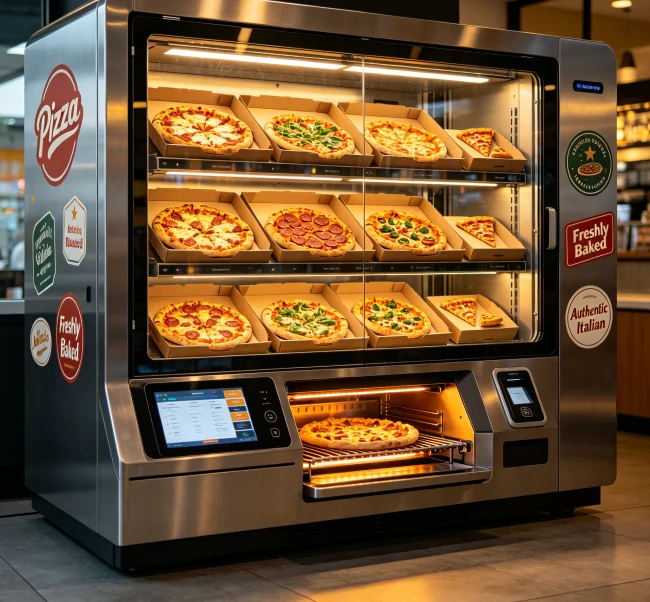
The machine itself is only the beginning. If you’re budgeting for a pizza vending machine, you need to account for these expenses:
Installation and Setup. These machines aren’t plug-and-play. They often require dedicated electrical wiring (220V in many cases), water lines, and ventilation. Installation can run $2,000 to $5,000 depending on your location.
Location Costs. Whether you’re leasing space in a mall, a college campus, or a factory floor, rent eats into your margins. Some locations take a percentage of sales instead of fixed rent — negotiate carefully.
Inventory and Restocking. Fresh dough, sauce, cheese, toppings — these are perishable. You’ll need a reliable supply chain. Waste from unsold inventory is a real cost.
**Maintenance and Repairs.** Like any complex machine, pizza vending machines break down. A service contract can cost $200-$500 per month. And when something goes wrong, you need a technician who knows these machines — not your average repair guy. For a broader picture of ongoing costs, check out How Much Does It Cost to Maintain a Vending Machine.
Payment Processing Fees. Every credit card or mobile payment transaction costs you 2-3%. On a $10 pizza, that’s $0.20-$0.30 per sale.
Permits and Licenses. Depending on your area, you might need a vending machine license, a food service permit, and health department inspections. These aren’t free.
💡 Practical Advice: Add at least 30% to your machine’s purchase price when calculating your total startup budget. That covers the real-world costs of getting operational.
Price Comparison: New vs. Used vs. Refurbished
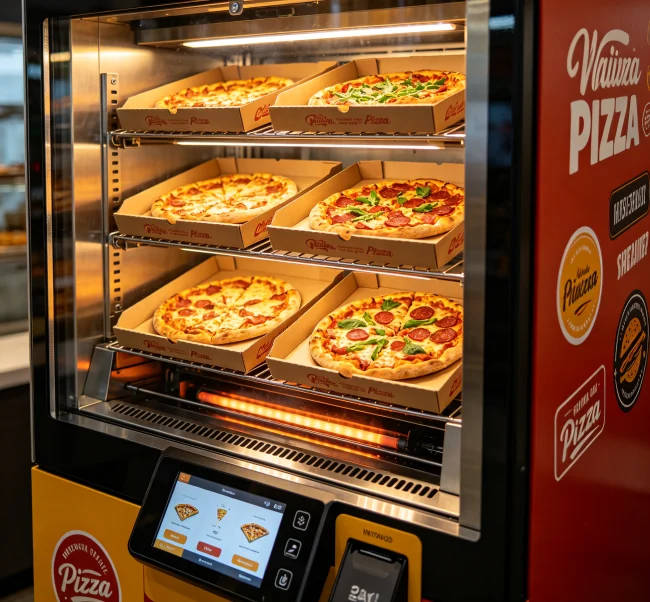
You’ve got options beyond buying brand new. Here’s how they stack up:
New Machines. Full warranty, latest technology, zero wear and tear. But you’re paying top dollar — $25,000 to $85,000. Financing is often available, but interest adds up.
Used Machines. You can find used pizza vending machines for $8,000 to $20,000. The catch? They might be older models with outdated tech. Parts can be hard to find. And you have no idea how well the previous owner maintained it.
Refurbished Machines. These are used machines that have been professionally restored. Expect to pay $12,000 to $25,000. They often come with a limited warranty. This is a solid middle ground if you’re on a tighter budget.
The used market is tricky with pizza vending machines. Unlike simple snack machines, these are complex food-service devices. A “great deal” on a used machine could turn into a money pit if the refrigeration system fails or the dough mechanism jams.
Real-World ROI: Can You Make Money?
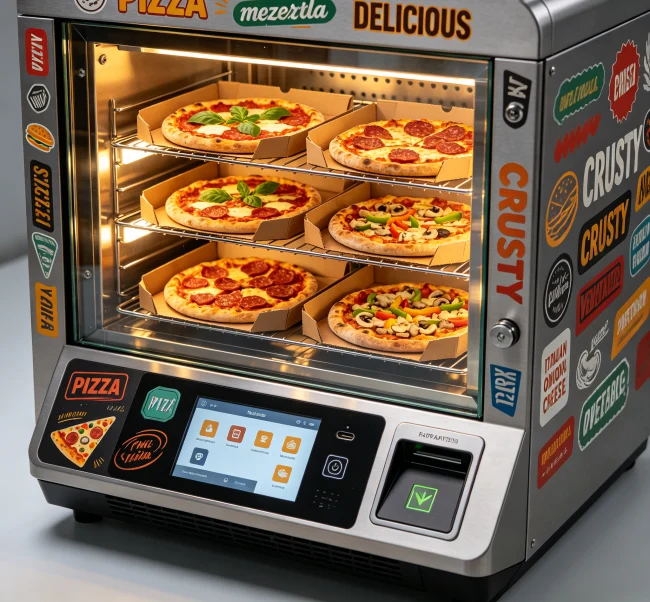
Let’s talk numbers. Say you buy a mid-range machine for $35,000. Your total startup costs (with installation, permits, initial inventory) might hit $45,000.
Assume you sell 30 pizzas per day at $10 each. That’s $300 daily revenue, or about $9,000 per month. Your costs — ingredients, rent, credit card fees, maintenance — might run 50-60% of revenue. So your monthly profit could be around $3,600 to $4,500.
At that rate, you’d recoup your investment in 10-12 months. That’s a solid return.
But here’s the thing — location is everything. A machine in a busy hospital might sell 50 pizzas a day. One in a quiet office park might sell 10. Do your homework on foot traffic before signing any lease.
💡 Critical Info: Don’t rely on supplier-provided ROI projections. They’re almost always optimistic. Build your own model using conservative sales estimates — assume 20% fewer sales than you hope for.
How to Choose the Right Supplier
This is where most people make mistakes. They focus on price and ignore everything else.
Start by asking these questions:
The cheapest machine is rarely the best value. A slightly more expensive machine from a reputable manufacturer will save you headaches — and money — over the long run. If you’re looking for a systematic way to evaluate suppliers, our How to Find Reliable Vending Machine Supplier checklist walks you through the vetting process step by step.
Is a Pizza Vending Machine Right for You?
These machines aren’t for everyone. They work best in high-traffic, 24/7 environments where people want fresh food fast — college campuses, hospitals, transportation hubs, manufacturing plants.
They’re less suitable for low-traffic areas or locations where people expect a full-service restaurant experience.
The upfront cost is significant, but the potential returns are real. The key is doing your due diligence on the machine, the location, and the supplier.
If you’re serious about exploring this opportunity, VendingCore can help you navigate the options. We work with manufacturers who meet rigorous quality standards and can provide detailed pricing based on your specific needs. Reach out to us for a consultation — we’ll help you figure out if a pizza vending machine makes sense for your business.