You need at least 3 to 5 well-placed vending machines to start seeing meaningful profit, with the average machine generating $75 to $200 in monthly net income depending on location, product mix, and operational efficiency. That’s not a huge number, but it’s also not a guarantee — location quality and ongoing maintenance make or break this business faster than almost anything else.
Let’s be real. You’ve probably seen those YouTube videos where someone claims they’re making $10,000 a month with just two machines. Those stories are almost always exaggerated or omit key details like location costs, machine breakdowns, and the time spent restocking. The truth is more grounded, and honestly, more useful for someone who actually wants to build a sustainable income stream.
So how many machines do you need? That depends entirely on what “profit” means to you. For some, it’s an extra $500 a month for date nights and savings. For others, it’s replacing a full-time job. Let’s break down the numbers based on real-world data, not hype.
The Real Numbers: What One Machine Actually Makes
Before you can calculate how many machines you need, you’ve gotta know what a single machine can realistically earn. Industry data from NAMA (National Automatic Merchandising Association) and operator surveys consistently show:
So if you’re aiming for an extra $1,000 a month, you’re looking at roughly 5 to 13 machines. That’s a wide range, I know. But it reflects reality — a machine in a busy office break room with 200 employees will crush a machine in a laundromat with 20 customers a day.
💡 Key Tip: Don’t buy 10 machines at once. Start with 2 or 3, test different locations, and learn the operational side before scaling. Most failed vending businesses bought too many machines too fast.
Scaling Up: From Side Hustle to Full-Time Income
Let’s say you want to replace a $45,000 annual salary. That’s about $3,750 a month in net profit. Using our conservative estimate of $100 profit per machine per month, you’d need roughly 38 machines. That sounds like a lot, and it is. But experienced operators with good locations often hit $150 to $200 per machine, which brings that number down to 19 to 25 machines.
Here’s the thing though — managing 25 machines is not a passive side gig anymore. You’re looking at 10 to 15 hours a week for restocking, maintenance, and route planning. That’s basically a part-time job. And if you’re managing 40+ machines? That’s full-time work, plus some.
Real-world example: A friend of mine started with 4 machines in 2023. Two years later, he’s at 18 machines. His best location (a small manufacturing plant with 150 employees) pulls $800 a month in revenue. His worst location (a nail salon) barely does $150. He’s replacing about $3,200 a month in income, but he also spends every Saturday morning restocking and every other month fixing a jammed machine.
⚠️ Caution: Don’t assume every machine will perform equally. Location quality varies wildly. A machine in a high-traffic office or warehouse can earn 3x more than one in a small retail shop. Vet locations hard before committing.
The $100k Question: How Many Machines for Six Figures?
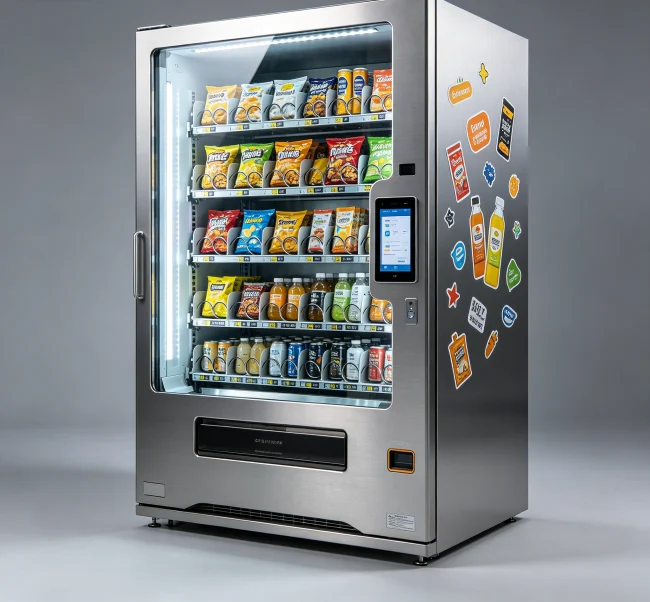
A lot of people search for “how many vending machines to make 100k” — and we’ve got a detailed breakdown in our guide on [how many vending machines you need to make 100k](https://vendingcore.com/how-many-vending-machines-do-you-need-to-make-100k/). But the short answer is: you’re looking at 50 to 80 machines if you’re hitting average margins, or 30 to 50 machines if you’ve got premium locations and optimized operations.
That might sound discouraging, but here’s the flip side — once you hit that scale, you can hire someone to do the restocking for you. Suddenly, you’re running a small business instead of a side hustle. The profit margins get better too, because you can negotiate better product pricing and machine maintenance contracts.
What Most Beginners Get Wrong
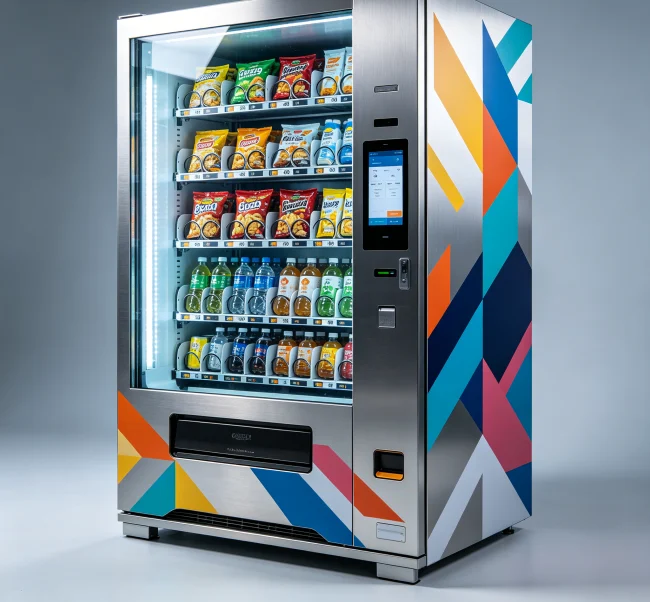
The biggest mistake I see? People focus on the number of machines instead of the quality of their locations. You can have 50 machines in terrible spots and lose money. Or 10 machines in great spots and make a solid living.
Other common pitfalls:
For a deeper look at whether this business is still worth it in 2026, check out our data-driven analysis on [whether vending machines are still a good investment](https://vendingcore.com/are-vending-machines-still-a-good-investment/).
💡 Practical Advice: Before buying any machines, find your locations first. Approach businesses, negotiate terms, and only purchase equipment once you’ve secured spots. This flips the risk model in your favor.
The Bottom Line on Machine Numbers
There’s no magic number that works for everyone. But here’s a realistic framework:
And remember — these numbers assume you’re doing the work yourself. If you hire help, your profit per machine drops, but your capacity to scale goes up.
If you’re serious about getting into this business, I’d recommend talking to someone who’s already doing it at scale. Platforms like VendingCore can help you understand the operational side — from machine selection to route optimization — so you don’t learn the hard way.