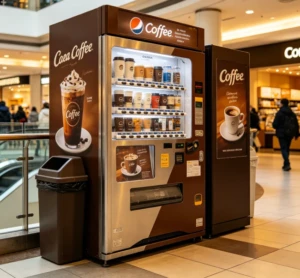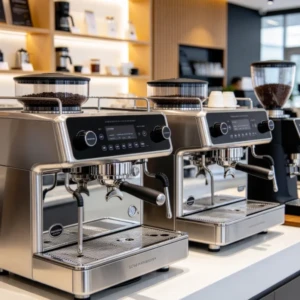
A 24 hour coffee vending machine is a self-service bean-to-cup unit that grinds fresh beans, brews, and dispenses hot coffee at any hour with no staff on site, and most models sell for $3,200 to $8,500 depending on the grinder, milk system, and payment hardware. You’ll find them in 24-hour gyms, hospital staff rooms, factory night-shift floors, truck stops, and apartment lobbies, where the worst outcome is a customer standing in front of a dark machine at 3 a.m. The unit runs the whole cycle itself, from hopper to grinder to brew group to cup, while a telemetry module reports sales and faults to the owner’s phone. Round-the-clock availability is the entire product.
What’s actually inside a unit that never closes
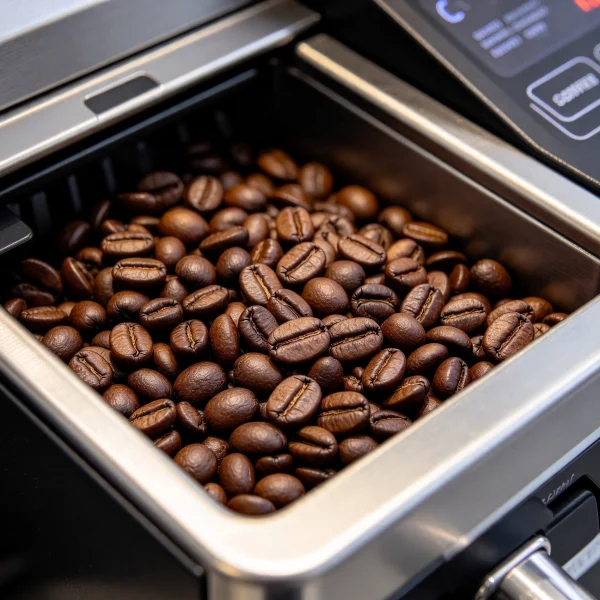
Six jobs happen inside one cabinet. The bean hopper holds 1 to 2 kg of roasted beans, roughly 150 to 250 cups before someone refills it. A burr grinder, steel or ceramic, cracks them fresh for every drink, which is the real difference between this and the old instant-powder machines still humming in some offices. The brew unit tamps and extracts at 9 to 15 bar, a boiler holds 1.5 to 3 litres of hot water, and a whipper or a small milk fridge adds foam.
A cup dispenser drops paper or plastic, and an MDB-compatible reader handles cards, phones, and coins. MDB, short for Multi-Drop Bus, is the standard protocol that lets you swap in a Nayax, Televend, or similar payment and telemetry module without replacing the machine’s brain. That matters more than most buyers expect, because payment gear ages faster than brewers do.
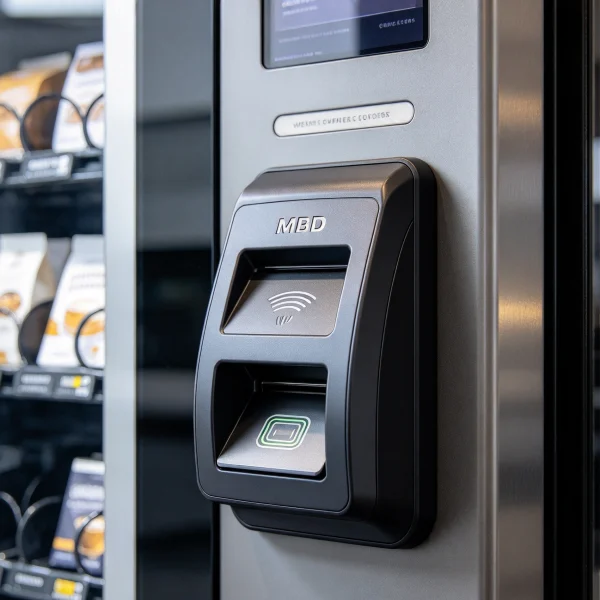
The part owners underestimate is remote monitoring. Stock levels, error codes, and daily sales landing on your phone mean you stop driving to a site just to check whether the hopper is empty. Running five machines across town, that’s the difference between a business and a series of errands.
What these machines cost in 2026
Prices move with grinder quality, milk handling, and cup capacity more than with brand name. Here’s the range buyers are actually seeing right now.
| Configuration | Price range (USD) | Cups per day it suits | Best for |
|---|---|---|---|
| Tabletop, single grinder, powdered milk | $3,200 to $4,500 | 20 to 50 | Offices, small gyms, single-room break areas |
| Floor standing, single grinder, fresh milk fridge | $5,200 to $6,800 | 50 to 100 | Sites where milk drinks drive sales |
| Twin grinder, two hoppers, fresh milk, cup dispenser | $7,500 to $8,500 | 100 to 200 | High-traffic venues, three-shift factories |
Then there’s the money people forget. Ocean freight and crating on a floor-standing unit runs $400 to $1,200 depending on destination and whether it ships as a partial or full container. Import duty, customs brokerage, and local delivery add more. A water filter and a dedicated circuit can cost a few hundred dollars to install. None of that is optional if you want the machine working on day one.
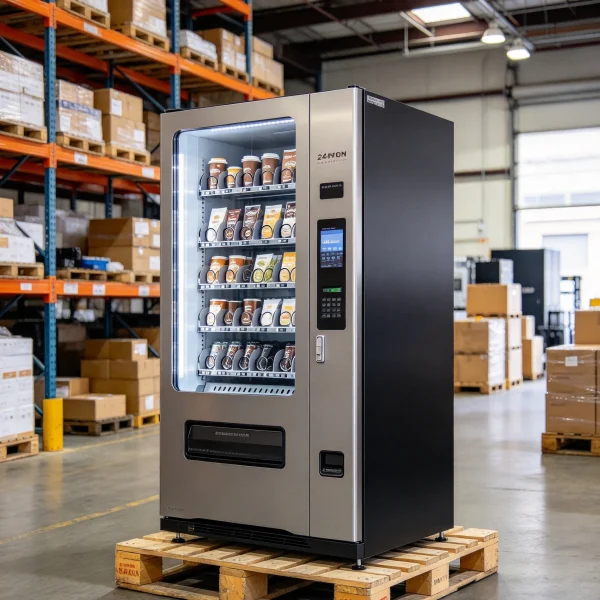
Where a round-the-clock machine earns its keep
Foot traffic decides everything. The machine itself can serve 200 cups a day, but if the room is empty between midnight and 6 a.m., you bought a very expensive ornament.
| Location type | Realistic cups per day | Why it works |
|---|---|---|
| 24-hour gym | 25 to 60 | Members train at 5 a.m. and after 10 p.m., and nobody wants a protein shake at those hours. |
| Hospital or clinic staff room | 60 to 120 | The cafeteria shuts. Night shift still drinks coffee. |
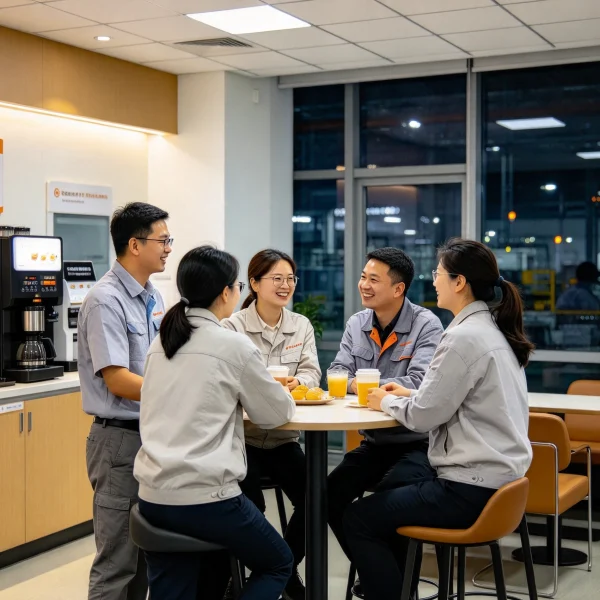
| Factory running three shifts | 80 to 200 | Three shift changes, three rush windows, most of them before sunrise. |
| Truck stop or logistics yard | 70 to 150 | Drivers keep odd schedules and pay for convenience. |
| Apartment or dorm lobby | 15 to 35 | Residents leaving at 6 a.m. want a cup they don’t have to make. |
Notice what those sites share. Someone is awake, and the alternative to your machine is either nothing or a five-minute drive. That’s the condition for round-the-clock revenue. A site where decent coffee is available two doors down at a staffed café is a different opportunity altogether, no matter how many people walk past.
The per-cup math, honestly
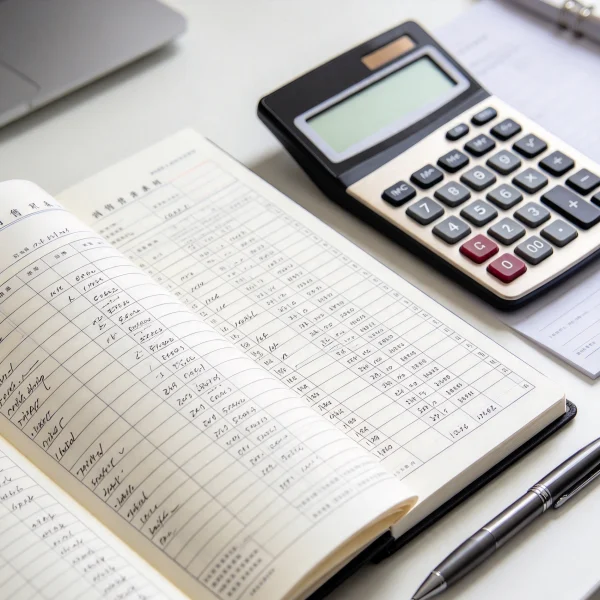
Ingredient cost per cup lands between $0.28 and $0.45 on a fresh-bean machine. Beans run about $0.18 to $0.25, milk or powder adds $0.05 to $0.10, the cup and lid another $0.04 to $0.07, and sugar or syrup a few cents more. Sell at $1.50 to $3.00 and you’re looking at gross margins near 70 to 80 percent, which is why this category survives where snack machines struggle.
Run a simple example. Sixty cups a day at $2.00 is $120 in revenue. Ingredients eat about $22, so roughly $98 stays in the machine. Site commission or rent takes $150 to $400 a month, cashless fees take another 2 to 4 percent, and consumable runs plus cleaning might cost $80. Net lands near $1,700 to $2,200 a month. On a $6,000 machine that’s a payback of 3 to 5 months, and even a slower site at 30 cups a day usually pays back in 6 to 9 months.
Those are operator-reported ranges, not promises. Your numbers move with the price you charge, the rent you negotiate, and how often the machine is down. A machine that’s broken for a week in month two pushes payback out by more than a week, because customers don’t automatically come back.
If you want to see how these figures shift in a specific market, the breakdown of vending machine profitability in Australia walks through revenue per site with operator data.
Specs to check before you wire anything up
- Water: direct mains connection with a filter, or a 19-litre bottle swap. Mains suits volume, bottles suit leased spaces.
- Power: 220 to 240 V single phase, 1,500 to 3,000 W, on a dedicated 16 A circuit. Don’t share it with a kettle.
- Footprint: tabletop units sit around 60 cm wide. Floor-standing towers run 70 to 90 cm wide and need 40 to 60 cm of clearance in front for the door.
- Payment: confirm MDB support and that the vendor can supply a card reader certified for your country’s acquirer.
- Cup capacity: 200 to 500 cups per load. More capacity means fewer visits, not more sales.
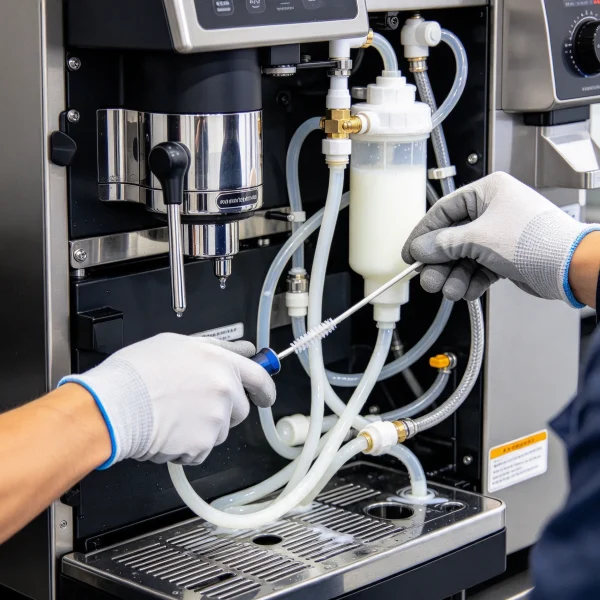
- Cleaning: daily rinse, weekly milk line flush, monthly descaling. Ask who does it and how long it takes.
What breaks first
Grinder burrs dull after roughly 1,500 to 2,500 kg of beans, which on a busy site is 12 to 24 months. Brew group seals go soft. Milk lines turn sour if the flush gets skipped, and that’s the failure customers taste before you ever see it in the error log. Water scale kills boilers in hard-water areas within a year unless you filter. Card readers drop offline, usually a signal problem rather than broken hardware.
Keep a spare burr set, a seal kit, and one payment module on the shelf. That’s maybe $250 of parts, and it turns a five-day wait for shipping into a two-hour fix.
Choosing a supplier you can hold to a warranty
This is where most first-time buyers lose money. The spec sheet looks fine; the relationship is the problem. You need someone who answers messages after the invoice clears, stocks spare parts, and will honor a 12 to 24 month warranty instead of blaming shipping damage.
Ask three questions before paying a deposit. What does the warranty cover and what does it exclude? Can they ship spare burrs, seals, and a payment module within a week? And who do you contact when the machine throws an error code at 2 a.m. on a Saturday?
On VendingCore you can compare verified suppliers side by side, read buyer reviews, check price ranges, and send an inquiry directly to the ones that fit your site. That beats cold-messaging factory accounts on a marketplace and hoping the person on the other end is real. If you’re weighing Chinese-built units against European or Korean brands, the guide to whether Chinese vending machines are reliable covers build quality, parts supply, and the certification paperwork worth requesting.

Should you add a second category?
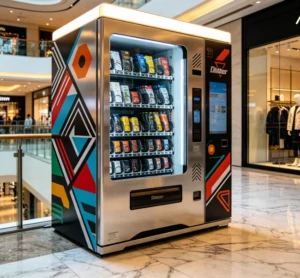
Coffee pays the rent, but the same location often supports a second unattended machine. Places with a captive, waiting audience are the ones that work, which is why phone case kiosks and even perfume vending machines get placed in malls and transit areas where coffee alone wouldn’t cover the rent. If the personalized-print angle appeals to you, the 2026 guide to DIY phone case vending machines breaks down unit costs and print specs, and there’s a companion piece on who supplies phone case vending machines if you’d rather compare manufacturers first.
A short pre-order checklist
Walk through this before you transfer any money.
- Site traffic counted at the hours you expect sales, including overnight.
- Lease or commission agreed in writing, including who pays for power.
- Water source confirmed, with a filter budgeted.
- Dedicated power circuit available and the amperage verified.
- Payment method matched to a local acquirer and currency.
- Landed cost quoted, not just the machine price.
- Warranty terms, spare parts list, and response time in writing.
- A named technical contact, tested with one message before purchase.
Nobody buys a round-the-clock coffee machine because the brochure is pretty. They buy it because a site has people awake at hours when nothing else is open, and the machine quietly collects two dollars each time one of them needs a cup. Get the location right, get the landed cost right, and choose a supplier who answers the phone.
Start with the supplier list. On VendingCore you can compare verified suppliers, read what other buyers say about them, and send an inquiry with your site details so quotes come back in one place instead of scattered across email chains.
FAQ
How much does a 24 hour coffee vending machine cost?
Most units land between $3,200 and $8,500 before freight and duty. A tabletop model with a single grinder and powdered milk sits at the low end. A floor-standing bean-to-cup machine with a fresh milk fridge runs $5,200 to $6,800, and high-volume twin-grinder models with a cup dispenser reach $8,500. Add $400 to $1,200 for crating and ocean freight, plus local delivery and any water or electrical work on site.
Does it need a water line?
Not always. Machines can draw from a 19-litre bottled supply, which suits leased spaces where plumbing isn’t practical. A direct mains connection with a filter is better above roughly 40 cups a day, because swapping bottles gets old fast and running dry mid-service costs sales. Either way, budget for a water filter. Scale is the most common cause of boiler failure in hard-water areas.
How many cups a day do I need to break even?
It depends on rent and price, but the usual floor is around 12 to 18 cups a day. At roughly 60 cents net margin per cup after ingredients, 15 cups covers electricity and small consumables and not much else. Past 30 cups a day, site rent is comfortably covered and the machine starts paying itself back, typically inside 6 to 9 months on a mid-range unit.
Can it accept card and mobile payments?
Yes, if the machine supports MDB, which nearly all units built since around 2018 do. You attach a cashless reader from Nayax, Televend, Ingenico, or a local acquirer, and it takes contactless cards, Apple Pay, and Google Pay. Confirm two things before buying: that the reader is certified for your country’s payment network, and that the machine’s telemetry reports cashless sales alongside cash.
How much maintenance does it take?
Plan on 10 to 15 minutes of daily work: empty the grounds and waste bins, rinse the brew area, and run the milk flush if you serve fresh milk. Weekly, clean the milk system properly and wipe the dispensing area. Monthly, descale the boiler and check burr wear. Every 12 to 24 months, replace burrs and brew group seals. Most of it is simple, but it has to happen on schedule rather than when it becomes convenient.
Do these machines work in very hot or very cold locations?
Only with the right spec. Most machines are designed to run between 5 and 35 degrees Celsius, so an unheated warehouse in winter or an outdoor site in summer needs a model rated for it, or an enclosure with climate control. Heat stresses the boiler and the payment electronics; cold thickens the oils in the grinder and slows the milk system. Ask the supplier for the operating temperature range in writing.
Where can I compare verified coffee vending machine suppliers?
On VendingCore you can browse a supplier directory, compare verified companies side by side, read buyer reviews, and check typical price ranges for the configuration you want. You send your inquiry straight to the suppliers that fit, so quotes come back in one place. It’s an information platform, so there’s no machine to buy from the site itself, just suppliers to compare before you commit.
After years of running unattended coffee, the thing I’d tell a new operator is that the machine is the easy part. Anyone can buy a grinder and a boiler. What separates a site that pays back in four months from one that bleeds money is whether people are actually awake and thirsty during the hours you’re open. I’ve moved machines from busy-looking offices to quiet hospital corridors and doubled revenue without changing a single setting. Count the traffic at night before you sign anything. Then buy the machine.