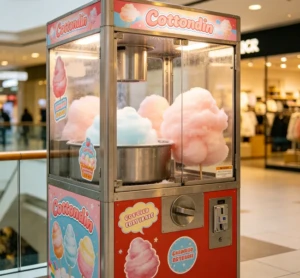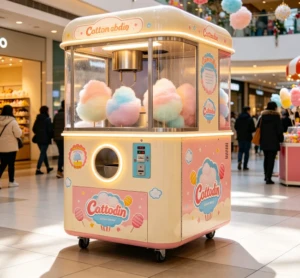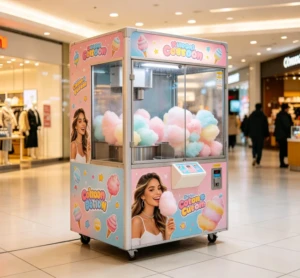
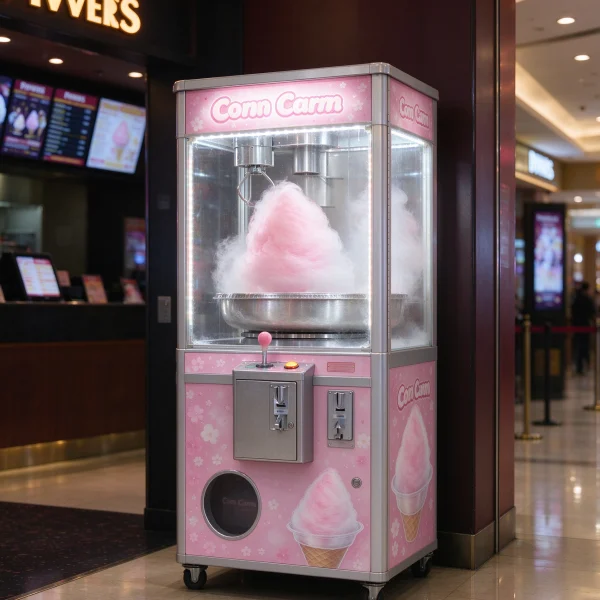
The best cotton candy Machine for a vending operation is an automated unit that turns out 80 to 120 servings per hour and costs $18,000 to $45,000 new, depending on brand and capacity. Operators place these machines in malls, movie theaters, airports, and family entertainment centers, then sell each piece for $6 to $9. At those numbers, you need roughly 2,500 to 5,000 sales to clear your initial investment in a strong location. The daily work is less about spinning sugar and more about restocking, monitoring, and keeping the machine clean.
What we mean by best for vending
A quick search online sends you into endless lists of retro countertop makers. Those are fine for a birthday party. For a vending route, though, you need equipment that works while you handle the rest of the business.
Two product categories dominate the cotton candy vending world. The first is a fully automated cabinet that spins, flavors, and drops a finished cone through a hatch. The second is a commercial concession machine that needs an operator present. Both can make money, but they are different businesses.
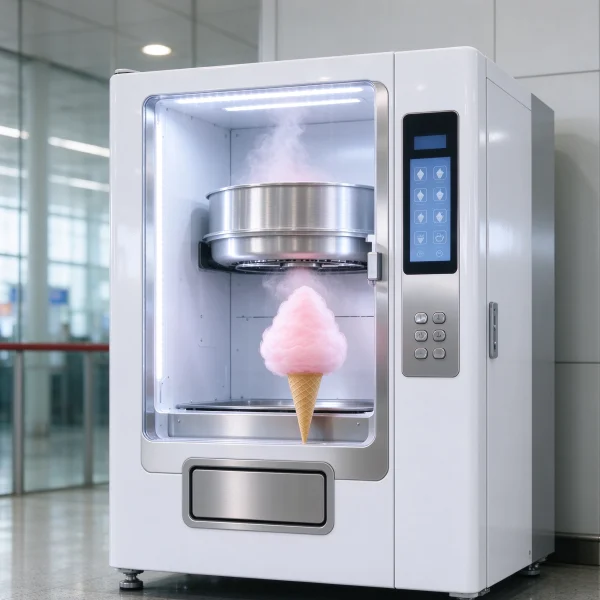
| Feature | Automated vending machine | Commercial concession machine |
|---|---|---|
| Typical price | $18,000 to $45,000 | $4,000 to $9,000 |
| Labor needed | Restock and collect cash | One operator per machine |
| Servings per hour | 80 to 120 | 20 to 40 |
| Best locations | Mall hallways, cinemas, airports | Fairs, festivals, events |
| Space needed | Roughly 4 by 6 feet | Table or cart footprint |
If you want the machine to earn while you sleep, automated is the direction. If you already have fair permits and a trailer, a concession unit may be the smarter start.
The specs that decide whether a unit earns
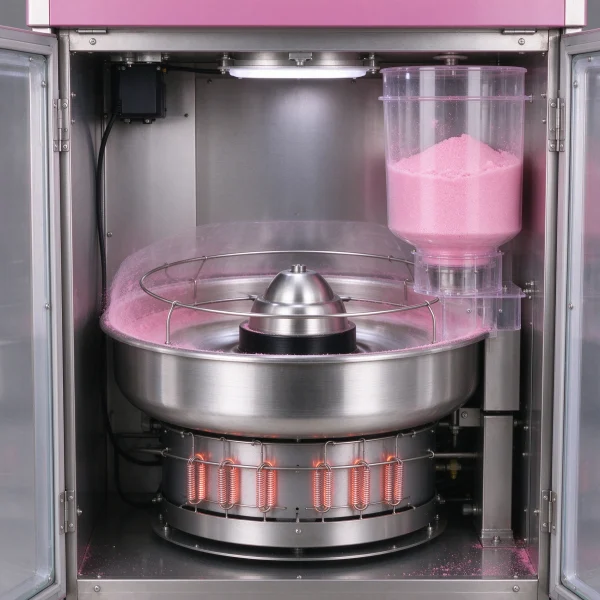
A machine that looks great in a brochure can be a nightmare on a concrete floor. Pay attention to the heating element, the spinner head, and the hopper capacity.
Automated cotton candy vending machines have a few parts that matter more than the rest. The heating element needs to reach the right temperature quickly. The spinner head needs to be easy to remove for cleaning. The hopper holds raw sugar, and bigger usually means fewer refills during peak hours.
Check power requirements before you fall in love with a floor plan. Most automated machines need a standard 110V outlet, but some commercial concession models want 220V. Measure the footprint, account for a meter of clearance around the machine, and confirm you can open the side panels when it is against a wall.
Keep these five things on your checklist:
- Heating element wattage
- Spinner head warranty
- Hopper capacity
- Removable food-contact parts
- Phone and remote diagnostics
What a cotton candy vending machine really costs
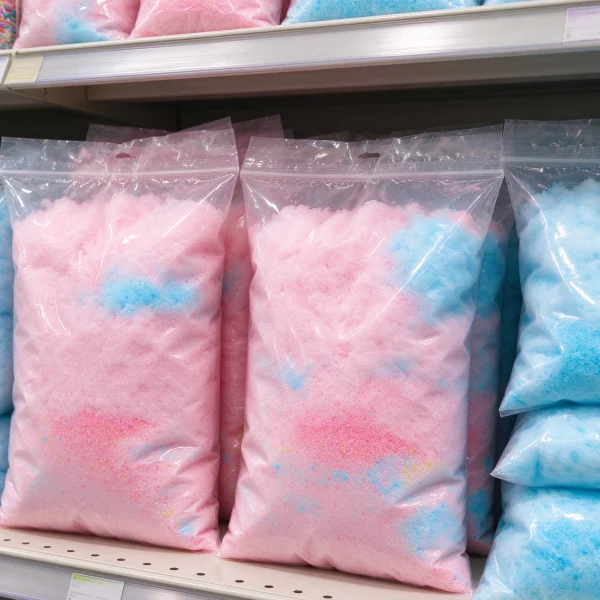
The sticker price is only the opening bid. You also need sugar mix, cups, sticks, bags, cleaning supplies, site rent, and a reserve for repairs. The consumables run $0.40 to $0.65 per serving. At a $7 selling price, your gross margin sits around 85 percent before site commission and machine finance. For the real per-serve breakdown, check our cotton candy vending machine ingredients cost guide.
A used automated unit can run $9,000 to $18,000, but support may be sparse and older units often need motor brushes or a new heating element. If you are weighing new versus used, our guide on used vs new vending machines covers the hidden costs and reliability differences.
| Cost item | Price range |
|---|---|
| New automated machine | $18,000 to $45,000 |
| Used automated machine | $9,000 to $18,000 |
| Sugar mix per serving | $0.25 to $0.40 |
| Cup, stick and bag per serving | $0.15 to $0.25 |
| Power and cleaning per month | $80 to $200 |
| Maintenance reserve per month | $100 to $300 |
The good news is that operating cost stays predictable once you settle on a sugar brand. Bad news? Cheap machines sometimes need expensive custom parts. That’s why supplier verification matters as much as the price tag.
Location math that makes or breaks you
Machine quality matters, but location matters more. A mediocre machine in a busy mall hallway will beat a premium machine in a quiet storage lobby.
The rule of thumb I hear from operators: one sale every 6 to 8 minutes during a four-hour peak shift works out to 30 to 40 servings a day. At $7 each, that is $210 to $280 in daily revenue, or $1,200 to $1,700 a week in a decent site.
Place the machine near movie theaters, game zones, or a food court. Customers there already plan to spend money. Some operators run a phone case vending machine next to the cotton candy unit because both sell on impulse; our phone case vending machine buyers guide breaks down that model. And if you are exploring unattended retail in general, flower vending machines follow the same site logic, which we cover in our 24 hour flower vending machines guide.
How to pick a supplier without getting burned
Here’s where people get into trouble. Many suppliers list beautiful machines online but offer zero after-sales support. Ask for a spare parts list, a wiring diagram, and the contact of one current operator. If a seller hesitates, walk away.
This is also where a supplier ranking helps. On VendingCore’s supplier ranking, you can compare verified suppliers, read buyer reviews, and send inquiries directly. You’ll see which distributors answer questions, which ones ship on time, and which ones vanish after the first check.
The biggest mistake I see with first-time vending buyers is choosing hardware before location. A cotton candy machine is a production tool. It does not create demand by itself. The operator who picks a bad spot and tries to make the machine work usually blames the equipment. The successful ones start with a location agreement, then buy the smallest machine that can serve that traffic, and put the extra money into service and sugar supply. Before they order a single unit, I tell them to write down the location’s daily visitor count, the selling price they can charge, and the rent they will pay. If those three numbers do not work, no machine will save them.
Daily operations and maintenance
Cleaning is the part nobody budgets for. Sugary floss gets everywhere, and dried mix jams hoppers. Wipe the spinner head after every 30 to 50 servings, deep clean the chamber weekly, and swap worn bearings before they squeal.
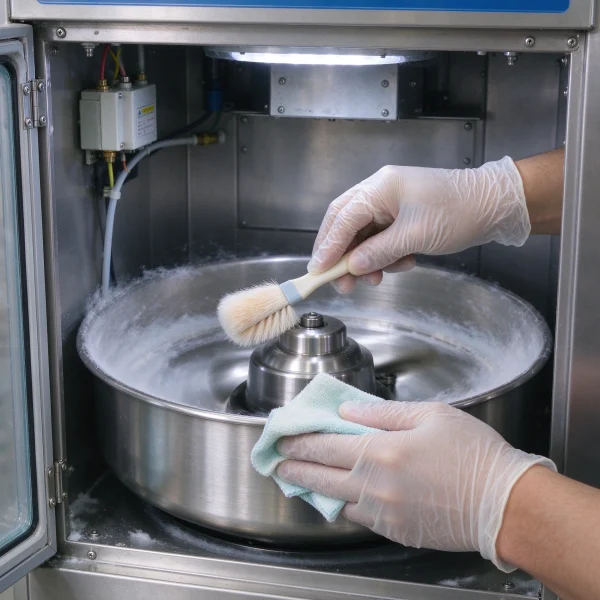
A simple checklist can save you from a shutdown in peak season. Check sugar levels, cup stock, waste bin, and the cooling fan. If the machine has a diagnostic screen, learn to read the error codes and keep a log.
So what should you do before you spend money? Decide which model fits your operation, run the numbers with real serving costs, and compare suppliers side by side. A cotton candy vending machine can be a strong little earner, but only when the location, supplier, and maintenance plan line up.
FAQ
Is an automated cotton candy vending machine better than a concession machine?
It depends on your labor and location. Automated machines work without an operator, so they fit malls, cinemas, and airports where you cannot staff a booth. Concession machines cost less and work well for fairs and events, but they need someone there to spin and collect money. Start by deciding how many hours each week you can be on site, then compare the two models against that number.
How many servings can a vending cotton candy machine make per hour?
Most automated units quoted by suppliers produce 80 to 120 servings per hour when the heating element is warm and the hopper is full. Actual throughput depends on how fast customers pay and whether the machine has to pause between flavors. For planning, use 50 to 60 servings an hour as a safe number for busy periods.
What is the real startup cost for a cotton candy vending machine?
New automated machines cost $18,000 to $45,000. Used units run $9,000 to $18,000. You also need permits, site rent, sugar mix, cups, sticks, and a cash reserve for repairs. A practical startup budget with six months of operating costs lands between $25,000 and $55,000 for a new unit in a solid location.
How long does it take to learn to run one?
The learning curve is shorter than most people expect. You can handle daily restocking and cleaning after two or three service visits. Diagnosing mechanical issues takes longer, so make sure the supplier provides a manual and phone support. If you buy used, budget time to learn that specific model’s quirks.
What sugar mix should I use in a cotton candy vending machine?
Use floss sugar made for commercial machines, not granulated sugar straight from the bag. Commercial floss sugar melts evenly and carries flavor dye. The per-serving cost is $0.25 to $0.40 depending on brand and volume. Buying in bulk from a vending supplier can cut that number by 15 to 20 percent. Check our ingredients cost guide for a detailed profit breakdown.
Where can I find cotton candy vending machine suppliers?
Start with a platform that checks suppliers instead of a search page full of ads. On VendingCore’s supplier ranking, you can compare verified suppliers, read buyer reviews, and send inquiries directly. Build a list of three or four candidates, ask each one for operator references, and compare their spare parts and support policies before making a decision.