An automatic popcorn vending machine can generate between $1,500 and $4,000 in monthly revenue depending on foot traffic and location strategy. These machines are typically deployed in high-traffic venues like shopping malls, movie theaters, amusement parks, and college campuses where impulse snack purchases are common. The system handles the entire process—from popping fresh kernels using hot air or oil-based methods to dispensing the finished product into a cup—without any human intervention required.
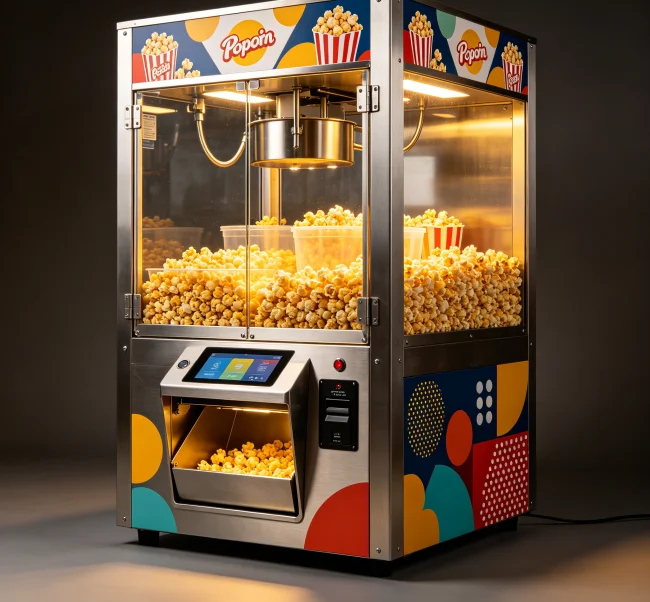
And here’s the kicker—you don’t need a popcorn stand or employees. Just a machine, a power outlet, and a steady supply of kernels.
What Makes an Automatic Popcorn Vending Machine Different?
You’ve probably seen those old-school popcorn carts at fairs. Cute, sure. But they need someone to run them. An automatic version changes the game entirely.
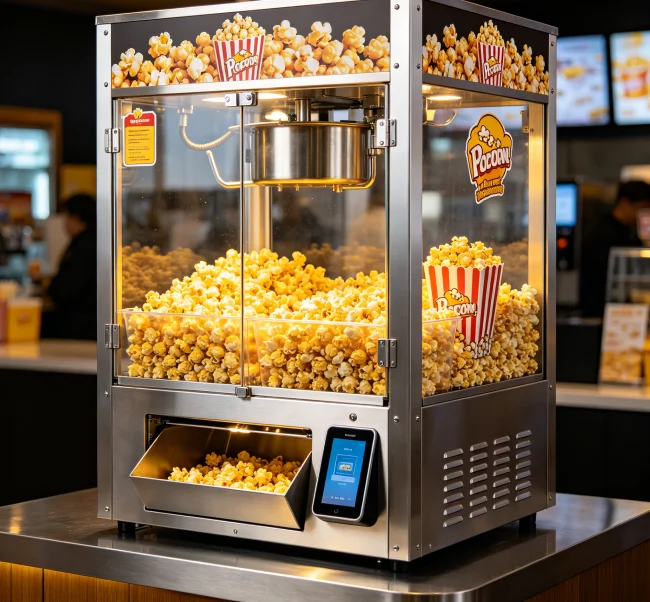
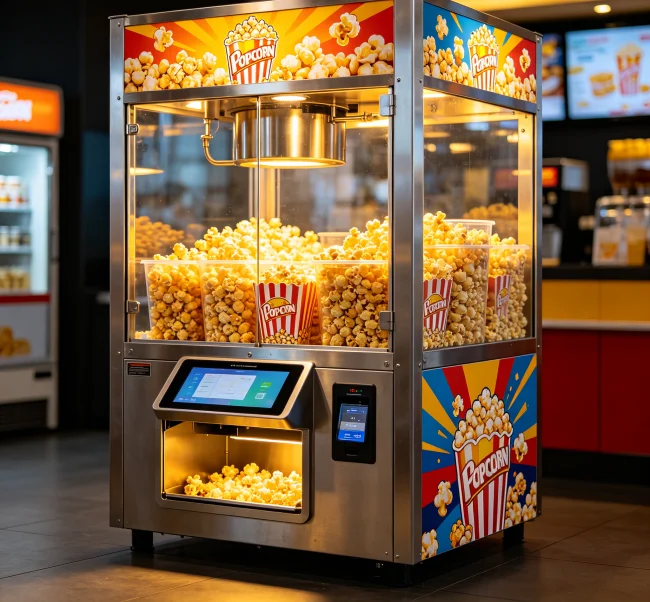
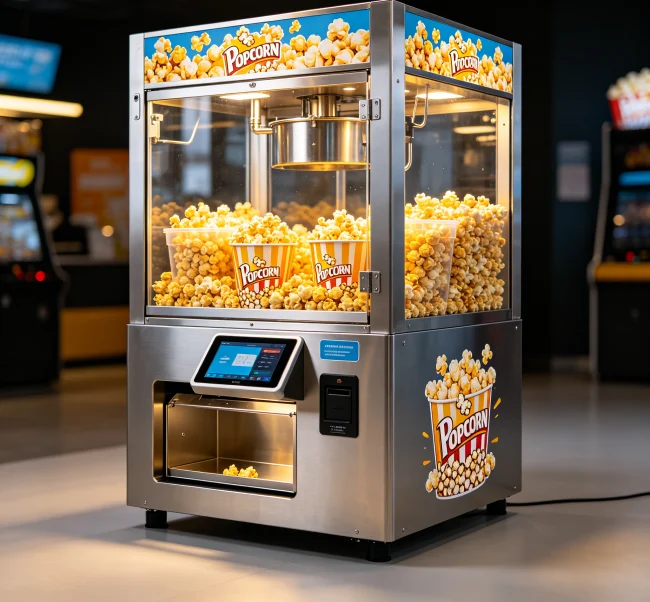
These machines are essentially mini factories in a box. They store raw kernels, oil, and seasoning. When a customer pays—through cash, card, or mobile wallet—the machine pops a fresh batch right there. We’re talking about 60 to 90 seconds from payment to a warm, ready-to-eat snack.
Most units hold enough supplies for 50 to 150 servings before needing a refill. That’s a lot of popcorn without lifting a finger.
The technology has come a long way too. Modern machines include self-cleaning cycles, temperature sensors to prevent burning, and remote monitoring so you can check inventory from your phone. Some even let you adjust the salt level or switch between butter and caramel flavors remotely.
Think about it—no labor costs, no spoilage (popcorn kernels last forever), and a product with margins that make most other vending items look weak.
The Real Cost Breakdown
Let’s talk money. Because that’s what matters, right?
Here’s what you’re looking at for a commercial-grade automatic popcorn vending machine in 2026:
| Cost Category | Estimated Amount |
|---|---|
| Machine Purchase (New) | $8,000 – $18,000 |
| Machine Purchase (Used/Refurbished) | $4,000 – $9,000 |
| Shipping & Installation | $500 – $1,500 |
| Monthly Supplies (Kernels, oil, cups) | $200 – $600 |
| Monthly Location Lease | $150 – $800 |
| Monthly Maintenance Reserve | $100 – $300 |
The upfront cost isn’t tiny. But compare that to opening a physical popcorn shop? You’re saving tens of thousands in rent, build-out, and staffing.
💡 Smart Move: Start with a used machine from a reputable supplier. You’ll cut your initial investment in half while testing locations. Upgrade to new equipment once you’ve proven the concept.
How Profitable Are These Machines Really?
Here’s where it gets interesting. The gross profit margin on a single serving of vending machine popcorn is around 75% to 85%.
Let’s break that down with real numbers. A typical serving costs you about $0.35 to $0.50 in materials (kernels, oil, cup, lid). You sell it for $3.00 to $5.00. Do the math—that’s a $2.50 to $4.50 profit per sale.
If your machine does 30 sales per day at $4.00 each, that’s $120 daily revenue. Subtract $15 in COGS (cost of goods sold) and maybe $10 in daily location and maintenance costs. You’re looking at $95 per day in profit.
That’s roughly $2,850 per month. Not bad for a machine that just sits there working.
Of course, location is everything. A machine in a busy mall corridor might do 50+ sales daily. One in a quiet office break room? Maybe 10. The profitability of a popcorn machine depends heavily on where you put it.
Where Should You Place One?
Location hunting is the part most people underestimate. You can’t just stick it anywhere and expect gold.
Here are the top spots that work in 2026:
The key is negotiating a fair revenue split or flat lease with the property owner. Most locations will take 10% to 20% of revenue or a flat $200-$500 monthly fee.
⚠️ Watch Out For: Don’t sign a long-term lease for a location you haven’t tested. Negotiate a 3-month trial period first. Some spots look great on paper but underperform in reality.
Maintenance and Upkeep—What You Need to Know
Let’s be real. Machines break. It’s not a matter of if, but when.
The good news? Automatic popcorn vending machines are simpler than soda or snack machines. Fewer moving parts. Less to go wrong.
Still, you’ll deal with:
Plan on visiting each machine once or twice a week for restocking and basic cleaning. That’s about 2-3 hours per machine per week.
If you’ve got 5 machines spread across town, you’re looking at a part-time gig with serious profit potential.
The VendingCore Advantage
This is where we come in. At VendingCore, we don’t just sell machines—we help you build a profitable vending operation from the ground up.
Our automatic popcorn vending machines come with:
We’ve helped hundreds of operators launch their first machine and scale to fleets of 20+. Whether you’re a first-timer or an experienced operator looking to add popcorn to your mix, we’ve got you covered.
💡 Pro Tip: Start with one machine in a proven location. Run it for 3 months. Track every dollar. Once you’ve confirmed the numbers work, scale from there. Don’t buy 5 machines at once and hope for the best.
Common Mistakes New Operators Make
I’ve seen people lose money on vending machines. Here’s what they did wrong so you don’t have to:
Buying the cheapest machine available. That $3,000 unit from an unknown brand? It’ll break. Parts won’t be available. You’ll lose more in downtime than you saved upfront.
Ignoring location quality. A free spot in a dead zone is worse than a paid spot in a busy area. Foot traffic is everything.
Setting prices too low. You’re selling convenience and freshness. $3 is the floor. $4-$5 is standard. Don’t be afraid to charge what it’s worth.
Neglecting maintenance. A dirty machine doesn’t sell. Neither does a broken one. Stay on top of it.
Not tracking metrics. If you don’t know your daily sales, cost per serving, and profit margin, you’re flying blind. Use the machine’s reporting or a simple spreadsheet.
Is This Right for You?
Automatic popcorn vending machines aren’t a get-rich-quick scheme. They’re a solid, predictable income stream that scales well.
If you’ve got $10,000 to invest and can commit 5-10 hours per week to managing your machines, you can build a nice side income. Scale to 5-10 machines, and you’re looking at a full-time business pulling $5,000-$15,000 monthly profit.
The best part? It’s passive-ish income. Once the machine is set up and running, it works while you sleep. You just need to keep it stocked and maintained.
If you’re ready to explore this further, reach out to VendingCore. We’ll walk you through machine options, location scouting, and the financial projections for your specific situation.