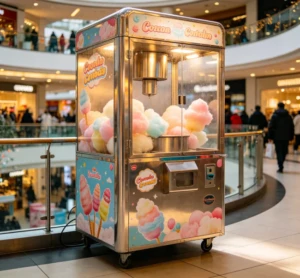
Home / Cotton Candy Vending Machine / Cotton Candy Vending Machine ROI: A Realistic 2026 Profitability Guide

Cotton Candy Vending Machine ROI: A Realistic 2026 Profitability Guide

Article Summary

A cotton candy vending machine can achieve ROI in 3-6 months with strong location placement, offering net margins of 65-75% after accounting for sugar, cones, location fees, and card processing.

You're probably wondering if this sweet idea is a real moneymaker or just a sugar-coated dream. We get it—you need hard numbers, not hype. This guide cuts through the fluff to give you a realistic financial breakdown, including the hidden costs and location strategies most blogs miss. We'll show you exactly how to calculate your potential profit and avoid the common pitfalls that trip up new operators.

The allure of a cotton candy vending machine as a passive income stream is undeniable, but savvy entrepreneurs know the real question isn’t about the dream—it’s about the data. Moving beyond simple cost lists, a true ROI analysis requires dissecting operational realities, hidden expenses, and location-specific variables that most generic guides overlook.
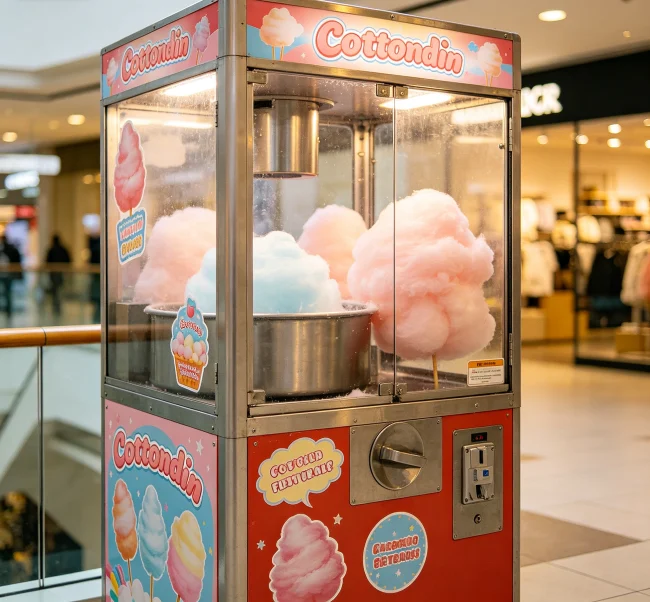
cotton candy vending machine ROI

Your initial investment is more than just the machine. A realistic startup budget must account for both capital expenditure (CAPEX) and initial operating supplies. On platforms like vendingcore.com, we see quality, fully automated commercial machines from our network of over 500 manufacturers ranging from $3,500 to $8,000, depending on capacity and features like touchscreens or advanced payment systems.

Here’s a detailed breakdown of typical upfront costs:

Cost Category Item Estimated Cost (USD)
Machine & Setup (CAPEX) Commercial-Grade Machine $4,000 – $7,000
Delivery & Installation $200 – $500
Initial Business Licensing & Permits $100 – $400
Initial Inventory & Essentials Flavored Sugar (First 200-300 lbs) $300 – $600
Cones/Sticks (First 1,000 units) $80 – $150
Cleaning Supplies & Tool Kit $50 – $100
Spare Parts Kit (Heating element, motor brushes) $100 – $250

💡 Budgeting Tip: Always allocate 10-15% of your machine cost for a “contingency fund” to cover unexpected setup fees, permit variations, or higher initial shipping costs.

Operational Costs: The Numbers They Don’t Always Show
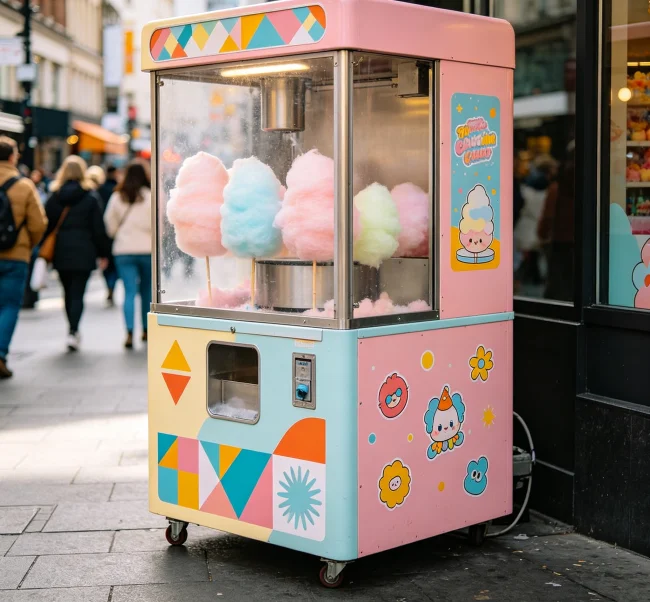
Operational Costs: The Numbers They Don't Always Show

Your ongoing profitability hinges on managing operational expenses (OPEX). The cost per serving is surprisingly low, but ancillary fees can erode margins if not planned for.

  • Direct Cost of Goods Sold (COGS): A standard serving uses about 1 oz of sugar. With a 50lb bag of commercial floss sugar costing $60-$80, your sugar cost is approximately $0.07 – $0.10 per serving. Cones add another $0.03-$0.05.
  • Location Commission/Rent: This is often the largest variable. High-traffic venues like malls or airports may charge 15-25% of gross sales or a fixed monthly rent of $200-$800.
  • Payment Processing: Credit/debit card transactions incur fees of 2.5% – 3.5% + $0.10-$0.30 per transaction. For a $5 sale, this could be $0.20-$0.30.
  • Maintenance & Repairs: Budget 1-2% of machine cost annually ($50-$150/year) for routine maintenance. A major component failure (like the spinner head) can cost $200-$500.
  • Insurance & Miscellaneous: General liability insurance may cost $500-$1,000 annually. Don’t forget fuel for traveling to service multiple locations.
  • 💡 Negotiation Leverage: When discussing location fees, propose a percentage-of-sales model over a flat rent. This aligns your success with the venue’s and protects you during slow periods.

    Revenue Realities: From Festival Frenzy to Steady Mall Traffic
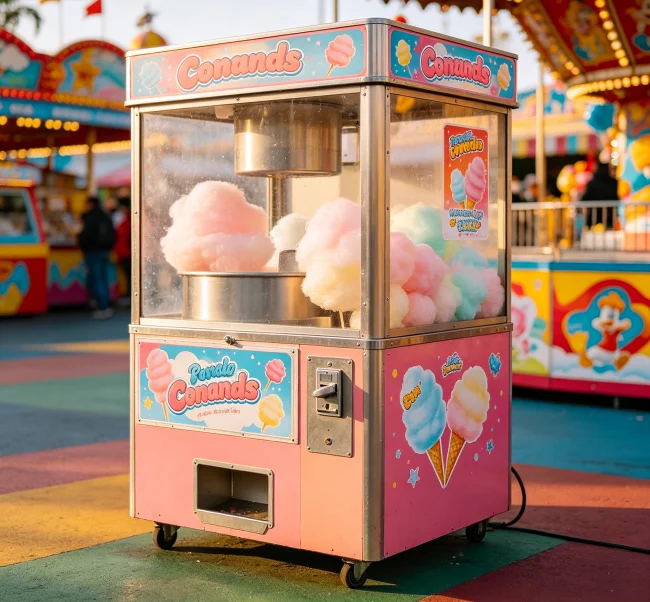
    Revenue Realities: From Festival Frenzy to Steady Mall Traffic

    Revenue is highly location-dependent. A machine at a seasonal fair will have explosive but short-lived income, while an airport location offers consistent, year-round sales. Pricing is typically between $5 and $8 per serving.

    Let’s examine realistic daily sales scenarios:

    Location Type Estimated Daily Servings (Avg.) Price Point Gross Daily Revenue Key Considerations
    Major Airport Terminal 25 – 40 $7 – $8 $175 – $320 High foot traffic, captive audience, stringent health/safety codes, very competitive placement.
    Regional Shopping Mall 15 – 30 $6 $90 – $180 Family traffic, weekends peak, requires mall approval and likely a revenue share agreement.
    Weekend Festival/Fair 50 – 100+ $5 $250 – $500+ Very high volume for short duration, requires generator for outdoor use, significant setup/tear-down labor.
    College Campus Student Union 10 – 20 $5 $50 – $100 Consistent academic-year traffic, may have lower summer sales, appeals to late-night crowds.

    Calculating Your ROI: A Practical, Multi-Scenario Model
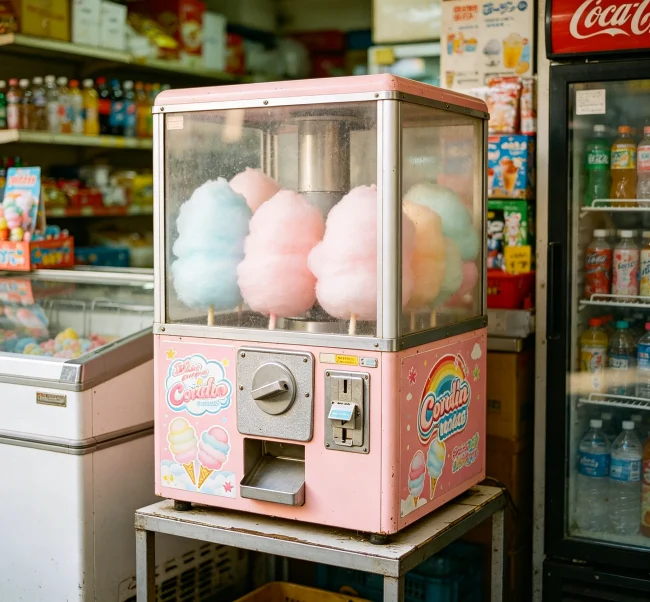
    Calculating Your ROI: A Practical, Multi-Scenario Model

    The basic ROI formula is: (Net Profit / Total Investment) x 100. Net Profit = Gross Revenue – (COGS + Location Fees + Processing Fees + Other OPEX). Let’s model a realistic scenario.

    Scenario: Mid-Tier Mall Location

  • Total Investment: $5,500 (Machine, delivery, permits, initial stock)
  • Daily Averages: 20 servings at $6.00 = $120 Gross Revenue
  • Daily Costs: COGS ($2.00) + Mall Commission 20% ($24) + Card Fees 3% ($3.60) = ~$29.60
  • Daily Net Profit: $120 – $29.60 = $90.40
  • Monthly Net Profit (25 operating days): $2,260
  • Simple Payback Period: $5,500 / $2,260 ≈ 2.4 months.
  • This is a strong scenario. A less optimal location with 10 daily servings might extend the payback to 5-6 months. This is why we emphasize connecting with vetted manufacturers on vendingcore.com—securing a reliable machine at a direct-factory price through our platform is the first critical step to achieving a favorable ROI.

    💡 Cash Flow Focus: Don’t just fixate on payback period. Ensure your projected monthly net profit after payback justifies the ongoing management time and effort for a sustainable business.

    The Critical Hidden Factors That Make or Break Profitability

    Most ROI analyses stop at the math. Your real success depends on these operational nuances.

  • Health Department & Regulatory Hurdles: This is a food business. Requirements vary by state and county but often include a Mobile Food Establishment license, a commissary kitchen agreement for storage/cleaning, and employee food handler certifications. These can cost $300-$1,000 initially with annual renewals.
  • Machine Reliability & Humidity: Cotton candy machines are sensitive to ambient humidity. High humidity causes sugar to clump and not spin properly, leading to waste and downtime. A climate-controlled indoor location is ideal.
  • The “Owner’s Diary” Reality: Your first month involves troubleshooting, adjusting pricing, and learning cleaning routines (a 15-20 minute daily task is crucial). Month 3 might involve your first minor repair. By Month 6, you’ll know your best-performing locations intimately.
  • Seasonality Planning: Revenue will likely dip in January-February. Plan your annual budget accordingly, using profits from the summer fair season and holiday mall traffic to cover slower periods.
  • How to Secure a Prime Location

    A great machine in a poor location is a guaranteed poor ROI. Your pitch to a venue manager should focus on mutual benefit.

  • Lead with Data: Present your machine as a source of new, incremental revenue for them, attracting families and creating a festive atmosphere.
  • Offer a Clean Proposal: Be professional. Have insurance certificates ready, explain your daily maintenance routine, and propose a clear revenue share (e.g., 20-25% of gross sales).
  • Start Local: Approach family entertainment centers, bowling alleys, or community ice rinks before targeting major national chains. Success in a smaller venue builds your track record.
  • 💡 First Move: Before you even buy a machine, start scouting and making informal inquiries at potential locations. Securing a letter of intent from a venue can de-risk your entire investment.

    Is the Cotton Candy Vending Machine Business Right for You?

    The ROI can be excellent—often with a payback period under 6 months in a good location. However, this is not a “set it and forget it” passive income. It’s a hands-on microbusiness requiring attention to maintenance, location relationships, and inventory. For an individual willing to manage these operational details, it represents a scalable, relatively low-barrier entry into the vending industry. The key to maximizing your return starts with a quality, reliable machine. By leveraging a platform like vendingcore.com, you gain access to a global network of certified manufacturers, ensuring your foundation is solid, your costs are competitive, and you’re supported by a community that has facilitated over 10,000 successful transactions worldwide.
    Frequently Asked Questions (FAQ)

    A

    The raw material cost for sugar and a cone is very low, typically $0.10-$0.15. On a $5 sale, after accounting for credit card fees (approx. $0.25) and a 20% location commission ($1.00), your net profit per serving ranges from $3.60 to $3.75, representing a 72-75% net margin before fixed costs.

    A

    It is possible but challenging. The machine must be under a covered, waterproof canopy and connected to a stable power source, often requiring a heavy-duty generator. Crucially, high humidity or rain will prevent the sugar from spinning correctly, leading to product waste and machine malfunctions. Indoor, climate-controlled locations are vastly more reliable.

    A

    You will likely need a general business license and, because it's a food device, a Mobile Food Establishment or Vending License from your local health department. This often requires an inspection of the machine and may mandate that you operate from a permitted commissary kitchen for supply storage and equipment cleaning. Requirements vary significantly by city and county.

    A

    For reliable operation and food safety, the machine requires daily attention. The spinning head and bowl should be cleaned thoroughly after each day's operation (a 15-20 minute task). You should perform a deeper inspection and cleaning weekly, checking the heating element and spinner mechanism for sugar buildup. Neglecting cleaning is the fastest way to cause breakdowns and violate health codes.

    A

    For a first-time operator, a new machine from a reputable supplier is strongly recommended. It comes with a warranty, ensures compliance with current electrical and safety standards (like UL/ETL certification), and provides reliability. A used machine might save 30-40% upfront but carries a high risk of hidden repair costs and downtime that can destroy your ROI. Platforms like vendingcore.com connect you directly to quality manufacturers for transparent pricing.

    A

    Modern vending machines are equipped with cash validators and credit card readers. You will need to set up a merchant services account for the card reader, which charges a per-transaction fee (e.g., 2.9% + $0.30). You must collect cash and settle card transactions regularly. Digital systems often allow for remote sales monitoring, which is a huge advantage for managing multiple locations.

    The financial model for a cotton candy vending machine is compelling, but operators often underestimate the logistical layer. Your ROI isn't just a function of (Revenue - Cost). It's a function of (Reliable Machine + Prime Location + Strict Hygiene Routine). The biggest financial leaks come from machine downtime due to poor maintenance and unfavorable location contracts that take too large a share of gross revenue. Sourcing a commercial-grade machine designed for high-cycle use is non-negotiable; the minor savings from a consumer-grade unit disappear after its first major failure during a peak sales weekend.

    Marcus Chen
    Operations Director, Vending & Food Service Equipment Association (VFSEA)

    Ready to Start Your Project?

    Contact us for professional advice and customized solutions

    Contact Now

    Asher

    Technical expert in smart vending solutions and IoT-enabled retail automation. Providing in-depth reviews and comparisons to guide businesses toward the best technology choices.

    Leave a Comment

    Your email address will not be published. Required fields are marked *

    Table of Contents
    0%
    VendingCore
    Privacy Overview

    This website uses cookies so that we can provide you with the best user experience possible. Cookie information is stored in your browser and performs functions such as recognising you when you return to our website and helping our team to understand which sections of the website you find most interesting and useful.