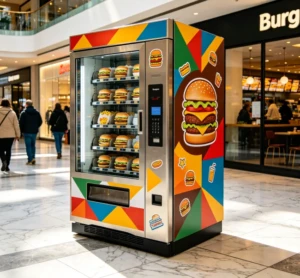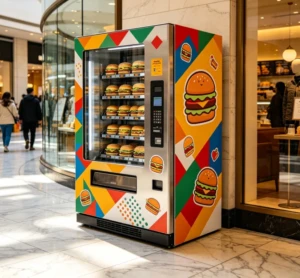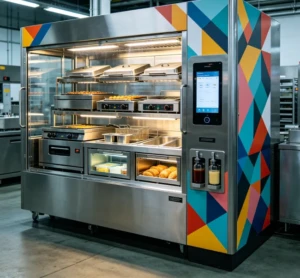
A burger vending machine for sale usually lands somewhere between $30,000 and $60,000, depending on how much of the cooking you want automated. The lower end gets you a machine that reheats pre-cooked burgers and sauces; the higher end includes a grill, bun warmer, condiment dispenser, and robotic arm. Food court operators, hotel lobby kitchens, office towers, and university dorms are the most common buyers. The machine stocks pre-cooked patties and buns, then assembles and boxes a burger in about a minute. In 2026, many operators pair one with coffee kiosks or self-order screens.
What you’re really buying: rethermalizer vs raw-cook robot
Nearly every listing for a burger vending machine falls into one of two camps. A rethermalizer heats pre-cooked patties and slides them into a bun. A raw-cook unit grills fresh patties inside the cabinet. That process difference matters more than the brand name, because it changes your daily prep work, the machine’s footprint, and what you can honestly put on the menu.
Pop open a rethermalizer and you’ll find vertical trays stacked with chilled patties, a heated sauce injector, and a bun warmer at the bottom. The robot version has a small grill plate, a pressing arm, and an extractor fan. Both need regular cleaning, but the grill machine demands more.
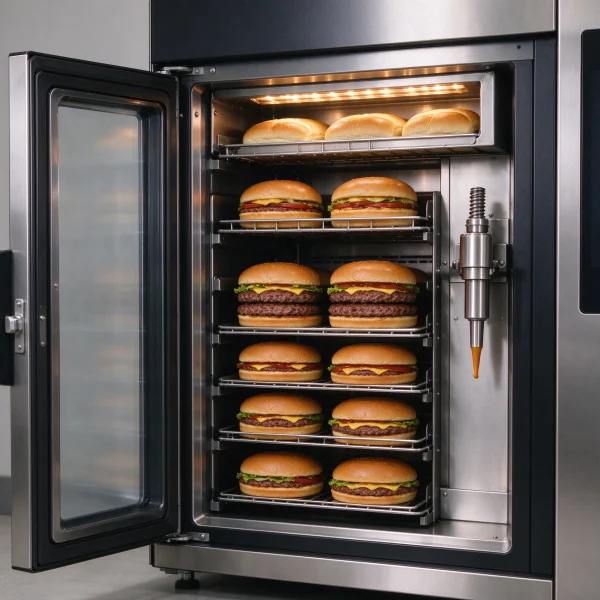
Rethermalizer units
If you care about throughput and consistency, the rethermalizer wins. Because the burger is already cooked, every unit comes out the same. You can offer cheeseburgers, spicy chicken, or even breakfast sandwiches by swapping trays. These machines are also cheaper to ship, since they don’t need heavy-duty ventilation.
Raw-cook robots
Raw-cook robots are the showpieces. They flip a patty on a grill, toast the bun, squirt sauce from nozzles, and slide the finished burger into a cardboard box. They cost more and need a more careful maintenance schedule, but they give you a freshly grilled story that draws crowds.
| Machine type | How it works | Typical price range | Best fit |
|---|---|---|---|
| Rethermalizer | Heats pre-cooked patties and assembles | $30,000 to $45,000 | Office cafeterias, hotels, events |
| Raw-cook robot | Grills fresh patties inside the cabinet | $48,000 to $70,000 | Food courts, tourist spots, dense transit hubs |
The real cost goes beyond the sticker price
The unit price is only the beginning. Freight from most overseas suppliers runs $2,000 to $5,000 depending on the port, and you’ll spend another $1,000 to $3,000 on rigging and placement. Customs duties apply in most countries. Then there’s site prep: power, ventilation, data connection, and a washable floor. A simple install can add 15 to 20 percent to the total.
Most of these machines arrive on a pallet with the cabinets bolted to plywood. Unpacking takes a forklift, two movers, and a few hours. If the site can’t accept a 600 kg cabinet through the door, you’re looking at crane costs.
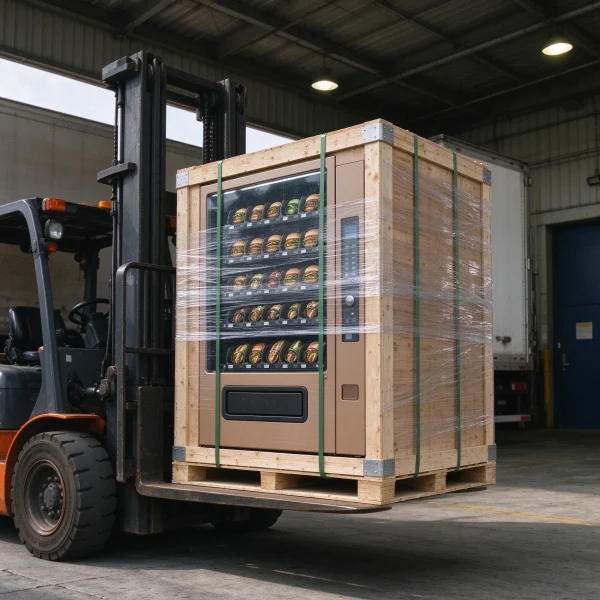
- Freight and customs: $2,000 to $6,000 depending on the origin port.
- Rigging and local delivery: $800 to $2,500.
- Electrical and ventilation work: $1,500 to $4,000.
- Spare parts and first year service: $1,200 to $2,000.
How to vet suppliers without learning the hard way
I get why people buy the cheapest listing they can find. But the burger vending machine market has a long tail of importers, assemblers, and white-label resellers, and some don’t have a technician within 500 miles. Start with the supplier’s track record, not the demo video.
Look for verified suppliers with documented installs. Ask for a live video call where the machine cooks a full menu, not a polished promo clip. Ask about warranty parts inventory, lead time, and whether the technician speaks your language. If they dodge the spare parts question, move on.
If you want a shortcut, compare vetted suppliers directly. On VendingCore’s supplier ranking, you can compare verified suppliers, read buyer reviews, and send inquiries directly to multiple brands from one page. It’s slower than buying on impulse, and that’s the point.
Where a burger vending machine actually earns its keep
Location matters more than the machine’s features. The best spots are places where people need food fast but don’t want to queue: transit stations, hospital lobbies, college dorms, and 24-hour gas plazas. Traffic matters, but so does dwell time.
Picture a burger machine glowing between a coffee kiosk and a convenience store in a busy transit hub. That’s where the numbers work.
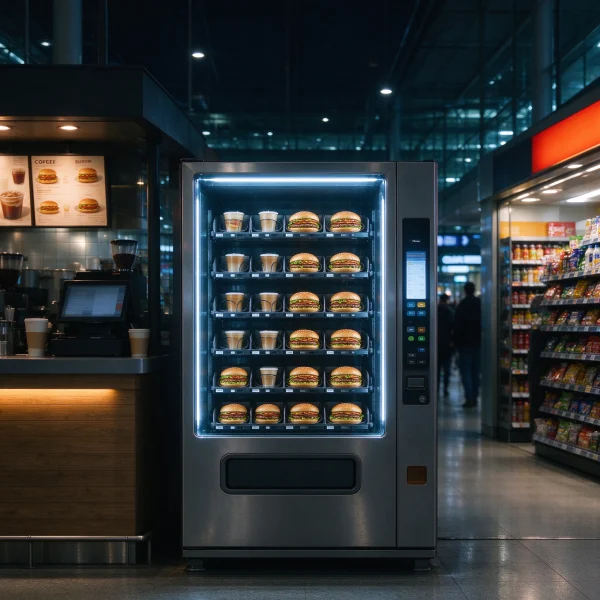
You’ll also need to check local vending regulations before installation. Rules differ street by street in some cities. If you’re looking at the Gulf region, the 2026 guide to vending machines in Dubai explains food handling licenses, placement rules, and costs that apply to hot food machines as well.
Running the numbers: what a realistic month looks like
Let’s build a simple example. Assume a rethermalizer costs $38,000 installed. If the machine sells 40 burgers a day at $7, that’s $280 in daily revenue, about $8,400 a month. With a $2.50 cost per burger, gross profit sits near $5,400. After $500 for electricity and payment fees and $300 for cleaning, you’re around $4,600 before rent and insurance. That puts payback near eight months.
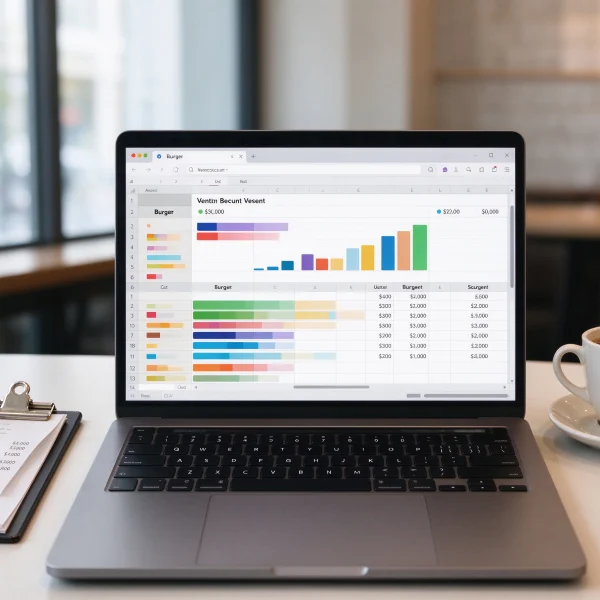
That math falls apart at 12 burgers a day, so don’t buy one for a low-traffic spot. Vending is still a location business, and the why vending machines are a good business in 2026 explains the same pattern with broader numbers. The same lesson shows up in the real numbers and honest advice for toy vending machines.
Custom branding makes the machine look local, not generic
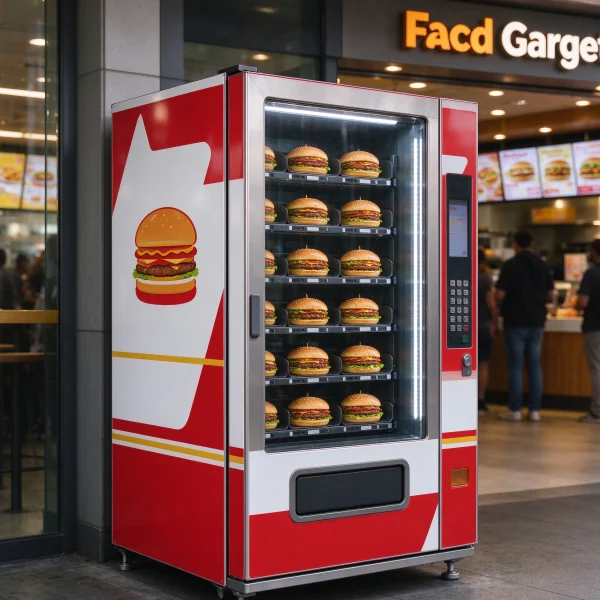
Most suppliers offer basic color changes. True custom wrapping, menu screens, and branded packaging cost extra and usually lengthen lead time. The same decision shows up in other vending niches; for example, custom bubble tea vending machines often add weeks to delivery when a buyer changes the panel design.
For a burger machine, custom branding is worth it when the unit sits somewhere with high foot traffic. If it’s tucked in a back hallway where people already know it, skip the wrap and spend that money on a service contract.
Burger vending machines are a niche, not a passive side gig
You still need a person to restock patties, refill sauce, wipe down the cabinet, and handle a clogged dispenser at 11 pm. The machine removes the cook, but someone has to own the boring parts. If you can accept that, a burger vending machine can earn back its price faster than most food service equipment.
Before you buy, compare at least three suppliers, visit an installed unit if possible, and pressure-test the foot traffic. VendingCore’s supplier ranking is a good place to start that comparison, and it beats trusting a single YouTube demo.
FAQ
How much does a burger vending machine cost in 2026?
Expect to pay $30,000 to $70,000 for the machine itself. Rethermalizer models sit below $45,000, while raw-cook robot models run $48,000 or more. Add 15 to 20 percent for freight, site prep, installation, and initial spare parts. The final price depends on capacity, ventilation requirements, and whether you need custom branding.
Can a vending machine cook a burger from raw?
Yes. A raw-cook robot has an integrated grill plate and pressing arm. It loads a chilled or frozen patty, grills it on both sides, toasts the bun, and applies condiments automatically. Cycle time usually lands between 60 and 90 seconds. These machines need daily grease removal and a stricter service schedule than rethermalizers.
Are burger vending machines safe and food code compliant?
Food safety depends on the unit’s temperature zones and your local code. Most commercial machines keep patties chilled at or below 40°F and heat them above 165°F before serving. Ask for a food safety certificate and a temperature log from the supplier. Your health inspector will want to see the same documents before approving the site.
How many burgers per day do I need to break even?
As a rough guide, assume your installed machine costs $38,000. At 40 burgers a day with a $4.50 gross profit per burger, you clear about $5,400 a month before rent and insurance, which puts payback around eight months. Most owners should plan for a 12 to 18 month payback after slow opening weeks.
Do I need a food license to operate one?
Usually yes. Vending permits cover business operation, but hot food machines often trigger a food service license because you’re handling food. Requirements differ by city and country. Check the local health department before signing a lease. In some regions like Dubai, the rules are strict enough to change your whole setup plan.
What warranty should I ask for?
Look for at least a 12 month warranty on the compressor, grill element, and control board. Ask whether the supplier stocks spare parts in your country and what the response time is. If no local technician exists, get a quote from an independent vending repair company and factor it into your costs.
From the installations I’ve reviewed, the biggest mistake is overbuying automation. A $60,000 grill robot in a site that needs 15 burgers a day will sit idle. I tell operators to start with the least expensive machine that can meet the site’s peak volume, protect it with a strong service agreement, and only upgrade to a raw-cook unit once sales prove the demand. The machine is the last thing that should wow you.