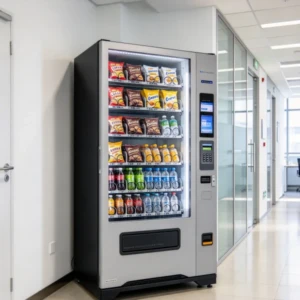
Buying a snack vending machine looks simple until the quotes arrive and every seller bundles something different. Plan on $2,000 to $3,500 for a refurbished ambient machine with a card reader, or $4,000 to $7,500 for a new chilled unit, and expect payback in roughly 9 to 17 months if your site has steady foot traffic and you price snacks sensibly.
What a snack machine really costs in 2026
The machine is the easiest number to find and the least useful one on its own. Freight, install, payment hardware, and the first stock order usually add 20% to 30% to whatever the seller quotes you.
| Buying route | Upfront cost | Typical warranty | Who handles repairs |
|---|---|---|---|
| Used, private seller | $700 to $1,800 | None, sold as seen | You, and parts may be discontinued |
| Refurbished from a dealer | $2,000 to $3,500 | 90 days to 1 year | Dealer |
| New ambient snack machine | $3,500 to $6,000 | 1 to 3 years | Manufacturer plus a local service firm |
| New chilled or combo machine | $5,500 to $9,000 | 1 to 3 years | Manufacturer plus a local service firm |
| Lease | $90 to $250 per month | Covered by the lease | Leasing company or dealer |
| Managed service | $0 | Not applicable | Operator |
Three things move the price more than anything else: how many selections you need, whether the cabinet is chilled, and whether a card reader ships with it. A private-sale machine is the cheapest way in, and also the route where you end up hunting a discontinued coil motor eight months later.
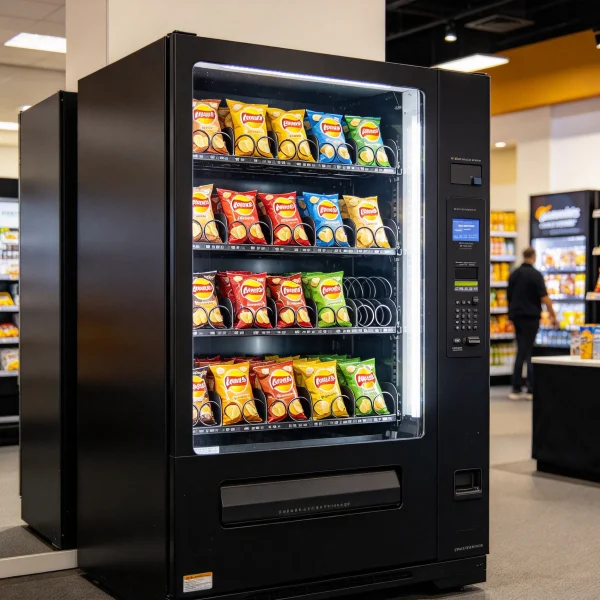
Freight for a single machine runs about $150 to $600 depending on distance and whether you need a liftgate. Local dealers often deliver free inside 50 miles. If you buy from far away, get in writing who pays when the cabinet arrives dented.
First stock is $350 to $700 for a 40 selection machine if you fill each coil two deep. Add $200 to $500 if a technician has to level the unit, set the thermostat, and program the reader for you.
Non-food routes follow the same pattern, which is why our breakdown of what a phone case vending machine costs reads so similarly once you strip out the product line.
Work out the payback before you sign anything
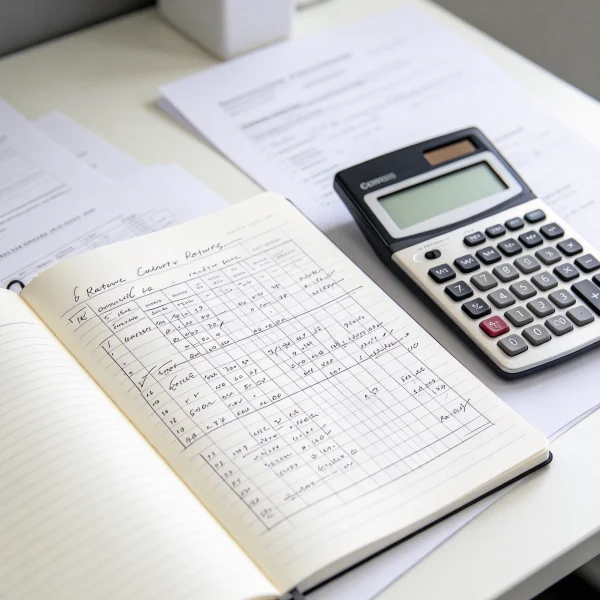
Payback is the number that tells you whether the machine belongs at that site at all. The formula is simple: total upfront cost divided by monthly net profit.
Monthly revenue equals vends per day times average price times trading days. Snack cost of goods usually lands at 50% to 55% of retail, so your gross margin sits near 45% before running costs.
| Line item | Small office | Mid-size site | Busy plant |
|---|---|---|---|
| Vends per day | 15 | 35 | 70 |
| Average price | $1.50 | $1.60 | $1.70 |
| Monthly revenue | $675 | $1,680 | $3,570 |
| Product cost at 52% | $351 | $874 | $1,856 |
| Gross profit | $324 | $806 | $1,714 |
| Card processing | $20 | $60 | $137 |
| Electricity | $25 | $30 | $40 |
| Spoilage and shrink | $30 | $50 | $90 |
| Repair reserve | $35 | $50 | $80 |
| Restocking labour | $60 | $120 | $240 |
| Location commission | $0 | $168 | $428 |
| Monthly net | $154 | $328 | $699 |
| Total upfront cost | $2,600 | $4,000 | $6,500 |
| Payback | 17 months | 12 months | 9 months |
Two lines surprise first-time buyers. Restocking a mid-size machine takes about 45 minutes twice a week, and at $18 an hour that is $120 a month you have to count. Commission is the other one: offices and factories increasingly ask for 5% to 30% of sales, and that single line can swallow a third of your profit.
The same logic applies to other niches. If you want to see how a non-food route behaves over time, when phone case vending machines make profit maps out the timeline month by month.
Specs that decide whether a snack machine actually works
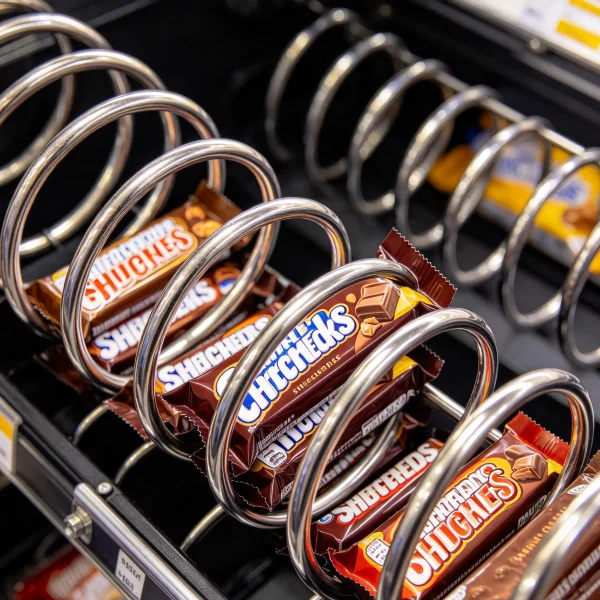
Snack packaging is the constraint most buyers miss. A coil set at 60mm pitch will not hold a wide share bag, and a machine loaded with bags that snag will jam twice a week.
| Dispensing type | Best for | Capacity | Watch out for |
|---|---|---|---|
| Spiral coil | Bags, bars, and boxes of consistent width | 30 to 60 selections | Wide or floppy bags snag; pitch needs adjusting row by row |
| Conveyor or elevator | Glass jars, bottled drinks, fragile items | 20 to 45 selections | Slower vend cycle and more moving parts |
| Locker or drop shelf | Large or irregular items, merchandise | 8 to 20 compartments | Low capacity for the floor space |
Coil pitch is adjustable on most machines between roughly 40mm and 90mm. Ask what range the shelves support and whether spare coils are a stock item or a six-week special order.
Refrigeration matters more than people expect. Chocolate softens above about 24°C (75°F), and a machine in a south-facing lobby or a warm warehouse turns stock into a smear without a chilled cabinet. Chilled snack cabinets cost $1,500 to $2,500 more and pull roughly 300 to 500 watts more while the compressor runs.
On the electronics side, look for MDB protocol so any card reader will work, DEX output so you can pull sales reports, and telemetry if you plan to run more than three machines. A machine without MDB locks you into whatever reader the seller installed.
Hot food is a different animal. If you are weighing something beyond snacks, our guide to burger vending machines and where they work covers the power, ventilation, and food safety demands that come with a heated cabinet.
Where the snacks come from, and what they cost
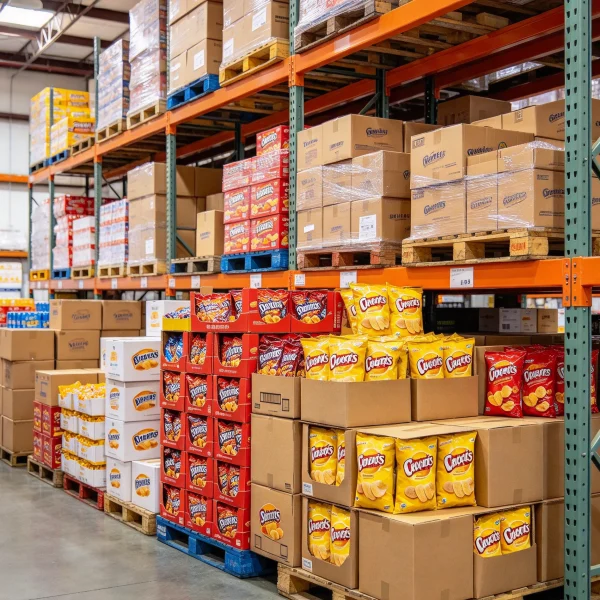
You have two sourcing routes. A vending distributor gives you wholesale pricing, planogram support, and code dates you can trust. A warehouse club works when you run one or two machines and cannot hit a distributor minimum order.
Typical product cost as a share of retail price: candy bars 50% to 55%, chips and salty snacks 45% to 55%, biscuits and pastry 50% to 60%, bottled drinks 55% to 65%. Your margin lives or dies on buying at wholesale and pricing at the local vending norm, usually $1.25 to $2.00 for a single bag or bar.
Card fees change the maths at the low end. A 5.5% processing fee on a $1.25 sale is 7 cents, and some plans apply a 10 cent minimum per transaction. Anything priced under a dollar in a cashless machine is close to charity.
Site prep, or the things that stop a delivery
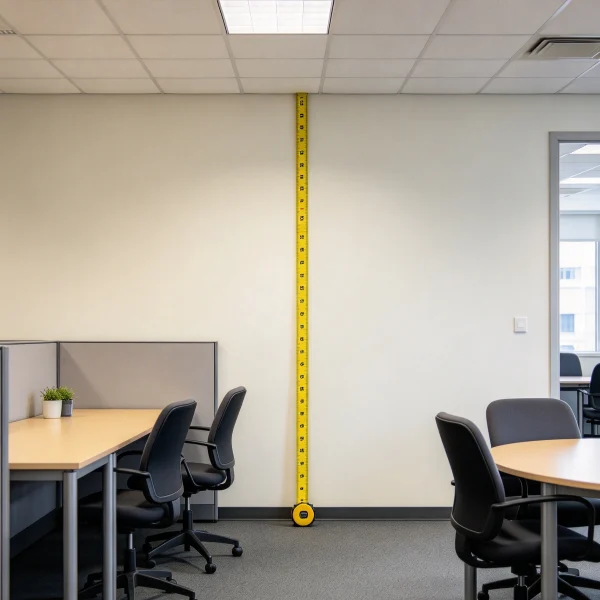
A machine that will not fit through the door is a problem you solve twice. Measure first, order second.
- Footprint. A full-size snack machine is usually 72 to 78 inches tall, 30 to 40 inches wide, and 30 to 35 inches deep. Leave 4 inches behind it for airflow and 36 inches in front for the door swing.
- Power. Most snack machines run on a dedicated 115V 15A circuit. Chilled cabinets and combo units often need a second circuit. Check the data plate rather than the brochure.
- Floor loading. A loaded machine weighs 400 to 700 kg. Mezzanines, suspended floors, and older timber floors need a joist check.
- Delivery route. Door widths, lift size, stair turns, and any step at the entrance. A pallet truck needs 48 inches of clear width.
- Placement. Put it where people already walk, near the coffee point or the main exit, and out of direct sunlight. Machines in dead corridors do a fraction of the volume.
- Accessibility. Coin slot, card reader, and product door should sit between roughly 15 and 48 inches from the floor for wheelchair users.
- Security. Anchor the machine or fit a wall strap on public sites, and add a camera if the area is unattended.
Photograph the space and the route before you order and send the pictures to the seller. Most delivery disasters start with a doorway nobody measured.
Buy, lease, or managed service: the five-year view
Buying wins if you have the capital, the site is stable, and you want the asset on your books. Leasing wins if you would rather keep the spend off your capital budget. Managed service wins if nobody on your team wants to touch a coil.
| Route | Upfront | Five-year cash out | Who stocks and repairs | End state |
|---|---|---|---|---|
| Buy new | $5,000 | About $7,500 including repairs | You | You own the machine |
| Lease | $0 | About $10,800 at $180 per month | You stock, lessor repairs | Returned, or bought out |
| Managed service | $0 | $0, plus a 5% to 15% commission paid to you | Operator | Nothing to own |
Read the lease closely. Watch for a clause that hands you repair bills after year one, and for automatic renewal when you miss the notice window.
Whichever route you choose, budget for upkeep rather than hoping. Our detailed look at what vending machine maintenance really costs covers compressor failures, coil and motor swaps, and the annual service visit.
Product mix, planogram, and shrink
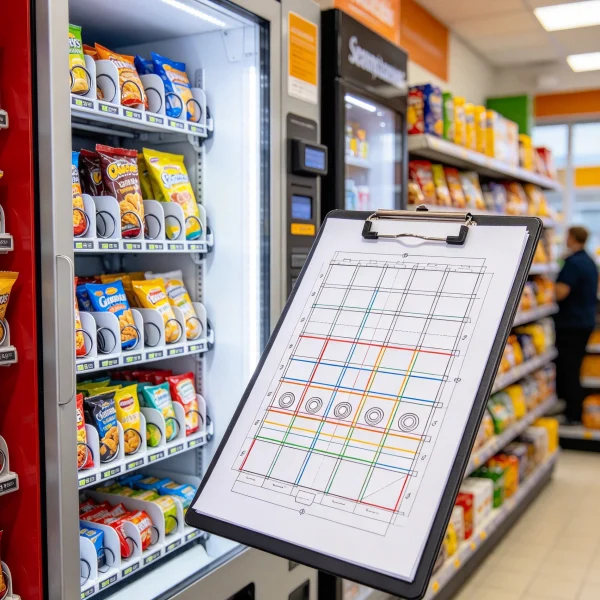
Roughly a third of snack sales come from five or six SKUs, and the rest trickle out slowly. That makes the planogram more important than the catalogue.
Start with a top shelf of larger and premium bags at the highest price, put your volume sellers at eye level, and use the bottom shelf for slower lines and bulk items. Keep chocolate and anything heat-sensitive in a chilled cabinet or the coolest corner of the room, never on the top shelf under a window.
Rotate stock front to back and check code dates at every restock. A bar past its date is a refund waiting to happen, and expired product sitting in a machine is one of the biggest hidden costs for new operators. Expect shrink of 3% to 6% of revenue in a warm site and 1% to 2% in a climate-controlled one.
How to vet a supplier without getting burned
Ask these seven questions before you pay a deposit.
- Is the warranty on parts, labour, or both, and what is the target response time for a service call?
- Do you stock spare coils, motors, and door switches for this model?
- Which card readers and telemetry systems are compatible, and who pays the processing fees?
- What is the delivery lead time in writing, and who carries the risk if the machine arrives damaged?
- Can I see the machine running before delivery, with my own product loaded?
- Can you give me two references from buyers who have owned this model for a year?
- What is the return policy, and who pays the freight if I reject the unit?
Red flags: pressure to pay in full before inspection, a warranty that covers only the cabinet frame, machines with no serial plate, and a dealer who cannot name the manufacturer’s parts department.
These questions work across categories. Our guide to finding phone case vending machine suppliers runs the same vetting process and shows what good and bad answers sound like.
Compliance you cannot skip
Food vending is lightly regulated compared with restaurants, and there are still rules worth knowing before your first delivery.
- Allergens. US law requires the nine major allergens to be declared on packaged food, including sesame since 2023. Keep packaging intact and never repackage snacks yourself.
- Calorie labels. Operators running 20 or more vending machines must post calorie information for each item, usually on a sign near the machine.
- Food hygiene. Register with your local health authority if you handle open food or run a route. Packaged-only snack machines usually need a basic registration rather than a full inspection.
- Electrical safety. Buy machines with UL or ETL listing for the country you operate in. An uncertified import can void your insurance.
- Business basics. Sales tax permit, a resale certificate from your distributor, and liability insurance covering the machine and any injury it causes.
Delivery day: the 12-point check
- Serial number matches the invoice and the warranty card.
- Cabinet has no dents, deep scratches, or rust at the base.
- Door opens and closes smoothly and the lock works.
- Every shelf slides in and out without binding.
- All coils turn by hand and the motors run during a test vend.
- The card reader approves a test purchase and the receipt prints.
- Thermostat holds the set temperature for 30 minutes if the unit is chilled.
- Interior light works and the door switch cuts it off.
- No water damage and no unusual compressor noise on refrigerated models.
- Machine sits level and does not rock.
- You sign the delivery paperwork only after the test vend.
- Service contact, parts list, and manual are left with you.
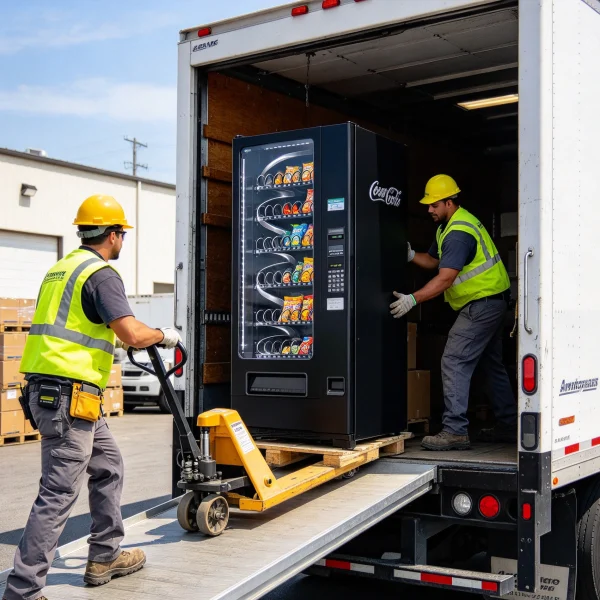
Do the test vend before the driver leaves. Once the truck is gone, a bent coil becomes a warranty argument instead of a delivery claim.
The first 30 days
Track four numbers every week: vends per day, sell-through by SKU, card versus cash split, and out-of-stock rate. If vends per day sit under 10 after two weeks of full stocking, the site is the problem rather than the machine.
Adjust the planogram on day 14 and again on day 28. Pull the two worst sellers and hand their coils to the two best. Fill slow lines to 80% depth instead of 100% so code dates do not expire inside the cabinet.
Card readers lift the average ticket. Cantaloupe’s 2026 transaction data puts the average cashless purchase at $2.45 against $1.57 for cash, which is why nearly every new machine now ships cashless-first. If your processing fees land under 5.5% of sales and your average price is above $1.50, you are in a normal range.
Next steps after you pick a machine
Choose the site before the machine, because the site decides the machine. Measure the space, check the circuit, count foot traffic over three days, and run the payback maths on a realistic vends-per-day figure rather than your best guess.
Then pick new, refurbished, or leased based on how long you plan to keep it. Get two quotes, ask the seven supplier questions, and put the delivery date and warranty in writing. Keep the first stock order small and let month one of sales data shape your planogram.
Frequently asked questions
How much profit does one snack machine make?
Most single machines in a decent office or factory clear $150 to $700 a month after product cost, fees, and restocking. Traffic and location commission drive that spread, and sites under 10 vends a day rarely justify the capital.
Do I need a licence to buy a vending machine?
Most US states do not require a vending licence, but you will need a sales tax permit, and packaged food routes usually need a basic health registration locally. Check your state and city rules before ordering.
Can I put a snack machine in my own shop or office?
Yes, and it is the simplest version of this business. You skip the location agreement and commission, which typically shortens payback by around a third compared with a commission site.
How much stock should I carry at the start?
Two weeks of cover on your top 10 SKUs and one case each of the slower lines. That is roughly $350 to $700 for a 40 selection machine. Overbuying is how new operators lose money on expired product.
Is a used snack machine a bad idea?
Only if you skip the inspection. Check coil motors, door seals, the compressor if chilled, and whether parts are still available for that model year. A used unit from a dealer with a 90 day warranty is a reasonable middle ground.
How long does it take from order to installation?
Dealers usually ship within 3 to 10 business days. Factory orders and refrigerated models can take 4 to 8 weeks. Add a week for site prep and electrical work if a new circuit is needed.
Do I need a card reader from day one?
Yes, unless the site is unusually cash-heavy. Cashless share sits above 60% at most sites in 2026, and a coin-only machine leaves money sitting in people’s pockets.