How much can you make with one vending machine? A single drink and snack machine doing $700 to $1,400 in monthly sales typically clears $200 to $430 in profit after product cost, the location’s commission, and card processing. Those are ordinary route numbers rather than the best-case figures a sales rep quotes at a trade show. The machine is the cheap part of the deal. Where you park it decides almost everything, and a break room serving 60 people will out-earn a quiet apartment hallway by two or three times over.
What one machine earns in a month
A drink and snack vending machine is a coil or push-mechanism cabinet that sells pre-packaged bottles, cans, and bagged snacks. It’s the workhorse most first-time operators buy, and the easiest place to start the math because every input is something you can look up or measure yourself.
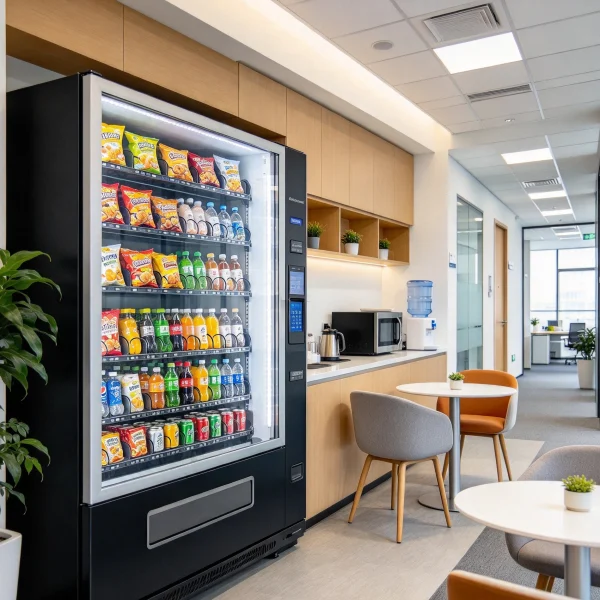
Here’s how five common account types shake out. Product cost assumes wholesale buying at roughly 45 to 55 percent of retail. Commission is the property owner’s cut, and it swings more than any other line in the model.
| Location type | Monthly sales | Product cost | Commission | Card and other fees | Net profit |
|---|---|---|---|---|---|
| Quiet apartment hallway | $350 | $175 | $35 | $25 | $115 |
| Small office, 50 staff | $750 | $375 | $90 | $40 | $245 |
| Gym corridor | $900 | $450 | $108 | $45 | $297 |
| Hospital staff lounge | $1,150 | $575 | $138 | $52 | $385 |
| Warehouse, 3 shifts | $1,400 | $700 | $210 | $60 | $430 |
The busiest location doesn’t win by a little. It wins by a multiple, and it does that while paying the highest commission of the five. That’s why location shopping eats up more of an operator’s time than machine shopping ever will.
Where the money actually goes
Two lines on that table get underestimated by new operators: card fees and their own time.
Card processing on a vending machine typically runs $8 to $15 a month for the terminal plus 2.5 to 3.5 percent of every card sale. That stings on $900 in monthly sales. Going coin-only to dodge it costs more, because most people under 40 don’t carry change and they’ll walk right past a cash-only machine. Keep the reader and treat the fee as part of your cost of goods.
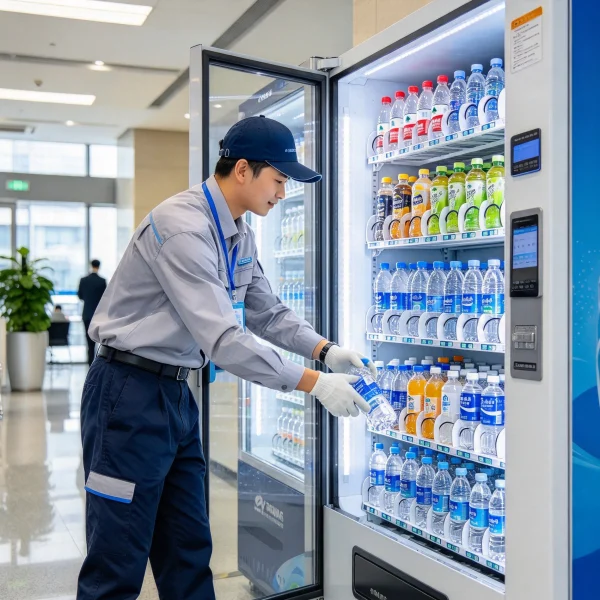
Restocking is the other quiet expense. A proper service visit is two to three hours once you factor in the drive, the loading, wiping the glass, and pulling anything close to its date code. Twice a month at three hours a visit, on a machine netting $250, works out to roughly $40 an hour. Decent part-time money. It turns ugly fast if the machine sits 45 minutes away.
The costs that don’t show up on the spec sheet
- Fuel and vehicle wear on every restock run
- Spoilage on short-dated items like pastries and fresh drinks
- Depreciation, which is real money even when it doesn’t feel like it
- Spare parts and the repairs you’ll end up doing yourself
- Sales tax collection and remittance in most states
Location beats machine every single time
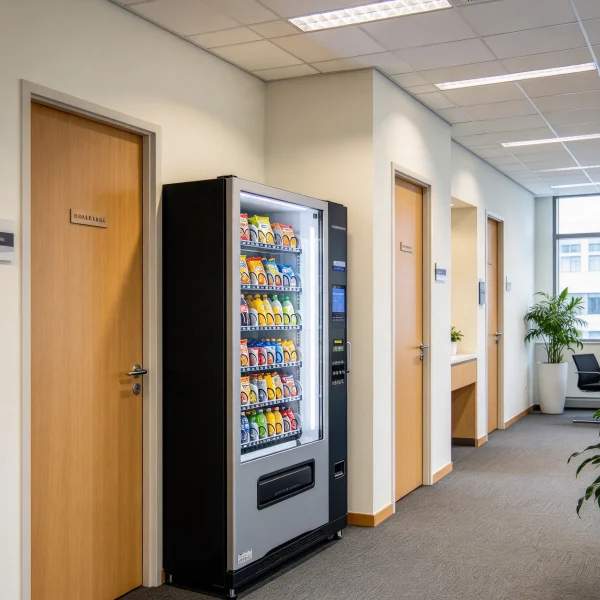
Ask an operator with a few years behind them what separates a $150 machine from a $600 machine and you won’t hear a brand name. You’ll hear about foot traffic and dwell time.
Dwell time is the part beginners miss. A corridor with 300 people passing through is worth less than a break room where 60 people sit for 20 minutes. Snacks sell to people who are bored or waiting around. Nobody stops mid-stride on the way to a meeting.
The other number worth learning is capture rate, meaning the share of people who see the machine and actually buy something. A fair location converts 3 to 8 percent. A great one, sitting next to a time clock or a break area, can hit 15 percent. When you scout a spot, count people during real break windows instead of random mid-afternoon hours.
Some machines earn more per unit, and cost a lot more to buy
The drink and snack combo isn’t the ceiling. Fresh-beverage and custom-print machines often clear more per unit because the average ticket is higher and there’s no competing machine two doors down. They also cost three to five times as much up front, which changes how long you wait to get your money back.
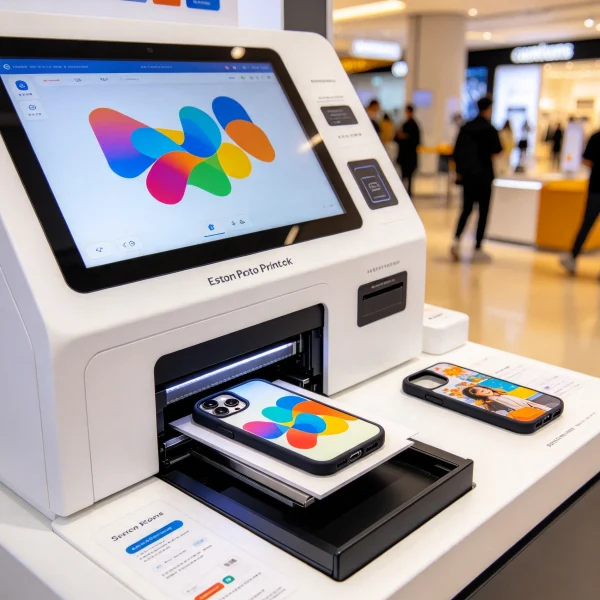
A bean-to-cup coffee machine that grinds and steams sells a $2.50 to $4.00 cup at a product cost of 40 to 60 cents. A custom print kiosk that UV-prints a customer’s photo onto a puzzle or phone case in three to five minutes sells a $12 to $25 item with almost no inventory to spoil or date-check.
| Machine type | Typical machine price | Typical monthly net, one unit | Best-fit locations |
|---|---|---|---|
| Drink and snack combo | $2,500 to $5,000 | $200 to $430 | Offices, warehouses, apartment lobbies |
| Bean-to-cup coffee | $6,000 to $12,000 | $300 to $700 | Offices, hospitals, universities |
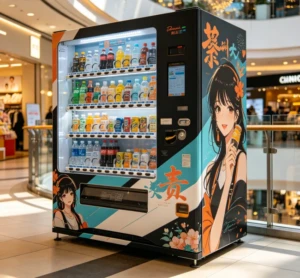
| Bubble tea | $12,000 to $22,000 | $500 to $1,200 | Malls, campuses, transit hubs |
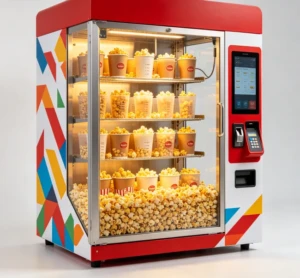
| Cotton candy | $3,000 to $6,000 | $250 to $600 | Events, malls, family venues |
| Custom print: photo puzzle, phone case, nail art | $7,000 to $15,000 | $400 to $1,500 | Malls, tourist areas, campuses |
| Perfume | $5,000 to $15,000 | $250 to $800 | Airports, malls, hotels |
| Fresh flowers | $4,000 to $9,000 | $250 to $700 | Transit stations, hospitals, malls |
Specialty machines also change how you evaluate a location. A cotton candy unit sold in a cup rises and falls with event calendars, mall footfall, and weekend traffic, which is a completely different exercise from counting office workers at 10 a.m. If that’s the direction you’re leaning, the placement playbook for cotton candy machines walks through the traffic patterns that actually convert.
Custom-print units are the other category worth a hard look, because the customer supplies the design and you carry no stock. Phone case kiosks have taken off in high-traffic Asian markets, and the Malaysia DIY phone case setup guide shows what the machine costs, where operators place them, and how pricing works there. Perfume machines fit a similar niche in airports and hotels, and how perfume vending machines are placed and priced is worth reading if you already have a mall contact.
Before you commit to a category, compare payback periods side by side. Our breakdown of the most profitable vending machine types uses current machine prices and honest cost assumptions instead of vendor marketing sheets.
One more warning, since it comes up constantly in operator forums. If a supplier pitches mystery-box machines as guaranteed money, slow down. The rules around lucky box machines have drawn regulator attention in Australia, and the revenue claims attached to them rarely survive a close look at the terms. This explainer on lucky boxes in Australia covers what they are and where the legal lines sit.
How to choose a supplier without getting burned
Most first-machine disasters aren’t mechanical. They’re supplier problems: a unit that arrives with no local parts support, a payment terminal that won’t talk to your processor, or a warranty that means shipping the machine across the country on your dime.
Ask these five things before you wire a deposit:
- Does the machine run on MDB protocol, so you can swap payment devices later without replacing the board?
- Who holds spare parts in your country, and how fast can they ship a coin mechanism or a door switch?
- What does the warranty actually cover, and who pays freight on a repair?
- Can the supplier show a route profit-and-loss sheet from a real account, with product costs included?
- Does the machine support remote telemetry so you can see sales without driving to it?
Straight answers on those five points filter out most of the noise. On VendingCore you can compare verified suppliers side by side, read real buyer reviews, check current price ranges, and send an inquiry directly rather than guessing which quote to trust.
What a realistic first year with one machine looks like
Month one is research, purchase, and placement. Don’t rush the placement. A mediocre machine in a great spot beats a great machine in a dead hallway all day long.
Months two and three are about tuning the product mix. You’ll learn that a warehouse wants energy drinks and meat snacks while a medical office wants water and granola bars. Most operators cut spoilage by a third in that window just by watching what leaves the coils.
Payback on a single standard machine usually lands between 5 and 9 months when the location performs. A higher-priced specialty unit tends to sit at the longer end, closer to 8 to 10 months, because the sales target is bigger. Anyone claiming they made their money back in six weeks is usually counting gross sales instead of profit.
The short version
One machine can realistically net $200 to $430 a month in a decent location, and more than $500 in a genuinely busy one with the right product mix. The machine you buy matters far less than where it sits, what you pay for the space, and how much of your own time the route eats.
If you want to move from reading to doing, start with supplier quotes. Browse the verified supplier directory on VendingCore, compare price ranges and buyer reviews across at least three vendors, and send an inquiry with your budget and target location. That’s the fastest way to find out what’s actually available at your price point, and it costs you nothing but an afternoon.
FAQ
How much profit can one vending machine make per month?
Most single drink and snack machines net between $200 and $430 a month. A high-traffic account with 100 or more daily users can push past $500. The wide range comes from location quality, product cost, and the commission you pay the property owner, not from the machine brand.
How much can you make with one vending machine in a really good location?
A busy break room, warehouse, or hospital corridor can gross $1,500 to $2,500 a month and net $450 to $700 after commission and product cost. Those accounts are competitive and often go to operators with an existing relationship or a multi-machine offer, so expect to work for them.
Is one vending machine enough to live on?
No. At $300 a month net, one machine covers some bills, not a mortgage. It works well as part-time income alongside a job. Most operators who go full time run at least eight to fifteen machines before the numbers support them, mostly because purchasing and routing get cheaper per unit as you scale.
How long does it take for one machine to pay for itself?
A standard combination machine in a solid location usually pays back in 5 to 9 months. A higher-priced specialty unit typically runs 8 to 10 months because the sales target is larger. Accounts that underperform the traffic estimate push payback past a year, which is exactly why scouting matters more than shopping.
What do I need to start with one machine?
A machine, a card reader, roughly $300 to $600 in starting inventory, a vehicle, and a signed location agreement. Budget another $100 to $200 for a hand truck, cleaning supplies, and a basic repair kit. Business registration and any local vending permit are usually cheap and quick to sort out.
How do I find a reliable vending machine supplier?
Compare at least three vendors, insist on MDB-compatible equipment, confirm who stocks spare parts locally, and request a buyer reference in your region. On VendingCore you can compare verified suppliers, read buyer reviews, and send inquiries directly, which shortlists vendors before you commit a deposit.
Do I need a permit or license for one vending machine?
It depends on your state, county, and sometimes your city. Most operators need a general business license and a sales tax permit. A health permit only comes into play if you sell food that requires temperature control. Call your local business office before you place the machine so you aren’t surprised later.
The number I give new operators is never a monthly figure, because that number belongs to the location and not to the machine. I’ve put the same model in two buildings ten minutes apart and watched one do $180 a month while the other did $700. What I tell people is to spend two weeks standing in the lobby counting people before they spend a dollar on equipment. Get the location right and the rest is arithmetic. Get it wrong and no machine on the market will save you.