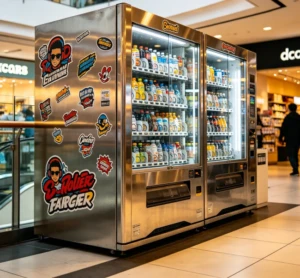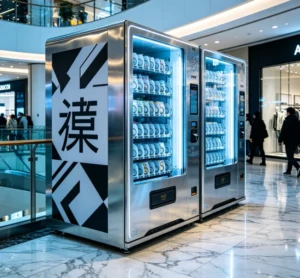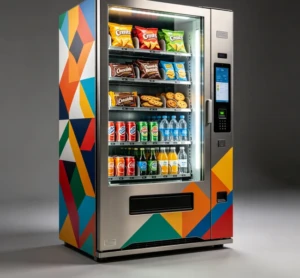
How much would a custom vending machine cost? Most builds land between $4,000 and $20,000, with the final number tied to enclosure size, custom branding, payment hardware, and software. A compact custom unit for a small cafe might run $4,500, while a large phone-case printing kiosk with a touchscreen and custom cabinet can reach $18,000 or more. Operators use these machines in malls, transit hubs, and office breakrooms, and the self-service model keeps labor costs near zero outside of stocking. Most of that price sits in three places: the cabinet, the payment and telemetry hardware, and the software. You need to know what to trim without hurting the user experience.
Where the money actually goes
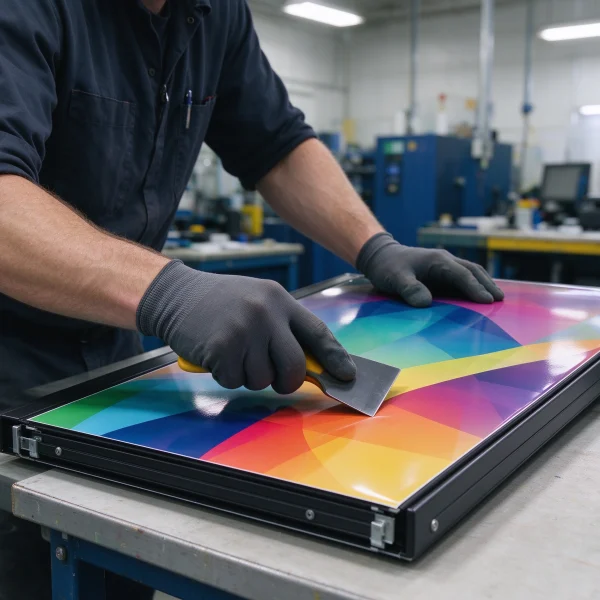
The cabinet is the biggest variable. A stock snack machine uses a standard steel body, injection-molded shelves, and a generic front. A custom machine usually means a purpose-built frame, LED lighting, custom side panels, and sometimes a larger touchscreen portrait display. That’s where you can burn through $8,000 alone. Composite panels and powder-coated paint add cost, but they also make the machine look like a fixture rather than a box.
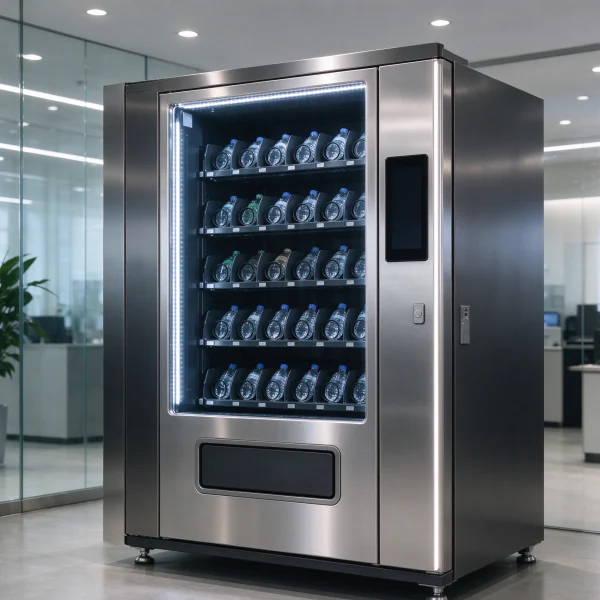
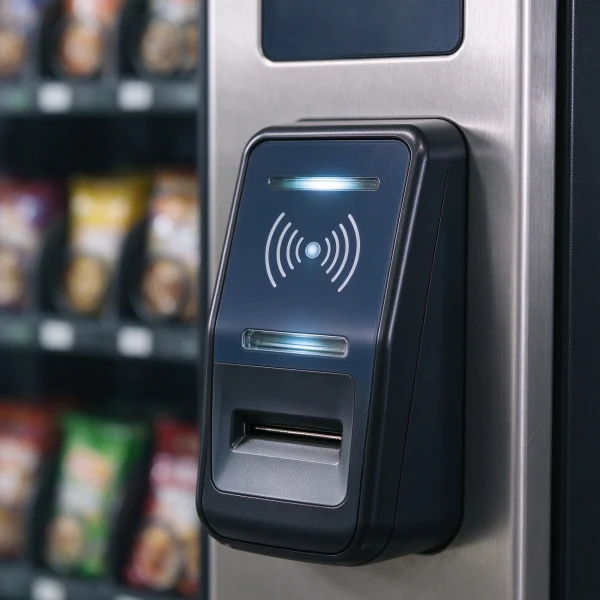
The payment stack matters just as much. Cashless readers from Nayax, Cantaloupe, and USA Technologies add roughly $400 to $800 per unit depending on connectivity. Telemetry cards for remote monitoring add another $150 to $300. If you want a custom app so customers control the machine from their phone, you’re now in the $5,000 to $15,000 range for the software side, separate from the hardware. Some buyers skip the custom app and just use the manufacturer’s built-in software. That works, but you lose the wow factor.
A realistic cost breakdown
These ranges come from typical quotes collected from manufacturers and route operators. They’re not exact bids, but they’ll help you spot an overpriced quote.
| Component | What affects the price | Common range |
|---|---|---|
| Cabinet and refrigeration | Steel thickness, insulation, glass door | $1,500 – $5,000 |
| Custom bodywork | Cutouts, odd dimensions, powder coating | $800 – $4,500 |
| Branding and panels | Vinyl wrap, painted logo, LED sign | $250 – $1,200 |
| Touchscreen and media player | Screen size, brightness, computing power | $300 – $2,000 |
| Payment stack and telemetry | Cashless reader, card fees, LTE module | $550 – $1,100 |
| Software | Stock platform vs custom mobile app | $0 – $12,000 |
| Delivery and installation | Freight, rigging, electrician | $200 – $1,500 |
Notice the software row is the only one that jumps by an order of magnitude. That’s why you need to ask whether custom means a custom exterior or custom software experience. Most of the time, budgets break on the second.
When custom is worth the money (and when it isn’t)
Most operators don’t need a fully custom machine. If you just want your logo and colors on a standard drink machine, a vinyl wrap gets you there for a few hundred dollars. A custom build makes sense when the product doesn’t fit standard shelves or when the unit needs to do something a normal machine can’t.
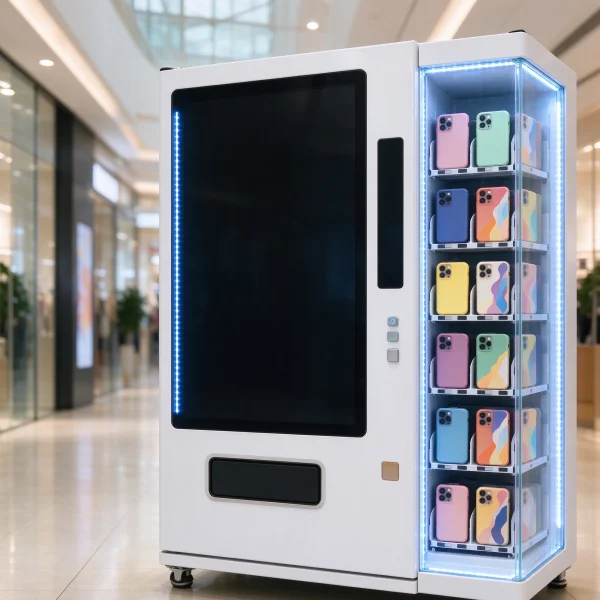
Phone case printers are a good example. Cases vary in size, and the machine needs an integrated printer, a screen, and a custom dispensing slot. Standard snack coils won’t cut it. The same goes for puzzle vending machines, where each box has a different shape and the drop channel has to be engineered. In those categories, custom is the only way to enter the business.
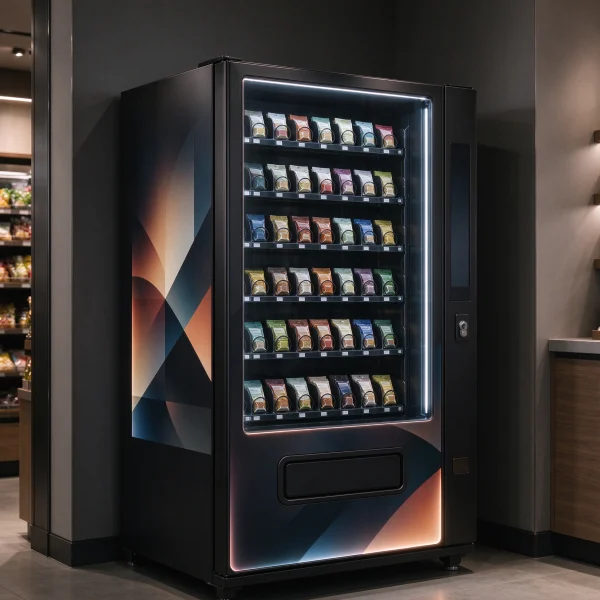
Custom branding is where you can get a lot of visual impact for less than you’d think. A matte black cabinet with a printed front panel and LED accent lighting will turn heads in a food court or gym lobby, and it won’t blow your budget. Route operators have learned that a machine that looks like a fixture sells more than a generic gray box sitting in a corner.
Of course, custom only pays off if the location earns its keep. We wrote a guide on which vending machines make the most money, and the short version is that product choice and placement beat cabinet aesthetics almost every time.
Real-world examples and what to avoid
A gym owner wants a branded beverage machine. A standard glass-door cooler with cashless payment and remote monitoring runs about $6,000. Add a printed front panel, LED lighting, and a larger screen, and that same machine lands at $9,000. A custom phone case printer with a 32-inch screen, payload sensors, and a full branded enclosure can cross $15,000 before installation.
If you’re buying a phone case machine in the US, our guide to buying phone case printing vending machines in the USA walks through warranty and shipping pitfalls before you commit.
I’ve watched operators make two mistakes. First, they pour money into a custom app that customers never download. Second, they forget delivery and electrician costs. Budget at least $500 for logistics, and plan for a 220V outlet if the unit needs it. These small misses turn a $12,000 project into a $15,000 surprise.
A lot of buyers source custom builds from China to save money. That can work, but you need to confirm safety certifications and shipping terms. This question comes up so often that we put together a detailed guide on whether Chinese vending machines are reliable. VendingCore is one manufacturer that runs custom cabinet production and carries CE and UL certifications, so you’re not dealing with a middleman who disappears after the sale. Still, get references and ask to see photos of the actual build before you wire a deposit.
How to keep the cost down without cheaping out
You have more options than most buyers think.
- Start with a standard base cabinet and swap the front panel. You get a custom look without paying for structural work.
- Use the manufacturer’s stock software first. You can add a custom app later if the numbers justify it.
- Pick a cashless reader that works with your existing route management platform. Switching readers later is painful.
- Work with one supplier for both fabrication and assembly. Splitting the work across two vendors adds freight and coordination costs.
- Ask about refurbished units or demo models. Some companies sell lightly used custom machines for 30% to 40% under the original build price.
A refurbished machine with a wrap can be a smart entry point. For $2,500 to $4,000, you can have a working machine that looks unique. The tradeoff is that you won’t get special dispensing behavior if your product needs it.
Placement matters so much that we wrote an entire guide to placing phone case vending machines. The same principle applies to any custom unit: high foot traffic plus dwell time equals sales.
Before you sign the quote, ask these questions
- What’s actually custom on this machine versus stock?
- Which components are rated for commercial use?
- Does the warranty cover the custom panels and software integration?
- Can you service the machine from the front without moving it?
- Is the touchscreen readable in bright sunlight?
- What’s the lead time from order to delivery?
Lead time matters. Custom builds usually run six to ten weeks, while a stock machine ships in four or less. If you’re signing a lease on a location, don’t commit to an opening date before you have a confirmed build timeline.
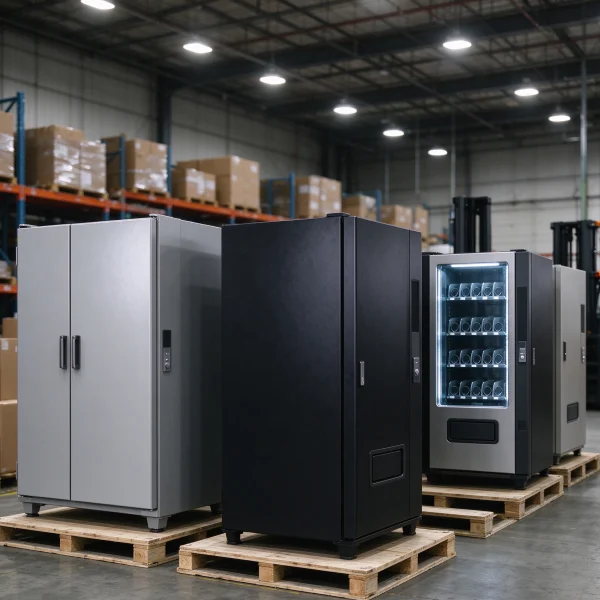
A machine with a custom cabinet and standard software runs $4,000 to $12,000. A build with a bespoke app and full custom engineering runs $15,000 to $25,000. This machine is a business asset, so treat the decision like a small business investment and get three quotes.
Most of my clients overbuild their first machine. They want every feature and end up paying for things customers never use. A reliable cabinet, a good payment reader, and a location that produces revenue matter more than a flashy touchscreen. You can add custom software features after you see how customers actually buy. Once you understand their buying pattern, upgrades become simple and most people end up doubling down on location strategy instead of hardware.
FAQ
Can I get a custom vending machine for under $5,000?
Yes, if you keep the software standard and skip major structural changes. A small custom-wrapped snack or drink machine with a basic cashless reader can fall in the $4,000 to $5,000 range. You’ll likely sacrifice a touchscreen and some branding options. It’s a solid entry point, but get a detailed quote to make sure delivery and installation aren’t tacked on later.
Why are phone case vending machines so expensive?
Phone case machines need an integrated printer, a custom dispensing system, and control software that connects to the printing hardware. That’s a different engineering challenge than dropping a candy bar. The machine also needs to hold multiple phone models, which means more moving parts and more potential failure points. Expect to pay $12,000 to $20,000 for a trustworthy unit.
Does a custom vending machine need custom software?
Not automatically. If you’re only changing the exterior and product layout, the manufacturer’s standard software will handle the machine. Custom software becomes necessary when you want mobile ordering, dynamic pricing, or a branded customer experience. That’s where you should carefully weigh the cost, because building a solid app starts around $5,000 and can go much higher.
Are there cheaper alternatives to a fully custom build?
Yes. Buy a standard machine and have it wrapped in your branding, or buy a rebuilt cabinet and customize the front panel. This approach typically costs $2,500 to $4,000 all-in. It won’t solve unusual product shapes or unique dispensing needs, but for most snack and beverage products it looks just as polished at a fraction of the price.
How long does a custom vending machine take to build?
Most custom fabricators quote six to ten weeks from order to shipment. That includes engineering, part sourcing, assembly, and testing. A fully custom software project can add another four to eight weeks on top. If you’re on a tight timeline, ask the manufacturer whether they offer an expedited build slot at a premium.
Is it better to buy a custom machine from China or a local fabricator?
China usually wins on price, with custom builds often 30% to 40% cheaper before freight. Local fabricators win on communication, after-sales support, and easier warranty claims. The best middle ground is a manufacturer with an international track record and certifications. Check that your supplier can provide a CE or UL certificate and references from buyers in your region.