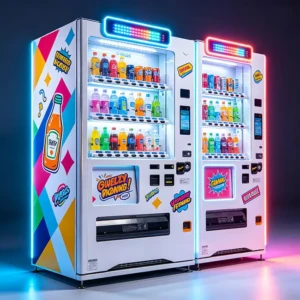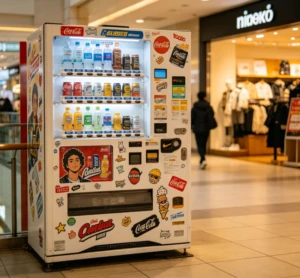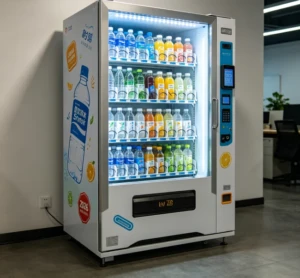
A phone case printing machine costs anywhere from around $3,000 for a compact entry-level model to $35,000 or more for a full commercial station. Most small operators start with a $6,000 to $12,000 unit that prints onto blank cases, UV prints edges, and supports 40 to 60 phones an hour. You typically pair it with a phone case vending machine, place it in a mall, tourist district, or campus, and sell custom cases on the spot. The machine itself is only part of the real cost, because inventory, maintenance, and location rent decide whether it pays for itself.
What actually moves the price?
The sticker price follows four components: the print engine, the control system, the cabinet, and the software. A low-end flatbed UV printer uses cheaper piezo heads, a basic touchscreen, and no auto-loading. A commercial station adds a robotic arm or conveyor, integrated curing, and software that won’t let a busy queue reset the job. That explains why one machine sits at $4,000 while a look-alike goes for $28,000.
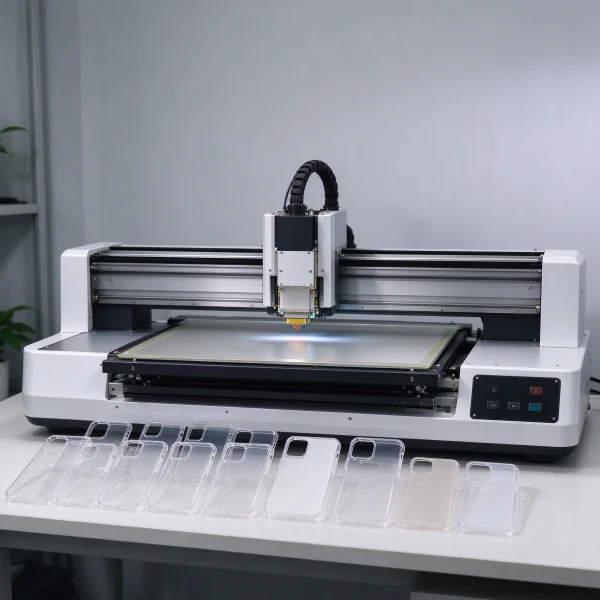
Here’s a rough price tier comparison for 2026. Treat these as starting points, not quotes, because vendors use different names for the same setup.
| Machine tier | Typical price | What’s included | Best for |
|---|---|---|---|
| Entry desktop setup | $3,000-$6,000 | Flatbed UV printer, manual tray, starter software | Weekend stands, small kiosk, learning the process |
| Mid-range station | $7,000-$15,000 | Larger print area, faster UV curing, semi-automatic loading, better color calibration | Mall kiosks, tourist spots, campus stores |
| All-in-one vending unit | $18,000-$35,000+ | Enclosed kiosk, touchscreen storefront, payment system, integrated printer and curing, remote monitoring | Full self-serve phone case vending business |
Some listings say ‘from $4,900’ but leave out the compressor, air filter, or spare print heads. Always ask what is bolted on and what ships in the box before you compare numbers.
The real costs hide in the details
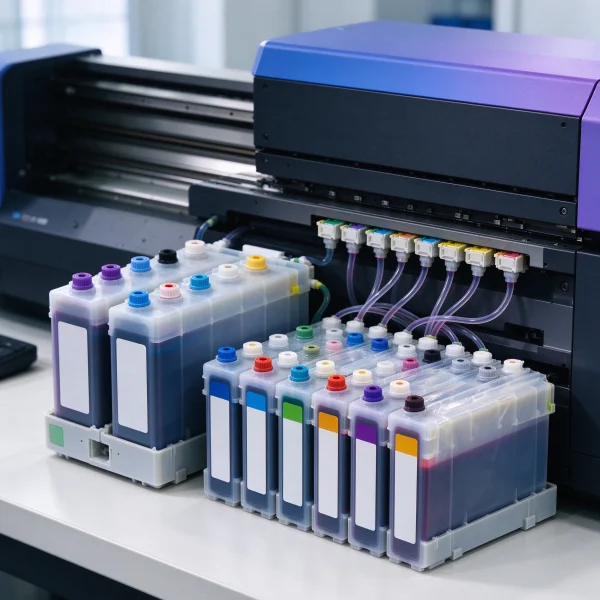
Before you fall in love with a sticker price, run a 12-month cost forecast. Ink is the biggest recurring expense. UV ink for case printing runs $60 to $120 per liter depending on brand and color count, and a busy kiosk can burn through several liters a month. Blank cases cost $1.80 to $6 each in bulk, but cheap blanks create more wasted prints.
Most first-time buyers forget four items until the invoice arrives:
- Shipping, customs, and import fees, which can add 15% to 30% for overseas machines.
- Site prep, power, internet, and a spare print head.
- Software licensing or per-order fees.
- Training time, because an untrained operator can ruin a $2,000 print head in a month.
How a phone case vending machine flips the math
Here’s where the price starts making sense. A phone case vending machine sells custom cases at $15 to $25, while your blank and ink cost stays in the $2.50 to $7.50 range. At five sales a day and an average ticket of $19, you’re looking at around $95 in daily revenue before rent. A solid weekend can push that much higher, especially near a cinema or food court.
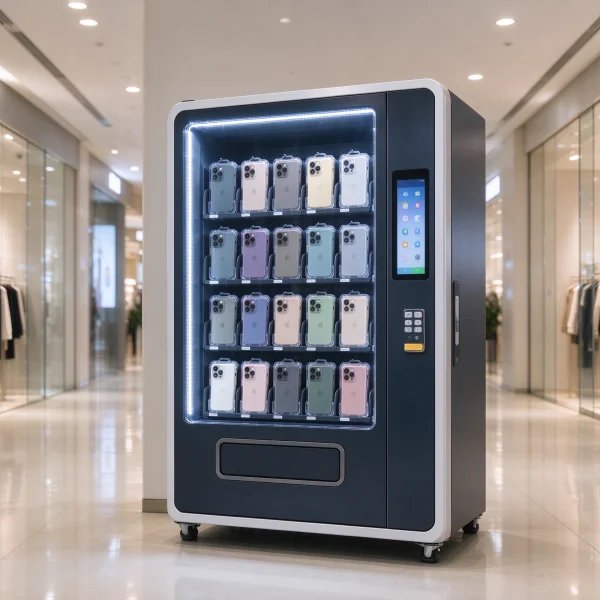
We walk through the unit economics in detail and explain what a phone case printing vending machine is and how it makes money. The short version: you are buying a retail location with a printer inside it.
Buyers who treat this as a print shop instead of a location business make the classic mistake. The printer only works as hard as the foot traffic in front of it. A $9,000 machine in a dead hallway will lose to a $30,000 machine near the main entrance. If you’re still checking whether this fits your plan, the buyer profiles for phone case vending machines will help you see who actually buys them.
Entry machine or all-in-one vending station?
You have two real choices. The first is a flatbed printer you run yourself. You load a blank case, send the design from a laptop, wait, and hand over the finished case. The second is a self-serve vending unit where the customer picks a design on a screen, pays with a card, and watches the case print and drop out. That second option is more expensive, but it replaces your labor during operating hours.
If you’re handy and want to keep costs low, a DIY route can work. The 2026 buyer guide for DIY phone case vending machines compares kits, factory-built units, and what each package really costs.
For a solo operator, an all-in-one station makes sense only when the location already delivers steady traffic. If not, start simpler, learn the print process, and upgrade once the numbers prove it. You’ll waste less money while you make mistakes.
Questions most buyers forget to ask suppliers
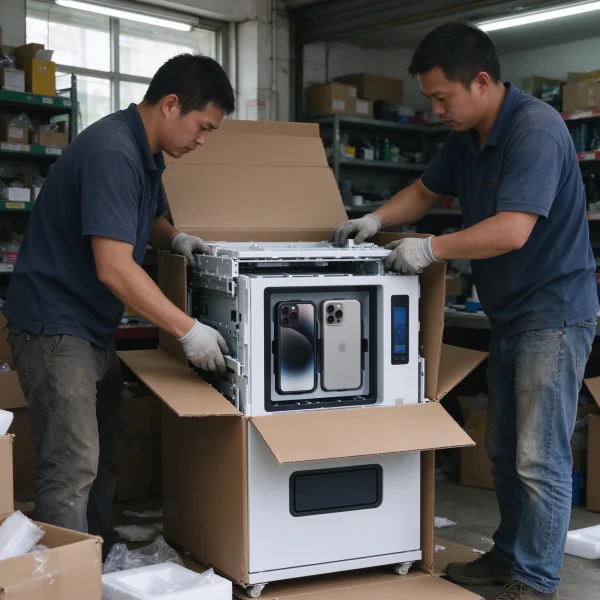
International buyers usually pay 15% to 30% extra once freight and customs are included. That can turn a $9,000 machine into an $11,500 one, so the ‘factory price’ means little until you see the landed cost. Ask about the power setup, regional certifications, and whether the warranty covers on-site service or only parts.
Machines fail. The difference between a good supplier and a bad one shows up after month three. That’s why buyers look for a track record over a low quote. VendingCore, for example, builds phone case vending machines with international certifications and offers customization on cabinets, branding, and software. They’ve been doing this for years, which matters when a part breaks in the middle of a weekend shift.
Is the price worth it? Run these four numbers first
Before you buy, write down monthly rent, expected daily orders, average selling price, and total cost per finished case. A simple payback estimate goes like this: a $9,000 machine, $2.50 cost per case, five sales a day at $18, and $350 monthly rent works out to a roughly four-month payback. Drop to three sales a day and it stretches closer to ten months.
Location determines everything. The same machine can be a money-maker or a storage unit depending on where you put it. If you’re new to vending, the essentials of running a vending machine business will help you avoid rookie mistakes with contracts, maintenance, and cash flow.
Final word: think like an operator, not a shopper
A phone case printing machine has a wide price range because the machines do very different jobs. Start with a realistic budget, lock down a location before choosing a model, and ask suppliers the questions that expose hidden costs. If you want to talk through a configuration, VendingCore can help you price out a full phone case vending setup and check the requirements for your region.
FAQ
How much does a phone case printing machine cost in 2026?
Entry-level desktop models start around $3,000 to $6,000, mid-range stations run $7,000 to $15,000, and all-in-one vending units sit between $18,000 and $35,000 or more. These figures exclude shipping, installation, ink, and blank case inventory, which can add 20% to 35% to your first-year budget.
What is the true cost per custom phone case?
Plan for $2.50 to $7.50 per finished case. That includes a blank case at $1.80 to $6, ink, electricity, and a slice of machine depreciation. A small operator selling at $19 still has a healthy margin before location cost and labor.
Can a $3,000 machine start a phone case vending business?
Yes, if you run the printing yourself and test the model first. A cheaper machine works for a weekend stand or a small kiosk where you handle every order. For a fully self-serve experience with card payments and an enclosed cabinet, budget for an $18,000-plus vending unit instead.
Are used phone case vending machines worth it?
A used machine can save money, but only if you test the print head and check how many hours the printer has run. Replacing a print head often costs $400 to $1,200, which can erase the savings. Ask the seller for a live print test before you pay anything.
What kind of maintenance does this equipment need?
Expect daily nozzle checks, weekly cleaning, and periodic head replacements. Budget $50 to $150 a month for cleaning supplies and consumables, and set aside a repair fund. Most operators also keep a spare print head on hand to avoid long downtime.
How much money can a phone case vending machine make?
At six sales a day with an $18 average ticket, you’ll see about $3,240 in monthly revenue before ink and rent. After materials and location costs, a good spot may net $1,500 to $2,500 a month. Higher-traffic tourist locations can do more, but no machine guarantees volume.
What should I ask to compare machine prices fairly?
Request a line-item quote that includes shipping, customs, installation, training, software fees, warranty service, and replacement parts. If a seller won’t separate those, you aren’t comparing the same product. The machine that looks cheapest often has the highest landed cost.
Most buyers fixate on the printer and forget the business around it. I’ve seen people spend $6,000 on a desktop printer and leave it idle because they had no foot traffic, and others spend $30,000 on a full vending station that paid for itself in a season. A $12,000 machine with low traffic is a bad deal, while a $20,000 machine in a strong location can pay for itself in six months. Get the location locked down first and buy a machine that matches the volume it will actually see, not the one that looks most impressive. The price is a starting point, not the whole picture.