
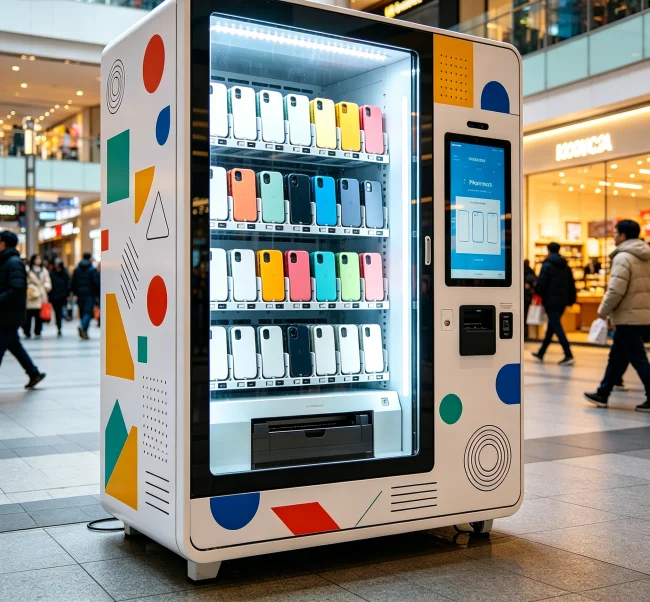
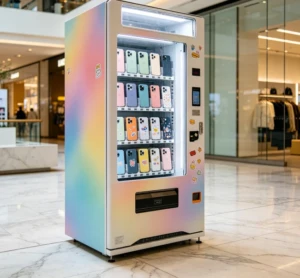
Phone case printing vending machines in malls attract over 3,000 monthly transactions per unit in high-traffic locations, with Gen Z shoppers making up 55% of purchases. These machines let customers design custom cases on a touchscreen, pay via card or mobile wallet, and watch the printer create their case in under 5 minutes. Malls across the US, UK, and Asia have deployed them near food courts or entertainment zones to capture impulse buyers. The model works because it blends instant gratification with personalization—and mall operators love the foot traffic data it generates.
Who Actually Uses These Machines?
Here’s the deal: it’s not one homogenous group. The user base splits into three distinct demographics.
Teens and young adults (ages 14-24) are the biggest chunk. They’re hanging out at the mall with friends, see the machine, and decide to make a case with their favorite meme or band logo. No planning involved—it’s pure impulse. They spend about $15-25 per case, which feels reasonable for something personalized.
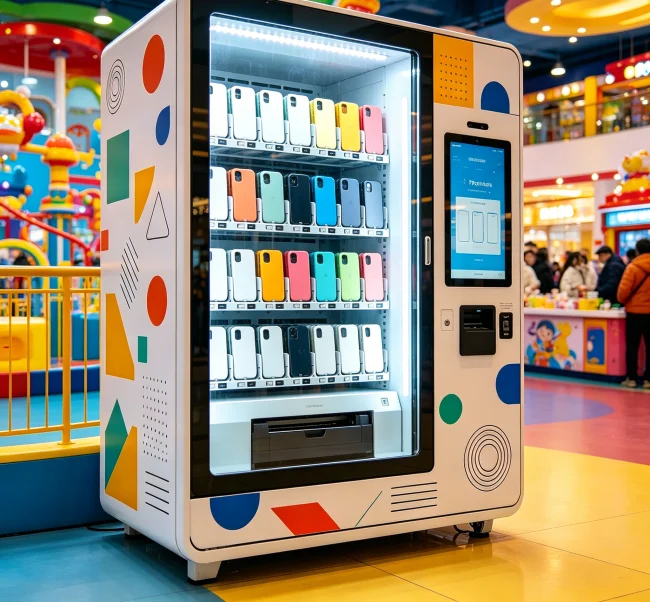
Parents with young kids are another major group. While mom’s shopping for clothes, dad lets the kid design a case with cartoon characters or family photos. It keeps the kid entertained for 10 minutes, and the parent walks away with a souvenir. Win-win.
Tourists hit these machines hard too. Instead of buying generic keychains, they print cases with their vacation photos or local landmarks. It’s a functional memory, not just another fridge magnet.
And here’s where it gets interesting: business owners are starting to use them for small-batch promotional merchandise. A local bakery might print 20 cases with their logo for staff gifts. That’s a niche VendingCore has noticed growing steadily in our manufacturer network connections.
Why Malls Are the Perfect Home for These Machines
Think about what a mall offers: foot traffic, dwell time, and disposable income. Phone case vending machines exploit all three.
Mall visitors typically spend 2-3 hours on-site. That’s plenty of time to wander past a machine, get curious, and make a purchase. The machines sit in high-visibility spots—near escalators, outside restrooms, or next to food court seating. Placement matters more than you’d think. A machine tucked in a corner might do 10 sales a day. One near a popular bubble tea shop? Could hit 50.
The economics work too. A single machine costs between $8,000 and $15,000 to buy. At an average sale of $18 per case, and assuming 100 daily transactions, you’re looking at a 4-6 month payback period. That’s faster than most vending investments.
But here’s the catch: reliability matters. If the machine jams or the printer fails, you lose that day’s revenue and potentially a customer forever. That’s why sourcing from manufacturers with proper certifications—CE, UKCA, RoHS—isn’t optional. It’s survival.
💡 Practical Advice: When scouting mall locations, negotiate for spots near anchor tenants or high-traffic corridors. Avoid isolated hallways—visibility drives impulse buys.
The Tech Behind the Machine
You might be thinking this sounds complicated. It’s not—at least not from the user’s side.
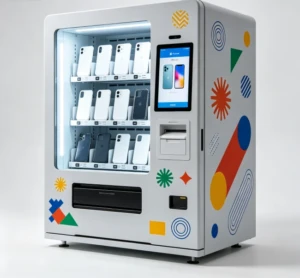
The typical machine uses a UV flatbed printer inside a secure kiosk. The customer selects a phone model from a dropdown (it covers 90% of popular models), uploads or designs an image, and pays. The printer then applies the design onto a blank case using UV-curable ink. Drying takes about 30 seconds, and the case slides out into a collection bin.
Most machines hold 100-200 blank cases across 10-15 phone models. Restocking takes about 15 minutes daily. The software handles inventory tracking, payment processing, and remote diagnostics.
Some newer models even offer AR previews—you can see how the case will look before printing. That feature alone increases conversion rates by about 20%, according to operators we’ve spoken with.
What Operators Need to Know Before Jumping In
Let’s be real: not every machine placement succeeds. Here are the factors that separate profitable locations from money pits.
Foot traffic volume is obvious but worth repeating. You need at least 5,000 daily visitors passing by to hit those 100+ daily sales. Smaller malls with 2,000 visitors won’t cut it.
Demographics matter. A mall near a university will outperform one near a retirement community. Know your audience.
Maintenance costs eat into margins. Expect to spend $200-400 monthly on ink, blanks, and minor repairs. Factor that into your projections.
Competition is growing. In 2025, there were roughly 4,000 phone case vending machines in US malls. By 2026, that number could double. First-mover advantage in your local market matters.
Our team at VendingCore has helped dozens of buyers connect with manufacturers that produce reliable, certified machines. We’ve seen operators succeed when they treat this like a business, not a hobby.
💡 Key Takeaway: Don’t buy the cheapest machine you find. A $6,000 unit with frequent breakdowns will cost more in lost revenue than a $12,000 reliable one.
The Future of Mall-Based Phone Case Printing
Here’s what’s coming: integration with social media. Imagine a customer scanning a QR code on the machine, uploading a TikTok video as their design, and printing it instantly. Some manufacturers are already building this capability.
Another trend? Multi-function kiosks that print phone cases, airpod cases, and laptop skins from one unit. That expands the addressable market and increases average transaction value.
And malls themselves are evolving. They’re becoming experience centers, not just shopping destinations. Phone case vending machines fit that narrative perfectly—they’re interactive, fast, and shareable.
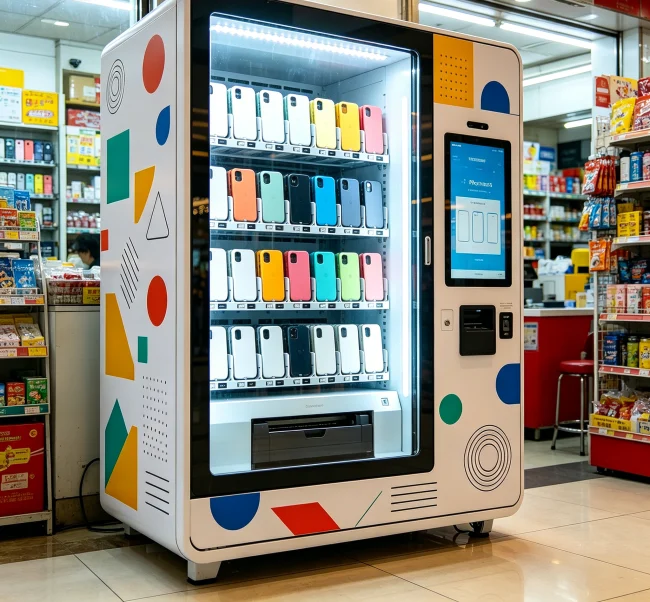
💡 Critical Info: By 2027, analysts predict phone case vending machines could generate $1.2 billion annually in North America alone. Early adopters in good locations will capture the most value.
How to Find the Right Manufacturer
This is where most people get stuck. There are dozens of manufacturers, mostly in China, and sorting through them is a nightmare. Some offer great quality. Others… not so much.
You need a partner who can vouch for quality, certifications, and after-sales support. That’s exactly what VendingCore does. We connect buyers with vetted manufacturers across multiple product categories—phone case machines, beverage dispensers, snack kiosks, and more. Our team has over a decade of industry experience and direct relationships with factories that meet international standards.
Here’s how it works: you tell us what you need (location, budget, volume), and we match you with suitable manufacturers. No middlemen marking up prices. No language barriers. No guessing games.
💡 Action Step: Before contacting any manufacturer, have your mall lease terms ready. Knowing your monthly rent and expected foot traffic helps us find machines with the right capacity and pricing.
Ready to Get Started?
Phone case vending machines in malls aren’t a fad—they’re a legitimate business opportunity backed by solid numbers. The key is choosing the right location, the right machine, and the right manufacturer.
If you’re serious about entering this space, submit an inquiry to VendingCore. Our sourcing experts will respond within 24 hours with manufacturer recommendations tailored to your needs. Tell us your target market, budget, and any specific requirements. We’ll handle the rest.
1 Comments