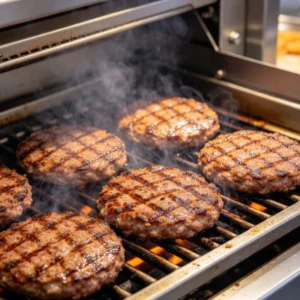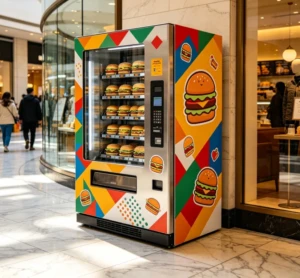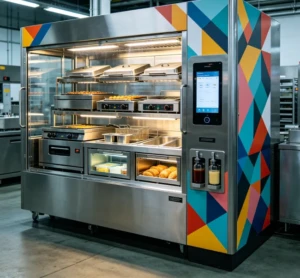
How much does a robo burger machine cost? A RoboBurger Gen 3 runs $27,500 on pre-order in 2026, with a $5,000 deposit to hold one of the limited 200 units. That price covers the cooking robot, touchscreen ordering, and installation guidance; the site lease, power, and ingredients stay on you. These units work best in malls, airports, universities, and office lobbies where people want a hot burger without waiting in line. The machine grinds, presses, cooks, and assembles each patty on demand, so you’re basically operating a tiny kitchen without the payroll.
What you’re actually paying for
You might see “burger vending machine cost” and expect a $10,000 snack machine price. Not this. A RoboBurger unit stores pre-portioned patties and buns in a refrigerated compartment, grills the patty when someone orders, toasts the bun, pumps on sauce, and slides a boxed burger out. That’s a lot of moving parts inside a metal box.
That complexity is why the pre-order price sits closer to a food truck than a snack dispenser. The public numbers are clear: $5,000 upfront and $22,500 more before the unit ships. The question becomes whether the location you have in mind can move enough burgers to make that work.
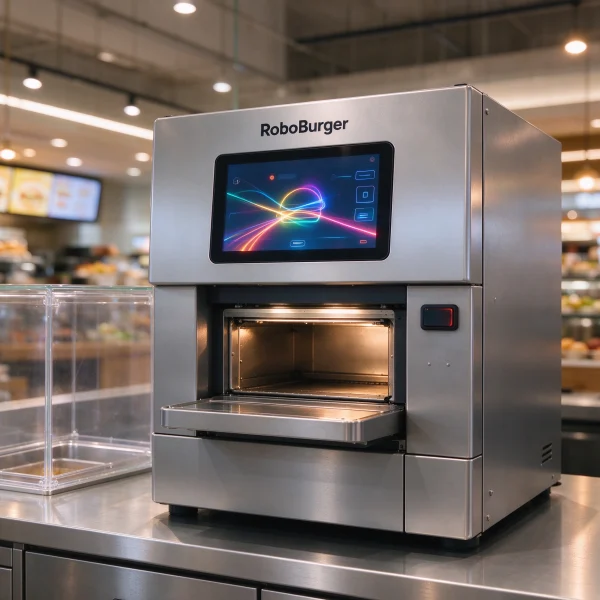
If you compare it to a traditional vending machine, think about what you’re not paying: no driver wages, no fry cook, no cashier. The savings show up monthly, not on day one.
The real cost beyond the machine price
The machine price is the number people Google, but the operating budget is where owners actually feel it. You need a spot with enough space for a counter-height kiosk, a dedicated electrical circuit, and a water line if your menu calls for it. Each location has its own rules about this, so the quote from two malls can look very different.
Here’s a rough look at what a RoboBurger operation might involve, based on public pre-order details and typical food service leases.
| Cost item | What it covers | Notes |
|---|---|---|
| Machine price | Robot cooking unit, touchscreen, software, onboarding | $27,500 pre-order price |
| Deposit | Holds your unit in the launch batch | $5,000 upfront, balance later |
| Location lease | Space in a mall, airport, campus, or store | Depends heavily on foot traffic |
| Site prep and shipping | Delivery, rigging, electrical, ventilation | Request an on-site quote |
| Ingredients and packaging | Patty mix, buns, sauce, boxes | Recurring cost every week |
Notice what’s missing from that table: utilities and maintenance. A machine that cooks food uses more electricity than a cold snack machine. You also need someone local who can troubleshoot mechanical issues when the grill stops heating. That might be a technician, a vendor, or a very patient operator.
If you want to see how this compares with a different unattended food play, our guide to fully automatic bubble tea vending machines explains a lighter setup that can work for similar locations.
Is it worth the money? Think like an operator
I get why people fall for the concept. A robot that makes burgers on demand is the kind of thing you want to be first in town with. But the number that matters is not the sticker price. It’s the cost per burger at the volume your site can actually reach.
If your food cost per burger is, say, $1.80 and you sell at $6.99, you need thousands of burgers just to recover the $27,500 machine before counting rent and power. That doesn’t make it a bad investment. It makes it a high-traffic investment.
One way to think about it: the machine is replacing a fast-food crew, not a can of soda. If you can place it where a fast-food lineup forms, the economics are interesting. Put it in a quiet lobby and you’re just storing an expensive appliance. For a lower-cost starting point, check our profit-focused forecast for best-selling drinks.
Where does it actually work? Location lessons
Location is the whole game. RoboBurger’s own marketing mentions malls, airports, and universities. That’s not PR fluff; those are places with long dwell times, hungry people moving in predictable patterns, and no late-night food options in many cases.
Airport and hospital concourses have their own approval processes, insurance requirements, and space rules. A mall kiosk might be the easiest place to start, but you’ll deal with mall hours and revenue-sharing agreements. A campus location gives you steady weekday traffic but disappears during summer.
Before you buy, map the venue’s busy hours against your own schedule. Who will restock the machine at 7 a.m.? Who carries backup buns on a busy Friday? These unglamorous questions decide whether the robot feels like a business or a hobby that costs money.
How to compare suppliers and avoid price surprises
RoboBurger is the brand most people mean when they ask about robo burger machine cost, so the pre-order pricing is what it is. Once units start shipping in 2026, expect secondary sellers and smaller brands to appear. Some will offer lower prices; some will use that $27,500 number as an anchor and claim their machine is just as good but cheaper. Be careful.
Your due diligence should include asking for a service plan, spare parts pricing, software updates, and a list of real installations. If the supplier cannot show you a working unit in a commercial setting, any price is too high.
On VendingCore’s supplier ranking, you can compare verified suppliers, read buyer reviews, and send inquiries directly. That gives you a side-by-side view before you pay a deposit. If you’re only starting out with a smaller budget, our guide to the best business to start with $5000 lists lower-cost vending routes.
The bottom line
So, how much does a robo burger machine cost? The practical answer is $27,500 plus the work you put into the site, the lease, and the daily restocking. The educational answer is that this price makes sense only in high-traffic places with a strong burger culture and no direct competitor next door.
Start with your location, not the machine. Once you know how many burgers a site can support, the $27,500 becomes easy to evaluate. If the volume isn’t there, you’re better off with a smaller vending setup that matches the space. And if the volume is there, a robo burger machine could be the closest thing to a full fast-food kitchen without a payroll.
Before you pay anything, read our data-driven guide on whether vending machines still make money to sanity-check the broader market.
Robo burger machines are being priced like commercial kitchen equipment, not snack vending machines. The buyer has to shift from thinking in monthly product routes to thinking in food cost percentages, labor replaced, and peak-hour throughput. A machine that sells four burgers an hour at a mall food court and a machine that sells one per hour in a quiet office break room produce very different economics. The first real operators will reveal which locations work and which ones are just novelty traffic. Until that data arrives, treat the machine price as an entry ticket and the location as the actual investment.
FAQ
How much does a robo burger machine cost with all fees?
With RoboBurger, the machine price is $27,500 and the deposit is $5,000. You still need to add shipping, site electrical work, lease or kiosk rent, taxes, and ingredients. Many operators budget at least a few thousand dollars beyond the sticker price before the first burger sells. Request an itemized quote so you know whether the delivered price matches the advertised one.
Can you buy a RoboBurger machine outright?
Yes, on pre-order you pay $5,000 to reserve one of the limited units and the remaining balance later. There is no universal financing package advertised for every buyer. Some operators use equipment leases or small business loans to cover the balance. Your local lender will want a business plan, projected sales, and details about the site lease.
How long does it take to break even?
There is no reliable break-even number yet because the first commercial units are only now reaching operators. It depends on burger price, daily cycles, rent, labor you eliminate, and how often the machine needs repairs. A rough approach: divide your total upfront cost by the gross profit per burger. That gives the number of burgers you need to sell.
What are hidden costs?
Delivery and rigging are often quoted separately. Electrical work can be expensive, especially in older buildings. You may need a water line, ventilation, or additional refrigeration depending on your menu. There are also consumable supplies, remote monitoring subscriptions, payment processing fees, and the occasional service call. Keep a repair fund separate from your inventory budget.
Is RoboBurger the only robo burger machine?
RoboBurger is the most visible brand, and it owns the early press around the concept. Automated food kiosks from other companies may offer burgers or similar cooked items, but they vary in size, price, and reliability. Compare each supplier against real installations and buyer reviews rather than a website demo. On VendingCore’s supplier ranking, you can compare verified suppliers and read buyer reviews.
What foot traffic do you need?
There is no official minimum, but a burger robot works best where people already wait and decide to eat. Airport concourses, student unions, malls, and 24-hour convenience stores fit that pattern. The machine needs consistent orders during peak windows, not occasional walk-ups. Test the location with a simpler vending product if you’re unsure.