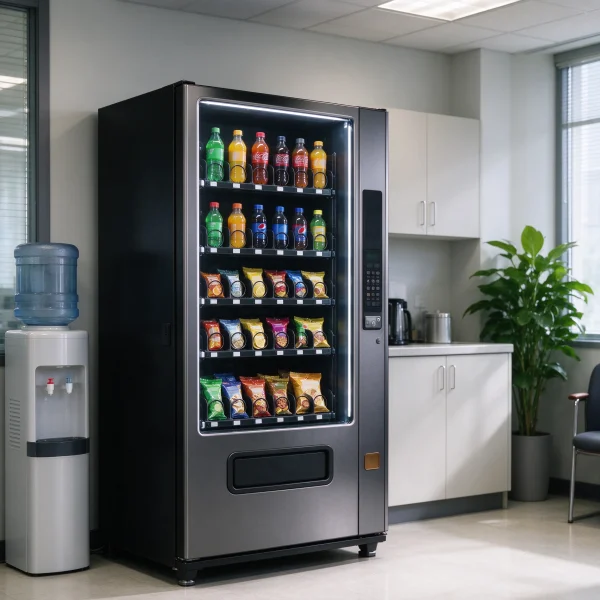
How much should I pay a location to place my vending machine there? Most operators pay either a flat monthly fee of $50 to $300 or a commission of 10% to 30% of gross sales. A small office break room with 40 employees might bring in $150 of profit each month, which is why a $75 rent feels fair. A busy gym can do three times that volume and still leave room for a 20% commission. The number shifts with foot traffic, available space, and how much work the owner wants to do.
Why location fees are all over the map
The fee range above looks wide because it is. A vending machine is a small business inside someone else’s building, so the host is taking on a little risk and giving up a little space. Some owners just want a simple monthly rent to cover the electricity. Others treat the machine as a profit center and ask for a cut of every sale.
Your job is to figure out what the spot is actually worth before you open the negotiation. Watch the area during the busiest times. Count how many people stop at the existing machines. Ask the manager if there have been vending machines before and why they left. That answer alone tells you a lot about the fee they’ll accept.
Here are typical ranges you’ll see across the industry, but treat them as a starting point, not a rule.
| Location type | Fee model | Typical cost | What changes the price |
|---|---|---|---|
| Office break rooms | Flat rent or commission | $50 – $150 per month | Employee count and shift patterns |
| Gyms | Commission | 10% – 20% of sales | Member traffic outside peak hours |
| Hospitals and clinics | Flat rent or hybrid | $100 – $300 per month | 24-hour access and waiting area size |
| Schools | Commission | 5% – 15% of sales | Seasonal calendar and admin approval |
Flat rent or commission: which one works better?
Flat rent is the easiest to manage. You know your fixed cost, and you never argue over sales reports. The downside is that you’re capped. If the machine takes off, you keep the upside, but the owner may feel shortchanged and cancel at the end of the lease. Commission keeps the owner on your side. When sales are good, they’re happy because their cut grows. The trade-off is honesty and record keeping. You need a reliable way to report sales, or you’ll have a suspicious host on your hands.
A hybrid model solves both problems. You pay a lower base rent like $25 or $50, then add a commission once sales pass a certain point. That way the owner gets a safety net and a piece of success, and you don’t overpay in a slow month.
How to calculate a fair price for any location
Let’s do the math together. Estimate the number of people who pass the machine on a normal weekday. Multiply by a conversion rate of 5% to 10% for drinks, or 10% to 15% for snacks. Then multiply by an average transaction of $1.50 to $2.50. For a clinic with 100 visitors a day, that might be 100 x 7% x $2 = $14 per day. Over 26 weekdays, that’s $364 a month. A fair location fee sits around 15% to 25% of that: roughly $55 to $90.
This model works for any stop. If you’re pitching a school where sales vanish in summer, adjust for the months you actually restock. If you’re putting a machine in a 24-hour laundromat, count the overnight crowd too. The key is to use your own assumptions, not the owner’s optimistic numbers.
Negotiation tips that actually work
You have more leverage than you think. Most location owners have no idea how much vending machines can make. Bring sales projections for similar sites, and show how your machine adds convenience for their customers rather than costs them money. Then pick one of these paths:
- Offer a lower flat rent plus a small commission above a monthly sales threshold.
- Ask for a shorter contract with a renewal option. Owners feel safer when they’re not locked in.
- Offer to upgrade the machine if they cover the space and the power. Newer machines, like those from VendingCore with international certifications and a strong service record, are less disruptive and easier for staff to manage.
- Take on the responsibility of cleaning and restocking the area around the machine. It sounds simple, but it makes the owner’s life easier.

When you bring up the reliability of your equipment, you’re stating a fact. A machine that breaks down less often means less hassle for their front desk. That’s worth a cheaper placement fee. If you’re sizing a drink machine for the spot, check how many cans a drink vending machine holds to match the location’s expected volume.
Hidden costs to stack next to the fee
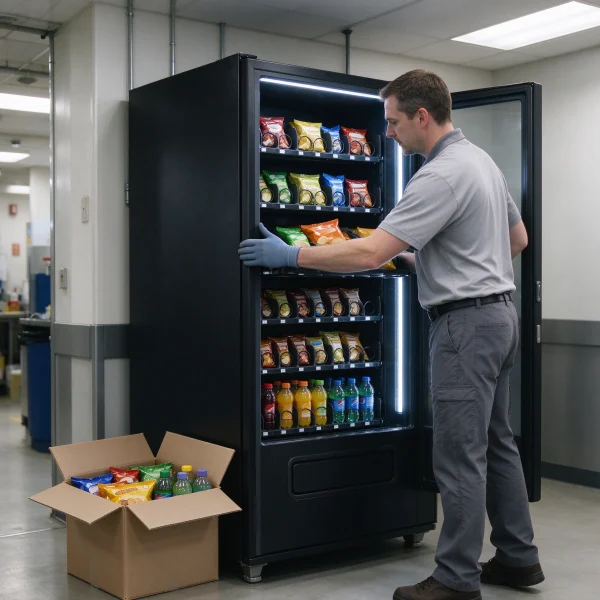
The monthly fee is just the headline number. Add the cost of electricity if the owner doesn’t include it, card reader processing fees around 3% to 5%, restocking labor, and occasional vandalism or theft. A $100 fee can quickly turn into $160 of real cost when you add these. If the owner wants extra payment for cleanup or special insurance, count that too.
Locations that don’t charge rent at all
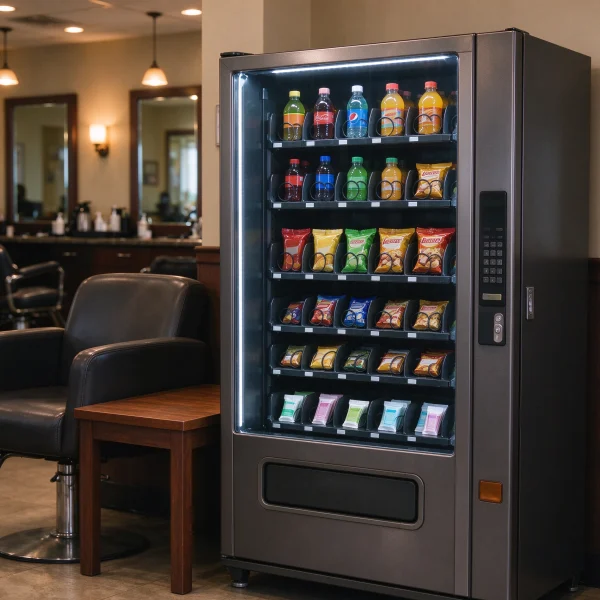
Maybe you don’t want to pay at all. Plenty of stops will host a machine for free because it solves a problem for them. Think about barbershops with long wait times, auto repair shops where customers are stuck for an hour, or small retail stores that want a drink option without managing inventory. In these spots, a simple 5% to 10% commission after you cover your costs can be enough.
If you operate in places like Singapore or Malaysia, location expectations can be different from the US. Our can I own a vending machine in Singapore guide covers cost and licensing angles, and the DIY phone case vending machine Malaysia guide shows how niche machines can earn in malls. Both help you judge whether a location fee is normal for that setting.
A simple deal structure you can copy
Here’s a template that works for a typical mid-size location. Offer a flat rent of $50 per month, plus 10% of the gross sales after the first $500. That protects you in slow months and rewards the owner when volume increases. Put the sales report schedule in writing, and be transparent every month.
The bottom line
The answer to how much you should pay is always: pay only what the location can generate back to you. For most operators, that means $50 to $150 per month in rent, or a 10% to 20% commission. Keep your costs visible, verify foot traffic, and stay flexible in the first year. When you’re ready to put a machine to work in that spot, VendingCore’s drink and snack vending machines are a solid place to start, and their team can help you plan around real placement costs.
FAQ
What is a fair monthly rent for a vending machine location?
For most offices, $50 to $150 is fair. For a high-traffic hospital or transit hub, $200 to $300 with a strong sales history is common. Whatever you pick, make sure it’s no more than 15% to 25% of the location’s projected gross sales, or you’ll be working for the landlord.
Should I pay commission or flat rent?
Flat rent is better for beginners because it’s simple. Commission works better when the owner is skeptical and wants to share the risk. Just remember that commission requires honest sales tracking. If the owner won’t accept your reports, switch to flat rent or walk away.
How much should I offer a gym for a vending machine?
Gyms usually get 10% to 20% of gross sales. Start with 10% if the gym has a few hundred members, and move to 15% if the owner provides a prime spot near the entrance. You can also offer a flat $75 plus a small commission, which covers the owner’s electricity and keeps you safe in slow months.
Can I get free locations for my vending machine?
Yes, especially small businesses like barbershops and repair shops. They care more about adding convenience for customers than earning rent. Offer a free machine and reliable restocking, and ask for just a small commission after you recover your monthly costs. You may end up paying nothing for years.
What should I do if a location asks for a high percentage of sales?
Push back with numbers. Show the owner your sales projection and operating costs. If they still insist on 30%+, consider a counteroffer: a lower 15% commission plus a guaranteed monthly minimum. That gives them a floor and you a ceiling. If they won’t budge, it’s fine to leave.
How do I track sales if I pay commission?
Use a vending management system or the machine’s internal data to pull a monthly report. Some operators simply count product levels before and after a restock. Keep the report simple and share it with the owner before you hand over the payment. Good records prevent arguments.
Should I sign a long-term contract for a vending machine location?
Start with 6 to 12 months. Long contracts look secure until you realize the location doesn’t perform. A trial period lets you test real sales with minimal risk. If the machine does well, you can renew with better terms or even a lower fee because you now have proof.
Location fees are the second biggest expense after the machine itself. Treat them like rent for a tiny shop: negotiate based on sales potential, not hope. When you pay a commission, tie it to a monthly sales report so everyone knows the same numbers. I’ve seen operators overpay by 30% simply because they skipped the foot traffic check. That one hour of counting customers before signing saves more money than any discount you’ll negotiate later. A fair location deal should survive a slow month without resentment from either side. If the owner presses for an unusually high fee, ask what happens in a down month. The best partnerships share both the upside and the risk.