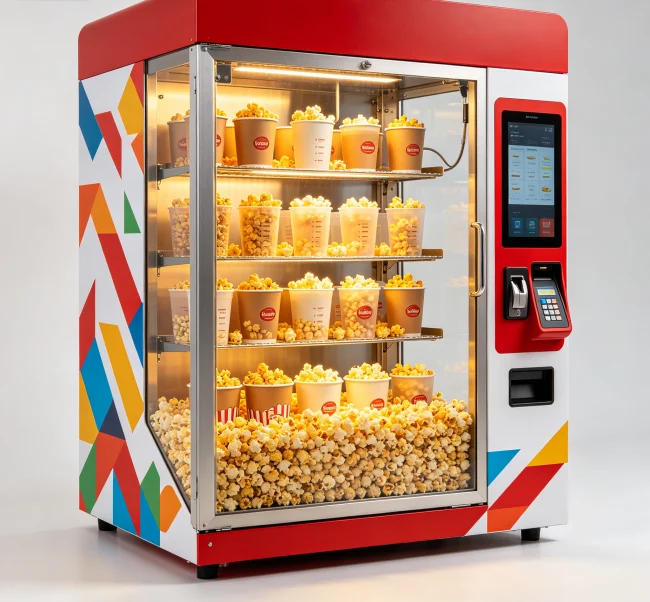
Popcorn vending machines in the USA generate an average of $150 to $400 per week in high-traffic locations, with some top-performing units bringing in over $1,500 monthly. These automated machines are popping up everywhere — from shopping malls and movie theater lobbies to college campuses and corporate break rooms — offering freshly made, warm popcorn 24/7 without any staff required. They use a combination of hot air or oil-based popping systems with automated dispensing, letting customers watch the entire process through a glass window.
Think about it: Americans consume roughly 15 billion quarts of popcorn annually, and that demand doesn’t stop at the theater. The beauty of these machines is they tap into an impulse-buy craving. You’re walking through a Walmart, you smell that butter, and suddenly you’re $4 lighter with a warm bag in your hand. And here’s the kicker — the machines handle all the cooking and packaging on their own.
💡 Key Tip: When scouting locations for a popcorn vending machine in the USA, prioritize spots with natural foot traffic and long wait times — think DMVs, transit stations, and hospital lobbies. These locations convert browsers into buyers effortlessly.
What Makes Popcorn Vending Machines Different
Most vending machines just dispense pre-packaged goods. Not these. A popcorn vending machine in the USA is essentially a mini popcorn factory. It stores raw kernels and oil, heats them up on demand, and packages the finished product right in front of the customer.
The experience matters. People love watching the popping process — it’s nostalgic, it’s satisfying, and it smells amazing. That sensory appeal drives sales in a way that a standard snack machine just can’t match. Plus, since the popcorn is made fresh for each purchase, there’s no issue with stale inventory sitting around for weeks.
Where They Work Best
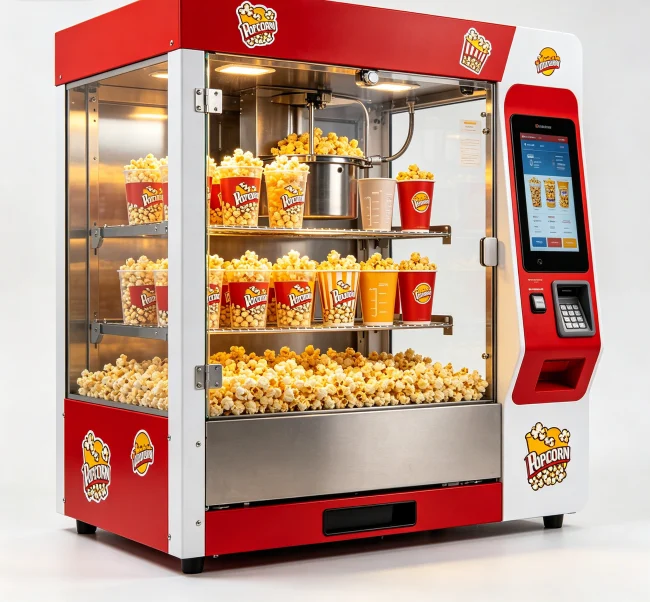
Location is everything in this business. Here’s where popcorn vending machines in the USA tend to perform best:
The Real Numbers Behind the Business
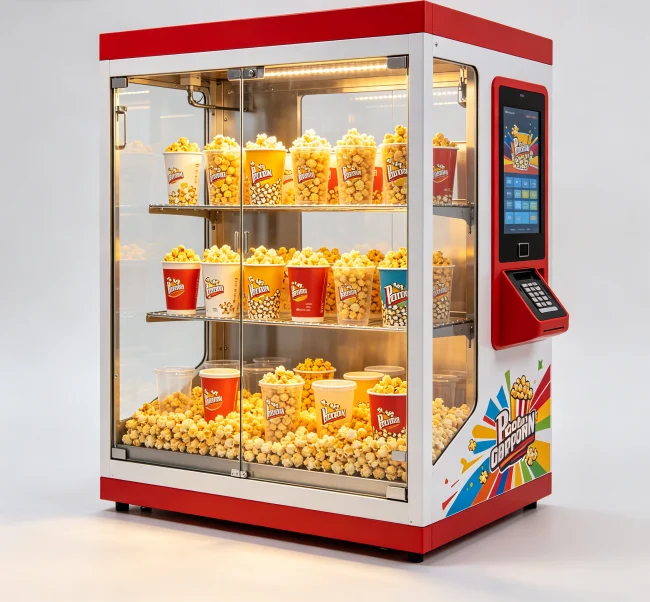
Let’s talk money because that’s what you’re here for. A typical popcorn vending machine in the USA costs between $4,000 and $15,000 depending on features and capacity. The profit margins? They’re pretty ridiculous.
A single serving costs roughly $0.30 to $0.60 in raw materials (kernels, oil, seasoning, bag). You sell it for $3 to $5. That’s a gross margin of 85-90%. Compare that to a standard snack machine where margins hover around 30-40%, and you start to see the appeal.
If you’re curious about the full breakdown, this popcorn vending machine price guide covers everything from equipment costs to ongoing expenses.
💡 Practical Advice: Don’t just look at the machine price. Factor in delivery, installation, and the first batch of supplies. A $6,000 machine might cost $7,200 by the time it’s ready to serve its first bag.
What to Look for in a Machine
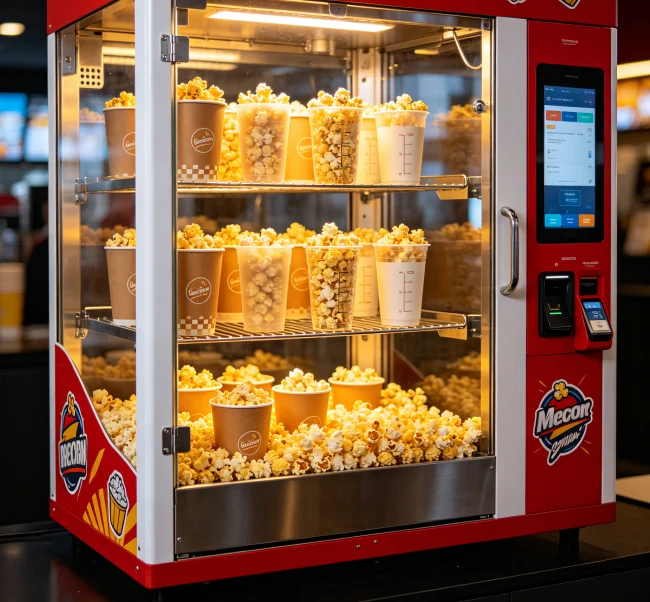
Not all popcorn vending machines are created equal. Here’s what separates the good ones from the headaches:
| Feature | Why It Matters |
|---|---|
| Oil vs. Air Popping | Oil gives better taste and higher sales. Air is healthier but less popular. |
| Capacity | Look for machines that hold at least 100 servings. Refilling mid-day is a hassle. |
| Ventilation System | Essential for indoor locations. Poor ventilation leads to smoke and complaints. |
| Payment Options | Card readers and mobile payments are non-negotiable in 2026. Cash-only is dying. |
| Warranty & Support | These machines have more moving parts. A 1-year warranty minimum is a must. |
The Operational Side
Running a popcorn vending machine in the USA isn’t a set-it-and-forget-it operation. You’ll need to restock kernels, oil, and bags regularly — usually every 1-2 weeks depending on volume. Cleaning is another factor. The popping chamber needs periodic maintenance to prevent buildup and keep the machine running smoothly.
But here’s the trade-off: the refill frequency is lower than traditional snack machines because you’re stocking only 3-4 ingredients instead of 30+ different products. Less inventory management, less spoilage, and fewer SKUs to track.
And if you’re wondering how this compares to other vending options, this detailed profitability analysis breaks down the real costs and returns.
💡 Caution: Don’t underestimate cleaning requirements. A neglected popcorn machine develops burnt oil smells that kill sales fast. Schedule bi-weekly deep cleans and daily surface wipe-downs.
Common Mistakes to Avoid
I’ve seen people jump into this and make some pretty avoidable mistakes. Here are the big ones:
Ignoring local health regulations. Some states treat popcorn vending machines differently than standard vending. Check with your local health department before you buy.
Putting the machine in the wrong spot. A popcorn machine in a quiet office hallway will collect dust. You need high foot traffic and people with time to spare.
Using cheap ingredients. People can tell the difference. Bad popcorn kills repeat business. Invest in good kernels and real butter flavoring.
Forgetting about seasonality. Popcorn sales dip in summer when people are outside more. Plan for it. Some operators switch to cold drinks or slushies during warmer months.
Is It Worth It in 2026?
Short answer: yes, if you pick the right location and machine. The popcorn vending machine market in the USA is growing because consumers want fresh, warm food from machines — not just chips and candy bars. The margins are better than almost any other vending category, and the novelty factor drives initial sales.
That said, it’s not magic. You need to maintain the equipment, keep it clean, and stock quality ingredients. But for operators who do it right, a single machine can pay for itself within 6-12 months.
If you’re thinking about starting a vending business, this guide to the most profitable vending machines gives you a broader view of what works and what doesn’t.
💡 Key Takeaway: Start with one machine in a proven location. Learn the ropes, track your numbers, and scale from there. Most failures come from expanding too fast before understanding the operational demands.