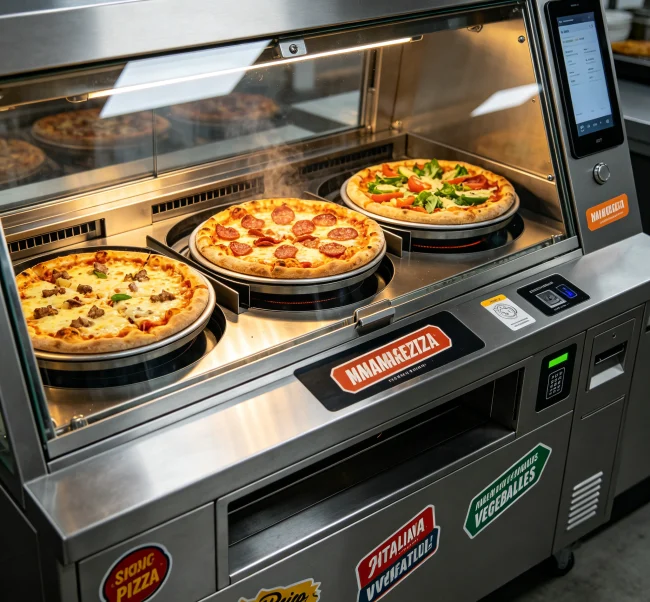
A pizza vending machine can cook a fresh 12-inch pizza in under 3 minutes, holding up to 200+ pizzas in a refrigerated inventory. These automated kiosks are popping up in college dorm lobbies, hospital cafeterias, and 24-hour truck stops across the US and Europe. You walk up, tap your phone or card, and within 180 seconds you’re holding a hot, crispy pizza that was made from scratch—dough, sauce, cheese, and all.
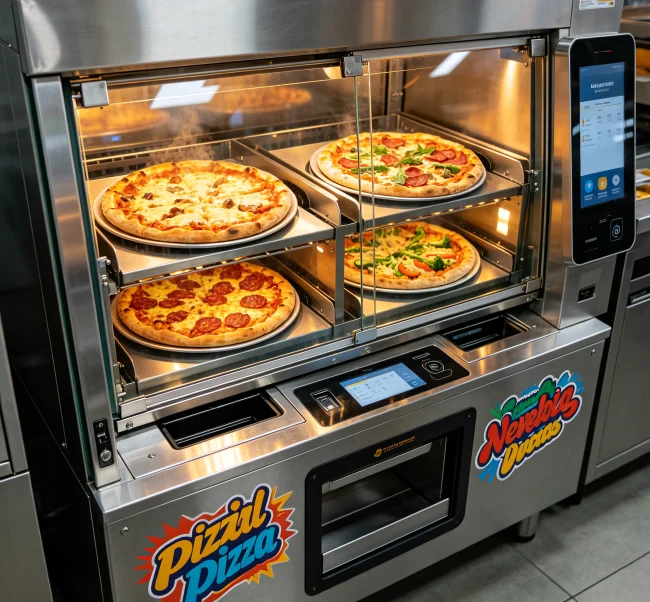
Here’s the thing: this isn’t reheated frozen garbage. These machines mix the dough fresh, apply sauce, add toppings, and cook it on the spot using a convection oven. No human hands touch your food. And yes, they’re real.
How These Machines Actually Work (It’s Cooler Than You Think)
Most people picture a glorified microwave when they hear “pizza vending machine.” But the technology is way more advanced. The machine stores pre-prepared dough balls in a refrigerated compartment. When you place an order, a robotic arm grabs a dough ball, presses it into a disc, and sends it down a conveyor belt.
Sauce gets sprayed on. Cheese gets sprinkled. Toppings get dropped. Then it slides into an infrared or convection oven that hits 500°F+.
The whole process is fully automated. No employees needed. And the machine cleans itself between cycles.
There are two main types:
| Type | Cook Time | Pizza Size | Storage Capacity |
|---|---|---|---|
| Fresh Dough | 2.5 – 3 minutes | 12 inches | 70 – 120 pizzas |
| Par-baked Crust | 90 seconds – 2 minutes | 10 – 14 inches | 150 – 220 pizzas |
The fresh dough machines generally taste better. But the par-baked ones are faster and hold more inventory. Pick your trade-off.
Where Do These Things Make Money?
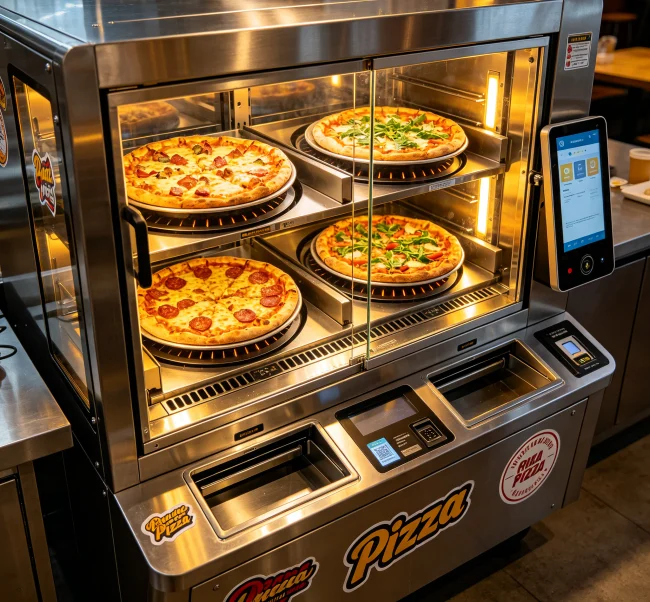
You can’t just stick one anywhere and expect cash to rain down. Location is everything. Think about places where people want pizza at odd hours or don’t have good options nearby.
College campuses are gold mines. Students are up late, hungry, and lazy. A pizza vending machine in a dorm lobby does insane numbers during finals week. Hospitals are another solid bet—night shift workers and visiting families get hungry at 2 AM when the cafeteria is locked.
Truck stops? Absolutely. Truckers need hot food fast. A 3-minute pizza beats a 20-minute fast food line every time.
And here’s where it gets interesting. Some operators are pairing pizza machines with other automated food options. You’ll see a pizza machine next to a burger vending machine in the same location. Double the food options, double the revenue potential.
💡 Location Tip: Avoid placing pizza vending machines near existing pizza shops or fast food chains. The machine works best where there’s unmet demand—not where you’re competing with a Dominos down the street.
The Real Cost Breakdown
Let’s talk money. A quality pizza vending machine isn’t cheap. But compared to opening a brick-and-mortar pizza shop? It’s a steal.
A commercial-grade machine runs between $35,000 and $85,000 depending on features. Some of the high-end Italian-made units push past $100,000. But you’re also saving on rent (smaller footprint), labor (zero employees), and utilities.
Operating costs are pretty lean. You’re looking at:
If you sell a pizza for $12 and your ingredients cost $3, that’s a 75% gross margin. Not bad at all.
💡 Cost Reality Check: Don’t forget the hidden costs—payment terminal fees, remote monitoring software, and occasional ingredient spoilage. Budget an extra 10% on top of your expected operating costs.
What Pizza Vending Machines Can’t Do (Yet)
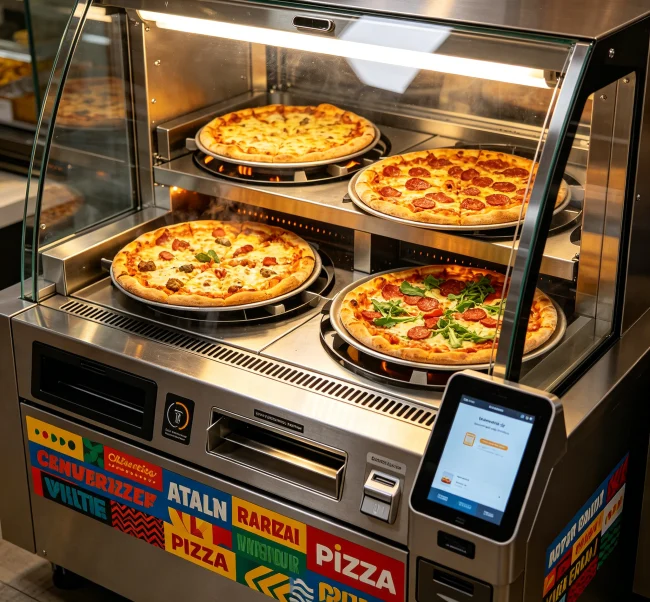
Let’s be real. These machines have limitations. They can’t make a custom pizza with 17 different toppings. You’re choosing from 4-6 preset options. Pepperoni, cheese, maybe a veggie and a meat lovers. That’s it.
The dough quality varies. Some machines produce genuinely good pizza. Others… taste like cardboard with sauce. It depends entirely on the brand and how well you maintain the ingredients.
And here’s the big one—reliability. These are complex machines with moving parts, refrigeration systems, and ovens. Things break. If your machine goes down for a week, you’re losing money and frustrating customers.
That’s why choosing the right supplier matters so much. Companies like VendingCore focus on equipment with strong service networks. You want a machine where replacement parts are available fast and technicians actually know what they’re doing.
The Profitability Picture
So how much can you actually make? Let’s run some numbers.
A well-placed machine in a busy location might do 30-50 pizzas per day. At $12 each with $3 in ingredient costs, that’s $270-$450 in daily profit. Monthly? Somewhere between $8,000 and $13,000.
But you’re not keeping all of that. Factor in location commission, maintenance, credit card fees, and restocking labor. Realistic net profit is probably 50-60% of gross. So call it $4,000-$8,000 per month per machine.
Compare that to a drink and snack vending machine that might net $300-$800 per month. The pizza machine absolutely crushes it in profitability.
💡 ROI Reality: Expect to recoup your machine investment in 8-14 months if you pick the right location. If you’re still not profitable after 18 months, something is wrong—either the location or your operational costs.
Common Mistakes New Operators Make
I’ve seen people screw this up in predictable ways. Here’s what to avoid.
Mistake #1: Putting the machine in a low-traffic area because the rent is cheap. Dead locations produce dead revenue. Pay for good foot traffic.
Mistake #2: Skimping on ingredient quality. Cheap cheese and sauce make bad pizza. Bad pizza kills repeat business. Use decent ingredients.
Mistake #3: Ignoring maintenance schedules. These machines need regular cleaning and calibration. Skip it and you’ll have breakdowns during peak hours.
Mistake #4: Not having a backup plan. What happens when the machine runs out of dough at 11 PM on a Saturday? You need remote monitoring and a restocking schedule that accounts for peak demand.
Is This Right for You?
Pizza vending machines aren’t for everyone. You need to be comfortable with food safety regulations, equipment maintenance, and supply chain management. It’s not a passive income machine—it’s a small business that happens to be automated.
But if you’re looking at the vending machine business and want something that actually moves the needle on profitability, pizza is where the action is. The margins are better, the demand is consistent, and the technology has finally matured enough to be reliable.
If you’re interested in exploring this further, reach out to VendingCore. They can walk you through the equipment options, location strategies, and what it actually takes to get started.