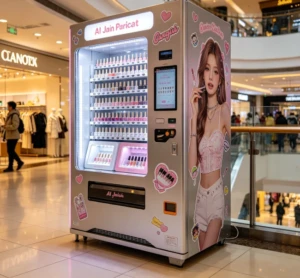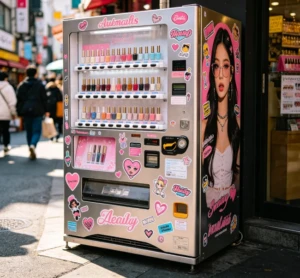
Starting a nail vending machine business requires a $3,000-$8,000 initial investment, involves securing locations in high-traffic beauty spots, and can generate $600-$700+ monthly net profit per well-placed machine after accounting for costs and commissions.
You're probably wondering if this side hustle is actually worth it or just another online hype. The truth is, it's a real business with real work, but the low startup cost and scalability make it super attractive. This guide cuts through the fluff to give you the honest steps, real numbers, and the unglamorous pitfalls you need to know—straight from industry sourcing data and operator experiences. Let's build your plan.
The beauty vending niche is experiencing a quiet revolution, moving beyond traditional snacks to capitalize on the booming at-home nail care market. For entrepreneurs, this represents a unique opportunity to build a scalable, location-based business with relatively low overhead compared to other retail ventures.
💡 Your First Reality Check: Before diving into costs, spend a week observing foot traffic in potential locations like salons and malls. Real-world observation is more valuable than any online guide.
Understanding your initial investment is critical. Costs can vary widely based on machine quality, sourcing, and location strategy. Here’s a realistic, itemized breakdown.
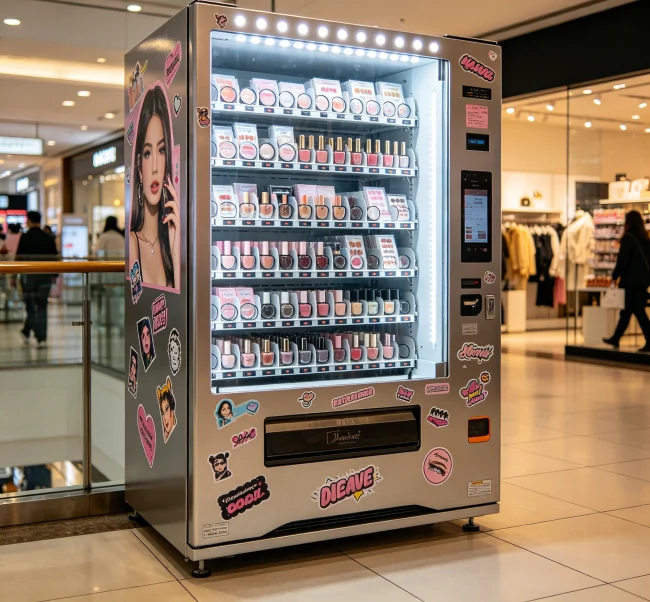
A new, basic nail vending machine from a reputable manufacturer typically ranges from $2,500 to $4,500. Refurbished or used models can start around $1,200, but factor in potential maintenance costs. Your initial inventory of nail wraps, press-ons, files, and cuticle oils will cost $300-$800, depending on variety and brand selection. Don’t forget business licensing ($50-$200), liability insurance ($400-$800 annually), and a budget for location commissions or rental fees, which can be 10-20% of gross sales or a flat monthly fee.
💡 Smart Sourcing Strategy: When sourcing machines, prioritize suppliers with verifiable international certifications like CE or RoHS. On platforms like vendingcore.com, we connect buyers directly with over 500 pre-vetted manufacturers, ensuring quality and often better pricing by cutting out intermediaries.
Your 90-Day Step-by-Step Launch Plan
A structured approach prevents costly mistakes. Follow this phased plan to move from idea to operation.
Days 1-30: Research & Foundation. Conduct local market analysis. Identify 15-20 potential locations (nail salons, beauty schools, college campuses, shopping malls). Legally establish your business (LLC is recommended) and secure insurance. Begin sourcing your machine and initial inventory. Platforms with global reach can be advantageous here; for instance, our services at vendingcore.com cover 50+ countries and have facilitated over 10,000 transactions, providing access to a wide range of machine options suited to different markets.
Days 31-60: Outreach & Acquisition. This is the most critical phase. Start contacting location owners. Your pitch should focus on mutual benefit: you provide their customers with convenient add-on purchases at no cost to them, and they earn passive commission income. Prepare a simple one-page agreement outlining terms.
Days 61-90: Installation & Optimization. Install your machine, ensuring it’s clean, fully stocked, and prominently displayed with clear instructions. Implement a tracking system for sales and inventory from day one. Analyze which products sell fastest and adjust your next restock order accordingly.
💡 Master the Initial Pitch: When contacting a salon owner, lead with how your machine enhances their customer experience and provides them extra income, not why you need a location. Frame it as a partnership, not a request.
Mastering Location Acquisition and Management
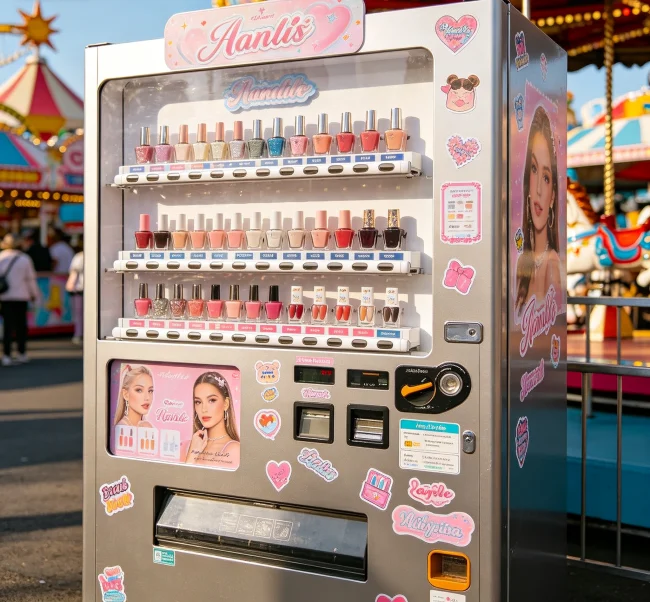
Securing a prime spot is 80% of the battle in vending. The best locations are places with high foot traffic from your target demographic (women aged 16-35) and dwell time.
Approach salon owners professionally. A script could be: “Hi [Owner Name], I provide complimentary nail vending machines to salons like yours. It offers your clients extra convenience, and it generates passive commission income for you with zero work on your part. Could I show you a photo of the unit and discuss a potential 3-month trial?” Always offer a trial period (e.g., 90 days) to lower the barrier to entry. Your location agreement must clearly state the commission rate (e.g., 15%), payment terms, responsibilities for electricity, and termination conditions.
Operations, Profitability, and Realistic Numbers
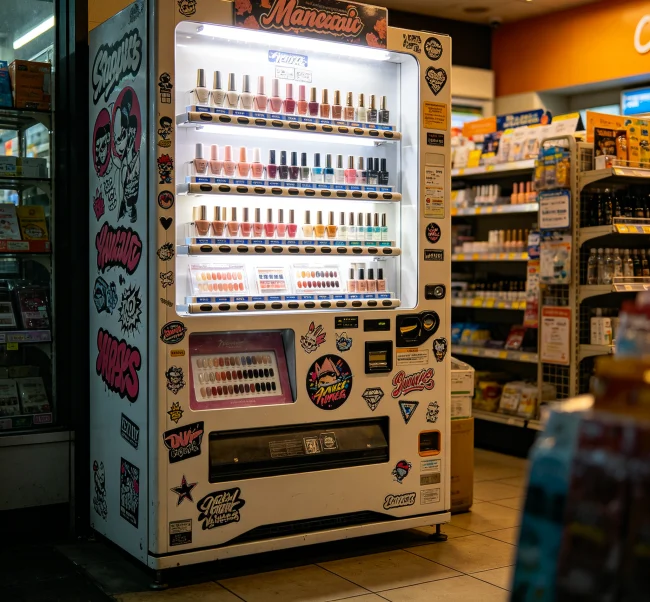
Daily operations involve restocking (weekly or bi-weekly), cash collection, and machine cleaning. Inventory management is key; use your sales data to identify top performers and discontinue slow-moving items.
Let’s talk realistic numbers. Assume a machine with 50 product spirals. If each item sells for an average of $8 with a cost of goods sold (COGS) of $3, your gross profit per item is $5. If you sell 5 items per day, that’s $25 daily gross profit. Subtract a 15% location commission ($3.75) and other overheads. This yields a net of roughly $18-20 per day, or $600-700 per month per machine. Achieving this requires a good location. Scaling to 5-10 machines turns this into a substantial business.
💡 Avoid the Profit Hype: Be skeptical of claims of earning thousands per month from a single machine immediately. Real growth comes from consistent operations, perfecting your product mix, and systematic scaling, not overnight success.
Franchise vs. Independent: An Objective Comparison
Your path to market is a major decision. Here’s a clear comparison.
| Factor | Franchise Model | Independent Operator |
|---|---|---|
| Startup Cost | High ($15k – $40k+). Includes franchise fee, branded equipment. | Lower ($3k – $8k). You control sourcing and costs. |
| Support & Brand | High. Provided training, marketing, and established brand recognition. | None. You build everything from the ground up. |
| Flexibility & Control | Low. Must follow franchise rules on products, pricing, and operations. | Total. You choose machines, products, prices, and locations freely. |
| Profit Potential | Moderate. Higher revenue share may go to franchisor. | Higher. You keep all profits after expenses and location commissions. |
| Best For | Those who prefer a structured system and are willing to pay for support. | Self-starters, negotiators, and those wanting full control. |
Critical Pitfalls and How to Avoid Them
Learning from others’ mistakes is free. The most common pitfall is a poor location agreement. Never sign a deal without a clear exit clause. Another major error is neglecting machine maintenance; a broken or empty machine destroys trust and revenue instantly. Underestimating the time commitment for restocking and relationship management with location owners is also frequent. Finally, poor inventory choices—not adapting to trends like nail charms or specific styles—will stall sales.
💡 Build a Scalable System Early: Even with one machine, use a simple spreadsheet or app to track sales per spiral. This data is gold when deciding what to reorder and when you’re ready to scale to machine number two.
What Are the Best Products to Stock in 2026?
Trends in nail art change seasonally. In 2026, focus on a mix of essentials and trendy items. Always stock classic press-on nails in popular shapes and neutral colors. Gel-effect nail wraps continue to be strong for their ease of use. Micro-charms and 3D nail art stickers are high-margin impulse buys. Don’t forget ancillary items like quality nail files, cuticle pushers, and strengthening treatments. Allocate about 70% of your spirals to proven bestsellers and 30% to test new, trending products. Sourcing these from quality suppliers is crucial for customer satisfaction.
How to Handle Machine Maintenance and Repairs
Proactive maintenance prevents most issues. Clean the machine glass and keypad weekly during restocking. Check coin mechanisms and bill validors for jams monthly. For repairs, have a plan before a breakdown occurs. If you purchased from a reputable supplier, check their warranty terms. For common issues, many solutions can be found in online forums or through tutorial videos. For complex electronic problems, establish a relationship with a local vending machine technician. Factor a small monthly percentage of revenue into a “repair fund” so you’re never caught off guard.
Effective Marketing Strategies for Your Machines
The machine itself is your primary marketing tool. Ensure it is visually appealing, well-lit, and has clear, enticing graphics. Use social media locally; partner with your host location to promote the machine to their followers. Consider running a “first purchase” promo, like a 10% discount code displayed on the machine. Inside the salon, ask the owner if you can place small table tents or counter cards. The best marketing, however, is a perfectly functioning machine with great products that creates repeat customers.
Starting a nail vending machine business is a tangible entry into entrepreneurship. It requires a blend of strategic planning, hands-on hustle, and meticulous management. By focusing on securing strong locations, managing your operations efficiently, and adapting to market trends, you can build a profitable and scalable venture. For those ready to source equipment, conducting thorough research on platforms that connect you directly to global manufacturers can provide a significant advantage in terms of cost, quality, and selection.